You want an anti-inflammatory meal plan that works on a busy week, uses normal groceries, and leaves a clean fridge on Sunday night. Here is a practical 7-day roadmap with specific cook times, batch tips, and a simple way to plan, shop, and cook without spending your weekend in the kitchen.
What anti-inflammatory eating means
Inflammation is part of your immune response. The everyday goal is not zero inflammation, but less chronic, diet-driven stress. An anti-inflammatory pattern leans into whole foods with fiber, healthy fats, and a wide mix of plants, while easing up on ultra-processed foods and excess added sugar. A simple plate guide: half vegetables, a quarter protein, a quarter whole grains, plus olive oil and herbs. Aim for fish 2 times a week, beans 3 times a week, and color at every meal.
Prioritize
- Fatty fish like salmon, trout, or sardines for omega-3s. Canned options count. Target 2 meals per week.
- Extra-virgin olive oil as your main cooking and finishing fat, about 1–2 tablespoons per meal.
- Nuts and seeds: walnuts, almonds, chia, flax, pumpkin seeds. Sprinkle on bowls and yogurt.
- Legumes such as lentils, chickpeas, and black beans for fiber and protein. Batch-cook or use canned.
- Leafy greens and cruciferous vegetables like kale, spinach, broccoli, and cabbage. Rotate varieties.
- Colorful fruit, especially berries and citrus. Fresh or frozen are both fine.
- Alliums and herbs: onions, garlic, ginger, turmeric, parsley, cilantro.
- Whole grains like quinoa, farro, brown rice, and oats.
- Fermented foods in small, regular servings: yogurt, kefir, sauerkraut, kimchi.
Limit
- Ultra-processed snacks and sweets with added sugars.
- Refined grains and breads that spike blood sugar.
- Processed meats like bacon and sausage.
- Excessive alcohol. Keep it light, or skip it.
- Deep-fried foods and trans fats.
Pattern beats perfection. If dinner goes sideways one night, your next meal brings you back on track.
7-day anti-inflammatory menu
This plan uses repeatable building blocks to save time. Batch-cooked grains and roasted veggies show up more than once, and most dinners land in 30–40 minutes. Swap proteins as needed and double recipes that reheat well.
Day 1
- Breakfast: Oats in half milk, half water, topped with blueberries, walnuts, and cinnamon.
- Lunch: Lentil and chopped veggie salad with olive oil, lemon, and parsley. Add feta if you like.
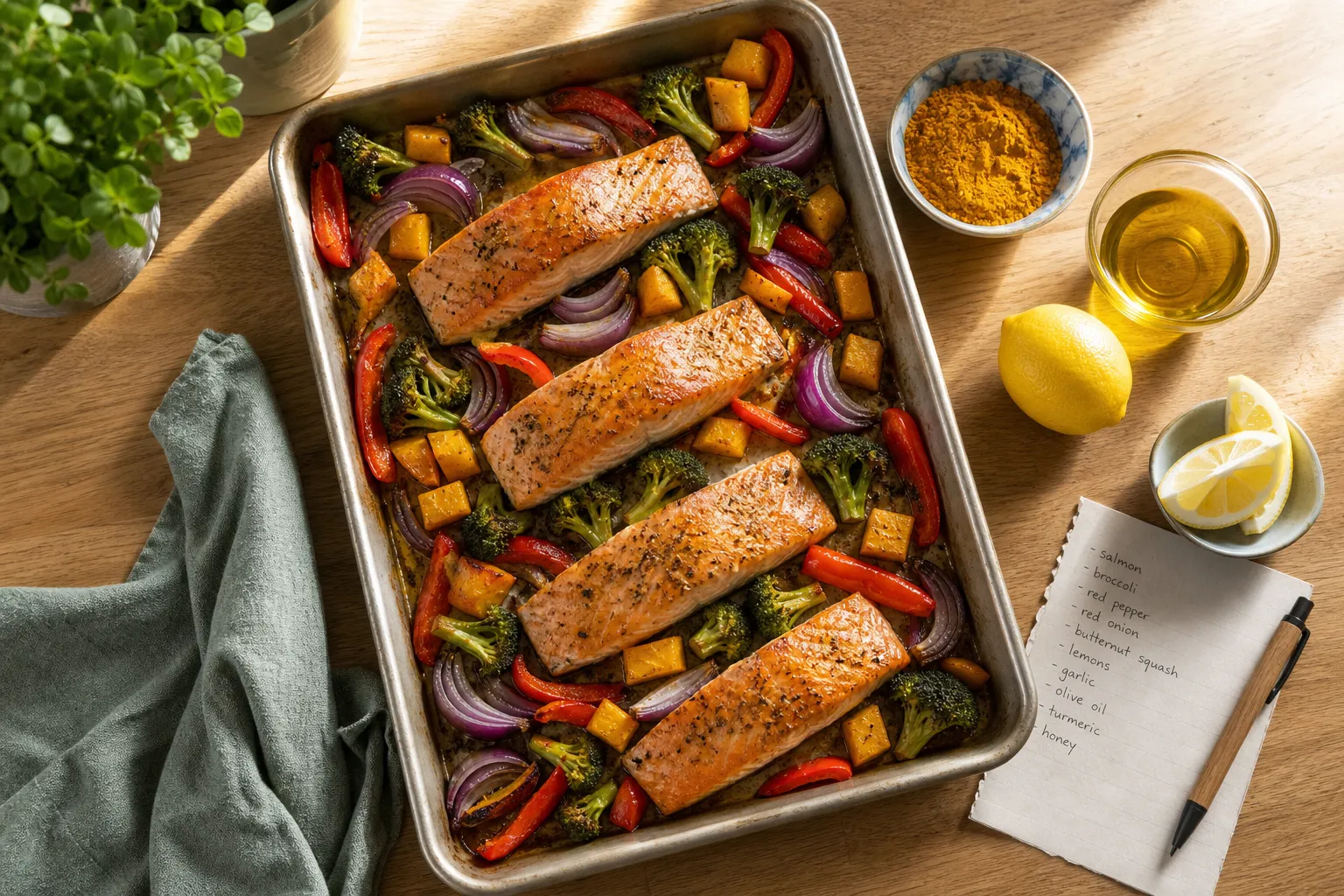
- Dinner: Roasted salmon with broccoli and sweet potato. Heat oven to 425°F. Toss broccoli florets and sweet potato cubes with olive oil and salt; roast 25 minutes. Add salmon brushed with olive oil, salt, and lemon; roast 10–12 minutes until it flakes.
Day 2
- Breakfast: Greek yogurt with chia seeds, sliced pear, and a drizzle of honey.
- Lunch: Leftover salmon flaked into greens with quinoa, capers, and dill yogurt sauce.
- Dinner: Chickpea and spinach coconut curry over brown rice. Sauté onion, garlic, ginger, turmeric, and cumin in olive oil 3 minutes; add chickpeas, coconut milk, and tomatoes; simmer 12 minutes; fold in spinach to wilt.
Day 3
- Breakfast: Veggie scramble with eggs, onions, bell peppers, and kale. Whole-grain toast on the side.
- Lunch: Quinoa bowl with roasted sweet potato, black beans, avocado, and lime.
- Dinner: Sheet-pan chicken thighs with Brussels sprouts and red onions. Toss with olive oil, paprika, salt; roast at 425°F for 25–30 minutes until juices run clear.
Day 4
- Breakfast: Smoothie with kefir, spinach, frozen berries, and ground flax.
- Lunch: Leftover chicken shredded into a chopped salad with olives, tomatoes, cucumber, and olive oil vinaigrette.
- Dinner: Whole-wheat pasta with garlicky sautéed mushrooms, kale, and white beans. Cook pasta. In olive oil, brown mushrooms 5–7 minutes; add garlic and kale to wilt; stir in beans, lemon zest, and a splash of pasta water; toss with pasta and olive oil.
Day 5
- Breakfast: Overnight oats with chia, almond butter, and strawberries.
- Lunch: Tomato-lentil soup with a side of mixed greens.
- Dinner: Seared trout or sardines with farro and blistered cherry tomatoes. Cook farro until tender, 20–25 minutes. Sear fish in olive oil 2–3 minutes per side; burst tomatoes in the same pan; finish with basil and lemon.
Day 6
- Breakfast: Savory yogurt bowl with olive oil, cucumbers, mint, and pumpkin seeds.
- Lunch: Leftover farro tossed with chickpeas, arugula, roasted peppers, and lemon-tahini dressing.
- Dinner: Turkey meatballs braised in tomato sauce with zucchini ribbons or over brown rice. Mix turkey with garlic, onion, parsley, and oats; form balls; simmer in sauce 20 minutes, or bake at 400°F for 15–18 minutes and warm in sauce.
Day 7
- Breakfast: Peanut butter and banana on whole-grain toast with a chia sprinkle.
- Lunch: Nori wraps with tuna, avocado, cucumber, and brown rice. Serve with edamame.
- Dinner: Sheet-pan cauliflower, carrots, and chickpeas with cumin and turmeric. Roast at 425°F for 25 minutes; top with a yogurt-herb sauce.
Snacks that pull their weight
- Fruit and a handful of nuts.
- Veggies with hummus or tahini yogurt dip.
- Roasted chickpeas or edamame.
- Dark chocolate, a square or two.
Vegetarian or dairy-free? Swap fish or chicken with beans, lentils, or tofu. Use dairy-free yogurt where needed. Keep the structure, adjust the ingredients.
Batch prep and time-savers
- Roast once, eat twice. On Day 1, roast a double tray of sweet potatoes and broccoli (about 2 pounds total) at 425°F for 25 minutes. Extras become bowls and sides later.
- Cook a base grain. Make 2 cups dry quinoa, farro, or brown rice on Day 1. You will get about 6 cups cooked for sides, bowls, and quick lunches.
- Make a house dressing. Shake 3 parts olive oil to 1 part lemon juice with Dijon and salt. Add tahini for creamy. Keep in a jar all week.
- Prep aromatics. Mince a head of garlic and a thumb of ginger. Cover with a thin layer of olive oil; refrigerate.
- Freeze smart. Portion cooked beans, grains, and soup in flat freezer bags so they thaw fast. Frozen broccoli and berries are easy stand-ins.
Time-saving tools help outside the kitchen too. If you are job hunting, try an AI job search tool that scans LinkedIn, career sites, and ATS platforms to send matched job alerts and auto-write tailored resumes and cover letters. Offload the repetitive tasks so you can focus on better meals and better work.
Plan, shop, and cook with Homecooked
Build your anti-inflammatory cookbook
In Homecooked, Personalized Cookbooks let you filter recipes by dietary needs and allergies. You can also start from curated cookbooks built for goals like debloating and reducing inflammation. Results rank by your preferred cuisines, meal types, and what is already in your kitchen.
Save your kitchen, shop only what you need
Add staples to your Persistent Pantry, including oils, grains, spices, and freezer proteins. Homecooked matches your saved kitchen to every recipe, shows smart substitutions, and when you plan the week, Automatic Grocery Lists subtract what you have. Items are grouped by aisle, with exact quantities you can check off or edit on the fly.
Plan and cook efficiently
Drop the dinners above into your calendar with Meal Planning and scale servings if you want leftovers for lunch. When it is time to cook, Smart Recipes guide you step by step with per-step timers and a scheduler that runs passive waits in parallel with prep. A 40-minute dinner becomes a calm 30 because simmering happens while you chop.
Quick starter list for this plan
For two adults, expect roughly: salmon or trout 1.5–2 lb; chicken thighs 2 lb; ground turkey 1 lb; canned tuna or sardines 2–3 cans; dry lentils 2 cups; canned chickpeas 4 cans; black beans 2 cans; oats 1 lb; quinoa or farro 2 cups dry; brown rice 2 cups dry; whole-wheat pasta 1 lb; extra-virgin olive oil; yogurt or kefir 1 large tub; berries 2–3 pints or frozen; bananas 6; citrus 4; leafy greens 2 large bunches; broccoli 2 heads; Brussels sprouts 1–1.5 lb; sweet potatoes 3–4; tomatoes 1 pint cherry plus 2 large; onions 3; garlic 1 head; ginger 1 knob; mushrooms 8 oz; kale 1 bunch; cucumber 2; avocado 2; eggs 1 dozen; nuts and seeds.
If you plan inside Homecooked, that list is automatic. Your pantry is subtracted, the rest is grouped by category, and you can check items off as you shop. No duplicate cumin jars, no guessing if you still have quinoa at home.
Key takeaways
- Anchor your meal plan in whole foods, healthy fats, fiber, and color.
- Repeat building blocks and batch-prep staples to save time and reduce waste.
- Use Personalized and curated cookbooks, Meal Planning, and Automatic Grocery Lists to plan smarter.
- Lean on Smart Recipes with timers and parallel steps to cook faster with less stress.
- Track your cooking, keep the hits, and refine next week’s dinners.
You do not need a perfect week to feel better. You need a simple pattern you can repeat. Plan it once, shop with a clean list, and let smart tools do the heavy lifting.