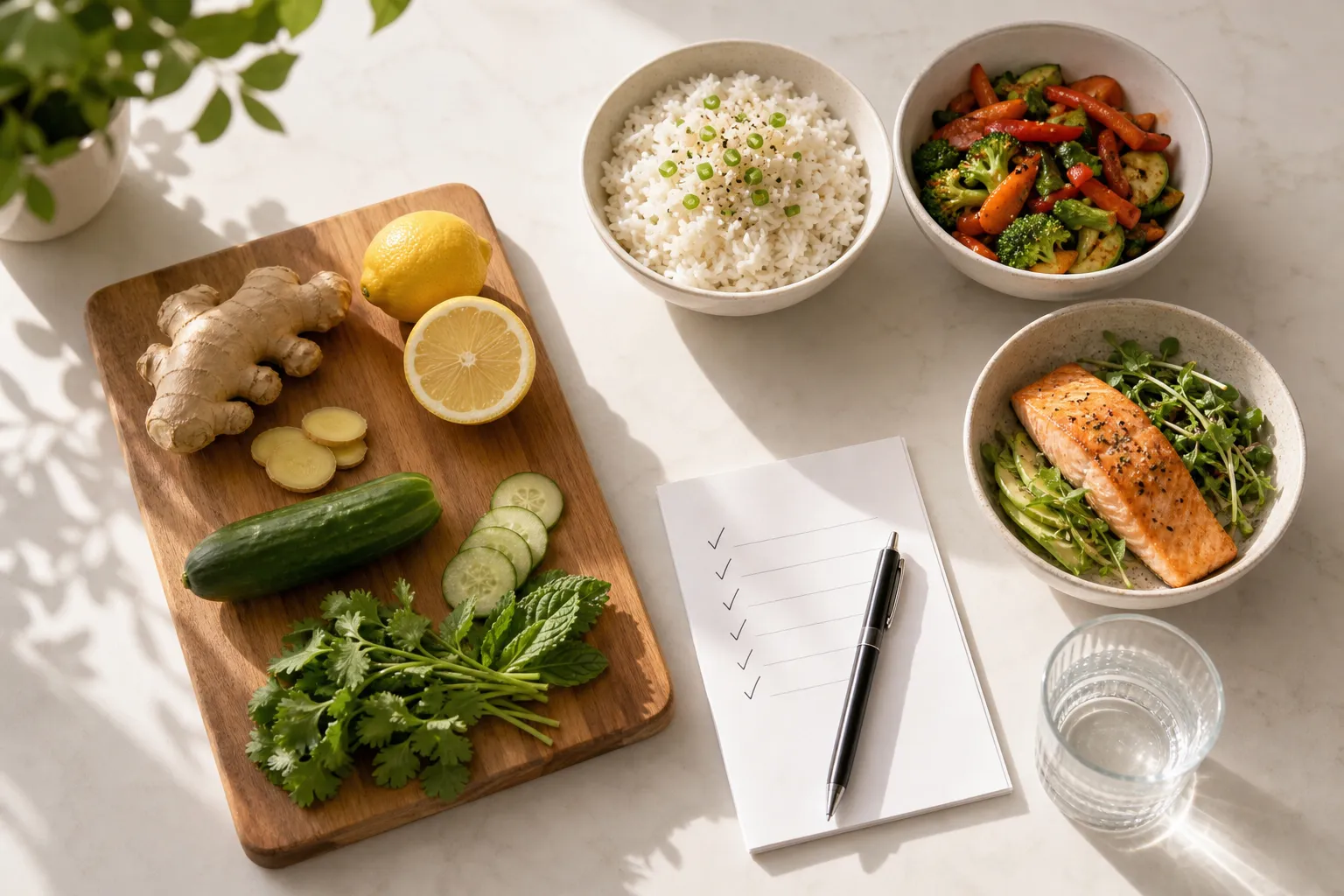
Feeling puffy after meals is annoying and distracting. You do not need a cleanse or bland food. You need a short reset that removes common triggers, keeps portions predictable, and gets you cooking simple, satisfying meals with minimal guesswork.
Debloating basics
Bloating is often about volume, speed, and fermentable carbs stacking up faster than your gut can process them. For three days, simplify inputs and support motility.
- Hydrate on purpose: 8 to 10 cups per day (about 2 to 2.5 liters). Add 1 to 2 mugs of ginger or peppermint tea. Steady fluids help move fiber and sodium along.
- Space meals: Aim for 3 to 4 hours between meals, with a 12-hour overnight fast. This gives the gut’s “clean-up wave” time to work.
- Chew slowly: 15 to 20 chews per bite and put the fork down between bites. Less swallowed air often equals less gas.
- Keep sodium modest: Shoot for under 2,000 mg per day for three days. Cooking at home and seasoning with citrus, herbs, and infused oils makes this easy.
- Move after you eat: A 10 to 20 minute walk improves motility and reduces that tight, stuck feeling.
- Finish dinner earlier: Wrap up 2 to 3 hours before bed so you are not lying down on a full stomach.
If you like structure, Homecooked helps you lock this in. Personalized Cookbooks apply your dietary preferences as a strict filter, rank recipes by your favorite cuisines and meal types, and factor in what is already in your kitchen. There are curated cookbooks for health goals like debloating and reducing inflammation, so you can pull a focused set of recipes in seconds.
Foods to include and limit
What to eat more of
- Cooked vegetables: Zucchini, carrots, spinach, potatoes, bok choy. Roast, steam, or sauté until fork-tender. Start with 1 to 2 cups cooked veg per meal.
- Lower-FODMAP fruits: Berries, citrus, kiwi, banana. Keep portions to 1 cup fruit or 1 medium piece at a time.
- Lean proteins: Eggs, chicken, fish, tofu, tempeh. Target 20 to 35 g protein per meal. Protein tends to be well tolerated and keeps you satisfied.
- Gentle grains: White rice, oats, sourdough bread. These are simple to digest and make a steady base. For oats, cook with extra water and a pinch of salt until silky.
- Soothers: Ginger, peppermint, fennel. Use as tea or seasonings. A thumb of fresh ginger simmered 10 minutes makes a calm, spicy brew.
- Dairy you tolerate: Lactose-free milk, kefir, yogurt, or aged cheeses like cheddar and Parmesan. Keep servings to 1 cup milk/kefir or 3 to 4 oz cheese.
What to press pause on
- Carbonated drinks: Bubbles add air. Choose still water, tea, or diluted citrus.
- Garlic and onion overload: Fructans in alliums ferment fast. Use garlic-infused oil to keep flavor without the fiber. Sauté whole crushed garlic in oil, remove it, then cook.
- Raw crucifers: Raw kale salads and raw broccoli are nutrient-dense but can be gassy. Cook until tender or swap for spinach or zucchini this week.
- Beans and lentils (if unaccustomed): They are great long term. Short term, choose canned lentils or chickpeas, rinse well, and keep to 1/2 cup.
- Sugar alcohols: Sorbitol, mannitol, xylitol are common in gum, mints, and protein bars. These pull water into the gut and cause gas for many.
- Ultra-processed, salty foods: They pile on sodium and additives that can leave you puffy.
- Heavy drinking: Alcohol can irritate the gut. If you drink, stick to a single serving and have it with food.
Add your staples to Homecooked’s Persistent Pantry. The app matches your pantry to every recipe and shows what you can cook now, what is one or two items away, and what is missing. That turns vague ideas into tonight’s dinner without extra shopping.
3-day sample menu
Use this as a template, not a strict diet. Adjust portions to hunger and activity. If you cook with Homecooked Smart Recipes, built-in timers and parallel steps stack passive simmering with active prep so dinner lands faster.
Day 1
- Breakfast: Creamy oats (1/2 cup dry) cooked with water, topped with 1 banana and 1 tbsp chia; ginger tea. Warm, soft fiber tends to sit better than a raw salad first thing.
- Lunch: Rice bowl with 1 cup cooked jasmine rice, 4 to 6 oz seared chicken, 1 cup sautéed zucchini and carrots, lemony olive oil and salt to taste.
- Dinner: Baked salmon (5 to 6 oz) with baby potatoes (1 cup) and wilted spinach (1 to 2 cups). Season with dill, lemon, and a drizzle of garlic-infused oil.
- Snacks: Lactose-free yogurt with 1/2 cup berries, rice cakes with 1 to 2 tbsp peanut butter, or peppermint tea.
Day 2
- Breakfast: 2 to 3 scrambled eggs with sautéed spinach and 1 to 2 slices sourdough toast. Add a kiwi if you want something sweet.
- Lunch: Turkey and cucumber sourdough sandwich with mustard. Side: baked sweet potato (1 medium) with olive oil and salt.
- Dinner: Ginger chicken stir-fry: sliced chicken, carrots, bok choy, and a splash of tamari over 1 cup jasmine rice. Use garlic-infused oil instead of chopped garlic.
- Snacks: 1 to 2 kiwis, a handful of walnuts, or 1 cup kefir if tolerated.
Day 3
- Breakfast: Smoothie with 1 cup lactose-free milk, 1 banana, a handful of spinach, and 2 tbsp oats. Blend until very smooth.
- Lunch: Tuna rice bowl: 1 can tuna, 1 cup rice, cucumber slices, nori, sesame, and a squeeze of lemon. Use tamari lightly for salt control.
- Dinner: Lemon herb chicken soup with rice and carrots. Think brothy and simple: shredded chicken, carrots, rice, parsley, lemon.
- Snacks: 1 cup berries, 1 to 2 oz cheddar with plain crackers, or fennel tea.
Time-savers with Homecooked: batch-cook 3 to 4 cups dry rice on Day 1 and reuse; roast extra carrots and potatoes on a sheet pan while salmon bakes; save your plan in Meal Planning, then adjust servings for anyone joining. Each finished cook is logged in Past Meals with the date, and you can add ratings, notes, and a photo for quick recall.
Shopping checklist
A clear list keeps you out of the snack aisle and trims waste. Homecooked turns your plan into an Automatic Grocery List, subtracts what is in your pantry, groups items by category, and lets you check them off or add your own.
- Produce: Bananas (6), berries (2 pints), lemons (3), fresh ginger (1 large knob), spinach (2 large bags), zucchini (4), carrots (2 lbs), cucumbers (2), baby potatoes (2 lbs), sweet potatoes (3), bok choy (2 heads), parsley (1 bunch).
- Proteins: Eggs (1 dozen), chicken thighs or breasts (2 to 3 lbs), salmon fillet (1 to 1.5 lbs), canned tuna (3 cans), sliced turkey (1/2 lb), tofu or tempeh if preferred (14 to 16 oz).
- Grains and breads: Old-fashioned oats (1 lb), jasmine or basmati rice (2 to 3 lbs), sourdough bread (1 loaf), rice cakes, plain crackers.
- Dairy and alternatives: Lactose-free milk or kefir (1 to 2 quarts), lactose-free yogurt (32 oz), cheddar or other hard cheese (8 oz).
- Pantry and flavor: Olive oil, tamari, Dijon mustard, garlic-infused oil, low-sodium broth (2 to 3 quarts), sesame seeds, peppermint and fennel tea, lemons for brightness.
Before you shop, fill your Persistent Pantry in Homecooked. The app will subtract what you already have from your Automatic Grocery List so you only buy what you actually need.
Track and adjust
- Log what you cook and how it felt: In Homecooked, every finished recipe is saved to Past Meals with the date. Add a rating, notes like “felt great, no bloat,” and a quick photo.
- Use a simple bloat scale: 0 = flat, 1 = mild, 2 = moderate, 3 = tight and uncomfortable. Mark it once a day at the same time.
- Capture context: Note if you ate fast, ate late, had carbonated drinks, or tried a new food. Patterns appear within a week.
- Reintroduce thoughtfully: After three days, add back one potential trigger at a time at lunch. Watch your bloat score for 24 hours before adding another.
- Prefer visuals over notes: If you like recording your process for personal reference, try a polished product demo video maker for Mac to capture your screen while you plan or cook. It supports automatic zoom and pan, smooth cursor paths, styled backgrounds, and high-quality exports so you can review steps later without guessing.
Key takeaways
- Keep meals simple, cooked, and low on common gas triggers for three days while you hydrate and take short walks.
- Use Homecooked to build a Personalized Cookbook and plan the week, then auto-generate a Grocery List that skips what is already in your pantry.
- Cook with Smart Recipes to save time, log Past Meals with notes, and reintroduce foods one by one to learn what actually helps your body.
Short, thoughtful changes beat drastic overhauls. Follow the checklist, cook from a simple plan, and pay attention to how you feel. In a few days you will have clear dinner ideas that work for you and a plan you can keep refining.