Agedashi Tofu
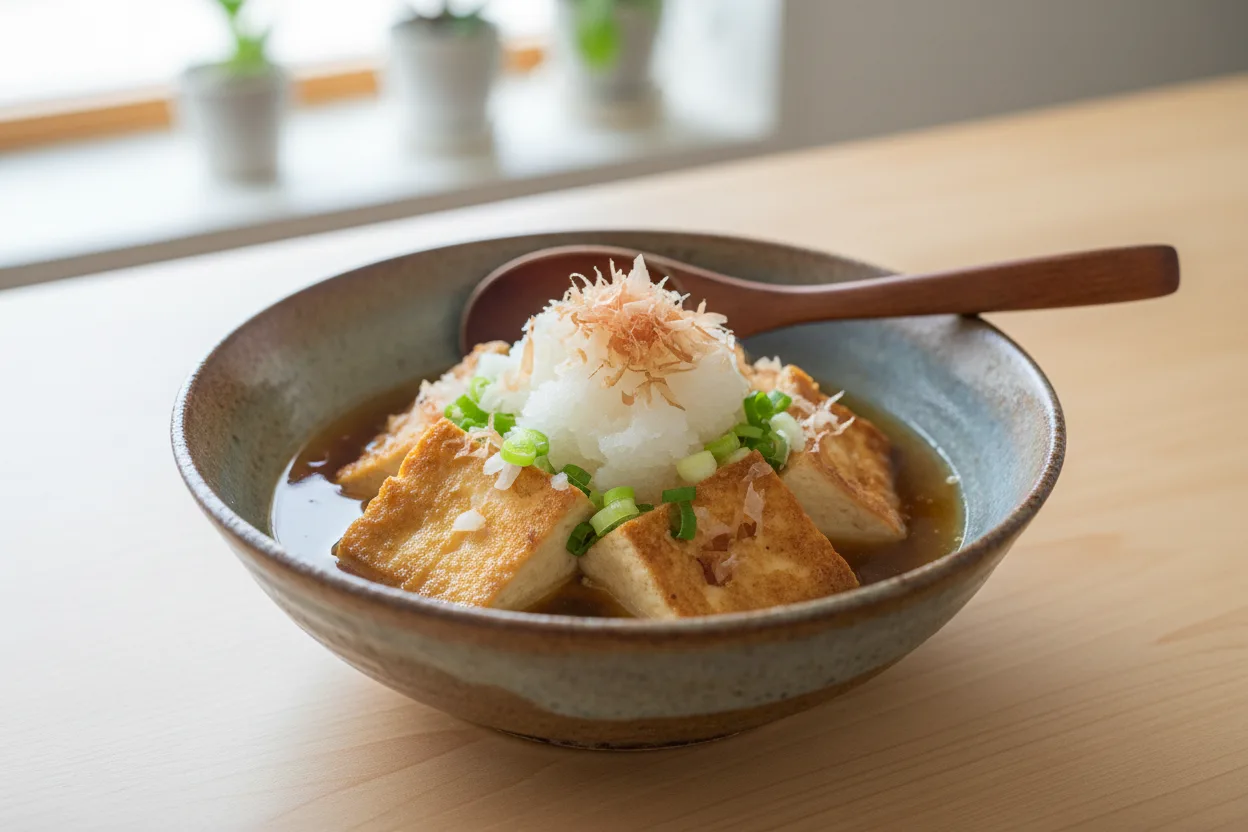
Silken tofu dusted in potato starch, deep-fried light, served in warm dashi-soy-mirin sauce.
Ingredients
- 400 g Silken tofu
- 60 g Potato starch
- 800 ml Neutral oil
- 5 g Kombu (dried kelp)
- 8 g Katsuobushi (bonito flakes)
- 2 tbsp Japanese soy sauce (koikuchi shoyu)
- 2 tbsp Mirin
- 80 g White radish (optional)
- 1 Scallions (optional)
- 10 g Ginger (optional)
Method
- Drain the tofu on a plate lined with kitchen paper, weighting it lightly if you can, then cut into cubes.
- Soak the kombu in a pot of cold water to make the base for the dashi (a kombu-and-bonito stock).
- Bring the kombu water over medium-low just to the first bubbles, then lift the kombu out. Take off the heat, add the bonito flakes, let them steep briefly, then strain the dashi.
- In a saucepan combine the dashi, soy, and mirin. Simmer briefly, then keep warm.
- Grate the daikon and ginger and squeeze out the excess liquid. Slice the scallions thin.
- Heat the neutral oil in a Dutch oven to 180C (355F).
- Pat the tofu dry once more. Roll the cubes in the potato starch and dust off the excess.
- Lower the tofu into the oil with a spider. Fry until pale gold and crisp, then lift onto a rack.
- Place the tofu cubes in bowls. Pour the warm sauce around them (not over — keep the crust). Mound grated daikon and ginger on top and scatter scallions.
Tap “Start cooking” for live timers that flag what to get ahead on while something simmers.
About Agedashi Tofu
Agedashi tofu is one of the great small plates of Japanese cooking — an izakaya and home-kitchen staple that turns something as plain as tofu into a study in contrast. Cubes of silken tofu are dusted in potato starch and fried just long enough to set a thin, delicate crust, then set into a shallow pool of warm dashi seasoned with soy and mirin. The result reads as an appetizer but eats like comfort food, the sort of dish that appears early in a meal alongside sake and a few other bites.
What defines this version is that it builds the sauce from scratch, steeping kombu and katsuobushi into a proper dashi rather than reaching for a bottle — and that homemade stock is where all the savory depth comes from, that clean smoky-oceanic backbone under the soy and mirin. The eating experience hinges on speed and contrast: the fried coating stays crisp for only a moment against the broth, so each cube gives you a whisper of crunch collapsing into custard-soft tofu underneath. The traditional garnishes do real work too — grated daikon squeezed dry to lighten and freshen each bite, with ginger and thinly sliced scallion cutting through the richness. Handle the tender tofu gently and serve it the moment it's assembled.
Agedashi Tofu: frequently asked questions
How many calories are in Agedashi Tofu?
A serving has about 306 calories — 10.5g protein, 16.7g carbs, 22.1g fat, 1.7g fiber. Figures are estimated from the ingredient amounts and will shift with your portions and brands.
Is Agedashi Tofu gluten-free?
As written, no — it contains Japanese soy sauce (koikuchi shoyu). You'd need a certified gluten-free swap for that ingredient to make it gluten-free.
How long does Agedashi Tofu take to make?
About 35 minutes start to finish, but only around 20 of those are hands-on — the rest is largely unattended cooking time you can step away from. In the Homecooked app the timers and parallel steps are sequenced for you so the hands-on part feels even shorter.
Do I need every ingredient to make Agedashi Tofu?
The core ingredients are essential, but you can leave out white radish, scallions, ginger — they're optional and mainly there for extra flavor or finish.
How many servings does Agedashi Tofu make?
This recipe makes 4 servings. In the app you can scale it up or down and the ingredient amounts adjust automatically.