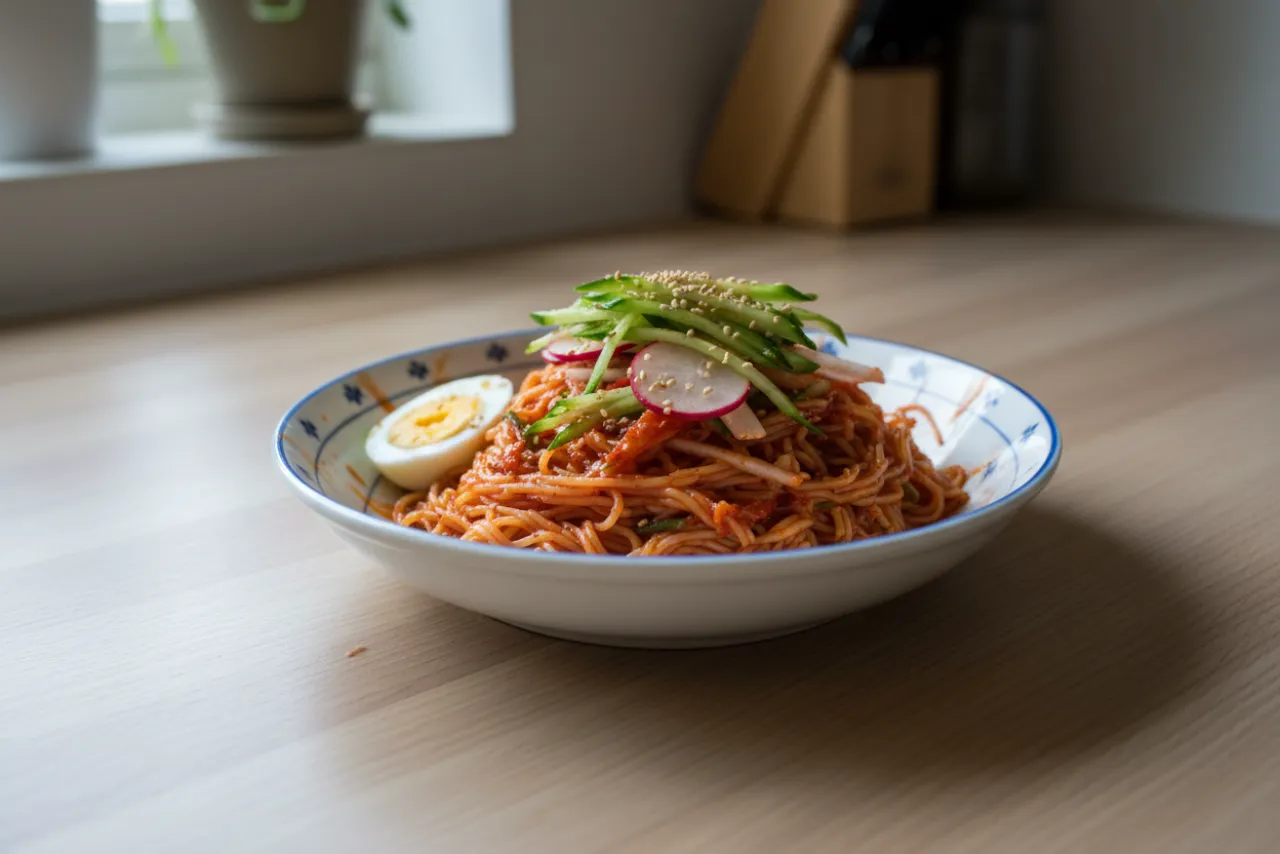
Bibim Guksu
Cold noodles tossed in a tangy-sweet gochujang sauce.
Ingredients
- 200 g Wheat noodles
- 1 Cucumber
- 100 g Kimchi
- 2 tbsp Gochujang
- 1 tsp Gochugaru
- 2 tbsp Rice vinegar
- 1 tbsp Toasted sesame oil
- 1 tbsp Sugar
- 1 tsp Sesame seeds (optional)
Method
- Bring a pot of water to a boil. Add the noodles and cook per package, then chill under cold water and drain well.
- While the noodles boil: julienne the cucumber and chop the kimchi.
- While the noodles boil: whisk the gochujang, gochugaru, vinegar, sesame oil, and sugar into a sauce.
- Toss the noodles with the sauce, cucumber, and kimchi.
- Top with sesame seeds and serve cold.
Tap “Start cooking” for live timers that flag what to get ahead on while something simmers.
About Bibim Guksu
Bibim guksu is a Korean cold noodle dish whose name literally means "mixed noodles," and it belongs to the family of quick, sauce-forward summer foods Koreans turn to when it's too hot to eat anything warm. Thin wheat noodles (somyeon) are boiled, then shocked and rinsed under cold water until they're springy and completely chilled, which is what gives the dish its clean, slippery bite. The sauce is the heart of it: gochujang for depth and fermented funk, gochugaru for direct chili heat, rice vinegar for a sharp lift, and a little sugar and toasted sesame oil to round everything into a tangy-sweet, glossy coat. Kimchi and julienned cucumber fold in raw, so every forkful carries sour crunch alongside the noodles.
The pleasure of bibim guksu is contrast. Cold and springy noodles against a warm-flavored sauce, the vinegar's acidity cutting the chili's sweetness, and the cucumber's fresh snap breaking up the soft tangle. It reads spicy but stays refreshing rather than heavy, which is why it works as a fast lunch or a light dinner and pairs naturally with grilled meat or a simple soup on the side. This version comes together in under twenty minutes, and the method is smart about it: the sauce gets whisked and the vegetables cut while the noodles boil, so everything meets at the same moment. Because it's tossed just before serving and eaten cold, it's also forgiving to make ahead, keeping its texture as long as the noodles are drained well.
Bibim Guksu: frequently asked questions
What's the difference between bibim guksu and bibim naengmyeon?
Both are Korean cold noodle dishes tossed in a spicy-sweet-tangy gochujang-based sauce, but the key difference is the noodle. Bibim guksu uses thin wheat-flour somyeon (somen) noodles, while bibim naengmyeon uses the chewy, springy buckwheat-and-starch noodles characteristic of naengmyeon. Bibim guksu is generally a lighter, everyday summer dish, whereas bibim naengmyeon (a spicy, brothless version of naengmyeon) has a firmer, more elastic bite and is often served as a restaurant specialty.
How many calories are in Bibim Guksu?
A serving has about 548 calories — 16g protein, 96.5g carbs, 10.7g fat, 6g fiber. Figures are estimated from the ingredient amounts and will shift with your portions and brands.
Is Bibim Guksu gluten-free?
As written, no — it contains Wheat noodles, Gochujang. You'd need a certified gluten-free swap for those ingredients to make it gluten-free.
How long does Bibim Guksu take to make?
About 18 minutes start to finish, but only around 9 of those are hands-on — the rest is cooking time. In the Homecooked app the timers and parallel steps are sequenced for you so the hands-on part feels even shorter.
Do I need every ingredient to make Bibim Guksu?
The core ingredients are essential, but you can leave out sesame seeds — they're optional and mainly there for extra flavor or finish.
How many servings does Bibim Guksu make?
This recipe makes 2 servings. In the app you can scale it up or down and the ingredient amounts adjust automatically.