Bibimbap
Korean rice bowl with vegetables, beef & egg
Ingredients
- 400 g Japanese short-grain rice
- 200 g Beef flank steak
- 150 g Spinach
- 1 Carrot
- 150 g Button mushrooms
- 100 g Bean sprouts
- 2 Egg
- 3 tbsp Gochujang
- 3 tbsp Toasted sesame oil
- 2 tbsp Light soy sauce
- 2 cloves Garlic
- 2 tbsp Neutral oil
- 1 tsp Salt
Method
- Rinse the rice and cook it in twice its volume of water, covered, until tender and the water is absorbed, about 15 minutes.
- While the rice cooks, julienne the carrot and slice the mushrooms; mince the garlic.
- Blanch the spinach and bean sprouts, then season each separately with sesame oil, garlic, and salt.
- Stir-fry the carrot and mushroom separately in the neutral oil to keep their colour.
- Slice the flank steak thinly against the grain, then stir-fry with the soy until just cooked through.
- Fry the eggs sunny-side up.
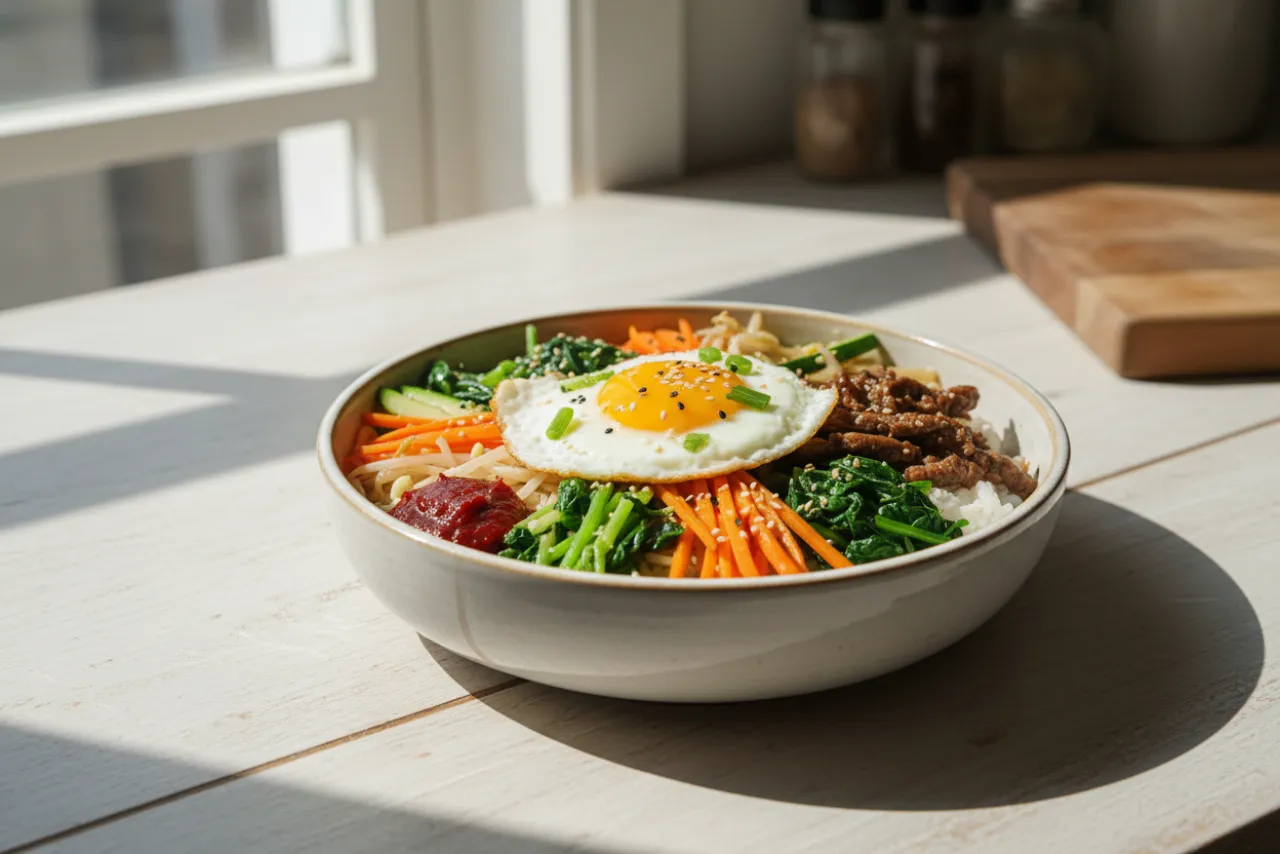
- Mound the rice in bowls and arrange the toppings, egg, and gochujang to mix at the table.
Tap “Start cooking” for live timers that flag what to get ahead on while something simmers.
About Bibimbap
Bibimbap is one of Korea's defining rice dishes, its name meaning "mixed rice," and it's built as a composed bowl rather than a single stew: a bed of short-grain rice arranged with an array of individually seasoned vegetables, thin-sliced beef, a fried egg, and a spoonful of gochujang to bring it together. What makes it distinctive is that each component is cooked and dressed on its own before assembly. Spinach and bean sprouts are blanched and seasoned separately with sesame oil and garlic, the carrot and mushroom are stir-fried apart so their colors stay bright, and the flank steak is sliced against the grain and quickly cooked in soy. The result is a bowl where every stripe tastes like itself.
Eating bibimbap is an act of destruction in the best way: you break the runny yolk and stir the gochujang through everything until the neat arrangement collapses into a warm, savory, gently spicy tangle. The textures are the appeal, chewy rice against crisp-tender vegetables, silky egg, and beef, with sesame running through the whole thing. It's a satisfying centerpiece for lunch or dinner and a classic way to use up seasoned vegetable side dishes. This four-serving version times the rice to cook while you prep the toppings and keeps the vegetables separate through cooking, which is the detail that gives real bibimbap its clarity of flavor rather than a muddled mix. Adjust the gochujang at the table to set your own heat.
Bibimbap: frequently asked questions
How many calories are in Bibimbap?
A serving has about 468 calories — 20.3g protein, 40.5g carbs, 25.2g fat, 3.1g fiber. Figures are estimated from the ingredient amounts and will shift with your portions and brands.
Is Bibimbap gluten-free?
As written, no — it contains Gochujang, Light soy sauce. You'd need a certified gluten-free swap for those ingredients to make it gluten-free.
How long does Bibimbap take to make?
About 50 minutes start to finish, but only around 33 of those are hands-on — the rest is largely unattended cooking time you can step away from. In the Homecooked app the timers and parallel steps are sequenced for you so the hands-on part feels even shorter.
How many servings does Bibimbap make?
This recipe makes 4 servings. In the app you can scale it up or down and the ingredient amounts adjust automatically.