Bossam
Tender boiled pork belly to wrap in lettuce with condiments.
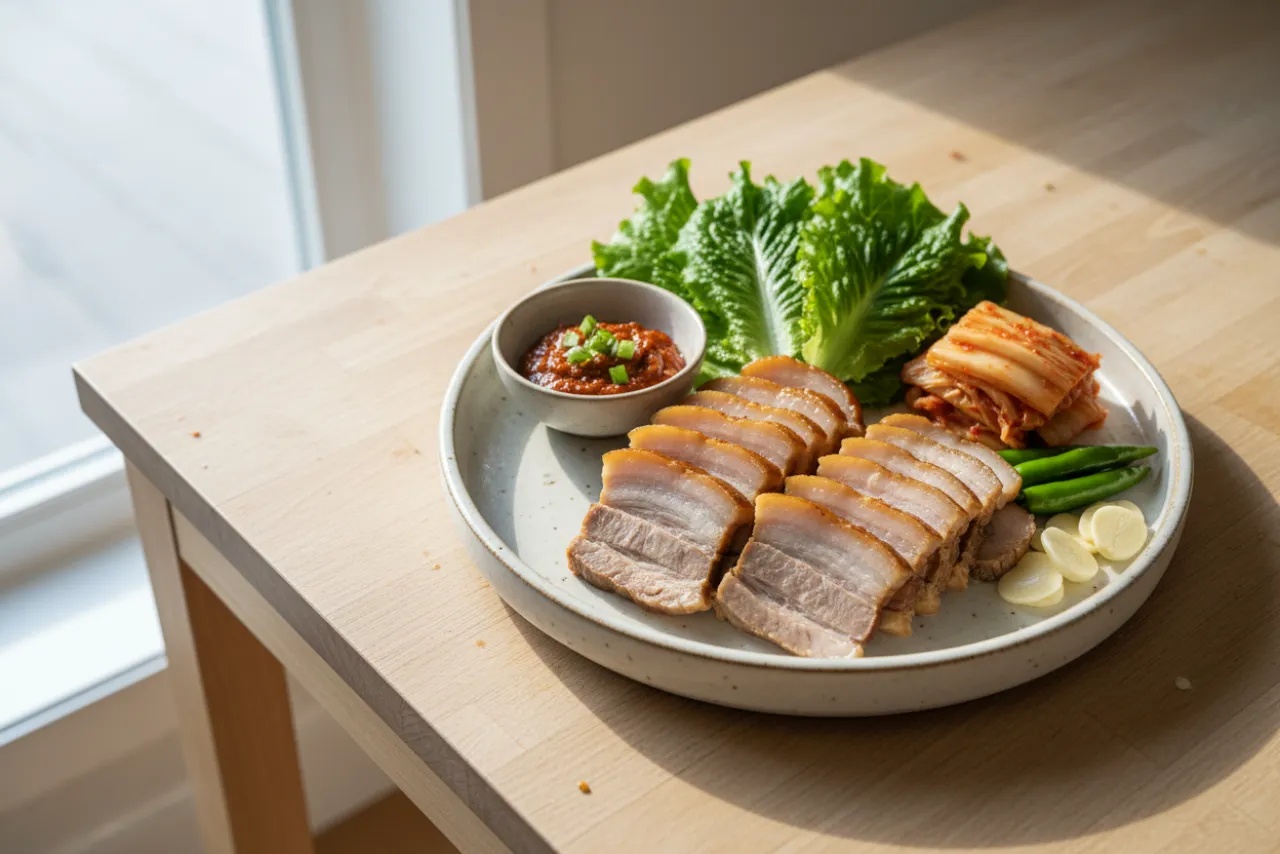
Ingredients
- 1200 g Pork belly
- 2 tbsp Doenjang
- 1 Ginger
- 6 cloves Garlic
- 1 head Romaine lettuce
- 200 g Kimchi
- 1 tbsp Salt
- 4 Scallions (optional)
Method
- Smash the ginger and garlic.
- Simmer the pork belly with the doenjang, ginger, garlic, scallions, and salt in a covered pot until very tender, about 70 minutes.
- Rest the pork briefly, then slice it thick.
- Serve with lettuce leaves and kimchi for wrapping.
Tap “Start cooking” for live timers that flag what to get ahead on while something simmers.
About Bossam
Bossam is a Korean dish of pork belly gently boiled until meltingly tender, then sliced and served for wrapping in lettuce leaves. Rather than the char of grilled pork, bossam goes for a clean, soft succulence: the belly simmers in a covered pot with doenjang (fermented soybean paste), ginger, garlic, and scallions, aromatics that tame any porkiness and season the meat from the outside in. It's often associated with communal, celebratory eating and, historically, with kimjang, the seasonal making of kimchi.
At the table, bossam is interactive and fresh-tasting. You take a lettuce leaf, add a slice of the rich, tender pork, then pile on kimchi and whatever condiments are offered, and eat it as a little hand-wrapped bundle. The contrast is the whole point — unctuous, mild pork against the crunch of the lettuce and the sour, spicy bite of kimchi — so each wrap resets the palate for the next. Boiling rather than roasting keeps the belly luscious and lean-tasting, and because it feeds a crowd, bossam is well suited to a gathering where everyone builds their own bites.
Bossam: frequently asked questions
What's the difference between bossam and suyuk?
Both are Korean dishes of pork belly (or shoulder) that is simmered/boiled whole in aromatics and then sliced, so the meat itself is prepared almost identically. The key difference is that "suyuk" is the general term for the boiled sliced meat on its own, while "bossam" refers to the full assembled dish where those slices are wrapped (the name means "wrapped") in leaves like napa cabbage or perilla along with condiments such as saeu-jeot (salted shrimp), ssamjang, garlic, and often a spicy radish or oyster kimchi. In short, suyuk is the meat; bossam is suyuk served as a wrap-it-yourself spread.
How many calories are in Bossam?
A serving has about 812 calories — 16.2g protein, 6.3g carbs, 80.1g fat, 2.5g fiber. Figures are estimated from the ingredient amounts and will shift with your portions and brands.
Is Bossam gluten-free?
As written, no — it contains Doenjang. You'd need a certified gluten-free swap for that ingredient to make it gluten-free.
How long does Bossam take to make?
About 90 minutes start to finish, but only around 14 of those are hands-on — the rest is largely unattended cooking time you can step away from. In the Homecooked app the timers and parallel steps are sequenced for you so the hands-on part feels even shorter.
Do I need every ingredient to make Bossam?
The core ingredients are essential, but you can leave out scallions — they're optional and mainly there for extra flavor or finish.
How many servings does Bossam make?
This recipe makes 8 servings. In the app you can scale it up or down and the ingredient amounts adjust automatically.