Chicken Karaage
Japanese-style fried chicken
Ingredients
- 800 g Chicken thighs
- 3 tbsp Japanese soy sauce (koikuchi shoyu)
- 2 tbsp Sake
- 1 tbsp Mirin
- 25 g Ginger
- 3 cloves Garlic
- 100 g Potato starch
- 1000 ml Neutral oil
- 1 tsp Toasted sesame oil (optional)
- 1 Lime (optional)
- 4 tbsp Kewpie mayonnaise (optional)
Method
- Cut the chicken into bite-sized pieces, leaving the skin on if you like extra crisp.
- Grate the ginger and garlic and mix with the soy, sake, mirin, and toasted sesame oil to make the marinade. Turn the chicken through it to coat, then cover and rest at least 20 minutes, or refrigerate up to 4 hours for deeper flavour.
- Heat the neutral oil in a deep, heavy pan to 160C (320F).
- While the oil heats, lift the marinated chicken out and let the excess drip off. Roll each piece in the potato starch and pat off any loose powder, then let the coated pieces sit briefly so the starch turns slightly damp and clings well.
- First fry: drop the chicken in batches into the 160C (320F) oil and cook until pale gold and just done. Lift onto a rack.
- Bring the oil up to 190C (375F). Second fry: drop the chicken back in batches and cook until deep amber and shatter-crisp. Drain on the rack.
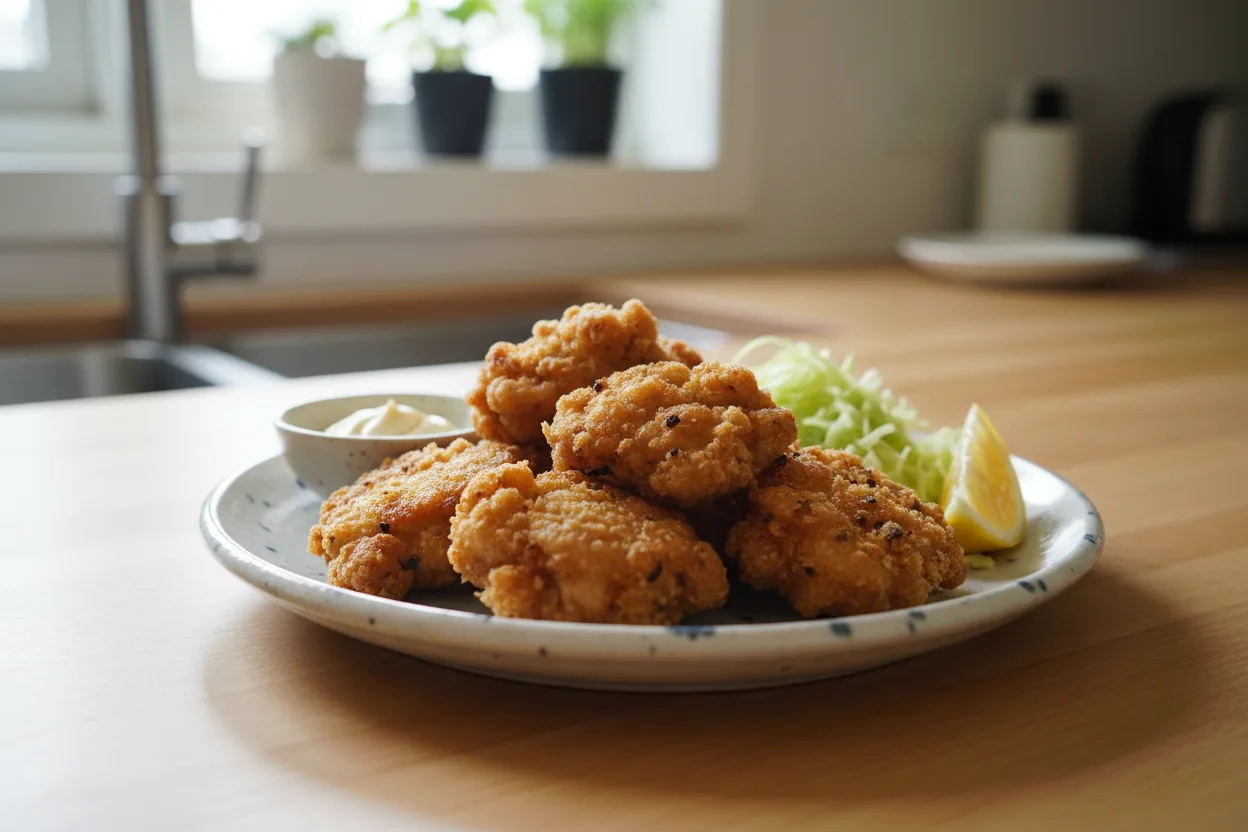
- Pile onto a plate. Cut the lime into wedges and tuck them in. Add a squirt of Kewpie on the side if using.
Tap “Start cooking” for live timers that flag what to get ahead on while something simmers.
About Chicken Karaage
Chicken Karaage is Japan's beloved fried chicken, found everywhere from izakaya menus to home bento boxes, and it's defined as much by its marinade as by its crunch. Bite-sized pieces of thigh are steeped in a mixture of soy, sake, mirin, grated ginger, and toasted sesame oil, which seasons the meat right through and gives every bite a savory, faintly sweet depth before frying even begins. Potato starch, not flour, is the coating that sets karaage apart — it fries up into a shatteringly light, lacy crust rather than the thick batter of Western fried chicken.
The real secret to this version is the double fry: an initial cook at a lower temperature gently sets the meat, and a hotter second dip drives off surface moisture for a crust that stays crisp long after it leaves the oil. The result is juicy, well-seasoned thigh under a delicate, crackling shell, cut through by a squeeze of fresh lime. Serve it hot with a dollop of Kewpie mayonnaise for dipping, alongside cold beer or a bowl of rice. It's finger food at its most satisfying, equally at home as a party snack or the centerpiece of a casual dinner.
Chicken Karaage: frequently asked questions
How many calories are in Chicken Karaage?
A serving has about 722 calories — 35.2g protein, 23.6g carbs, 52.5g fat, 1.7g fiber. Figures are estimated from the ingredient amounts and will shift with your portions and brands.
Is it high in protein?
Each serving has about 35.2g of protein, roughly 20% of its calories.
Is Chicken Karaage gluten-free?
As written, no — it contains Japanese soy sauce (koikuchi shoyu). You'd need a certified gluten-free swap for that ingredient to make it gluten-free.
How long does Chicken Karaage take to make?
About 50 minutes start to finish, but only around 44 of those are hands-on — the rest is cooking time. In the Homecooked app the timers and parallel steps are sequenced for you so the hands-on part feels even shorter.
Do I need every ingredient to make Chicken Karaage?
The core ingredients are essential, but you can leave out toasted sesame oil, lime, kewpie mayonnaise — they're optional and mainly there for extra flavor or finish.
How many servings does Chicken Karaage make?
This recipe makes 4 servings. In the app you can scale it up or down and the ingredient amounts adjust automatically.