Pad Kee Mao
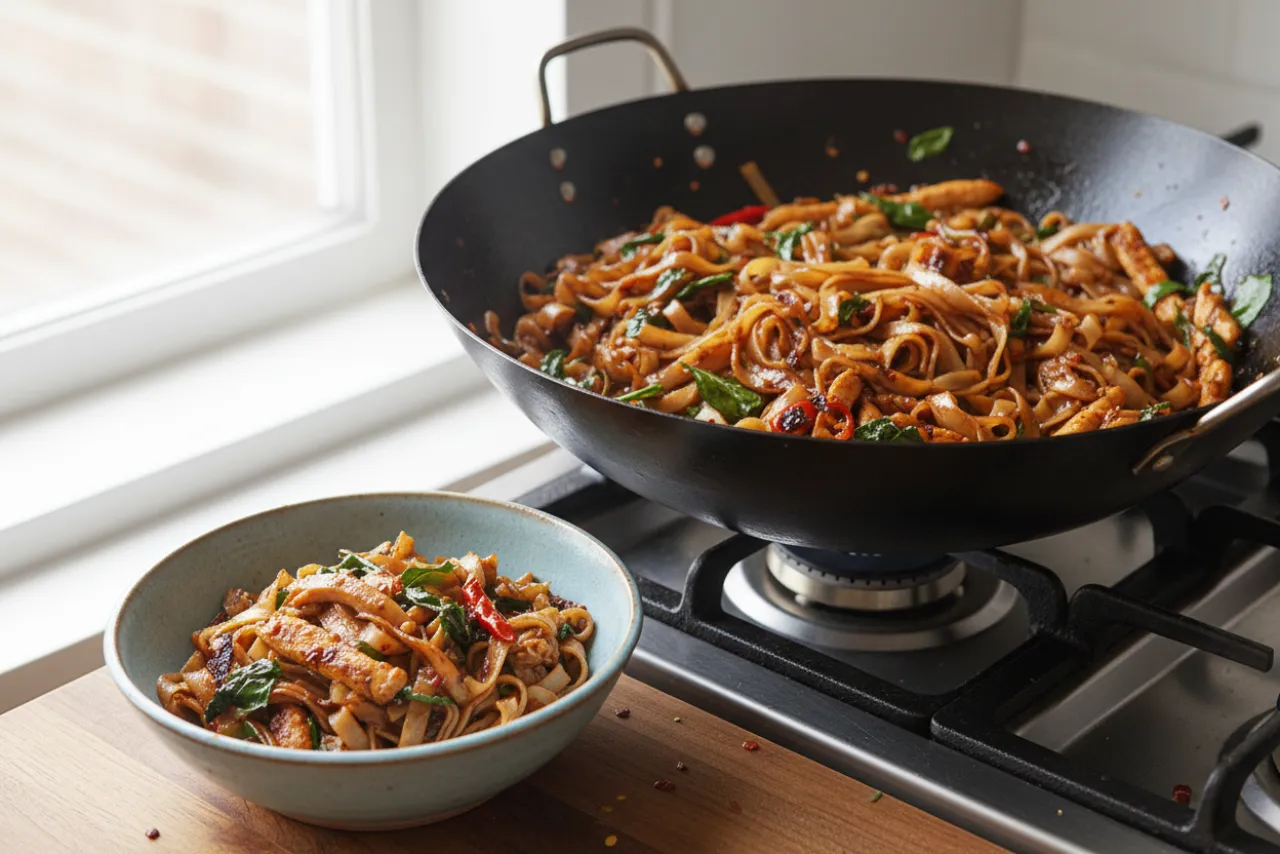
Spicy wide-noodle stir-fry with basil
Ingredients
- 300 g Flat rice noodles (he fen)
- 250 g Chicken
- 1 bunch Holy basil
- 4 cloves Garlic
- 4 Thai chilies
- 2 tbsp Dark soy sauce
- 2 tbsp Oyster sauce
- 1 tbsp Fish sauce
- 3 tbsp Neutral oil
- 1 tsp Sugar
- 1 Bell pepper (optional)
Method
- Slice the chicken and bell pepper and pound the garlic and Thai chilies to a rough paste.
- Whisk the dark soy sauce, oyster sauce, fish sauce, and sugar together into a sauce.
- Stir-fry the garlic, chili, and chicken in hot oil over high heat until the chicken is cooked through, then add the bell pepper.
- Add the rice noodles and the sauce and char over high heat until glossy and the noodles take on colour.
- Take the pan off the heat and fold in the holy basil so it just wilts.
- Serve at once.
Tap “Start cooking” for live timers that flag what to get ahead on while something simmers.
About Pad Kee Mao
Pad kee mao, better known in English as drunken noodles, is a fiery Thai stir-fry of wide flat rice noodles charred hard over high heat with chili, garlic, and holy basil. The name's "drunken" reputation has nothing to do with alcohol in the dish; it's the sort of bold, spicy food said to go well with a drink or to cut through a hangover. What defines it is the aggressive heat of the wok — the noodles are meant to take on smoky color and a glossy coat from a sauce of dark soy, oyster sauce, and fish sauce balanced with a little sugar.
The flavor is punchy and savory-sweet with a real kick from pounded Thai chilies, and the holy basil is essential: folded in off the heat at the very end so it just wilts, it releases a peppery, almost anise-like aroma that ordinary basil can't match. Chicken and bell pepper here make it a full meal, but the technique is the star — high heat, fast movement, and the noodles taking on char rather than steaming. It cooks in about 20 minutes and, like most stir-fries, is best served the moment it leaves the pan while the noodles are still smoky and the basil fragrant.
Pad Kee Mao: frequently asked questions
What's the difference between pad kee mao and pad see ew?
Both are Thai stir-fries built on wide, flat rice noodles (sen yai), but they differ in flavor and seasoning. Pad see ew is savory and slightly sweet, seasoned mainly with light and dark soy sauce and stir-fried with Chinese broccoli (gai lan) and egg, with no chili heat. Pad kee mao ("drunken noodles") is spicy and aromatic, built on fresh chilies, garlic, holy basil, and often fish sauce, with far less of the soy-sweet character.
What's the difference between pad kee mao and pad thai?
Both are Thai stir-fried rice-noodle dishes, but they differ in flavor and noodle type. Pad thai is mildly sweet-and-tangy, made with thin rice noodles tossed in a sauce of tamarind, fish sauce, and palm sugar, and finished with crushed peanuts, egg, bean sprouts, and lime. Pad kee mao ("drunken noodles") is savory and spicy rather than sweet, typically using wide flat rice noodles stir-fried with soy and oyster sauces, chili, garlic, and holy basil, with no tamarind or peanuts.
How many calories are in Pad Kee Mao?
A serving has about 707 calories — 24.3g protein, 88.2g carbs, 27.2g fat, 3g fiber. Figures are estimated from the ingredient amounts and will shift with your portions and brands.
Is Pad Kee Mao gluten-free?
As written, no — it contains Dark soy sauce, Oyster sauce. You'd need a certified gluten-free swap for those ingredients to make it gluten-free.
Do I need every ingredient to make Pad Kee Mao?
The core ingredients are essential, but you can leave out bell pepper — it's optional and mainly there for extra flavor or finish.
How many servings does Pad Kee Mao make?
This recipe makes 3 servings. In the app you can scale it up or down and the ingredient amounts adjust automatically.