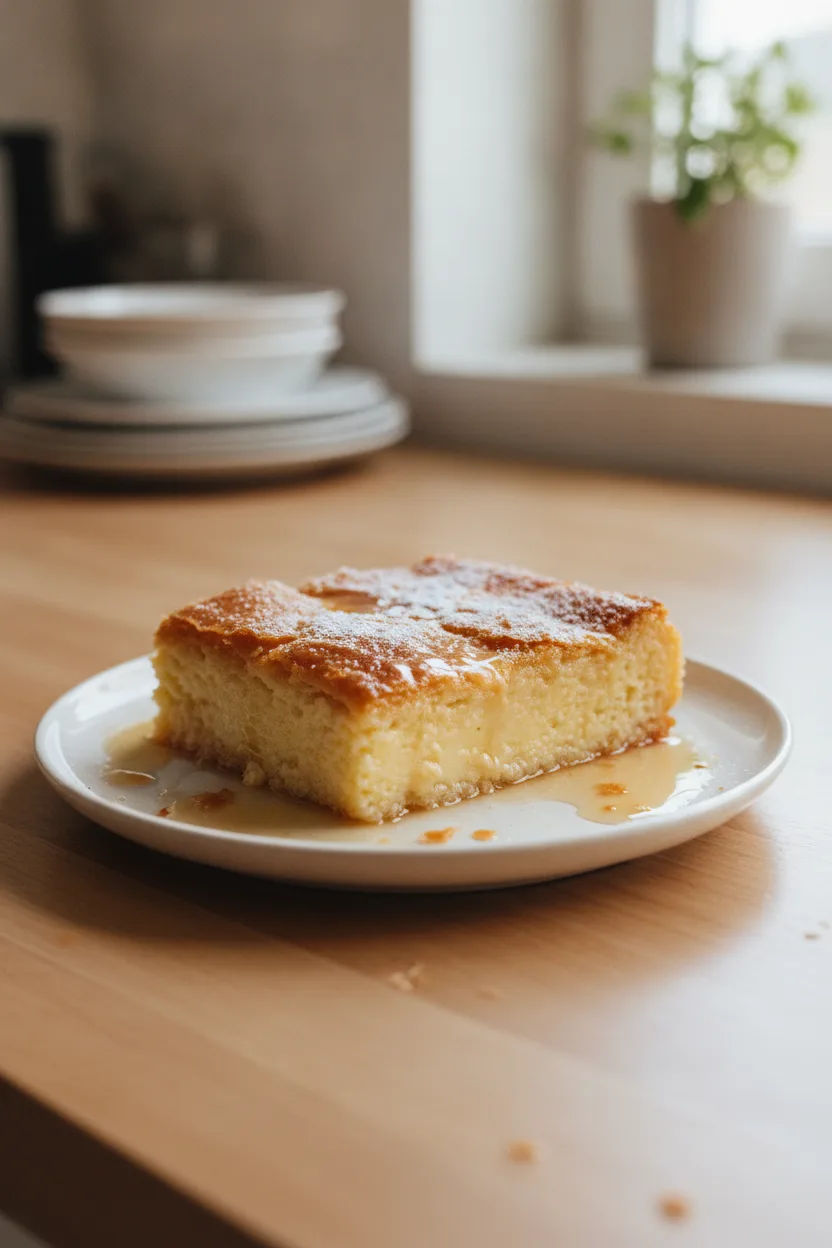
Galaktoboureko
Semolina custard baked in phyllo and soaked in syrup.
Ingredients
- 300 g Phyllo pastry
- 1000 ml Milk
- 150 g Semolina (rava)
- 4 Egg
- 150 g Butter
- 250 g Sugar
- 1 Lemon (optional)
Method
- Heat the oven to 180C (350F).
- Cook the milk, semolina, and half the sugar in a saucepan over medium heat, stirring, into a thick custard, then beat in the eggs.
- Layer buttered phyllo in a tray, pour in the custard, and fold the overhanging phyllo over the top.
- Bake until deep golden and set, about 45 minutes.
- While the pastry bakes, simmer the rest of the sugar with a splash of water and the lemon into a syrup, then let it cool.
- Pour the cool syrup over the hot pastry and let it soak before serving.
Tap “Start cooking” for live timers that flag what to get ahead on while something simmers.
About Galaktoboureko
Galaktoboureko is a Greek custard pie whose name comes from gala, milk, and boureki, a wrapped or filled pastry, and it stands among the cornerstones of Greek dessert alongside baklava. Unlike its nut-filled cousins, its heart is a soft semolina custard, thickened milk enriched with eggs and set inside layers of buttered phyllo, then baked until the pastry turns deep gold and shatteringly crisp. What makes it unmistakable is the finish: hot pastry meets cool lemon syrup so the top and edges stay crackly while the interior drinks up sweetness.
Eating it is a study in temperature and texture, the crisp buttery phyllo giving way to a smooth, faintly grainy custard scented with lemon, sweet but with the citrus keeping it from cloying. The one rule this version rightly insists on is pouring cool syrup over the hot pie rather than the reverse; that temperature gap is what lets the syrup soak in without turning the phyllo soggy, and it is the classic technique behind every good galaktoboureko. It is a celebration and holiday dessert in Greece, cut into generous squares and served at room temperature with coffee, and because it bakes in a single large tray it suits a crowd.
Galaktoboureko: frequently asked questions
What's the difference between galaktoboureko and bougatsa?
Both are Greek phyllo pastries built around a semolina custard, but galaktoboureko is a syrup-soaked dessert: the custard is wrapped in phyllo, baked, then drenched in sweet lemon- or orange-scented syrup, giving it a wet, sticky finish. Bougatsa is drier and not syrup-soaked; it's typically served warm for breakfast, often dusted with powdered sugar and cinnamon, and comes in savory versions too (cheese, minced meat) as well as the sweet custard one. In short, the defining difference is the syrup and dessert framing of galaktoboureko versus the drier, breakfast-oriented, multi-filling nature of bougatsa (strongly associated with Thessaloniki and Serres).
How many calories are in Galaktoboureko?
A serving has about 440 calories — 9.9g protein, 57g carbs, 19.4g fat, 1.2g fiber. Figures are estimated from the ingredient amounts and will shift with your portions and brands.
Is Galaktoboureko gluten-free?
As written, no — it contains Phyllo pastry, Semolina (rava). You'd need a certified gluten-free swap for those ingredients to make it gluten-free.
Is Galaktoboureko dairy-free?
Not as written — it uses Milk, Butter. Swapping those for a plant-based alternative makes it dairy-free.
How long does Galaktoboureko take to make?
About 80 minutes start to finish, but only around 33 of those are hands-on — the rest is largely unattended cooking time you can step away from. In the Homecooked app the timers and parallel steps are sequenced for you so the hands-on part feels even shorter.
Do I need every ingredient to make Galaktoboureko?
The core ingredients are essential, but you can leave out lemon — it's optional and mainly there for extra flavor or finish.
How many servings does Galaktoboureko make?
This recipe makes 10 servings. In the app you can scale it up or down and the ingredient amounts adjust automatically.