Pasta alla Gricia
Pasta with guanciale & pecorino
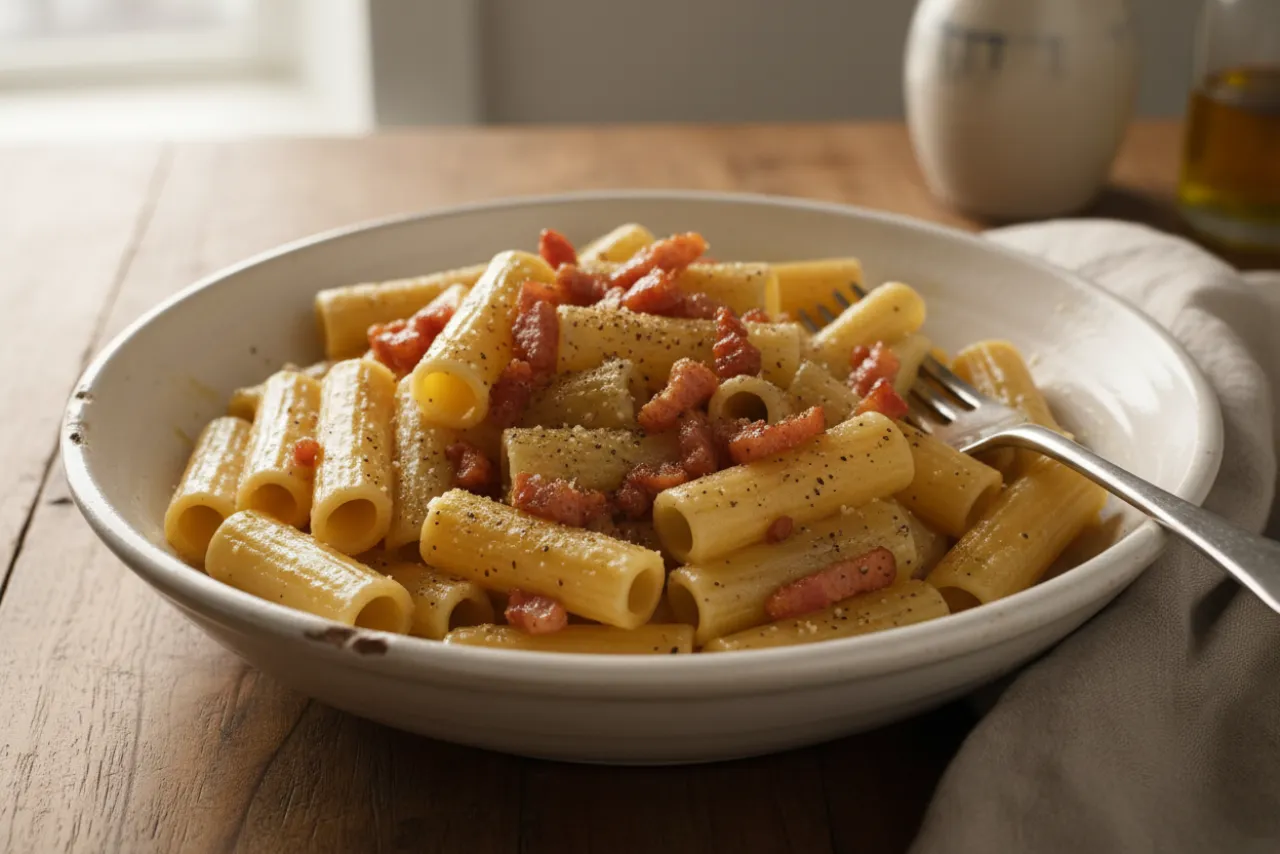
Ingredients
- 400 g Rigatoni
- 200 g Guanciale
- 120 g Pecorino Romano
- 1 tsp Black pepper
- 40 g Salt
Method
- Bring a pot of water to a boil. Salt lightly.
- Cut the guanciale into short batons.
- Grate the pecorino. Crack the pepper coarse.
- Render the guanciale in a cold skillet over medium-low until golden — about 8 min.
- Drop the rigatoni and cook one minute shy of al dente (firm to the bite).
- Reserve a mugful of pasta water, then drain.
- Tip the pasta into the skillet off heat with the guanciale. Toss with a splash of pasta water.
- Add the pecorino and pepper, tossing vigorously until creamy.
- Plate and finish with more pecorino.
Tap “Start cooking” for live timers that flag what to get ahead on while something simmers.
About Pasta alla Gricia
Pasta alla gricia is one of the four great pastas of Rome, and it is essentially carbonara without the egg or cacio e pepe with the addition of cured pork. It is built on just a handful of ingredients: guanciale, which is cured pork jowl, Pecorino Romano, black pepper, and pasta, here rigatoni. Often called the ancestor of carbonara, gricia is all about the interplay of rich rendered pork fat, sharp salty sheep's-milk cheese, and the bite of coarsely cracked pepper. The flavor is deep and savory, the texture glossy and clinging.
The technique is what makes or breaks it. The guanciale is rendered slowly in a cold skillet so its fat melts out and the batons turn golden and crisp without burning. The real skill is in the emulsion: off the heat, the pasta is tossed vigorously with grated pecorino and starchy reserved pasta water until the cheese and fat come together into a creamy sauce rather than seizing into clumps. Adding the cheese off the heat and controlling the water is essential, since pecorino curdles easily. The result is a plate of pure Roman comfort that proves how far a few excellent ingredients can go.
Pasta alla Gricia: frequently asked questions
What's the difference between pasta alla gricia and carbonara?
Both are Roman pasta dishes built on guanciale (cured pork jowl) and Pecorino Romano cheese, and neither traditionally uses cream. The key difference is that carbonara adds raw egg (usually yolks), which is beaten with the cheese and emulsified with pasta water to create a silky sauce, whereas gricia contains no egg at all—it's essentially "carbonara without the egg" (or, put another way, a white amatriciana without tomato). Both are typically finished with black pepper.
How many calories are in Pasta alla Gricia?
A serving has about 818 calories — 25.9g protein, 76.6g carbs, 44.4g fat, 3.5g fiber. Figures are estimated from the ingredient amounts and will shift with your portions and brands.
Is it high in protein?
Each serving has about 25.9g of protein, roughly 13% of its calories.
Is Pasta alla Gricia gluten-free?
As written, no — it contains Rigatoni. You'd need a certified gluten-free swap for that ingredient to make it gluten-free.
Is Pasta alla Gricia dairy-free?
Not as written — it uses Pecorino Romano. Swapping it for a plant-based alternative makes it dairy-free.
How many servings does Pasta alla Gricia make?
This recipe makes 4 servings. In the app you can scale it up or down and the ingredient amounts adjust automatically.