Horiatiki (Greek Village Salad)
Tomato, cucumber, onion, and olives under a slab of feta.
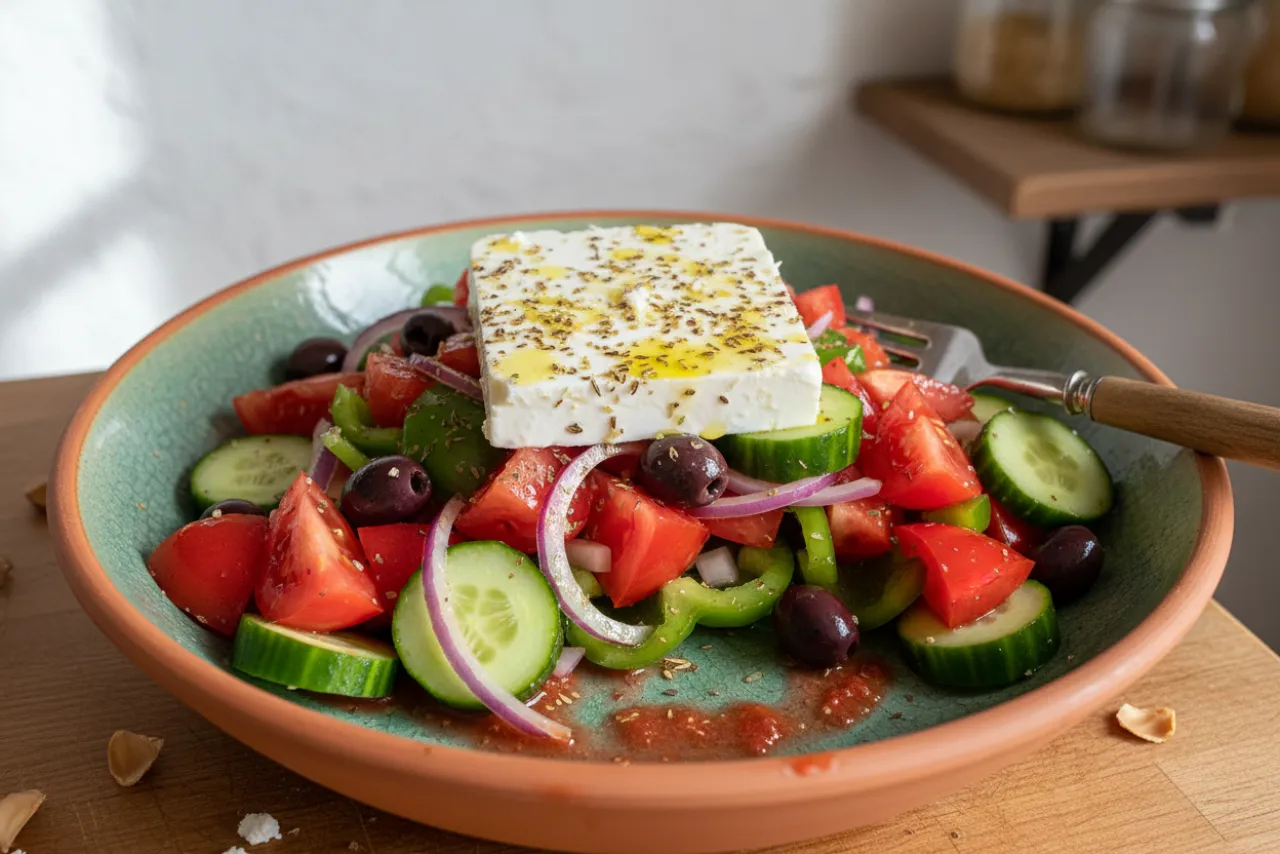
Ingredients
- 4 Tomato
- 1 Cucumber
- ½ Red onion
- 1 Green bell pepper
- 80 g Kalamata olives
- 200 g Feta
- 1 tsp Dried oregano
- 5 tbsp Extra-virgin olive oil
- 2 tbsp Red wine vinegar
- ½ tsp Salt
Method
- Cut the tomatoes into wedges and slice the cucumber, onion, and pepper.
- Whisk the olive oil, red wine vinegar, salt, and most of the oregano into a dressing, then toss with the vegetables and olives.
- Lay a slab of feta on top and dust with the last pinch of oregano to serve.
Tap “Start cooking” for live timers that flag what to get ahead on while something simmers.
About Horiatiki (Greek Village Salad)
Horiatiki, the Greek village salad, is the honest original behind what the rest of the world simplified into 'Greek salad.' The word means 'of the village,' and the dish is built from whatever a rural garden yields in summer: ripe tomatoes in thick wedges, cucumber, raw red onion, green pepper, and Kalamata olives. Notably there is no lettuce, and the feta arrives not crumbled but as a whole slab laid across the top and dusted with dried oregano. Dressed only with good olive oil, red wine vinegar, and salt, it is a study in restraint.
Eaten together, the salad is juicy, bright, and briny, with the sweetness of sun-warmed tomato playing against the sharp bite of raw onion and the salty tang of feta and olives. Because it comes together in barely ten minutes with no cooking, its quality lives entirely in the ingredients, so ripe tomatoes and a real block of feta matter more than technique. It is meant to be shared from the middle of the table, the tomato juices and oil pooling into a dressing that begs to be mopped up with bread. Serve it as a light lunch on its own or as the cooling counterpoint to grilled meat and fish.
Horiatiki (Greek Village Salad): frequently asked questions
What's the difference between horiatiki and Greek salad?
They're essentially the same dish — "horiatiki" (χωριάτικη, meaning "village" or "rustic" salad) is simply the Greek name for what English speakers call Greek salad. The main distinction is authenticity: a traditional horiatiki contains no lettuce, consisting of chunky tomatoes, cucumber, green pepper, red onion, olives, and a whole slab of feta on top, dressed only with olive oil, oregano, salt, and sometimes vinegar. Many Westernized "Greek salads" add lettuce and crumble the feta, which is why purists insist the lettuce-free horiatiki is the real thing.
How many calories are in Horiatiki (Greek Village Salad)?
A serving has about 364 calories — 9.2g protein, 14.5g carbs, 30.9g fat, 3.3g fiber. Figures are estimated from the ingredient amounts and will shift with your portions and brands.
Is Horiatiki (Greek Village Salad) gluten-free?
Based on its ingredients, Horiatiki (Greek Village Salad) has no gluten-containing components, so it's naturally gluten-free — as always, check that any packaged ingredients you use are certified gluten-free to be safe.
Is Horiatiki (Greek Village Salad) dairy-free?
Not as written — it uses Feta. Swapping it for a plant-based alternative makes it dairy-free.
How many servings does Horiatiki (Greek Village Salad) make?
This recipe makes 4 servings. In the app you can scale it up or down and the ingredient amounts adjust automatically.