Katsudon
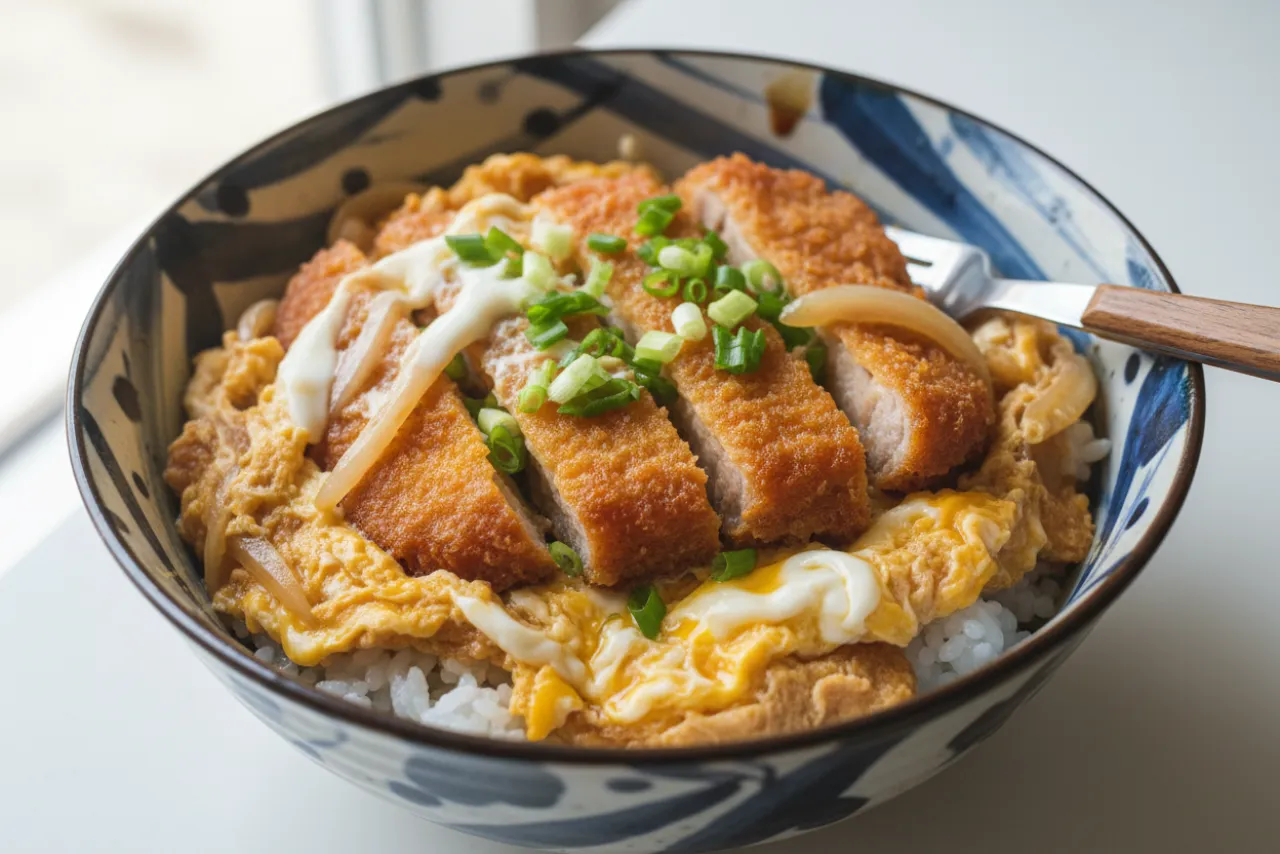
Pork cutlet and onion simmered in dashi and egg over rice.
Ingredients
- 300 g Pork loin
- 100 g Panko
- 4 Egg
- 1 Onion
- 400 g Japanese short-grain rice
- 1 Kombu (dried kelp)
- 3 tbsp Japanese soy sauce (koikuchi shoyu)
- 2 tbsp Mirin
- 200 ml Neutral oil
- 1 tbsp Sugar
Method
- Rinse the rice and cook it in twice its volume of water, covered, until tender and the water is absorbed, about 15 minutes.
- While the rice cooks, pound the pork thin, then dip each piece in beaten egg and coat all over in panko.
- Heat the neutral oil in a deep pan to 175C and deep-fry the cutlets until golden and crisp, about 6 minutes, then drain on a rack and slice.
- While the cutlets fry, slice the onion thin.
- While the cutlets fry, set the kombu in a small pan of water on a second burner over low heat. Bring to a bare simmer (do not boil), pull the kombu out, then take it off the heat and stir in the soy, mirin, and sugar.
- Simmer the onion in the broth until soft, lay the sliced cutlet on top, then pour the beaten egg over in a swirl and cover until it sets softly.
- Slide the cutlet and egg over the hot rice and serve.
Tap “Start cooking” for live timers that flag what to get ahead on while something simmers.
About Katsudon
Katsudon is the archetypal Japanese comfort bowl: a panko-crumbed pork cutlet simmered with sliced onion in a sweet dashi broth, bound with a loosely set egg, and served over steaming short-grain rice. The broth here is built from a gentle kombu dashi seasoned with soy, mirin and a touch of sugar, giving the characteristic balance of salty, sweet and umami that soaks down into both the cutlet and the rice below. The pork is fried crisp first, then sliced and slid into the broth just long enough to take on flavour before beaten egg is poured over and cooked only until softly set — never dry.
On the plate it's rich and homey, all soft textures against the last-standing crunch of the crumb: silky egg, sweet onion melting into the dashi, and broth-soaked rice at the base. Katsudon is quick everyday food in Japan and carries a cheerful superstition — its name echoes katsu, to win — so it's often eaten for luck before a big day. The strength of this version is its sequencing: rice and dashi come together while the cutlet fries, and the egg is added last off assertive heat, which keeps the omelette custardy and the whole bowl assembled at its best moment.
Katsudon: frequently asked questions
How many calories are in Katsudon?
A serving has about 1039 calories — 59.2g protein, 109.3g carbs, 38.2g fat, 4.2g fiber. Figures are estimated from the ingredient amounts and will shift with your portions and brands.
Is it high in protein?
Each serving has about 59.2g of protein, roughly 23% of its calories.
Is Katsudon gluten-free?
As written, no — it contains Panko, Japanese soy sauce (koikuchi shoyu). You'd need a certified gluten-free swap for those ingredients to make it gluten-free.
How many servings does Katsudon make?
This recipe makes 2 servings. In the app you can scale it up or down and the ingredient amounts adjust automatically.