Korean Fried Chicken
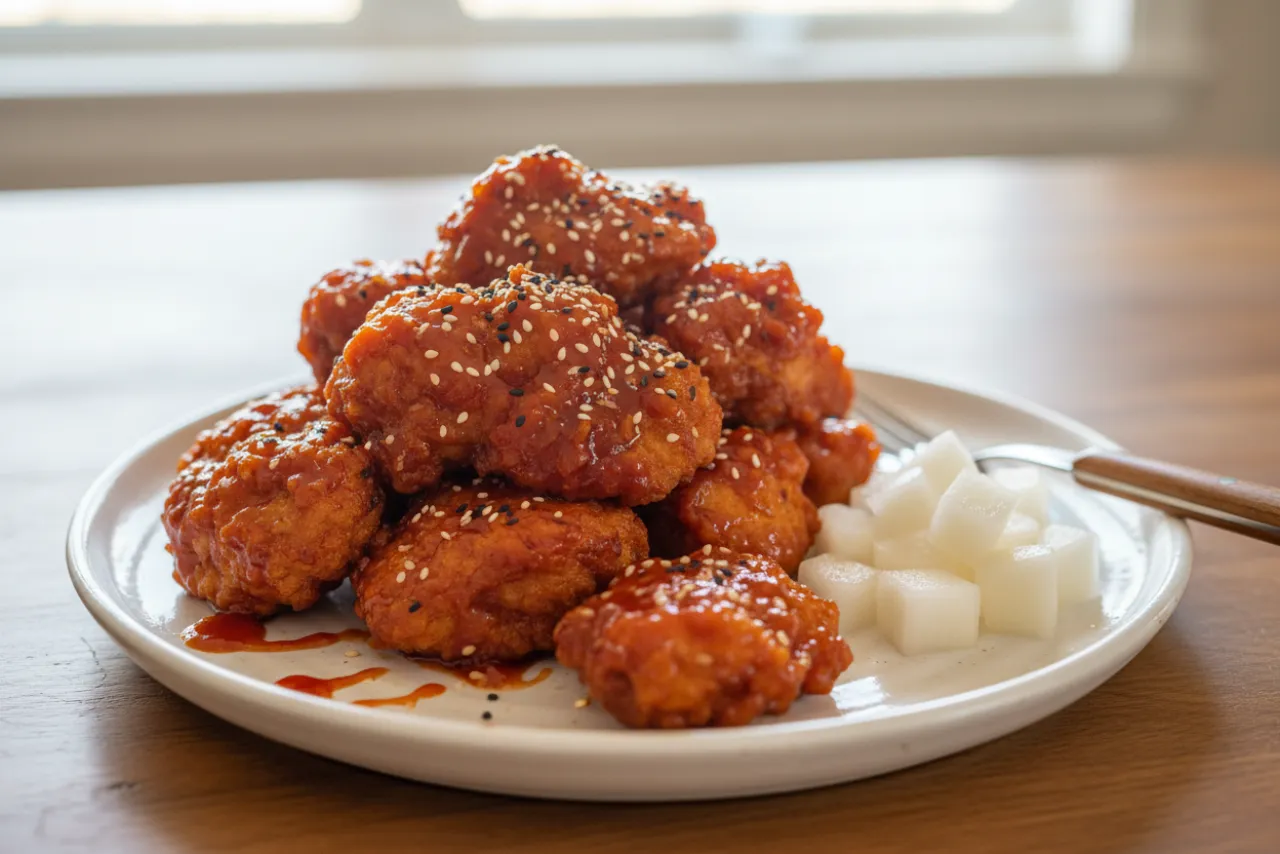
Double-fried chicken glazed in a sticky gochujang sauce.
Ingredients
- 1000 g Chicken pieces (legs + thighs)
- 100 g Cornstarch
- 3 tbsp Gochujang
- 3 tbsp Honey
- 2 tbsp Light soy sauce
- 4 cloves Garlic
- 500 ml Neutral oil
- 1 tbsp Sesame seeds (optional)
Method
- Pat the chicken dry thoroughly with paper towels (dry skin is the key to crispness), then toss in the cornstarch to coat every piece in a thin even layer. Shake off the excess.
- Mince the garlic cloves fine for the glaze.
- Heat the neutral oil in a deep pot to 160C / 320F. Fry the chicken in batches until pale and just cooked through, about 6-7 minutes per batch, then lift onto a rack to rest while the oil comes back up to temperature.
- Bring the oil up to 190C / 375F and fry the chicken a second time until deeply golden and shatter-crisp, about 3-4 minutes per batch, then drain on the rack.
- In a wide pan or wok, combine the gochujang, honey, soy, and minced garlic with a splash of water. Simmer over medium, stirring, until glossy and slightly thickened, 4-5 minutes.
- Off the heat, tip the crisp chicken into the glaze and toss quickly to coat every piece, then finish with a shower of sesame seeds.
- Serve at once while crisp.
Tap “Start cooking” for live timers that flag what to get ahead on while something simmers.
About Korean Fried Chicken
Korean fried chicken is famous for a crust that stays crisp long after frying and a glaze that's sweet, savory, and spicy all at once. What sets it apart from other fried chicken traditions is the double-fry technique: the chicken is fried once at a lower temperature to cook through, rested, then fried again hotter to reach a thin, shatteringly crisp shell. A light cornstarch coating rather than a heavy batter keeps the crust delicate, and the chicken is finished in a sticky gochujang-based sauce that clings to every craggy surface.
The payoff is the interplay of that crackling exterior with juicy meat and a glossy, addictive glaze — gochujang for fermented chili depth, honey for sweetness and shine, soy and garlic for savory backbone. Because the crust is engineered to resist sogginess, it holds up even under the wet sauce, which is the whole trick behind the style's reputation. Drying the chicken thoroughly before coating and letting the oil recover between fries are the details that make or break the result. Scattered with sesame seeds, it's classic party and sharing food, often washed down with cold beer, and worth the fifty minutes for a batch that stays crisp to the last piece.
Korean Fried Chicken: frequently asked questions
How many calories are in Korean Fried Chicken?
A serving has about 584 calories — 29g protein, 29.2g carbs, 38.3g fat, 0.7g fiber. Figures are estimated from the ingredient amounts and will shift with your portions and brands.
Is it high in protein?
Each serving has about 29g of protein, roughly 20% of its calories.
Is Korean Fried Chicken gluten-free?
As written, no — it contains Gochujang, Light soy sauce. You'd need a certified gluten-free swap for those ingredients to make it gluten-free.
How long does Korean Fried Chicken take to make?
About 50 minutes start to finish, but only around 35 of those are hands-on — the rest is cooking time. In the Homecooked app the timers and parallel steps are sequenced for you so the hands-on part feels even shorter.
Do I need every ingredient to make Korean Fried Chicken?
The core ingredients are essential, but you can leave out sesame seeds — they're optional and mainly there for extra flavor or finish.
How many servings does Korean Fried Chicken make?
This recipe makes 6 servings. In the app you can scale it up or down and the ingredient amounts adjust automatically.