Miso Ramen
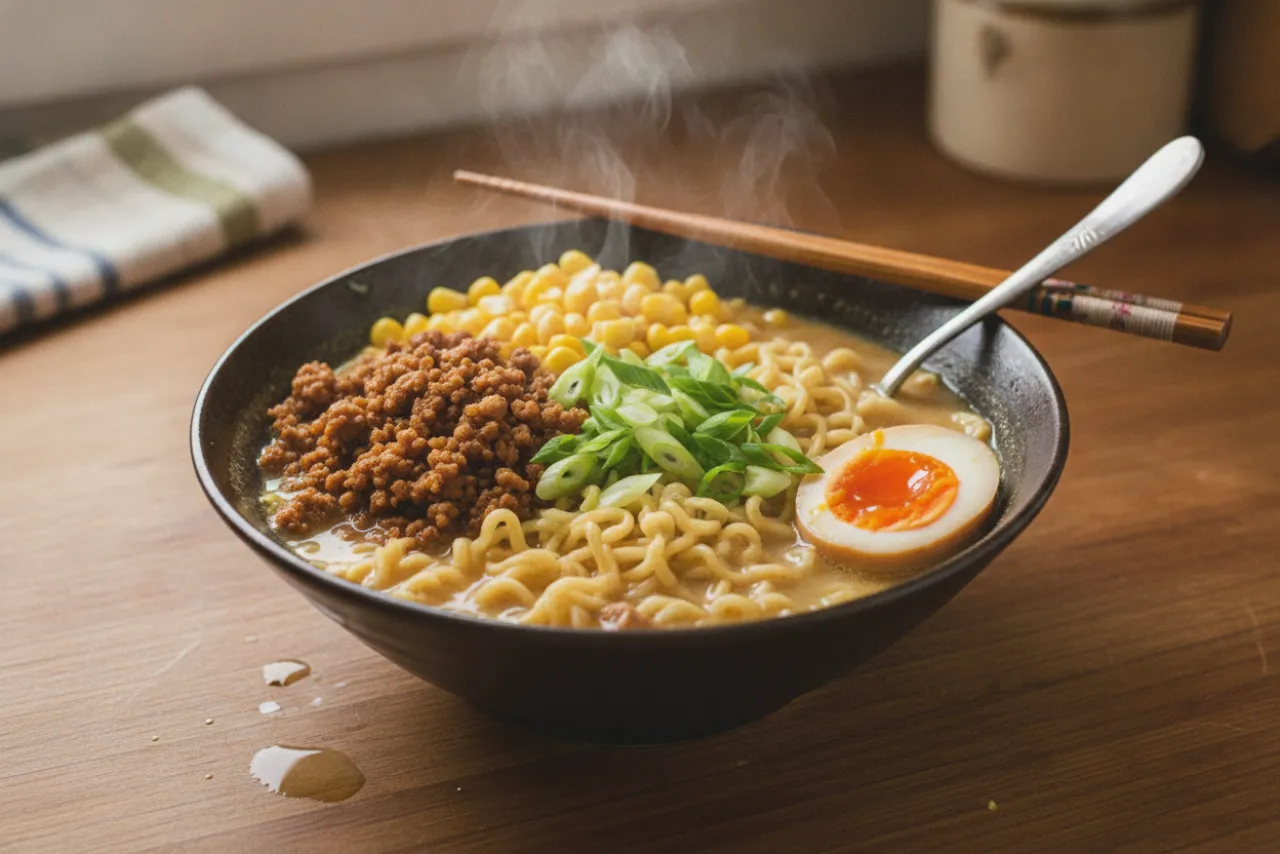
Rich miso broth with noodles, corn, and scallion.
Ingredients
- 200 g Fresh ramen noodles
- 3 tbsp Miso
- 150 g Ground pork
- 100 g Corn kernels
- 3 Scallions
- 2 cloves Garlic
- 1 Ginger
- 1000 ml Chicken stock
- 1 tbsp Toasted sesame oil (optional)
- 2 Egg (optional)
Method
- If using the eggs, lower them into boiling water and soft-boil 6-7 minutes, then chill in cold water, peel, and halve. (optional)
- Mince the garlic and ginger and thinly slice the scallions.
- Heat the sesame oil in a pot over medium-high and fry the ground pork with the garlic and ginger until browned and crisp, about 5 minutes.
- Whisk the miso into the pot, then pour in the chicken stock and bring to a gentle simmer until the broth is hot and unified, about 4 minutes.
- Meanwhile, cook the ramen noodles in boiling water until just tender, about 3 minutes, then drain and divide between bowls.
- Ladle the hot broth over the noodles and top with the corn, egg, and scallion.
Tap “Start cooking” for live timers that flag what to get ahead on while something simmers.
About Miso Ramen
Miso ramen is one of the four canonical styles of Japanese ramen, born in Sapporo on the northern island of Hokkaido, where the cold climate favored a broth robust enough to eat like a meal. What sets miso ramen apart from soy-based (shoyu) or salt-based (shio) bowls is that the fermented soybean paste is worked directly into the soup, giving it a thicker, opaque body and a savory backbone that reads as nutty, salty, and faintly sweet all at once. This particular bowl builds that depth quickly by frying ground pork with garlic and ginger until crisp before the miso and stock go in, so the fat carries the aromatics into every spoonful.
The eating experience is rich and warming: springy fresh noodles pull broth up with them, sweet corn kernels pop against the salty base, and a jammy soft-boiled egg adds silk when its yolk breaks into the soup. Scallions and a slick of toasted sesame oil keep it from feeling heavy, cutting the richness with sharpness and aroma. It comes together in about half an hour, which is the real appeal here — a bowl that tastes long-simmered without the all-day pork bone stock most ramen demands. Serve it piping hot, and eat the noodles first before they soften in the broth.
Miso Ramen: frequently asked questions
What's the difference between miso ramen and tonkotsu ramen?
The two describe different things: miso ramen is defined by its seasoning (tare)—fermented soybean paste stirred into the broth for a savory, slightly sweet depth—and originated in Sapporo, Hokkaido, in the 1950s. Tonkotsu ramen is defined by its broth base—pork bones boiled hard for many hours until the collagen and fat emulsify into a thick, cloudy, creamy soup—and originated in Fukuoka on Kyushu. They aren't strictly mutually exclusive (a tonkotsu broth can be seasoned with miso tare), but classic miso ramen typically uses a lighter chicken or pork stock, while tonkotsu is most often paired with a salt or soy tare.
How many calories are in Miso Ramen?
A serving has about 663 calories — 37g protein, 62.4g carbs, 29.6g fat, 5.2g fiber. Figures are estimated from the ingredient amounts and will shift with your portions and brands.
Is it high in protein?
Each serving has about 37g of protein, roughly 22% of its calories.
Is Miso Ramen gluten-free?
As written, no — it contains Fresh ramen noodles. You'd need a certified gluten-free swap for that ingredient to make it gluten-free.
Do I need every ingredient to make Miso Ramen?
The core ingredients are essential, but you can leave out toasted sesame oil, egg — they're optional and mainly there for extra flavor or finish.
How many servings does Miso Ramen make?
This recipe makes 2 servings. In the app you can scale it up or down and the ingredient amounts adjust automatically.