Miso Soup (Tofu and Wakame)
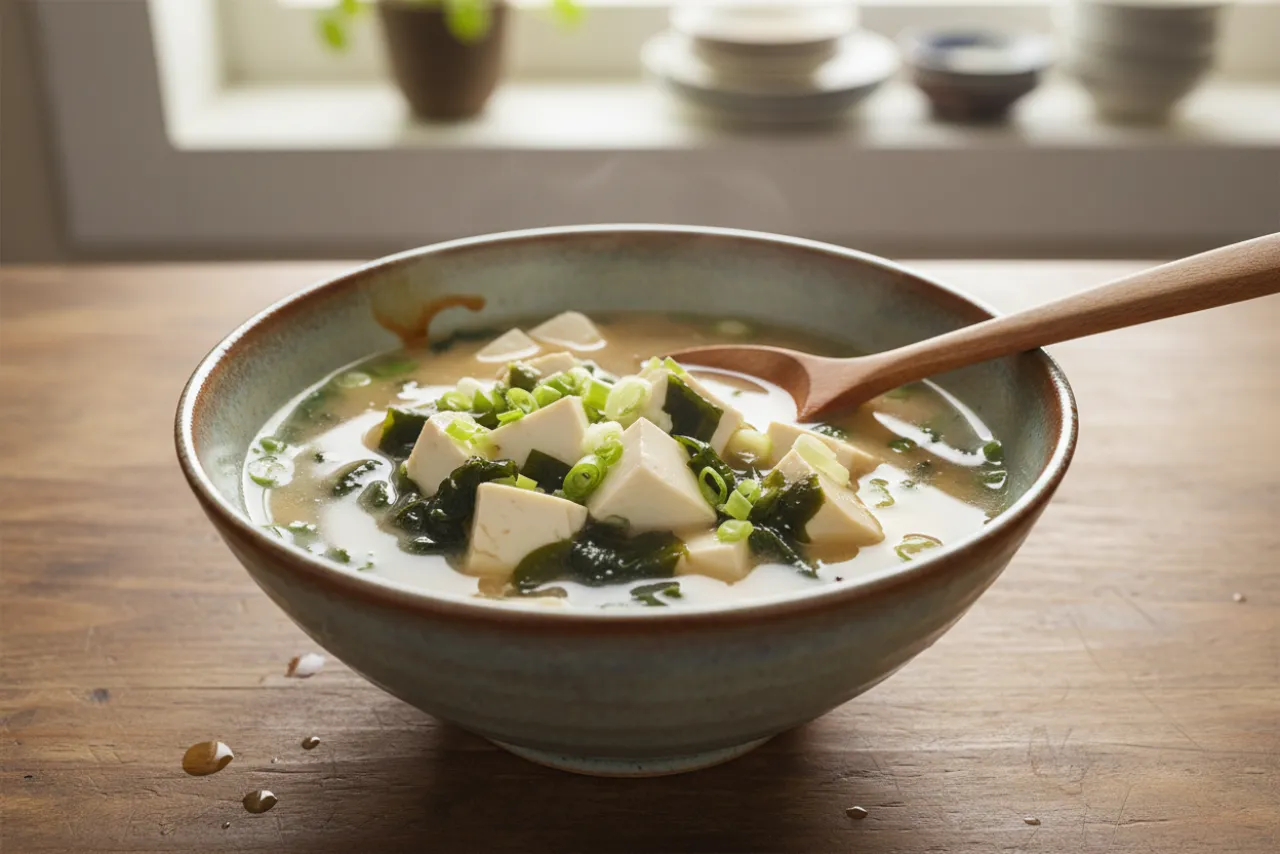
Awase dashi, silken tofu, wakame, and white miso whisked in at the end.
Ingredients
- 10 g Kombu (dried kelp)
- 15 g Katsuobushi (bonito flakes)
- 4 tbsp White miso (shiro)
- 200 g Silken tofu
- 5 g Dried wakame
- 2 Scallions (optional)
Method
- Wipe the kombu with a dry cloth (don't rinse — the white film is umami). Soak in enough cold water to cover well for 30 minutes.
- Bring the kombu + water to 60 °C (140 °F) over medium-low. The MOMENT bubbles start at the edges, lift the kombu out (or it goes bitter).
- Bring the broth to a gentle simmer, then take it off the heat. Sprinkle the bonito flakes over the surface and let them sit for 1 minute as they sink.
- Strain through a fine sieve into a clean pot — DON'T press the flakes. You now have ichiban dashi (the first, clearest kombu-and-bonito stock).
- Soak the wakame in cold water for 5 minutes until it expands, then drain.
- While the wakame soaks, cut the silken tofu into 1.5 cm cubes and thinly slice the scallions.
- Bring the dashi back to a bare simmer (60-80 °C / 140-175 °F). Slip in the tofu and wakame and warm for 1 minute.
- Pull the pot off the heat and press the miso through a fine sieve (or whisk in a ladle of broth) into the soup. Don't let it boil again, or the miso loses its aroma.
- Ladle into bowls and scatter the scallion over.
Tap “Start cooking” for live timers that flag what to get ahead on while something simmers.
About Miso Soup (Tofu and Wakame)
Miso soup is the quiet foundation of the Japanese table, served at nearly every meal including breakfast, and this version is built the traditional way rather than from instant granules. Everything rests on the dashi — here an awase (combination) dashi made by gently coaxing umami from kombu kelp, then steeping bonito flakes off the heat for the clearest first extraction known as ichiban dashi. The care shows in the small rules the method insists on: don't rinse the white film off the kombu, pull it before the water boils to avoid bitterness, and never press the bonito flakes when straining.
The finished soup is delicate, clean, and deeply savory rather than heavy, with white shiro miso lending a mellow, slightly sweet edge. Cubes of silken tofu bring soft protein, wakame unfurls into tender ribbons of seaweed, and scallions add a fresh green bite at the end. Crucially, the miso is whisked in only after the pot is off the boil — boiling miso dulls its aroma and kills the live cultures — which keeps the flavor fragrant and alive. Serve it hot in small bowls alongside rice and a main, or on its own as a light, warming start to a meal.
Miso Soup (Tofu and Wakame): frequently asked questions
How many calories are in Miso Soup (Tofu and Wakame)?
A serving has about 85 calories — 8.5g protein, 6.4g carbs, 3.4g fat, 1.5g fiber. Figures are estimated from the ingredient amounts and will shift with your portions and brands.
Is Miso Soup (Tofu and Wakame) gluten-free?
Based on its ingredients, Miso Soup (Tofu and Wakame) has no gluten-containing components, so it's naturally gluten-free — as always, check that any packaged ingredients you use are certified gluten-free to be safe.
How long does Miso Soup (Tofu and Wakame) take to make?
About 50 minutes start to finish, but only around 15 of those are hands-on — the rest is largely unattended cooking time you can step away from. In the Homecooked app the timers and parallel steps are sequenced for you so the hands-on part feels even shorter.
Do I need every ingredient to make Miso Soup (Tofu and Wakame)?
The core ingredients are essential, but you can leave out scallions — they're optional and mainly there for extra flavor or finish.
How many servings does Miso Soup (Tofu and Wakame) make?
This recipe makes 4 servings. In the app you can scale it up or down and the ingredient amounts adjust automatically.