Nikujaga
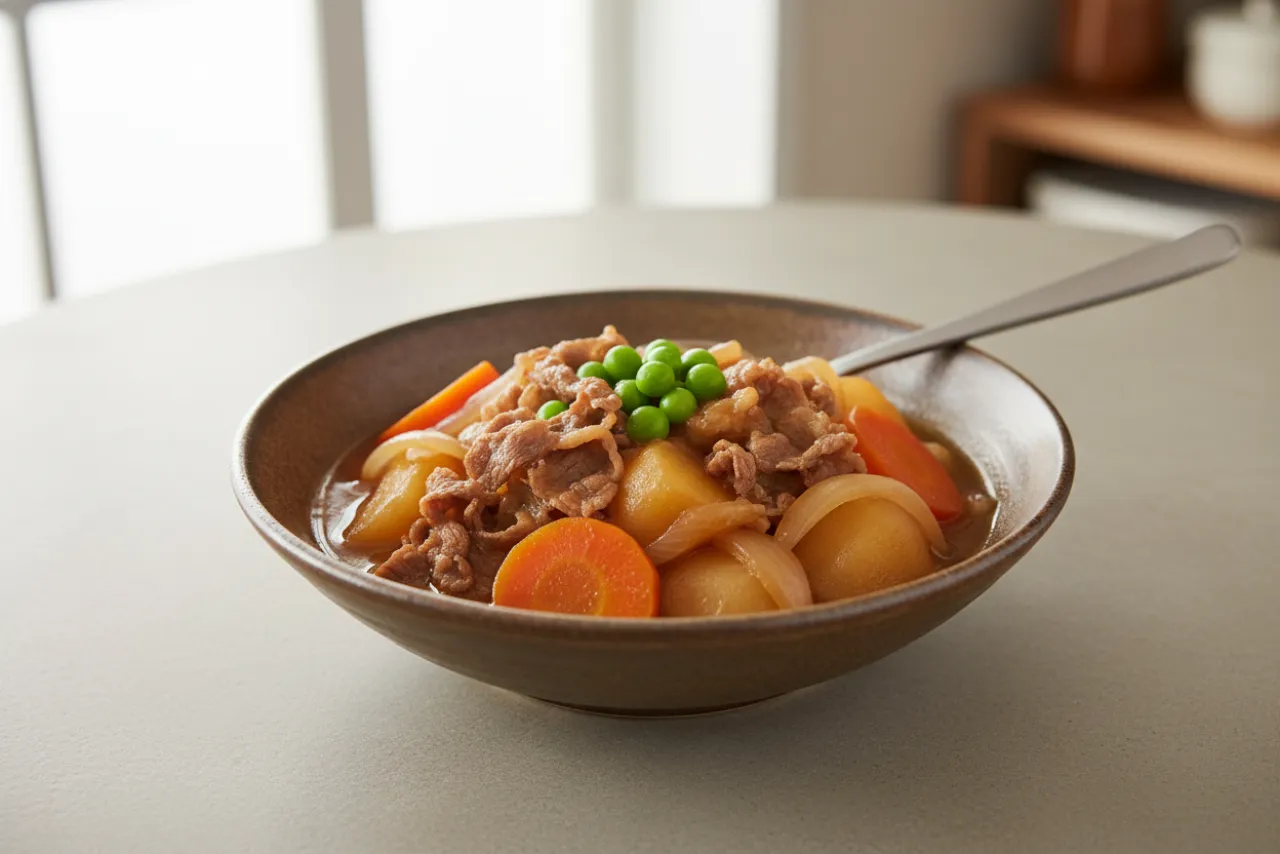
Comforting simmer of beef, potato, and onion in sweet soy dashi.
Ingredients
- 300 g Beef chuck
- 4 Potatoes
- 2 Carrot
- 2 Onion
- 1 Kombu (dried kelp)
- 4 tbsp Japanese soy sauce (koikuchi shoyu)
- 3 tbsp Mirin
- 2 tbsp Sake
- 1 tbsp Neutral oil
- 1 tbsp Sugar
Method
- Cut the beef thinly across the grain into bite-sized strips.
- Cut the onion into thick wedges (about 6-8 wedges per onion).
- Heat the oil in a heavy pot over medium-high. Sear the beef strips until lightly browned, then add the onion wedges and cook until they start to soften.
- While the beef sears: peel the potatoes and cut them into large bite-sized chunks (about 4 cm). Keep them in cold water until needed.
- While the beef sears: peel the carrots and roll-cut them into bite-sized chunks.
- Add the potato and carrot chunks, the kombu, sake, mirin, soy sauce, sugar, and enough water to nearly cover (about 400 ml). Bring to a gentle simmer.
- Cover with a drop-lid (or a piece of parchment with a small vent hole) and simmer gently for about 22 minutes, until the potatoes are tender all the way through and the liquid has reduced to a glossy bath.
- Pull the kombu out and discard. Rest the pot off heat a couple of minutes to let the flavours settle into the potatoes, then serve in shallow bowls with rice on the side.
Tap “Start cooking” for live timers that flag what to get ahead on while something simmers.
About Nikujaga
Nikujaga, whose name literally combines the words for meat and potato, is one of Japan's most beloved comfort dishes and a fixture of the ofukuro no aji, the taste of mother's cooking. It is a nimono, a simmered dish, in which thinly sliced beef chuck, potato, carrot, and thick onion wedges are stewed together in a sweet-savory bath of dashi, soy sauce, mirin, sake, and sugar. Cutting the beef thinly across the grain and searing it first builds flavor into the broth, while the kombu deepens the umami as everything cooks down.
On the plate it is tender and mellow, the potatoes gone soft enough to break with chopsticks and thoroughly saturated with the sweet soy liquid, the onions collapsing into sweetness of their own. It sits somewhere between a stew and a braise, homey rather than refined, and is meant to be eaten warm with steamed rice and perhaps a bowl of miso soup. This version pays attention to the details that matter: roll-cutting the carrots for even cooking, keeping the peeled potatoes in cold water so they don't discolor, and using sake alongside the mirin for a rounder, more grown-up depth than the sugar alone would give.
Nikujaga: frequently asked questions
How many calories are in Nikujaga?
A serving has about 407 calories — 19.3g protein, 40.6g carbs, 17.2g fat, 5.1g fiber. Figures are estimated from the ingredient amounts and will shift with your portions and brands.
Is Nikujaga gluten-free?
As written, no — it contains Japanese soy sauce (koikuchi shoyu). You'd need a certified gluten-free swap for that ingredient to make it gluten-free.
How long does Nikujaga take to make?
About 45 minutes start to finish, but only around 23 of those are hands-on — the rest is largely unattended cooking time you can step away from. In the Homecooked app the timers and parallel steps are sequenced for you so the hands-on part feels even shorter.
How many servings does Nikujaga make?
This recipe makes 4 servings. In the app you can scale it up or down and the ingredient amounts adjust automatically.