Ossobuco
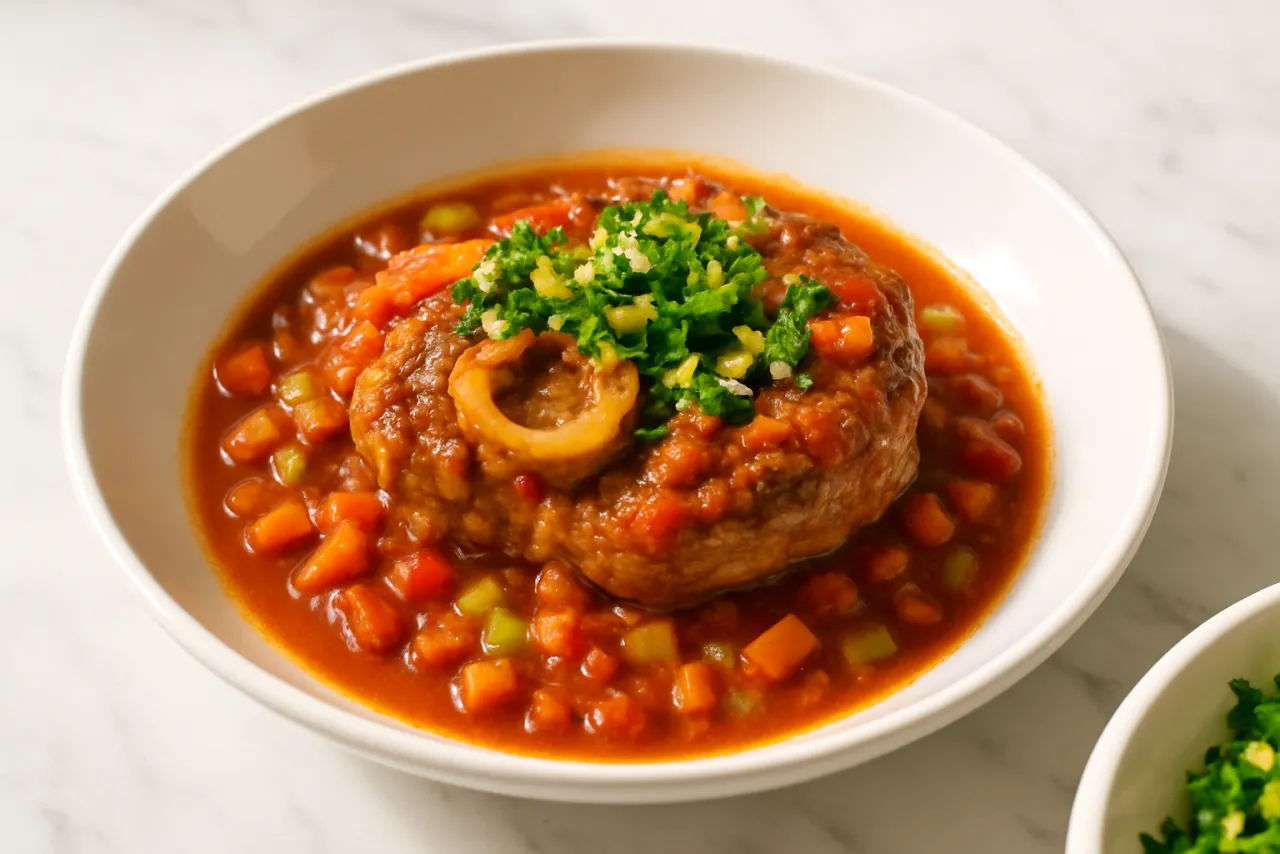
Veal-style braised shanks in wine with gremolata.
Ingredients
- 1200 g Beef shin
- 1 Onion
- 2 Carrot
- 2 Celery
- 200 g Canned tomatoes
- 500 ml Beef stock
- 2 cloves Garlic
- 40 g 00 flour
- 3 tbsp Extra-virgin olive oil
- 1 tsp Salt
- 200 ml White wine (optional)
- 4 tbsp Parsley (optional)
- 1 Lemon (optional)
Method
- Pat the shanks dry, season with salt, and dredge them in the flour, tapping off the excess.
- Heat the oil in a heavy braiser over medium-high. Brown the shanks well on both sides, working in batches so the pan stays hot. Lift them onto a plate.
- While the shanks brown, dice the onion, carrot, and celery into small even pieces.
- Lower the heat to medium. Add the diced onion, carrot, and celery to the same pan and sweat gently until softened and just starting to take colour.
- Pour in the wine and let it bubble down by half. Add the tomatoes, stock, and salt, then nestle the shanks back in. Cover and braise on the lowest heat about 2 hours, until the meat is fork-tender and pulling from the bone.
- While the shanks braise, make the gremolata: finely chop the parsley, mince the garlic, and zest the lemon. Toss together and set aside.
- Lift the shanks onto warm plates, spoon over the braising sauce, and scatter the gremolata generously on top.
Tap “Start cooking” for live timers that flag what to get ahead on while something simmers.
About Ossobuco
Ossobuco is a classic of Milanese cooking, its name meaning "bone with a hole" for the marrow-filled cross-cut shank at its center. Traditionally made with veal, this version uses beef shin, a tough, collagen-rich cut that rewards the long slow braise with meat that goes fork-tender and a sauce thickened by everything the bones and connective tissue release. The shanks are dredged in flour and browned hard before braising, which builds color and a fond that deepens the final gravy, then they simmer with a soffritto of onion, carrot, and celery, white wine, tomatoes, and stock for well over two hours.
What you get is a rich, wine-scented braise where the marrow softens into something spreadable and the sauce clings. The finishing touch, and the thing that keeps ossobuco from being heavy, is gremolata: a raw mince of parsley, garlic, and lemon zest scattered over at the end, cutting through the richness with a sharp green lift. In Milan it is classically served with saffron risotto alla milanese, though soft polenta or mashed potato work just as well to soak up the sauce. This is a weekend or dinner-party dish, one that mostly looks after itself once the shanks are in the pot.
Ossobuco: frequently asked questions
How many calories are in Ossobuco?
A serving has about 580 calories — 70.1g protein, 21.3g carbs, 20.4g fat, 3.1g fiber. Figures are estimated from the ingredient amounts and will shift with your portions and brands.
Is it high in protein?
Each serving has about 70.1g of protein, roughly 48% of its calories.
Is Ossobuco gluten-free?
As written, no — it contains 00 flour. You'd need a certified gluten-free swap for that ingredient to make it gluten-free.
How long does Ossobuco take to make?
About 150 minutes start to finish, but only around 29 of those are hands-on — the rest is largely unattended cooking time you can step away from. In the Homecooked app the timers and parallel steps are sequenced for you so the hands-on part feels even shorter.
Do I need every ingredient to make Ossobuco?
The core ingredients are essential, but you can leave out white wine, parsley, lemon — they're optional and mainly there for extra flavor or finish.
How many servings does Ossobuco make?
This recipe makes 4 servings. In the app you can scale it up or down and the ingredient amounts adjust automatically.