Oyakodon
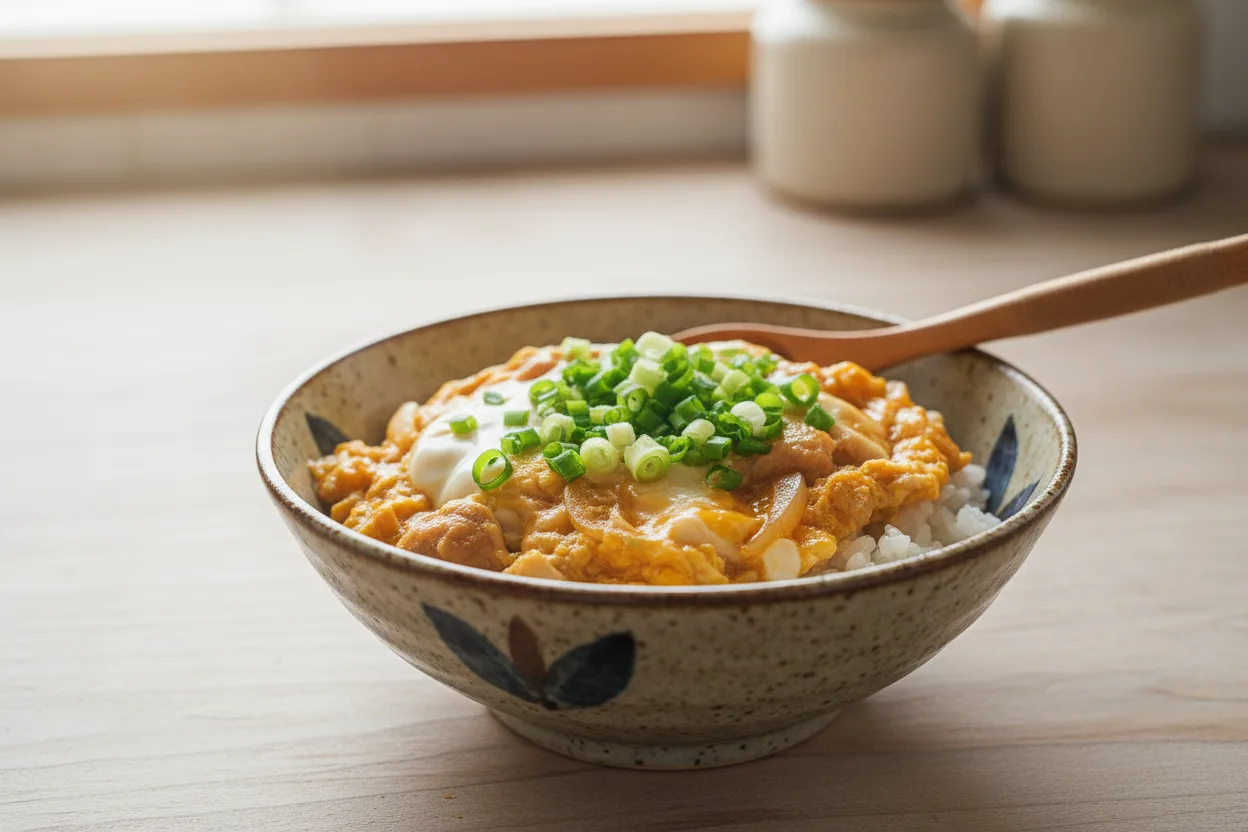
Chicken simmered in dashi-soy-mirin with onion; barely-set egg poured over and rested.
Ingredients
- 350 g Chicken thighs
- 300 g Japanese short-grain rice
- 1 Onion
- 4 Egg
- 5 g Kombu (dried kelp)
- 10 g Katsuobushi (bonito flakes)
- 3 tbsp Japanese soy sauce (koikuchi shoyu)
- 3 tbsp Mirin
- 1 tbsp Sake
- 1 tsp Sugar
- 2 Scallions (optional)
- 1 sheet Nori sheets (optional)
Method
- Soak the kombu in a pot of cold water to make the base for the dashi (a kombu-and-bonito stock).
- Bring the kombu water over medium-low just to the first bubbles, then lift the kombu out. Take the pot off the heat, scatter in the bonito flakes, and let them steep briefly before straining the dashi into a clean pan.
- Rinse the rice in cold water until it runs nearly clear. Drain.
- Combine the rice with an equal volume of fresh water in a heavy saucepan. Cover and bring to a boil.
- Drop the heat to its lowest setting and cook, lid on. Don't lift the lid.
- Pull the pot off the heat and rest, lid on.
- Slice the onion thin. Cut the chicken into bite-sized pieces. Beat the eggs loosely so whites and yolks are barely combined. Slice the scallions.
- Pour the dashi into a wide pan with the soy, mirin, sake, and sugar. Add the onion and simmer until just tender.
- Add the chicken and simmer gently until just cooked through.
- Pour most of the egg over in a swirling motion. Cover and cook briefly, then pour the rest over, cover, and pull off the heat. Rest until the eggs are barely set and glossy.
- Spoon the rice into two donburi bowls. Slide the chicken-egg topping over each. Scatter scallions and torn nori.
Tap “Start cooking” for live timers that flag what to get ahead on while something simmers.
About Oyakodon
This is the fuller, from-scratch take on oyakodon, the beloved Japanese chicken-and-egg rice bowl whose name means "parent and child." What sets this version apart is that the dashi is made properly rather than from a shortcut: kombu is steeped in cold water, brought just to the first bubbles, then the kelp is lifted out and bonito flakes are steeped and strained to build a clean, deeply savory stock. Chicken thighs simmer in that dashi seasoned with soy, mirin, sake, and a little sugar, and the egg is poured over and rested so it sets to a barely-firm softness.
The result is a bowl with more depth than the quick version can reach, the homemade dashi giving a rounder umami and the sake adding a subtle aromatic lift. The egg stays custardy and loose, sliding over carefully cooked short-grain rice that has been rinsed and rested for the right fluffy texture. Finished with scallions and a little nori, it eats as satisfying comfort food that still feels considered. At around fifty minutes it asks a bit more time than a weeknight rush allows, but the payoff is a noticeably better bowl.
Oyakodon: frequently asked questions
How many calories are in Oyakodon?
A serving has about 788 calories — 38.2g protein, 88.4g carbs, 26.8g fat, 0.8g fiber. Figures are estimated from the ingredient amounts and will shift with your portions and brands.
Is it high in protein?
Each serving has about 38.2g of protein, roughly 19% of its calories.
Is Oyakodon gluten-free?
As written, no — it contains Japanese soy sauce (koikuchi shoyu). You'd need a certified gluten-free swap for that ingredient to make it gluten-free.
How long does Oyakodon take to make?
About 50 minutes start to finish, but only around 19 of those are hands-on — the rest is largely unattended cooking time you can step away from. In the Homecooked app the timers and parallel steps are sequenced for you so the hands-on part feels even shorter.
Do I need every ingredient to make Oyakodon?
The core ingredients are essential, but you can leave out scallions, nori sheets — they're optional and mainly there for extra flavor or finish.
How many servings does Oyakodon make?
This recipe makes 3 servings. In the app you can scale it up or down and the ingredient amounts adjust automatically.