Pad Woon Sen
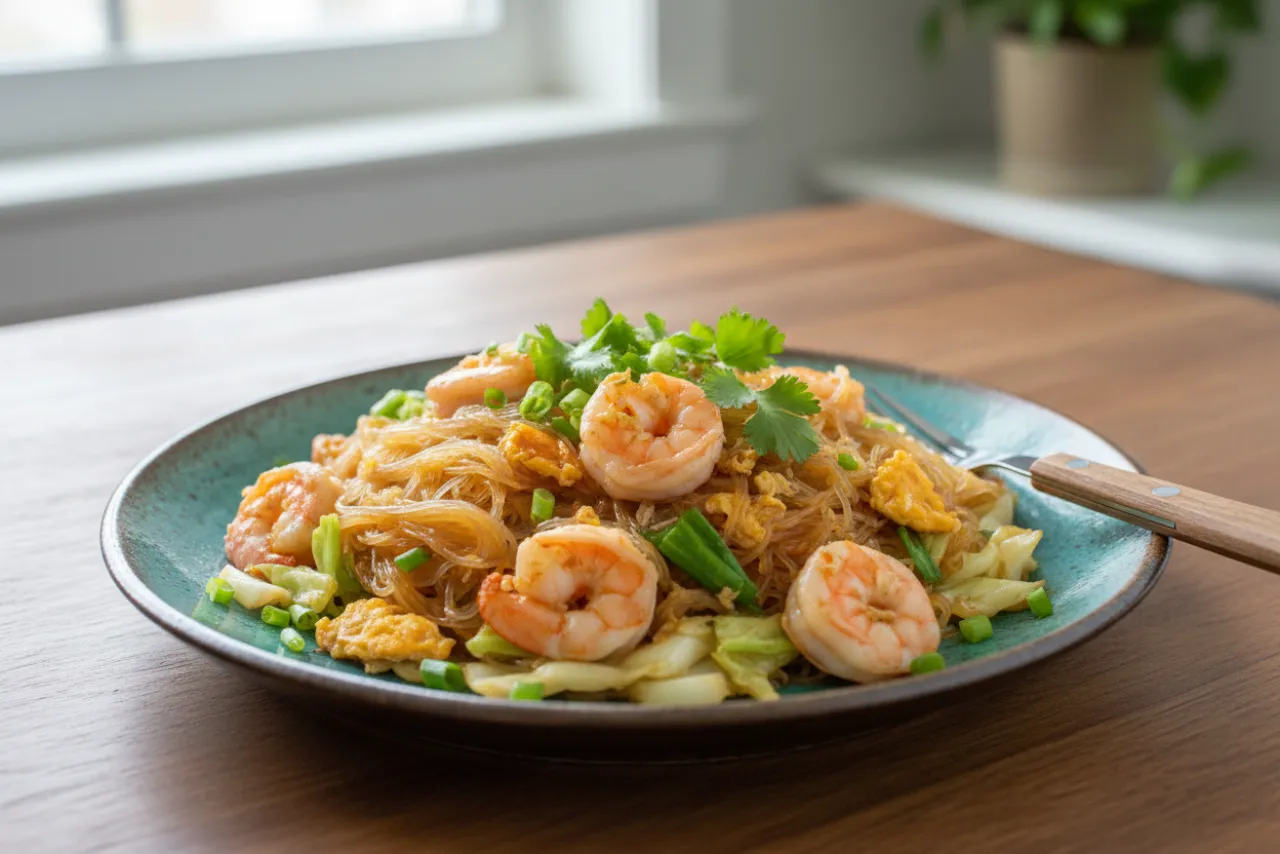
Stir-fried glass noodles with shrimp and vegetables.
Ingredients
- 200 g Sweet potato noodles (dangmyeon)
- 200 g Shrimp
- 2 Egg
- ¼ head Cabbage
- 3 cloves Garlic
- 2 tbsp Fish sauce
- 1 tbsp Oyster sauce
- 1 tbsp Light soy sauce
- 2 tbsp Neutral oil
- 1 tsp Sugar
Method
- Soak the glass noodles in warm water until pliable, then drain.
- While the noodles soak, mince the garlic and shred the cabbage.
- Whisk the fish sauce, oyster sauce, soy, and sugar together in a small bowl.
- Heat the oil in a wok over high heat, scramble the eggs into soft curds, then add the shrimp and garlic and stir-fry until the shrimp turn pink.
- Add the drained noodles, cabbage, and sauce and toss over high heat until the noodles are glossy and tender.
- Serve at once.
Tap “Start cooking” for live timers that flag what to get ahead on while something simmers.
About Pad Woon Sen
Pad woon sen is a Thai stir-fry built around woon sen, the slippery cellophane or glass noodles made from mung bean or sweet potato starch that turn translucent and springy once soaked. Unlike wide rice noodles, these threads carry almost no flavor of their own, which is the point: they act as a sponge for the savory-sweet sauce of fish sauce, oyster sauce, and soy, and they stay glossy rather than gummy when tossed over high heat. This version keeps the pan lively with shrimp, soft-scrambled egg, and shredded cabbage, so every forkful has a mix of chew, crunch, and bite. It is a home-style dish rather than a street-cart classic, the kind of quick single-wok meal cooked in Thai kitchens on a weeknight.
The whole thing comes together in about twenty minutes, and most of that is soaking the noodles until pliable so they finish cooking in the pan rather than in a pot. The technique that matters most is heat and timing: scrambling the egg into soft curds first, searing the shrimp and garlic, then adding the drained noodles, cabbage, and premixed sauce all at once so nothing overcooks while the noodles turn tender and take on shine. Because the sauce is whisked ahead in a small bowl, you are not measuring over an open flame, which keeps the balance of salty, sweet, and umami consistent. Serve it straight from the wok, on its own or as part of a larger Thai spread, with a wedge of lime or a shake of chili if you like more edge.
Pad Woon Sen: frequently asked questions
What's the difference between pad woon sen and pad thai?
The main difference is the noodle: pad woon sen ("stir-fried glass noodles") uses transparent mung-bean vermicelli (cellophane/bean-thread noodles), while pad thai uses flat rice-stick noodles. They also differ in seasoning and character — pad thai has a signature sweet-sour-savory sauce built on tamarind, fish sauce and palm sugar, finished with bean sprouts, crushed peanuts, garlic chives and lime, whereas pad woon sen is a simpler, saucier soy-and-oyster-sauce stir-fry with egg, vegetables and a protein, without the tamarind-peanut profile. Both are Thai stir-fried noodle dishes, but pad thai is a specific national dish while pad woon sen is a broader everyday glass-noodle stir-fry.
How many calories are in Pad Woon Sen?
A serving has about 685 calories — 29.9g protein, 97.7g carbs, 19.3g fat, 3.7g fiber. Figures are estimated from the ingredient amounts and will shift with your portions and brands.
Is it high in protein?
Each serving has about 29.9g of protein, roughly 17% of its calories.
Is Pad Woon Sen gluten-free?
As written, no — it contains Oyster sauce, Light soy sauce. You'd need a certified gluten-free swap for those ingredients to make it gluten-free.
How long does Pad Woon Sen take to make?
About 22 minutes start to finish, but only around 14 of those are hands-on — the rest is cooking time. In the Homecooked app the timers and parallel steps are sequenced for you so the hands-on part feels even shorter.
How many servings does Pad Woon Sen make?
This recipe makes 2 servings. In the app you can scale it up or down and the ingredient amounts adjust automatically.