Pisto Manchego
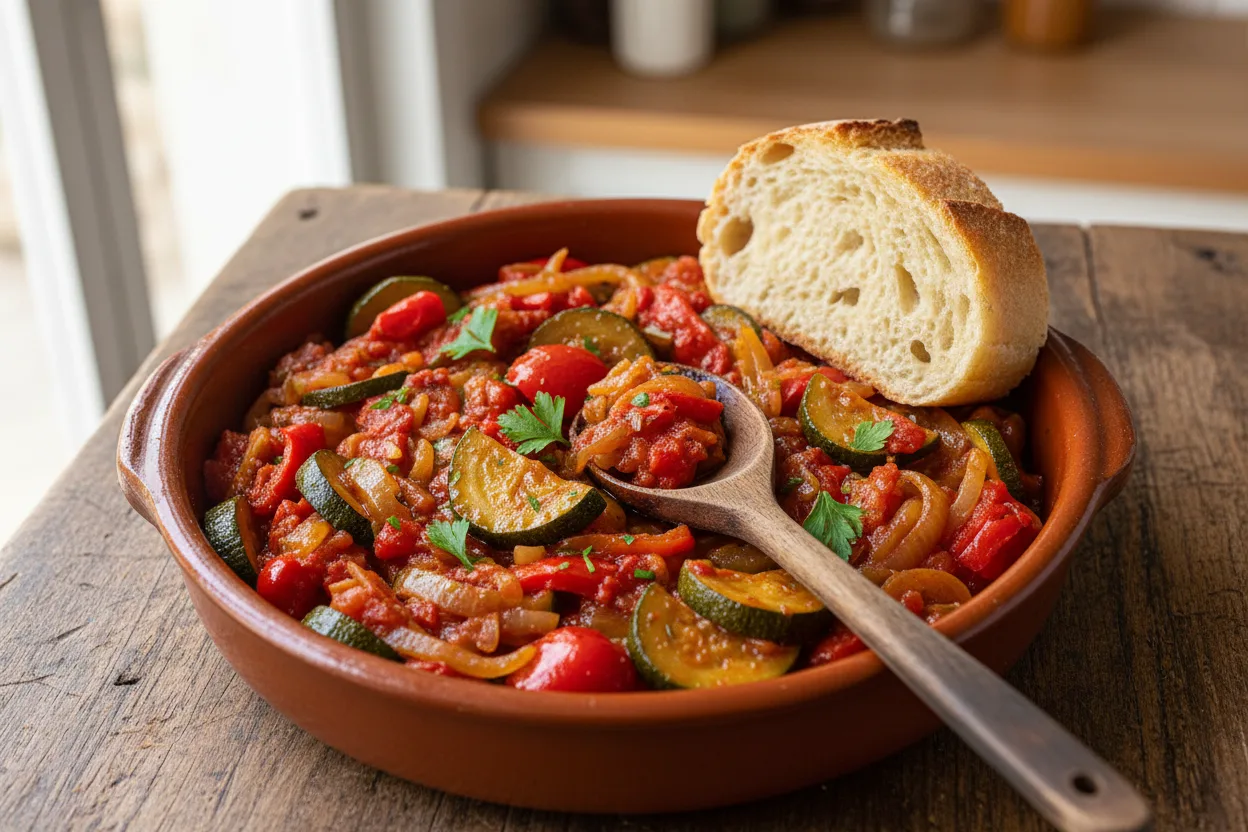
La Mancha's slow vegetable stew of peppers, zucchini, tomato — finished with a fried egg.
Ingredients
- 1 Onion
- 3 Bell pepper
- 2 Zucchini
- 1 tin San Marzano tomatoes (DOP)
- 2 cloves Garlic
- 80 ml Extra-virgin olive oil
- 1 tsp Pimenton dulce (sweet smoked paprika)
- 1 tsp Salt
- 4 Egg (optional)
- 1 tsp Sugar (optional)
Method
- Dice the onion into cubes and mince the garlic.
- Dice the green and red bell peppers into cubes.
- Warm the olive oil over low-to-medium heat. Sweat the onion gently until translucent.
- While the onion sweats, crush the tomatoes by hand.
- Add the peppers and a pinch of salt. Cook until very soft.
- While the peppers cook, dice the zucchini into cubes.
- Add the zucchini and garlic. Cook until softened.
- Off the heat, stir in the pimentón for about 10 seconds. Tip in the crushed tomato and the sugar.
- Return to low heat and simmer uncovered until jammy and the oil pools at the edges.
- While the pisto simmers, fry the eggs in a separate skillet to your liking — whites set, yolks runny. (optional)
- Spoon the pisto into bowls. Top each with a fried egg if you made one.
Tap “Start cooking” for live timers that flag what to get ahead on while something simmers.
About Pisto Manchego
Pisto Manchego is the version of pisto tied to La Mancha, the arid central plateau of Spain, and it treats the same peppers, zucchini, onion, and tomato with a bit more ceremony than the everyday stew. The vegetables are diced evenly and added in stages so each one cooks to its ideal softness, and the tomatoes are crushed by hand for a rustic texture rather than smoothed into a sauce. What sets this recipe apart is the sweet smoked paprika stirred in off the heat for just a few seconds, so it blooms in the warm oil without scorching and lends a gentle smokiness that reads as distinctly Spanish. A pinch of sugar rounds out the tomato's acidity.
Cooked properly it becomes jammy and glossy, thick enough that the olive oil pools at the edges of the pan, which is the traditional sign it is done. The flavor is deep and sweet with a savory backbone from the paprika and garlic, and the texture stays chunky rather than pureed. In La Mancha it appears as a main or a generous side, often crowned with a fried egg and served with bread, and it keeps and reheats well, tasting even better the next day. The hour it takes is mostly hands-off simmering, and that slow reduction is what gives Pisto Manchego its concentrated character.
Pisto Manchego: frequently asked questions
How many calories are in Pisto Manchego?
A serving has about 235 calories — 3.5g protein, 15.9g carbs, 19.2g fat, 6.1g fiber. Figures are estimated from the ingredient amounts and will shift with your portions and brands.
Is Pisto Manchego gluten-free?
Based on its ingredients, Pisto Manchego has no gluten-containing components, so it's naturally gluten-free — as always, check that any packaged ingredients you use are certified gluten-free to be safe.
How long does Pisto Manchego take to make?
About 60 minutes start to finish, but only around 25 of those are hands-on — the rest is largely unattended cooking time you can step away from. In the Homecooked app the timers and parallel steps are sequenced for you so the hands-on part feels even shorter.
Do I need every ingredient to make Pisto Manchego?
The core ingredients are essential, but you can leave out egg, sugar — they're optional and mainly there for extra flavor or finish.
How many servings does Pisto Manchego make?
This recipe makes 4 servings. In the app you can scale it up or down and the ingredient amounts adjust automatically.