Salsa Verde
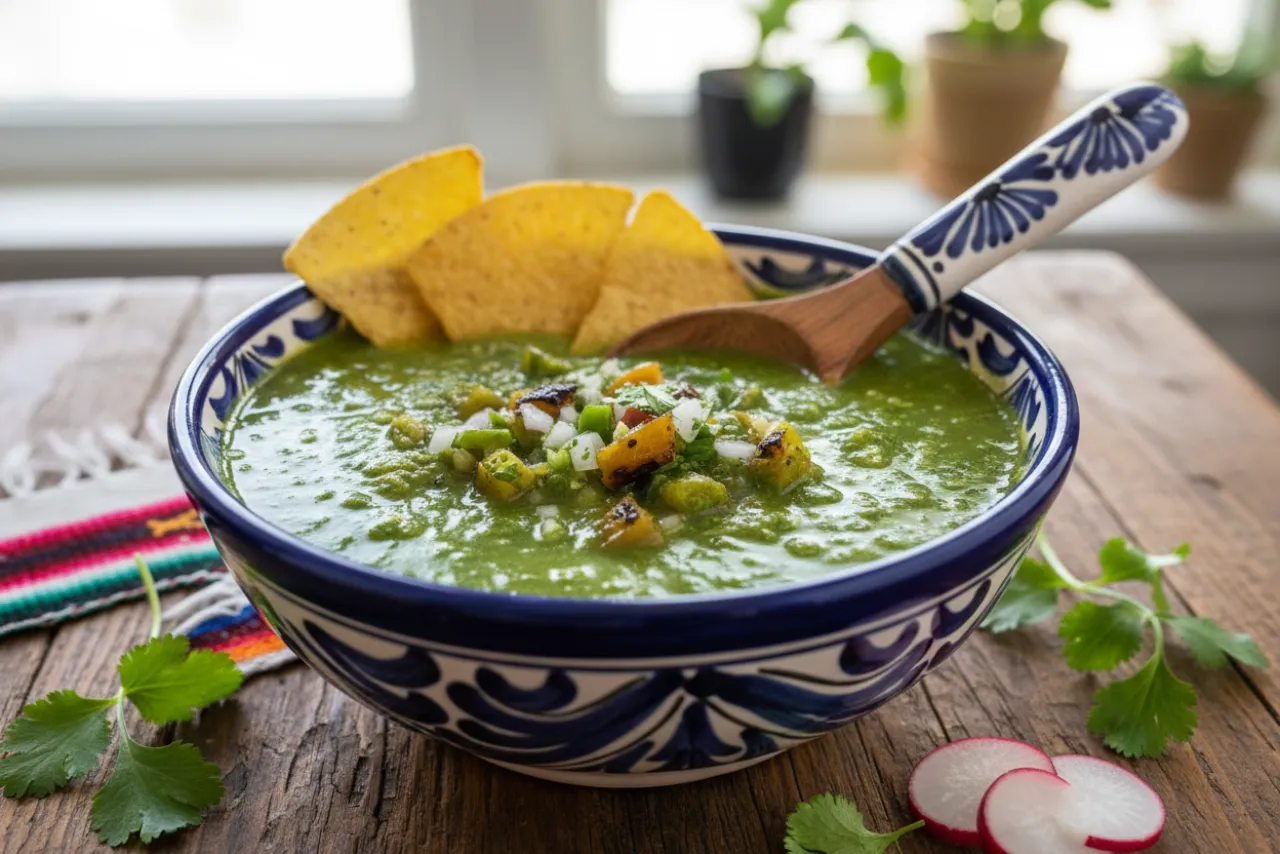
Charred tomatillo and serrano salsa with cilantro and lime.
Ingredients
- 500 g Tomatillos
- 2 Serrano chilies
- 2 cloves Garlic
- ½ Onion
- 4 tbsp Cilantro
- ½ tsp Salt
- 1 Lime (optional)
Method
- Char the tomatillos, serranos, garlic, and onion under a broiler until blackened in spots.
- While the vegetables char, roughly chop the cilantro and juice the lime.
- Blend the charred vegetables with the cilantro, lime juice, and salt to a coarse salsa.
- Pour into a bowl and serve.
Tap “Start cooking” for live timers that flag what to get ahead on while something simmers.
About Salsa Verde
Mexican salsa verde is a tart, green table sauce built on the tomatillo, the papery-husked fruit that turns bright and citric when cooked. This version leans on charring rather than boiling: running the tomatillos, serranos, garlic, and onion under a broiler until their skins blister concentrates their sugars and adds a smoky depth that a raw or simmered salsa never gets. Blended coarse with cilantro, lime, and salt, it lands somewhere between sour and savory, with a clean serrano heat that builds rather than burns. The texture is deliberately rustic, flecked and loose rather than smooth.
Unlike the Italian herb sauce of the same name, this salsa verde belongs to the world of tacos, grilled meats, and eggs. Spoon it over carnitas or carne asada, fold it into scrambled eggs, or set it out as a dip with warm tortilla chips. Because it comes together in under twenty minutes and keeps well in the fridge for a few days, it's the kind of thing worth making a double batch of. The lime and charred serrano keep it lively enough to cut through anything rich.
Salsa Verde: frequently asked questions
What's the difference between salsa verde and chimichurri?
Both are green, herb-forward sauces, but they come from different traditions. Chimichurri is Argentine/Uruguayan and is built on finely chopped fresh parsley (often with oregano), garlic, red wine vinegar, olive oil, and red pepper flakes, typically served with grilled meats. "Salsa verde" refers to more than one sauce: the Mexican version is a cooked or blended sauce of tomatillos, green chiles, onion, and cilantro, while the Italian version is a raw, oil-based blend of parsley, capers, anchovies, garlic, and vinegar—so the main differences come down to region, whether tomatillos are involved, and the use of capers/anchovies versus chili and oregano.
How many calories are in Salsa Verde?
A serving has about 36 calories — 1.2g protein, 6.9g carbs, 0.9g fat, 2.1g fiber. Figures are estimated from the ingredient amounts and will shift with your portions and brands.
Is Salsa Verde gluten-free?
Based on its ingredients, Salsa Verde has no gluten-containing components, so it's naturally gluten-free — as always, check that any packaged ingredients you use are certified gluten-free to be safe.
Do I need every ingredient to make Salsa Verde?
The core ingredients are essential, but you can leave out lime — it's optional and mainly there for extra flavor or finish.
How many servings does Salsa Verde make?
This recipe makes 6 servings. In the app you can scale it up or down and the ingredient amounts adjust automatically.