Sambar
South Indian lentil & vegetable stew
Ingredients
- 200 g Toor dal (split pigeon pea)
- 1 tbsp Tamarind paste
- 2 Tomato
- 1 Onion
- 1 tsp Ground turmeric
- 2 tsp Ground coriander
- 1 tsp Ground cumin
- ¼ tsp Fenugreek seeds (methi dana)
- 1 tsp Brown mustard seeds
- 1 sprig Curry leaves
- 2 Dried chilies
- 2 tbsp Coconut oil
- 2 tsp Salt
- 360 g Basmati rice
- 200 g Potatoes (optional)
- 100 g Green beans (optional)
- 1 Carrot (optional)
- 1 tsp Kashmiri chili powder (optional)
- 1 pinch Asafoetida (hing) (optional)
- 2 tbsp Cilantro (optional)
Method
- Rinse the basmati rice until the water runs clear, then cook it in twice its volume of water, covered, until tender and the water is absorbed, about 15 minutes.
- Rinse the toor dal until water runs clear.
- Pressure-cook the dal with plenty of water to cover, the turmeric, and a few drops of oil for 4 whistles (or simmer 30 minutes until mushy).
- Cube the potatoes and carrot 2 cm. Trim and cut green beans 3 cm. Chop tomatoes. Slice onion.
- Soak the tamarind in a cupful of warm water. Squish and strain into a jug, discarding the solids.
- Bring enough water to cover the onion, potatoes, carrots, and green beans to a boil. Simmer 12 minutes until the vegetables are tender.
- Add tomatoes, tamarind water, kashmiri chili, coriander powder, cumin, remaining turmeric, and the salt. Simmer 5 minutes.
- Whisk the cooked dal smooth. Tip into the vegetable pot. Bring back to a gentle simmer 5 minutes (add water to taste — sambar should pour, not glob).
- Tadka: heat coconut oil in the skillet over medium-high. Add mustard seeds and wait for them to pop (15 sec). Add fenugreek, dried chilies, curry leaves, and asafoetida. Sizzle 10 seconds.
- Pour the sizzling tadka over the sambar. Cover 1 minute to steep.
- Ladle into bowls. Scatter cilantro. Serve with rice or idli.
Tap “Start cooking” for live timers that flag what to get ahead on while something simmers.
About Sambar
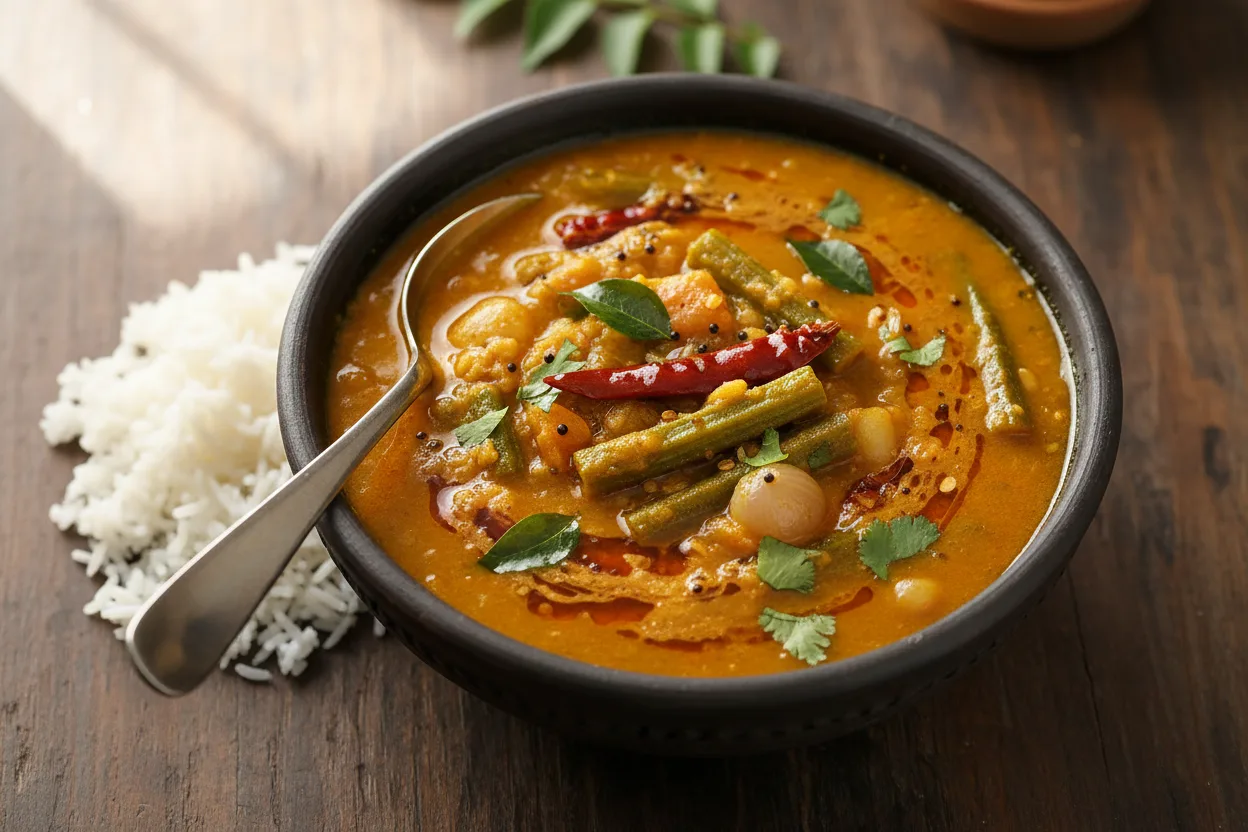
Sambar is the cornerstone lentil and vegetable stew of South Indian cooking, built on soft-cooked toor dal (split pigeon peas) soured with tamarind and loaded with vegetables like potato, carrot, and green beans. What sets it apart from other dal preparations is that tamarind tang, which gives the stew a bright, almost sweet-sour backbone against the earthy lentils and the warmth of coriander, cumin, and turmeric. The finishing tadka — mustard seeds, fenugreek, curry leaves, dried chilies, and asafoetida bloomed in hot coconut oil — is poured over at the end and is what makes a sambar taste like a sambar, sizzling and aromatic. The result is comforting and layered rather than fiery.
Sambar is everyday food across Tamil Nadu, Karnataka, Kerala, and Andhra, eaten with steamed rice, ladled over idli, or served alongside dosa and vada. It's endlessly adaptable to whatever vegetables are on hand, which is part of why it's a staple in so many households. This version pressure-cooks the dal until mushy for a naturally creamy body, then builds the stew and crowns it with that final tempering. Being vegan, fiber-rich, and gently spiced, it makes a nourishing one-pot meal that only improves as it sits.
Sambar: frequently asked questions
How many calories are in Sambar?
A serving has about 451 calories — 14.1g protein, 85.4g carbs, 6.7g fat, 9.7g fiber. Figures are estimated from the ingredient amounts and will shift with your portions and brands.
Is Sambar gluten-free?
Based on its ingredients, Sambar has no gluten-containing components, so it's naturally gluten-free — as always, check that any packaged ingredients you use are certified gluten-free to be safe.
Do I need every ingredient to make Sambar?
The core ingredients are essential, but you can leave out potatoes, green beans, carrot — they're optional and mainly there for extra flavor or finish.
How many servings does Sambar make?
This recipe makes 6 servings. In the app you can scale it up or down and the ingredient amounts adjust automatically.