Shortbread
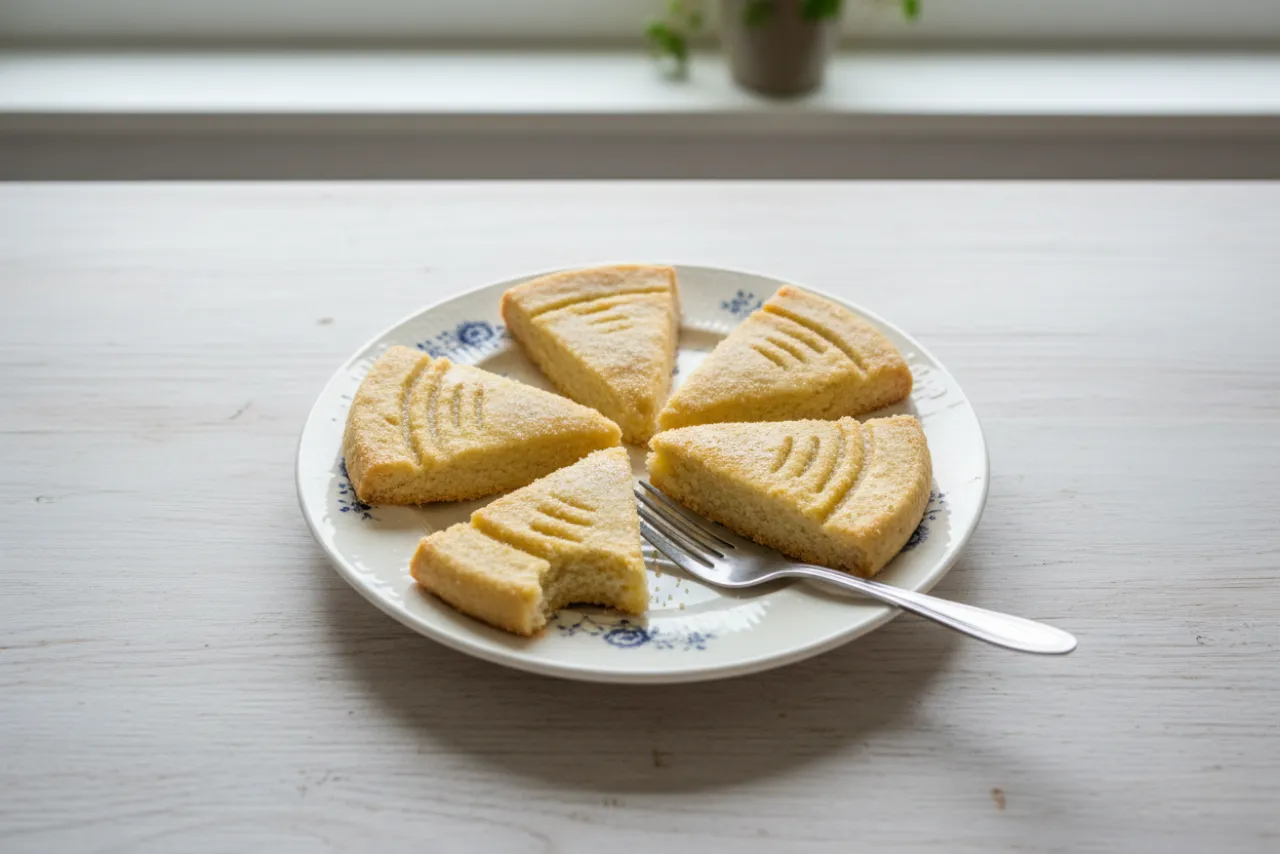
Butter, sugar, flour — three ingredients, one rule: don't overwork it.
Ingredients
- 150 g Butter
- 75 g Sugar
- 225 g Flour
- ¼ tsp Salt
- ½ tsp Vanilla (optional)
Method
- Heat the oven to 160°C (325°F).
- Beat the soft butter with the sugar in a bowl until just creamy.
- Work the flour, salt, and vanilla into the creamed butter until the dough barely holds together — don't overmix.
- Press the dough evenly into a tin and prick all over with a fork.
- Score the surface into fingers with a knife.
- Bake until pale gold but not browned, about 30 minutes.
- Re-cut along the scores while warm, then cool the shortbread in the tin and serve.
Tap “Start cooking” for live timers that flag what to get ahead on while something simmers.
About Shortbread
Shortbread is a Scottish classic and one of the purest expressions of baking there is: butter, sugar, and flour, with the ratio and the handling doing all the work. Its name comes from the 'short' texture — high in fat, low in gluten — that gives it a crumbly, sandy snap that melts on the tongue rather than bending. There is nowhere to hide with so few ingredients, which is why the one real rule is not to overwork the dough; too much mixing develops gluten and turns tender shortbread tough.
Baked low and slow to a pale gold rather than brown, it tastes richly of butter with a clean sweetness and a whisper of vanilla and salt to round it out. Traditionally it is pressed into a round or rectangle, pricked, and cut into fingers or petticoat-tail wedges — a Scottish teatime and Hogmanay staple, often given as a gift. This version scores and re-cuts the fingers while the shortbread is still warm from the oven, so they break cleanly once cooled instead of shattering, a small technique that keeps the edges neat.
Shortbread: frequently asked questions
What's the difference between shortbread and butter cookies?
Both are buttery cookies, but shortbread is a traditional Scottish cookie made from just three ingredients—butter, sugar, and flour—with no eggs or leavening, giving it a dense, crumbly, sandy ("short") texture from its high fat-to-flour ratio. Butter cookies (like Danish/European-style ones) typically use a higher proportion of sugar and often include eggs and sometimes leavening or flavorings like vanilla, producing a firmer, crisper, and often piped or molded cookie that holds decorative shapes. In short, shortbread is a specific minimalist recipe prized for tender crumbliness, while "butter cookie" is a broader category with more sugar and usually egg, yielding a snappier, more structured cookie.
How many calories are in Shortbread?
A serving has about 271 calories — 3.4g protein, 30.3g carbs, 15.6g fat, 0.7g fiber. Figures are estimated from the ingredient amounts and will shift with your portions and brands.
Is Shortbread gluten-free?
As written, no — it contains Flour. You'd need a certified gluten-free swap for that ingredient to make it gluten-free.
Is Shortbread dairy-free?
Not as written — it uses Butter. Swapping it for a plant-based alternative makes it dairy-free.
How long does Shortbread take to make?
About 45 minutes start to finish, but only around 15 of those are hands-on — the rest is largely unattended cooking time you can step away from. In the Homecooked app the timers and parallel steps are sequenced for you so the hands-on part feels even shorter.
Do I need every ingredient to make Shortbread?
The core ingredients are essential, but you can leave out vanilla — it's optional and mainly there for extra flavor or finish.
How many servings does Shortbread make?
This recipe makes 8 servings. In the app you can scale it up or down and the ingredient amounts adjust automatically.