Shoyu Ramen
Soy-based broth ramen
Ingredients
- 600 g Fresh ramen noodles
- 1200 ml Chicken stock
- 10 g Kombu (dried kelp)
- 15 g Katsuobushi (bonito flakes)
- 4 Dried shiitake
- 6 tbsp Japanese soy sauce (koikuchi shoyu)
- 400 g Pork belly
- 20 g Ginger
- 4 cloves Garlic
- 4 Egg
- 2 tbsp Mirin (optional)
- 2 tbsp Sake (optional)
- 4 Scallions (optional)
- 4 sheet Nori sheets (optional)
- 1 tsp Toasted sesame oil (optional)
Method
- Wipe the kombu and soak it in cold water with the dried shiitake.
- Bring the kombu-and-shiitake water over medium-low to about 70C (160F), then lift the kombu out before it boils. Take off the heat, add the bonito flakes, let them steep briefly, then strain — this is your dashi.
- Combine the chicken stock and dashi in a Dutch oven. Smash the ginger and garlic cloves, then add them with the pork belly. Cover and simmer on low until the pork is tender.
- While the broth simmers, soft-boil the eggs: bring a small pot of water to a boil, slide the eggs in, and cook to a jammy yolk. Plunge into iced water, then peel.
- While the broth simmers, make the tare (a sweet-soy seasoning base): in a small saucepan combine the soy, mirin, and sake. Simmer to cook off the alcohol.
- Lift the pork to a board and slice it thin. Keep it warm. Strain the broth into a clean pot and skim off the fat.
- Bring the strained broth back to a gentle simmer. Whisk in the tare and taste — it should taste fully seasoned but not aggressively salty.
- Bring a large pot of unsalted water to a rolling boil. Cook the noodles until just done (or per package), then drain immediately.
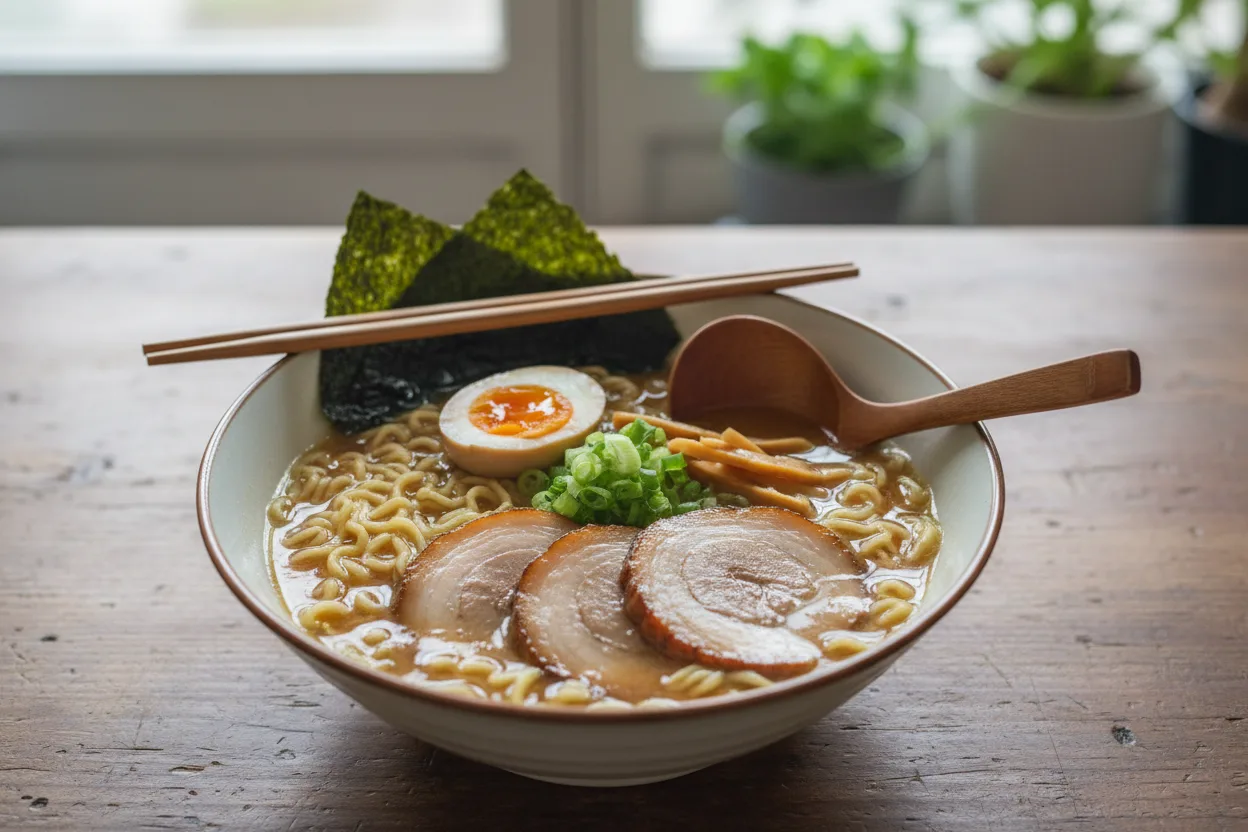
- Thinly slice the scallions. Divide the noodles among four bowls and ladle the hot broth over. Top each with sliced pork, a halved soft egg, scallions, and nori. Drizzle with sesame oil.
Tap “Start cooking” for live timers that flag what to get ahead on while something simmers.
About Shoyu Ramen
Shoyu ramen is the Tokyo-style bowl built on a soy-sauce tare, one of the foundational styles of Japanese ramen. What defines it is that seasoning base of koikuchi shoyu rounded with mirin and sake, poured into a clear, layered broth — here a marriage of chicken stock and a proper dashi coaxed from kombu, dried shiitake, and bonito flakes. The dashi is made with real care: the kombu is lifted out before the water boils and the bonito is only briefly steeped, the standard technique that keeps the broth clean and free of bitterness.
The finished bowl is savory and deeply umami without the heaviness of a tonkotsu, the soy giving it a browner, more aromatic character than a salt-based shio ramen. It comes topped in the classic way with springy fresh noodles, tender simmered pork belly, a soft jammy-yolk egg, nori, and scallions, each element adding its own texture and note. This is a project bowl rather than a weeknight one — closer to ninety minutes — but the payoff is a homemade ramen with the balance and clarity you would expect from a good Tokyo shop.
Shoyu Ramen: frequently asked questions
What's the difference between shoyu ramen and tonkotsu ramen?
The terms describe two different components: shoyu refers to the seasoning (tare), while tonkotsu refers to the broth base, so they aren't strictly opposites. Shoyu ramen is seasoned with soy sauce and traditionally uses a lighter, clearer stock (often chicken and/or dashi), giving a savory, brown-tinted, relatively thin broth associated with Tokyo. Tonkotsu ("pork bone") ramen is defined by pork bones boiled hard for many hours until the collagen and fat emulsify into a thick, cloudy, milky-white, richly porky broth, a style rooted in Fukuoka/Kyushu; note a tonkotsu broth can itself be finished with a shoyu, shio, or miso tare.
What does "shoyu ramen" mean?
"Shoyu" (醤油) is the Japanese word for soy sauce, so shoyu ramen simply means "soy sauce ramen" — ramen whose seasoning base (tare) is built on soy sauce. It typically has a clear brown broth, often chicken- or pork-and-chicken-based, and is one of the classic ramen styles alongside shio (salt), miso, and tonkotsu (pork bone). Shoyu ramen is strongly associated with Tokyo, where the soy-sauce style is considered the traditional local form.
How many calories are in Shoyu Ramen?
A serving has about 980 calories — 36.9g protein, 59.1g carbs, 63.8g fat, 3.4g fiber. Figures are estimated from the ingredient amounts and will shift with your portions and brands.
Is it high in protein?
Each serving has about 36.9g of protein, roughly 15% of its calories.
Is Shoyu Ramen gluten-free?
As written, no — it contains Fresh ramen noodles, Japanese soy sauce (koikuchi shoyu). You'd need a certified gluten-free swap for those ingredients to make it gluten-free.
How long does Shoyu Ramen take to make?
About 90 minutes start to finish, but only around 25 of those are hands-on — the rest is largely unattended cooking time you can step away from. In the Homecooked app the timers and parallel steps are sequenced for you so the hands-on part feels even shorter.
Do I need every ingredient to make Shoyu Ramen?
The core ingredients are essential, but you can leave out mirin, sake, scallions — they're optional and mainly there for extra flavor or finish.
How many servings does Shoyu Ramen make?
This recipe makes 4 servings. In the app you can scale it up or down and the ingredient amounts adjust automatically.