Zaru Soba
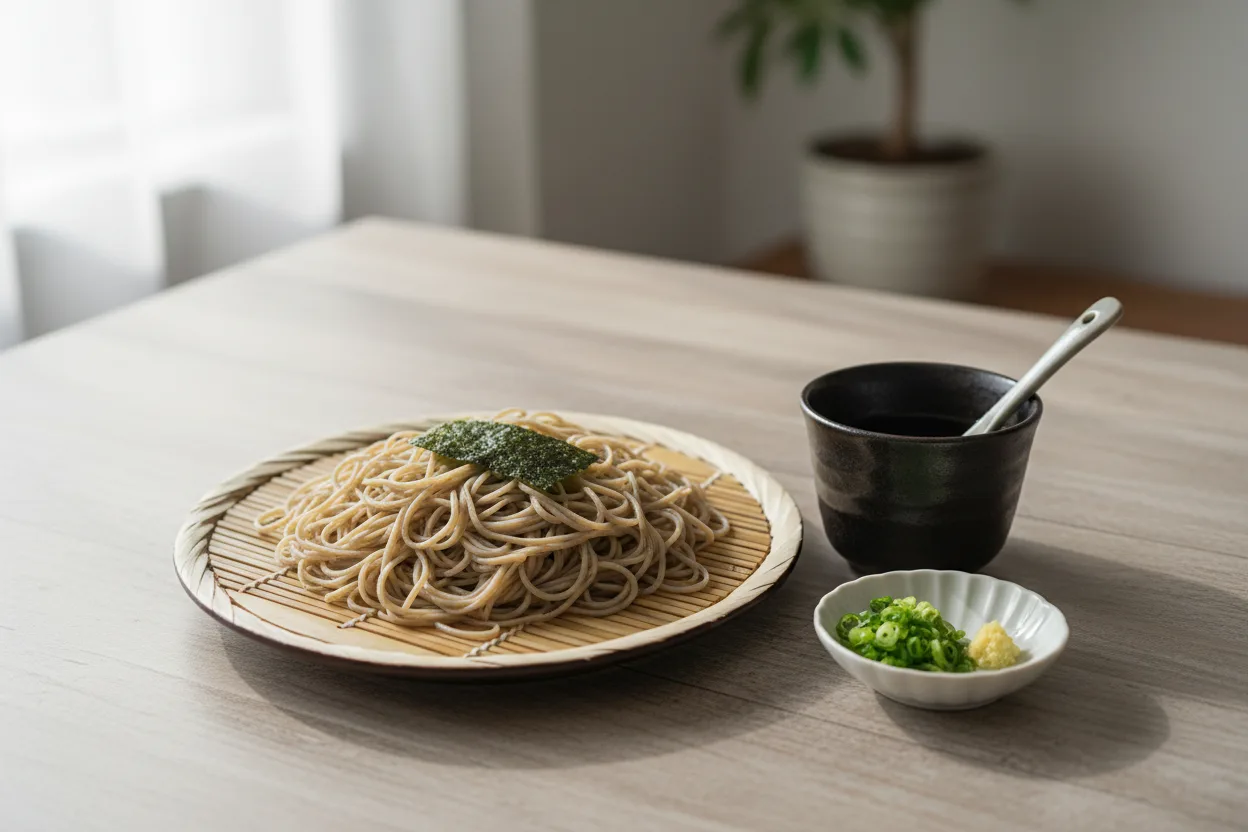
Cold soba noodles with dipping sauce
Ingredients
- 200 g Soba noodles (buckwheat)
- 5 g Kombu (dried kelp)
- 10 g Katsuobushi (bonito flakes)
- 60 ml Japanese soy sauce (koikuchi shoyu)
- 60 ml Mirin
- 1 sheet Nori sheets
- 2 Scallions (optional)
- 1 tsp Wasabi paste (optional)
- 1 tsp Sesame seeds (optional)
Method
- Soak the kombu in cold water to cover.
- Bring the kombu water over medium-low to about 70C (160F), then lift the kombu out. Take off the heat, add the bonito flakes, let them steep briefly, then strain into a clean pan to make the dashi.
- In a saucepan combine the mirin and soy and simmer to cook off the alcohol. Add the dashi and simmer briefly to make the mentsuyu. Chill it in the fridge until cold.
- Bring a large pot of unsalted water to a rolling boil. Cook the soba per package until it has a springy, firm bite.
- Drain the noodles into a colander. Rinse under cold water, rubbing gently with your hand to wash off the starch, then plunge into iced water until very cold.
- Slice the scallions thin and tear the nori into thin strips.
- Pile the drained soba on a bamboo zaru or flat plate. Pour the cold mentsuyu into two dipping bowls. Offer the scallion, nori, sesame, and wasabi on the side.
Tap “Start cooking” for live timers that flag what to get ahead on while something simmers.
About Zaru Soba
Zaru soba is the cold-weather counterpoint to hot soba: chilled buckwheat noodles served on a bamboo tray or basket with a small cup of cold dipping sauce alongside. It is high-summer eating in Japan, prized for how refreshing the springy, cold noodles feel in the heat, and the name comes from the zaru draining basket the soba traditionally rests on. Rather than sitting in broth, each mouthful of noodles is dipped into concentrated mentsuyu, so the diner controls the intensity of seasoning.
Making it well hinges on two things this version gets right: a proper dashi and cold, firm noodles. The dashi is drawn gently from kombu at around 70C and a brief steep of bonito flakes, then combined with mirin and soy that are simmered to cook off the alcohol, and the whole sauce is chilled until cold. The soba is boiled to a springy bite and then rinsed under cold water and rubbed to wash off surface starch, which is what keeps the strands separate and clean-tasting. Served with scallions, nori, wasabi, and sesame to stir into the dipping sauce, it is light, low-calorie, and quietly precise, a dish about texture and clean flavor.
Zaru Soba: frequently asked questions
How many calories are in Zaru Soba?
A serving has about 439 calories — 21.2g protein, 83.5g carbs, 1.7g fat, 1.1g fiber. Figures are estimated from the ingredient amounts and will shift with your portions and brands.
Is Zaru Soba gluten-free?
As written, no — it contains Soba noodles (buckwheat), Japanese soy sauce (koikuchi shoyu). You'd need a certified gluten-free swap for those ingredients to make it gluten-free.
How long does Zaru Soba take to make?
About 40 minutes start to finish, but only around 17 of those are hands-on — the rest is largely unattended cooking time you can step away from. In the Homecooked app the timers and parallel steps are sequenced for you so the hands-on part feels even shorter.
Do I need every ingredient to make Zaru Soba?
The core ingredients are essential, but you can leave out scallions, wasabi paste, sesame seeds — they're optional and mainly there for extra flavor or finish.
How many servings does Zaru Soba make?
This recipe makes 2 servings. In the app you can scale it up or down and the ingredient amounts adjust automatically.