Sweet and Sour Pork
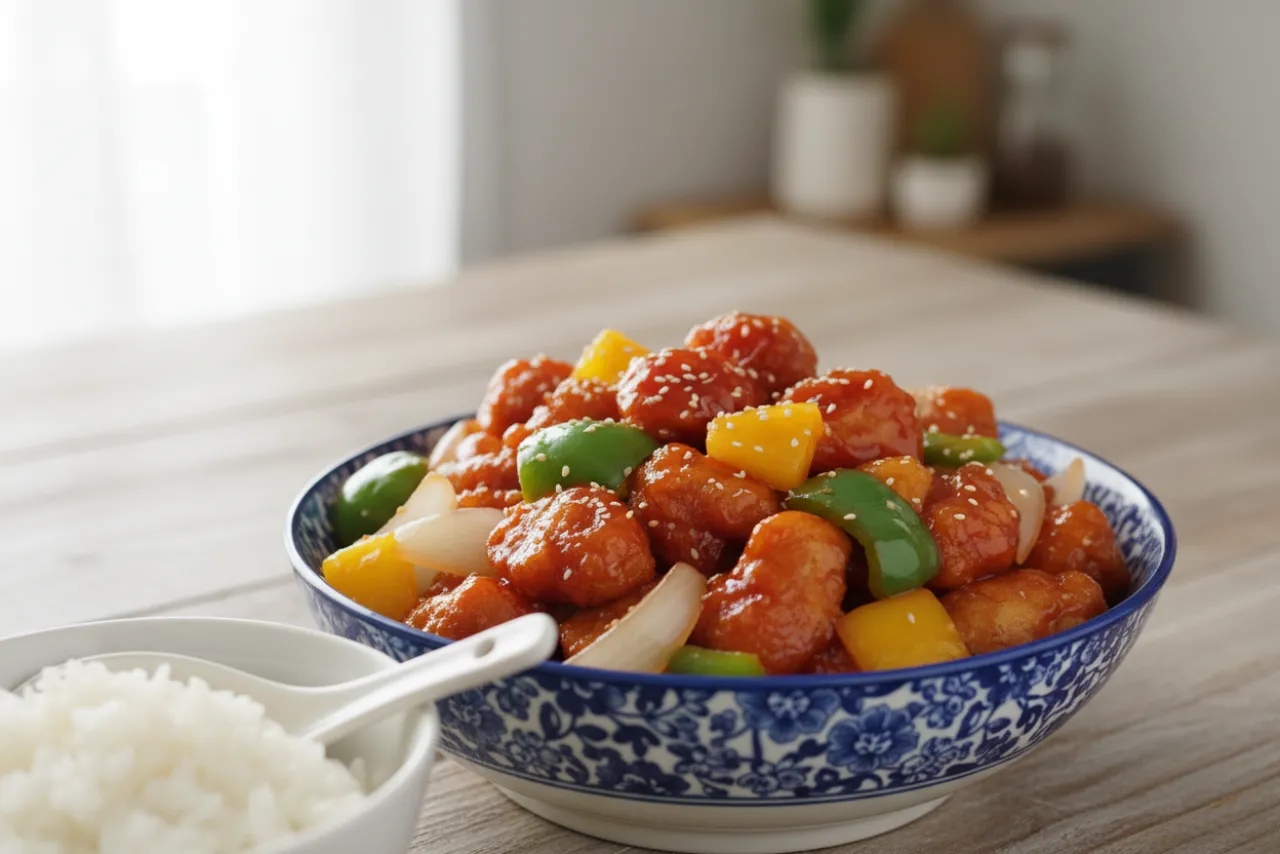
Crisp pork in a glossy sweet-sour sauce with pepper and pineapple.
Ingredients
- 500 g Pork shoulder
- 1 Bell pepper
- 1 Onion
- 5 tbsp Cornstarch
- 1 Egg
- 4 tbsp Rice vinegar
- 4 tbsp Sugar
- 2 tbsp Tomato paste
- 1 tbsp Light soy sauce
- 5 tbsp Neutral oil
Method
- Cube the pork and chop the bell pepper and onion.
- Coat the pork in the beaten egg and cornstarch.
- Heat the neutral oil in a wok or deep pan over medium-high until shimmering, around 175C/350F.
- While the oil heats, whisk the rice vinegar, sugar, tomato paste, and soy into a sweet-sour sauce.
- Deep-fry the coated pork in the hot oil until golden and crisp all over, then lift out and drain.
- Stir-fry the bell pepper and onion, pour in the sauce to bubble, then toss the pork through to coat.
- Serve straight away while crisp.
Tap “Start cooking” for live timers that flag what to get ahead on while something simmers.
About Sweet and Sour Pork
Sweet and sour pork is one of the most recognizable dishes in the Cantonese repertoire, though the version most people know abroad leans harder on the sweetness than the older southern Chinese originals. At its core it is a study in contrast: cubes of pork shoulder are given a light egg-and-cornstarch coat and deep-fried until the exterior turns genuinely crisp, then folded through a glossy, tangy sauce built from rice vinegar, sugar, and tomato paste. Bell pepper, onion, and pineapple go in for color, crunch, and a fruity acidity that keeps the whole thing from tipping into cloying. The defining pleasure is textural — that brittle, lacquered crust holding up against a syrupy sauce.
The dish tastes bright and rounded rather than fiery, with the vinegar and pineapple cutting through the richness of fried pork and the soy adding a savory floor beneath the sweetness. It is a classic centerpiece for a shared Chinese meal, set out alongside plain steamed rice and a green vegetable so the sauce has somewhere to go. What makes this version worth cooking is timing and restraint: the sauce is whisked together while the oil heats, and the fried pork is tossed through only at the very end so it stays crisp instead of going soggy. Serve it the moment it comes together — this is a dish that rewards eating straight from the wok.
Sweet and Sour Pork: frequently asked questions
How many calories are in Sweet and Sour Pork?
A serving has about 480 calories — 27.5g protein, 29.8g carbs, 27.5g fat, 1.6g fiber. Figures are estimated from the ingredient amounts and will shift with your portions and brands.
Is it high in protein?
Each serving has about 27.5g of protein, roughly 23% of its calories.
Is Sweet and Sour Pork gluten-free?
As written, no — it contains Light soy sauce. You'd need a certified gluten-free swap for that ingredient to make it gluten-free.
How long does Sweet and Sour Pork take to make?
About 35 minutes start to finish, but only around 24 of those are hands-on — the rest is cooking time. In the Homecooked app the timers and parallel steps are sequenced for you so the hands-on part feels even shorter.
How many servings does Sweet and Sour Pork make?
This recipe makes 4 servings. In the app you can scale it up or down and the ingredient amounts adjust automatically.