Tamagoyaki
Lightly sweet, multi-layered rolled omelet — the bento staple.
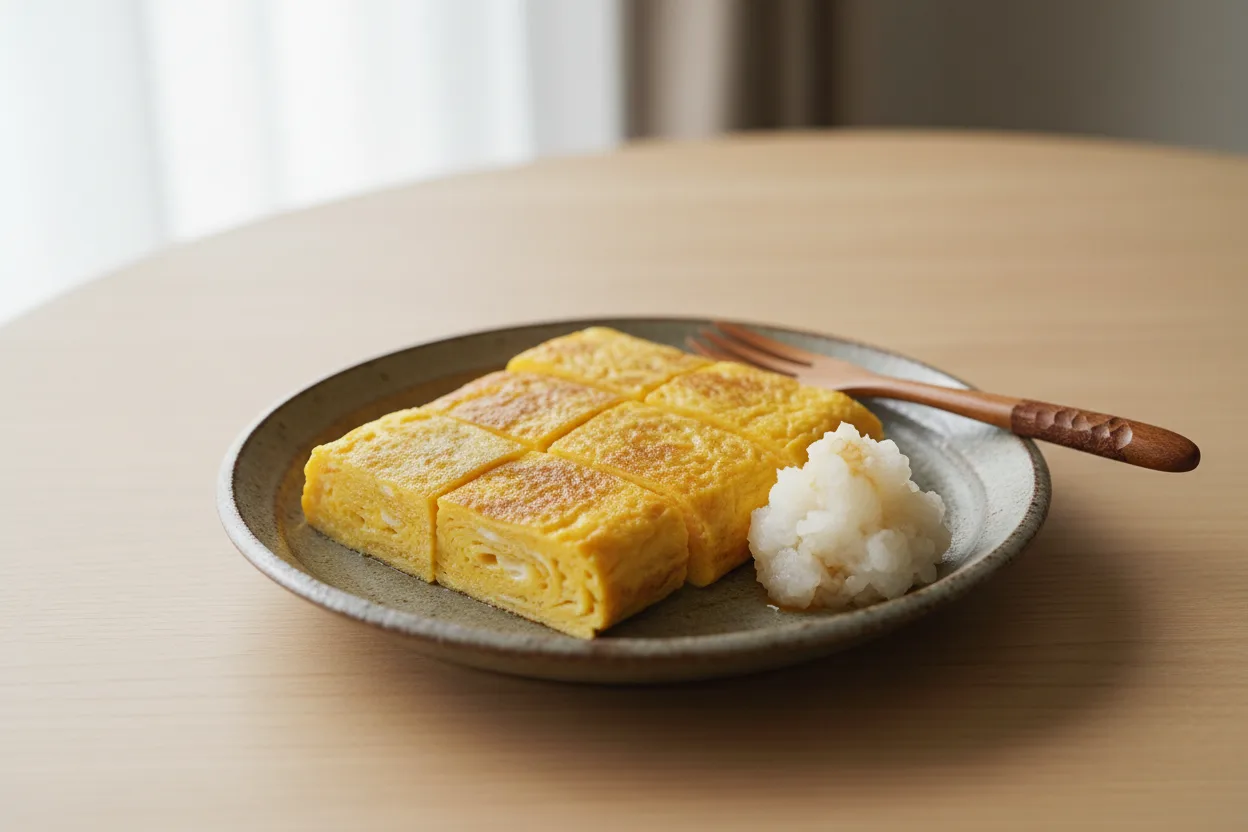
Ingredients
- 4 Egg
- 1 tsp Japanese light soy sauce (usukuchi)
- 1 tbsp Mirin
- 1 tsp Sugar
- ⅛ tsp Salt
- 2 tbsp Neutral oil
- 50 g White radish (optional)
- 1 tsp Japanese soy sauce (koikuchi shoyu) (optional)
Method
- Beat the eggs in a bowl with mirin, soy, sugar, and salt until smooth (don't froth).
- Heat the skillet over medium. Rub with oiled paper towel. Pour in a quarter of the egg mixture. Tilt to coat.
- When the surface is just setting but still glossy, push the egg from the far edge to the near edge in 3 folds, like rolling a scroll.
- Push the roll to the far edge. Re-oil. Pour in another quarter of egg, lifting the roll so it flows underneath.
- When the new layer is just set, roll the existing roll back over it (using it as the core). Repeat with the remaining 2 quarters of egg.
- Slide the finished roll onto a board. Press lightly with the spatula to even the shape. Rest 2 minutes.
- Slice the roll into 2 cm pieces. If using, mound grated daikon alongside and drizzle a few drops of soy over it.
Tap “Start cooking” for live timers that flag what to get ahead on while something simmers.
About Tamagoyaki
Tamagoyaki is the layered, gently sweet Japanese rolled omelet that turns up in bento boxes, at sushi counters, and on breakfast tables. Rather than being folded once like a French omelet, it is built up from several thin sheets of egg, each poured in turn and rolled onto the growing log while still glossy, so the finished piece has fine, distinct layers when sliced. The egg is seasoned before cooking with mirin, soy, and a little sugar, giving it a savory-sweet balance and a tender, almost custardy set. Traditionally it is made in a rectangular tamagoyaki pan, though the same scroll-rolling technique works in any skillet with patience.
Sliced into neat blocks, it is soft, faintly sweet, and delicate, often served with a mound of grated white radish and a dab of soy for a fresh, sharp contrast. It works as a side, a bento staple, or a topping for rice, and its make-ahead ease is part of its charm. The skill is entirely in the rolling: each layer must be poured thin and rolled while the surface is just setting but still tacky, so the sheets fuse into one seamless log. Done well, the payoff is that unmistakable spiral of layers and a texture that is at once firm enough to slice and soft enough to melt.
Tamagoyaki: frequently asked questions
How many calories are in Tamagoyaki?
A serving has about 288 calories — 12.9g protein, 4.2g carbs, 23.3g fat, 0g fiber. Figures are estimated from the ingredient amounts and will shift with your portions and brands.
Is Tamagoyaki gluten-free?
As written, no — it contains Japanese light soy sauce (usukuchi), Japanese soy sauce (koikuchi shoyu). You'd need a certified gluten-free swap for those ingredients to make it gluten-free.
Do I need every ingredient to make Tamagoyaki?
The core ingredients are essential, but you can leave out white radish, japanese soy sauce (koikuchi shoyu) — they're optional and mainly there for extra flavor or finish.
How many servings does Tamagoyaki make?
This recipe makes 2 servings. In the app you can scale it up or down and the ingredient amounts adjust automatically.