Tandoori Chicken
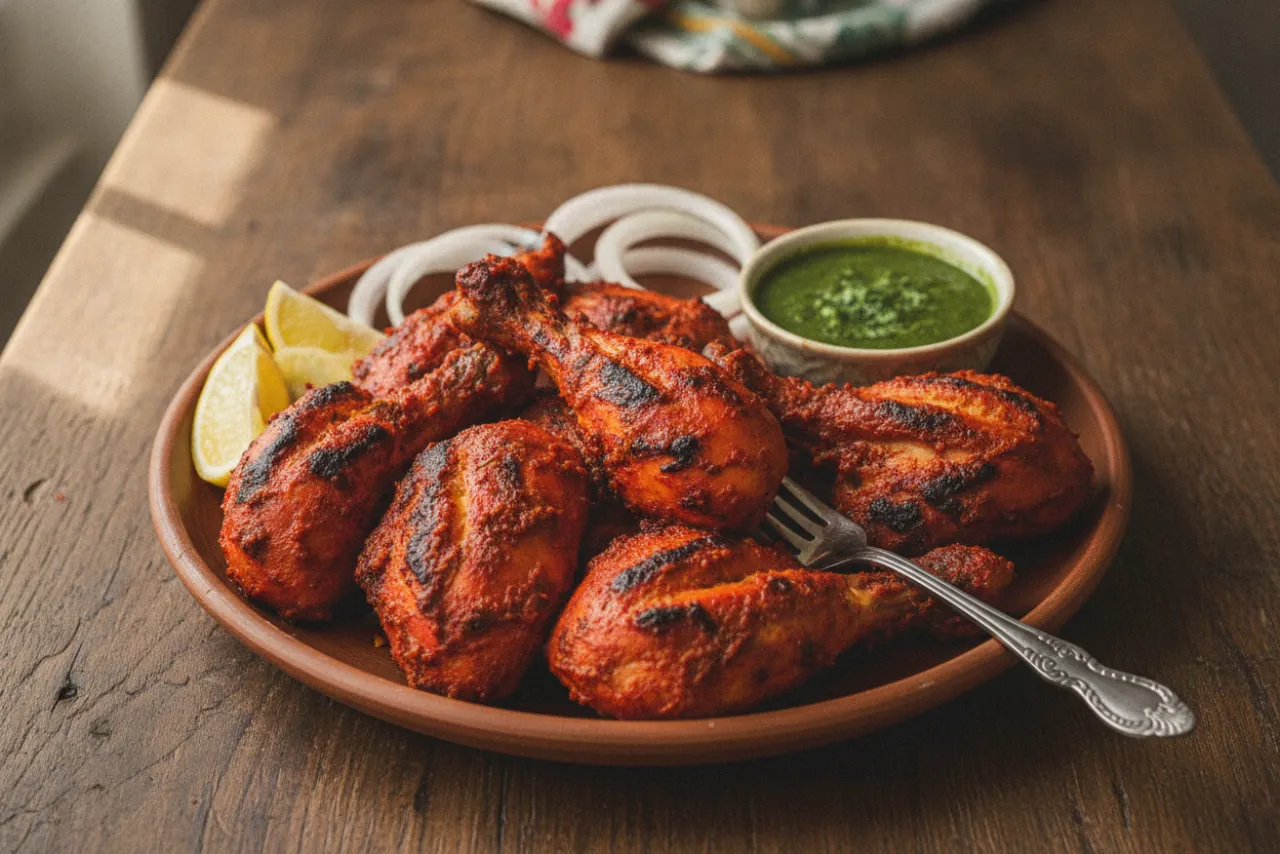
Yoghurt-and-spice marinated chicken roasted until charred.
Ingredients
- 1000 g Chicken pieces (legs + thighs)
- 200 g Yogurt
- 2 tbsp Tandoori masala
- 1 Ginger
- 5 cloves Garlic
- 1 Lemon
- 1 tsp Salt
Method
- Slash the chicken; grate the ginger and garlic and mix with yoghurt, tandoori masala, lemon, and salt. Coat the chicken in the marinade.
- Rest the chicken in the marinade at least 30 minutes, or overnight in the fridge for the deepest colour and flavour.
- Roast hot until charred at the edges and cooked through, about 30 minutes.
- Serve with lemon and onion.
Tap “Start cooking” for live timers that flag what to get ahead on while something simmers.
About Tandoori Chicken
Tandoori chicken is a cornerstone of North Indian cooking, named for the tandoor — the searing clay oven whose fierce heat gives the dish its charred edges and smoky character. The defining move is the marinade: chicken pieces are slashed to the bone and coated in yogurt spiked with tandoori masala, grated ginger and garlic, lemon, and salt. The yogurt does double duty, tenderizing the meat with its acidity while carrying the spice blend deep into every cut, and the lemon adds brightness that balances the warm, earthy masala. Slashing the chicken lets the marinade penetrate and helps the surface char.
The finished chicken is smoky, tangy, and boldly spiced, with a burnished exterior giving way to juicy meat beneath. It is classic party and restaurant fare, typically served with lemon wedges, raw onion, and a cooling chutney or mint dip, and it also makes the base for dishes like chicken tikka. This version leans on a proper rest in the marinade — at least half an hour, and ideally overnight — which is the single biggest factor in deep color and flavor. Roasting it hot until the edges char mimics the tandoor's intensity in a home oven, delivering that signature blistered finish without the clay pit.
Tandoori Chicken: frequently asked questions
What's the difference between tandoori chicken and chicken tikka?
Tandoori chicken uses bone-in chicken pieces (often a whole cut-up bird) marinated in yogurt and spices and roasted, whereas chicken tikka uses boneless, skinless chunks threaded onto skewers. Both share the same style of yogurt-and-spice marinade and are traditionally cooked in a tandoor (clay oven), so the core difference is the cut of meat—whole bone-in pieces versus bite-sized boneless cubes ("tikka" means small pieces or chunks). Chicken tikka is also the basis for chicken tikka masala, where the cooked cubes are simmered in a spiced tomato-cream sauce.
How many calories are in Tandoori Chicken?
A serving has about 624 calories — 44.6g protein, 9.9g carbs, 44.8g fat, 2.8g fiber. Figures are estimated from the ingredient amounts and will shift with your portions and brands.
Is it high in protein?
Each serving has about 44.6g of protein, roughly 29% of its calories.
Is Tandoori Chicken gluten-free?
Based on its ingredients, Tandoori Chicken has no gluten-containing components, so it's naturally gluten-free — as always, check that any packaged ingredients you use are certified gluten-free to be safe.
Is Tandoori Chicken dairy-free?
Not as written — it uses Yogurt. Swapping it for a plant-based alternative makes it dairy-free.
How long does Tandoori Chicken take to make?
About 45 minutes start to finish, but only around 10 of those are hands-on — the rest is largely unattended cooking time you can step away from. In the Homecooked app the timers and parallel steps are sequenced for you so the hands-on part feels even shorter.
How many servings does Tandoori Chicken make?
This recipe makes 4 servings. In the app you can scale it up or down and the ingredient amounts adjust automatically.