Dal Makhani
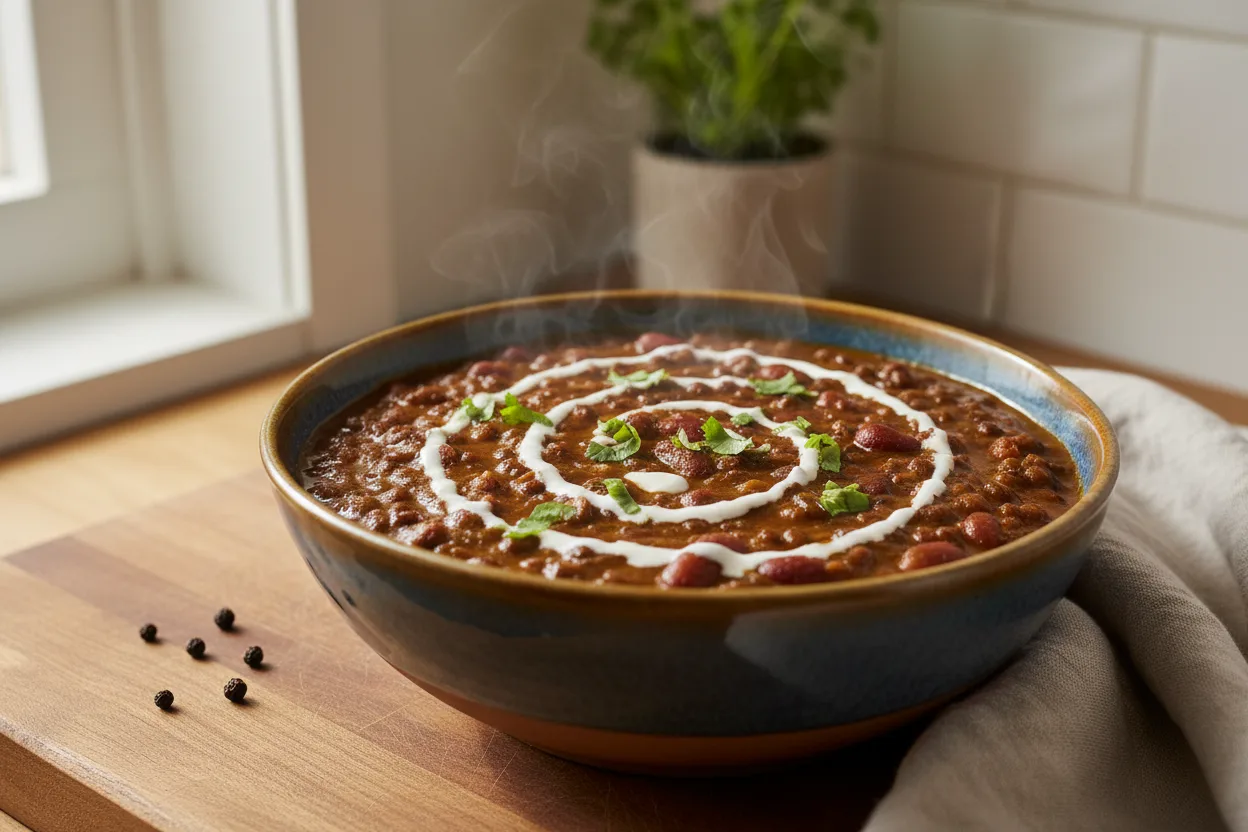
Slow-cooked black lentils with butter
Ingredients
- 200 g Urad dal (split black gram, skinned)
- 60 g Rajma (red kidney beans)
- ½ tin San Marzano tomatoes (DOP)
- 1 Onion
- 30 g Ginger
- 6 cloves Garlic
- 2 Green chili
- 1½ tsp Kashmiri chili powder
- ½ tsp Ground turmeric
- 2 tsp Ground coriander
- 1½ tsp Garam masala
- 100 g Butter
- 120 ml Heavy cream
- 1 tbsp Ghee
- 1 tsp Cumin seeds
- 2 tsp Salt
- 360 g Basmati rice
- 2 tsp Kasuri methi (dried fenugreek leaves) (optional)
Method
- Rinse the basmati rice until the water runs clear, then cook it in twice its volume of water, covered, until tender and the water is absorbed, about 15 minutes.
- Soak the urad dal and rajma (kidney beans) together in plenty of cold water for 8 hours or overnight — they must be soaked before cooking.
- Drain and rinse the soaked dal and beans.
- Pressure-cook the dal and rajma with enough water to cover well, the turmeric, and a good pinch of salt for 35 minutes after the first whistle (or until the rajma squashes between your fingers).
- Meanwhile mince the onion, ginger, garlic, and slit the green chilies.
- Melt half the butter over medium heat. Sweat the minced onion until soft and golden, about 10 minutes.
- Add ginger, garlic, and chilies. Cook 3 minutes until raw smell gone.
- Stir in kashmiri chili, coriander powder, and a splash of water. Cook 1 minute. Crush in the tomatoes and cook 10 minutes until thick and the oil starts to separate out at the edges.
- Tip in the cooked dal-rajma mixture (with cooking liquid). Mash a quarter of the beans against the side for body. Simmer 25 minutes on low, stirring every few minutes so it doesn't catch.
- Stir in cream, remaining butter, and most of the garam masala. Crush the kasuri methi (dried fenugreek leaves) between your palms over the pot. Simmer 5 minutes more.
- Make the tadka (a final sizzle of spices in hot fat): melt the ghee in a small pan. Toss the cumin seeds in for 10 seconds until they sputter. Pour the sizzling tadka over the dal.
- Ladle into bowls. Serve with naan or basmati rice.
Tap “Start cooking” for live timers that flag what to get ahead on while something simmers.
About Dal Makhani
Dal makhani is the flagship of Punjabi restaurant cooking, a slow, luxurious lentil dish built on whole black urad (split black gram) and a handful of red kidney beans. Unlike quick everyday dals, it depends on time: the lentils and rajma are soaked overnight and then cooked long and gently until they collapse into a dark, velvety base. What defines it is that unhurried richness — butter, cream and a slow simmer transform humble legumes into something closer to a special-occasion dish than a pantry standby.
The flavor is deep, mildly smoky and deeply savory, with Kashmiri chili giving color and gentle warmth rather than sharp heat, and crushed kasuri methi lending its signature slightly bitter, hay-like aroma at the finish. The texture is the whole point: creamy, clingy, almost buttery, meant to be mopped up with naan or spooned over rice. Because the base cooks so long, this is a dish for a weekend or a gathering rather than a rushed weeknight, and it holds and reheats beautifully — many cooks think it tastes even better the next day. It is vegetarian, and adaptable toward vegan by swapping the dairy for plant cream and oil.
Dal Makhani: frequently asked questions
What's the difference between dal makhani and dal tadka?
Dal makhani is made primarily from whole black lentils (urad/sabut urad) plus a few red kidney beans (rajma), simmered slowly for hours and finished with butter and cream, giving it a thick, rich, dark, and velvety texture; it originates from Punjab and is associated with the tandoor-style Punjabi/Mughlai kitchen. Dal tadka is a lighter, everyday dish typically made from split lentils such as toor (arhar), masoor, or moong, which cook quickly into a looser consistency and are finished with a "tadka" (tempering) of ghee, cumin, garlic, dried chilies, and other spices poured over the top. The key differences are the lentil type, the cooking time and richness (cream and butter vs. a simpler spice tempering), and the resulting texture.
How many calories are in Dal Makhani?
A serving has about 600 calories — 16.1g protein, 79.6g carbs, 25.1g fat, 10.6g fiber. Figures are estimated from the ingredient amounts and will shift with your portions and brands.
Is Dal Makhani gluten-free?
Based on its ingredients, Dal Makhani has no gluten-containing components, so it's naturally gluten-free — as always, check that any packaged ingredients you use are certified gluten-free to be safe.
Is Dal Makhani dairy-free?
Not as written — it uses Butter, Heavy cream, Ghee. Swapping those for a plant-based alternative makes it dairy-free.
How long does Dal Makhani take to make?
About 90 minutes start to finish, but only around 62 of those are hands-on — the rest is largely unattended cooking time you can step away from. In the Homecooked app the timers and parallel steps are sequenced for you so the hands-on part feels even shorter.
Do I need every ingredient to make Dal Makhani?
The core ingredients are essential, but you can leave out kasuri methi (dried fenugreek leaves) — it's optional and mainly there for extra flavor or finish.
How many servings does Dal Makhani make?
This recipe makes 6 servings. In the app you can scale it up or down and the ingredient amounts adjust automatically.