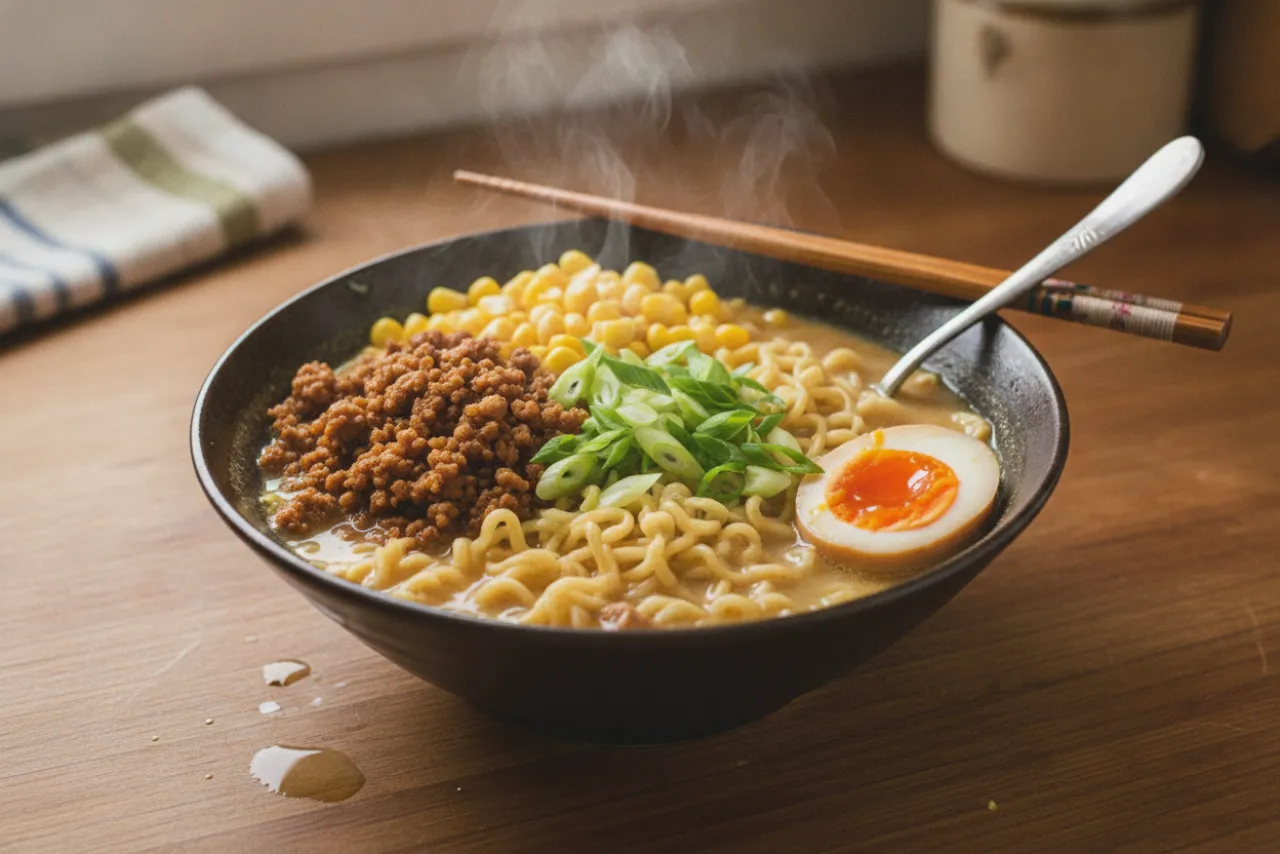
Great ramen isn't one recipe — it's a set of parts you can mix and match, and this roundup of the best ramen recipes covers all of them, from a 15-minute weeknight bowl to a 90-minute Sunday project. Once you understand how a bowl is built, you can hit whatever flavor you're after: rich and porky, clean and soy-forward, spicy, creamy, or fully plant-based.
Every bowl has four parts. The broth is the liquid base — chicken, pork, dashi, or a mushroom-kombu stock. The tare is the concentrated seasoning that goes in the bottom of the bowl and actually defines the ramen: miso tare, shoyu (soy) tare, or salt-based shio. Noodles are wheat noodles made springy with alkaline salts (kansui), which is where their color and chew come from. And the toppings — a soft egg, chashu pork, corn, scallion, nori, chili oil — are what finish it. Change the tare and you change the whole bowl on the same broth.
You don't need a 12-hour stockpot to eat well. Several bowls here lean into shortcut techniques that get you most of the way there fast: a tori paitan that borrows soy milk and white miso for a silky, cloudy broth, or a one-pot weeknight bowl built on grated aromatics. If you care about healthy ramen recipes, the numbers back it up — a bowl like Miso Ramen lands around 664 kcal with 36g protein, and the high-protein, high-volume bowls fill you up without wrecking the day.
And if instant ramen is your reality, the fix is simple: treat the packet as noodles and starting seasoning, not the finished dish. Build a real base — sweat garlic and shallot in oil, add stock, use only half the seasoning packet — then add protein and a soft egg. That's the whole idea behind how to make ramen better at home, and one recipe here does exactly that with seared beef and fried shallots.
1Miso Ramen
Japanese30 min664 cal36g protein
A rich miso broth over noodles with corn and scallion, ready in 30 minutes and serving two — this is the bowl most people mean when they say ramen. At roughly 664 kcal with 36g protein and 5g fiber, it's also one of the more balanced picks here.
Miso is your tare, so don't boil it: whisk the paste into the hot broth off the heat to keep the flavor from going flat and bitter. A knob of butter and the corn are the classic Sapporo-style finish.
2Shoyu Ramen
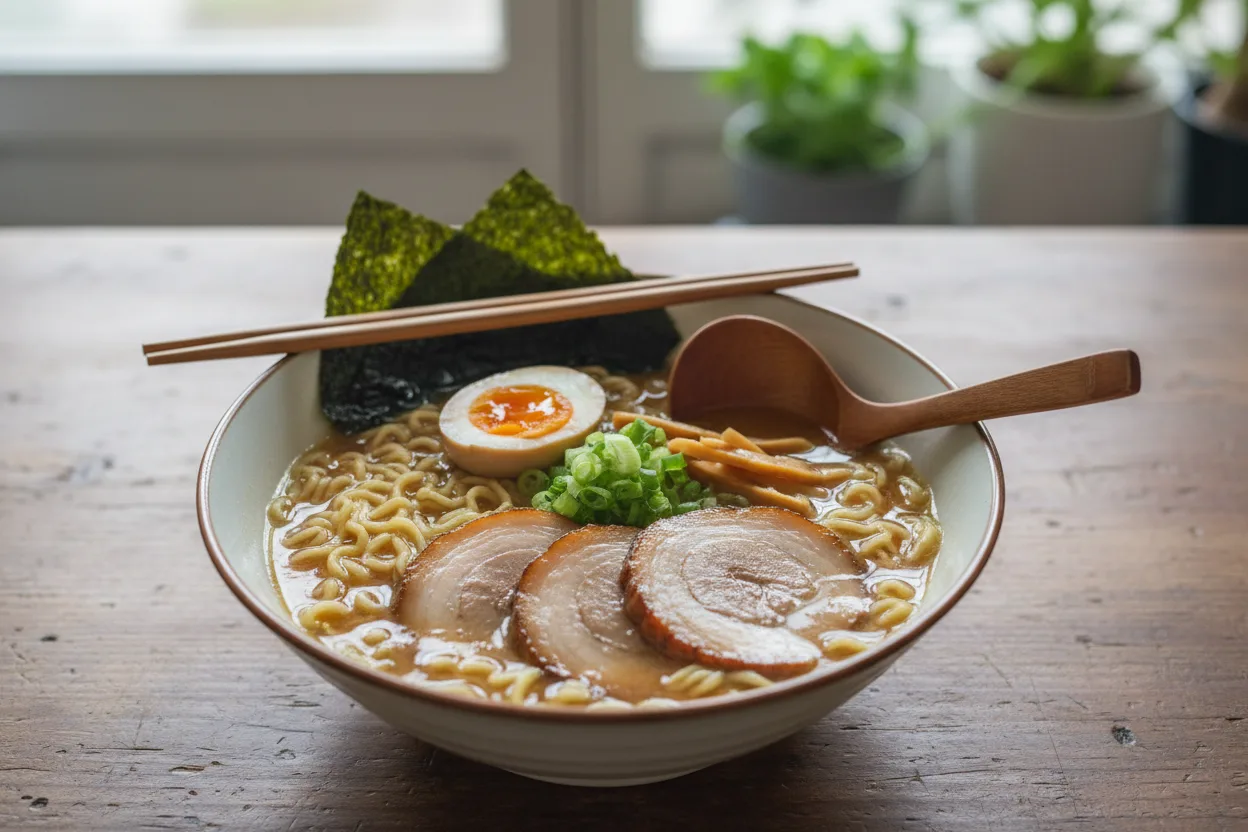
Japanese90 min988 cal35g protein
This is the 90-minute project of the group — a Tokyo-style bowl built on a bonito-and-chicken broth, a proper soy tare, springy noodles, a soft egg, and pork. If you want to taste what a from-scratch bowl actually delivers, this is it.
The reward for the time is a clean, layered broth you can't shortcut, so make it on a weekend and make the full four servings. Prep the soft eggs and pork ahead — the broth is the part that needs your attention.
3Chicken Shoyu Ramen
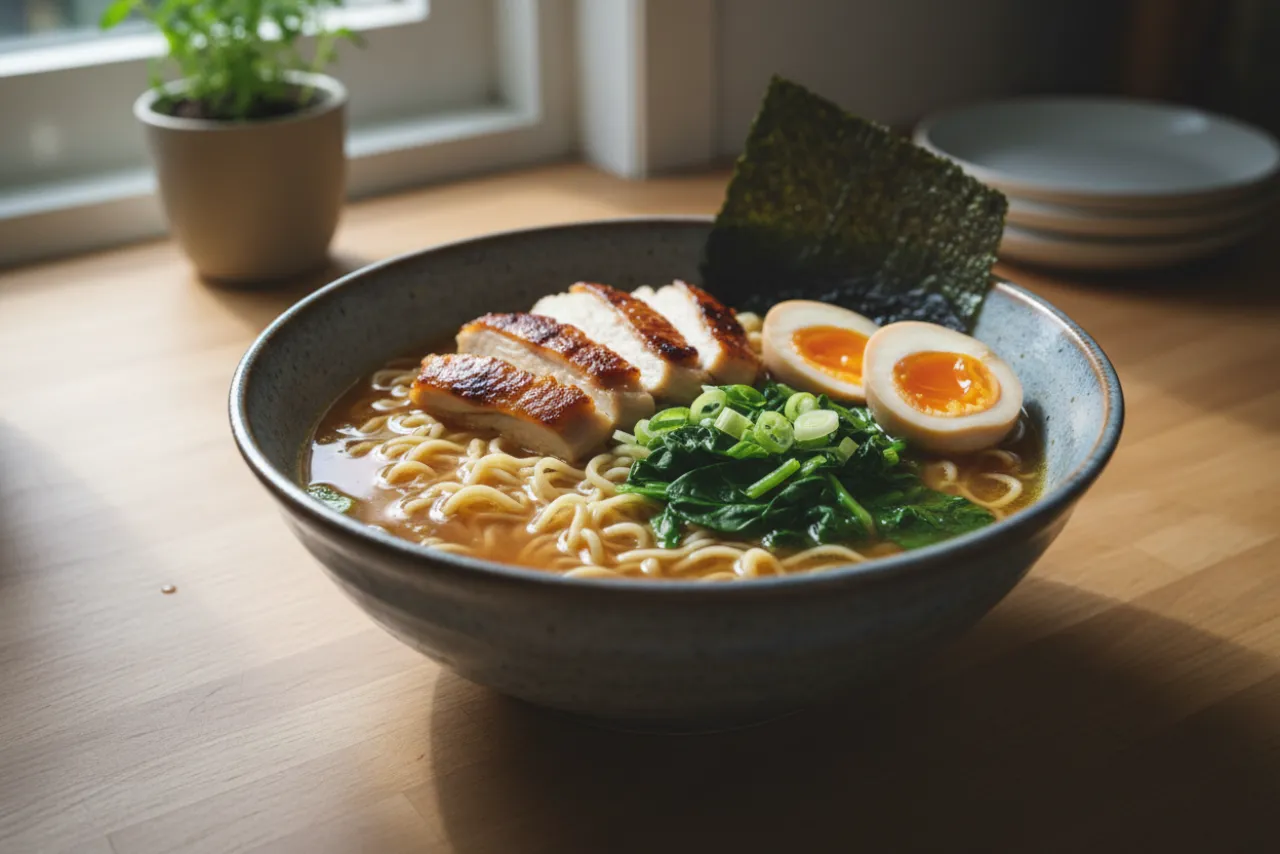
Japanese35 min
The weeknight answer to the full shoyu project — seared chicken thighs over a soy-seasoned chicken broth with a soft egg and scallions, done in 35 minutes. It's high-protein and high-volume, so it eats like a full meal.
Sear the thighs skin-side down and hard, then use the browned fond in the pan as the start of your broth — that's where the depth comes from without a long simmer.
4Spicy Miso Ramen
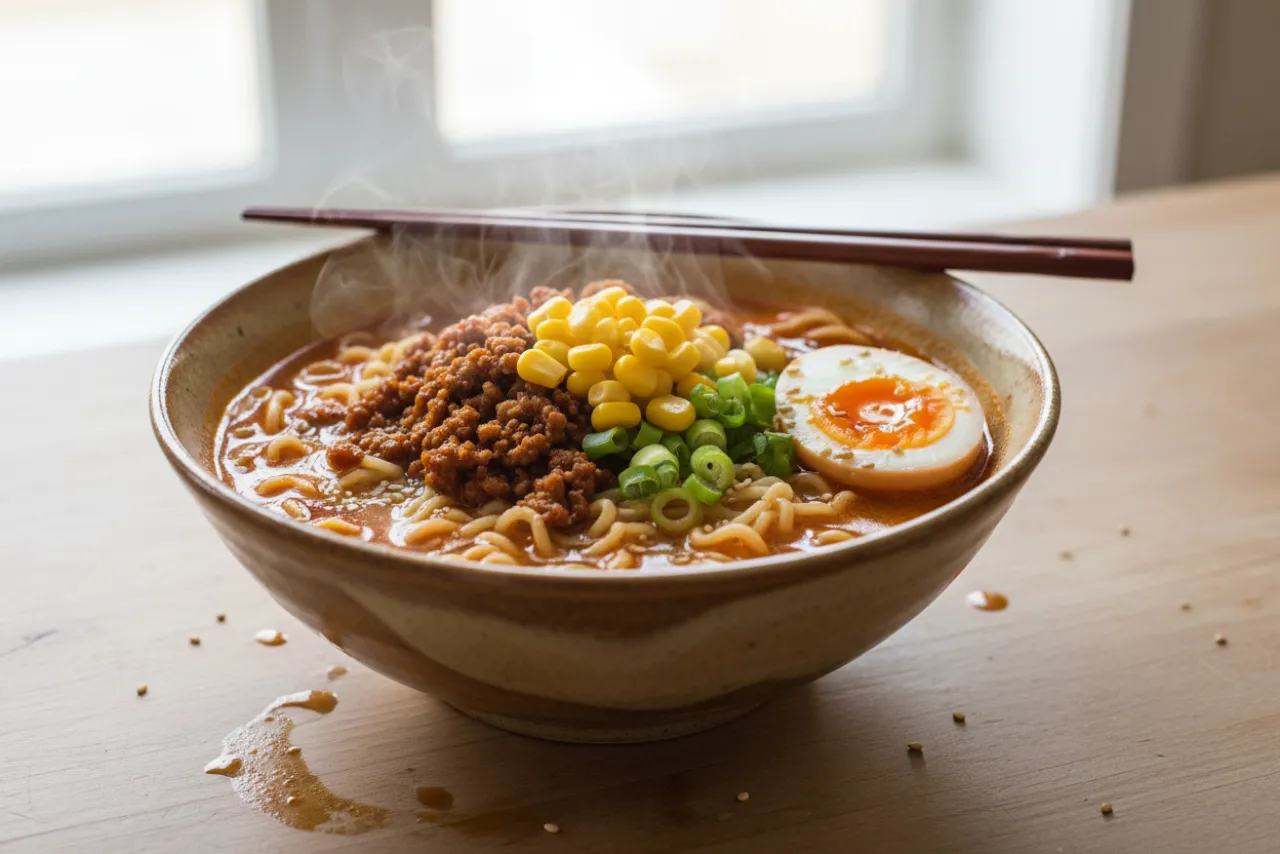
Japanese30 min
A gochujang-spiked miso broth with crispy pork, sweet corn, a soft egg, and chili oil to finish — heat layered onto the comfort of a miso bowl. High-protein and high-volume in 30 minutes.
Bloom the gochujang and any chili paste in a little oil before it hits the liquid; that quick fry deepens the color and takes the raw edge off the spice. Add the chili oil at the table so you control the burn.
5Kimchi Ramen
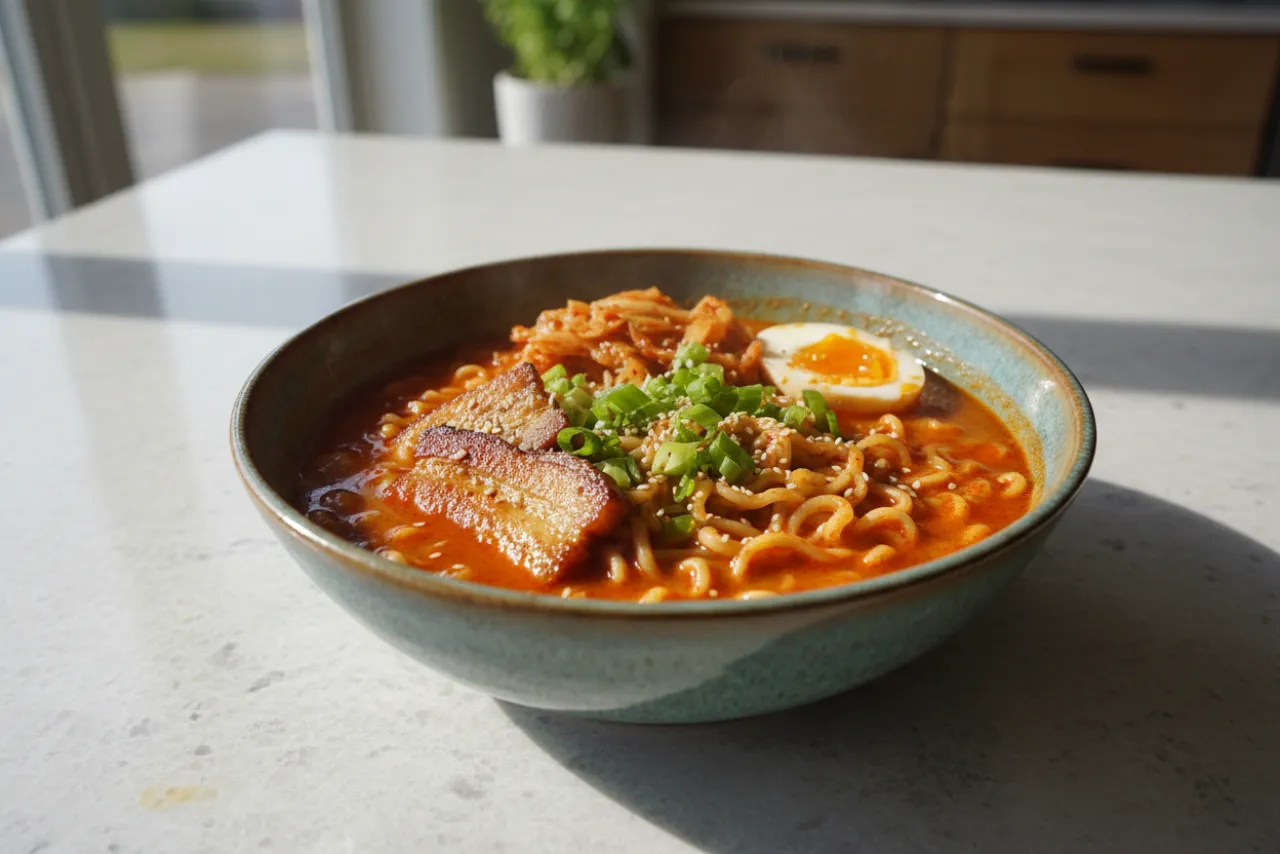
Korean30 min
Crispy pork belly and fried kimchi in a fiery gochujang broth — a Korean take where the kimchi juice does the heavy lifting as seasoning. Ready in 30 minutes for two.
Use well-fermented, sour kimchi and fry it hard before the liquid goes in — caramelizing it concentrates the flavor. Don't skip the brine from the jar; that funky liquid is the secret seasoning.
6Curry Ramen
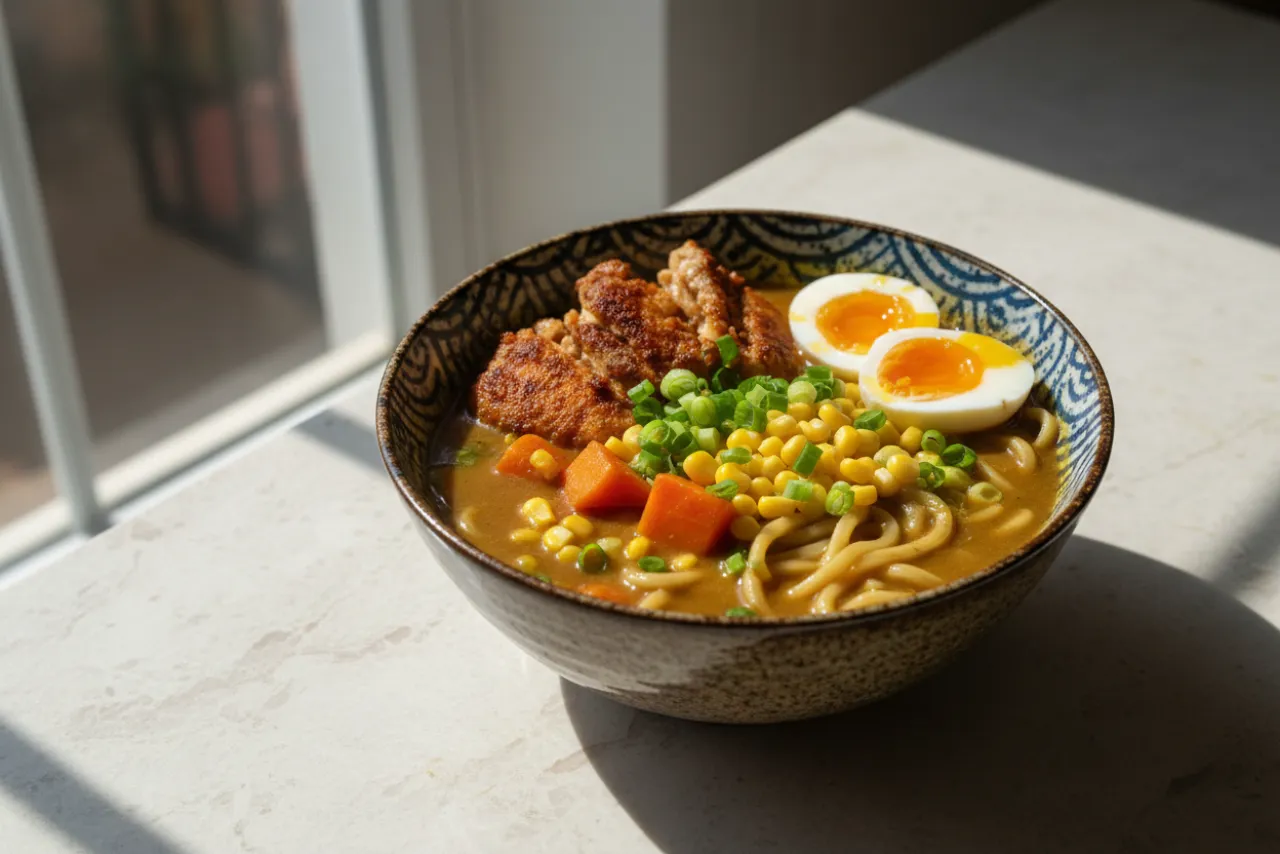
Japanese35 min
Japanese curry meets ramen — a roux-thickened, glossy broth over noodles with golden chicken and sweet onion. The thicker body clings to the noodles in a way clear broths don't. 35 minutes, serves two.
The roux is what makes it: cook the curry and flour together until it smells toasty before adding stock, then simmer to a coat-the-spoon consistency. Slightly undercook the noodles since the thick broth keeps cooking them in the bowl.
7Garlic Butter Corn Ramen
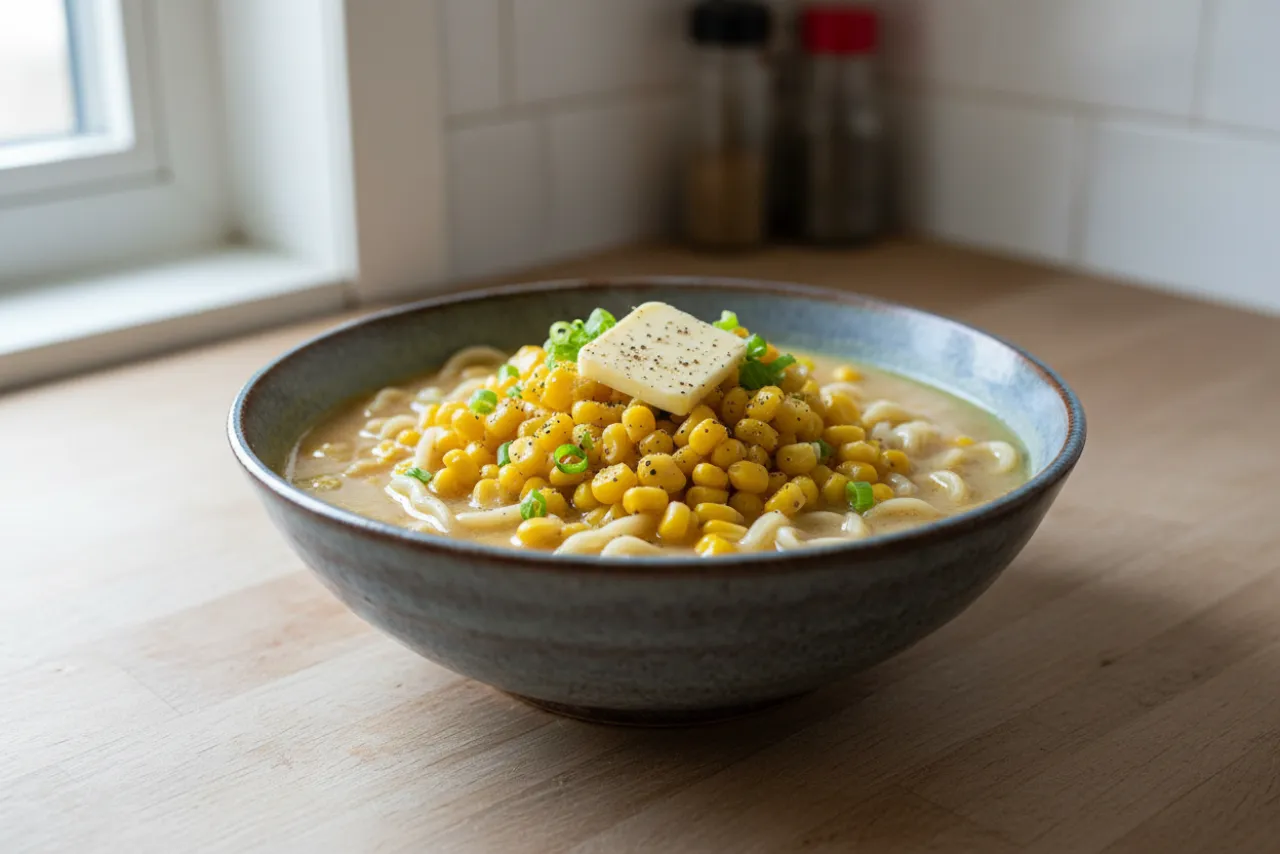
Japanese20 min
Sweet corn tossed in golden garlic butter over a light miso broth — straightforward Sapporo-style comfort in about 20 minutes. One of the fastest, most crowd-friendly bowls here.
Cook the corn in the butter until a few kernels catch color, then hit it with the garlic at the end so it doesn't scorch. It's a great low-effort upgrade path if you're starting from an instant packet.
8Veggie Ramen
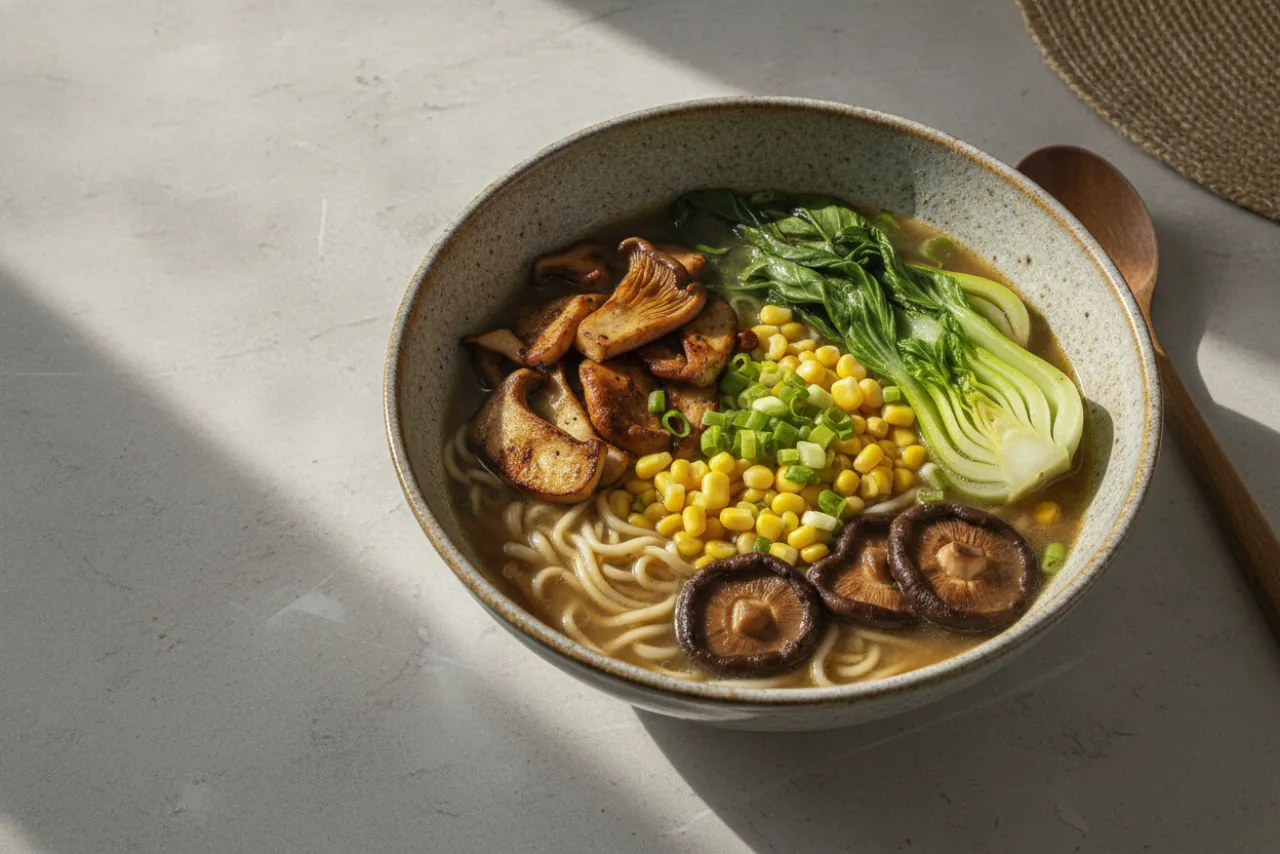
Japanese30 min
A deeply savory mushroom-kombu broth with seared mushrooms, bok choy, and sweet corn — fully plant-based and every bit as satisfying as a meat bowl. 30 minutes, serves two.
Dried shiitake and kombu are your umami engine here; steep them like a tea to build the broth's backbone. Sear the fresh mushrooms separately and hard so they add roasted depth rather than steaming into the soup.
9Tantanmen-Style Veggie Ramen
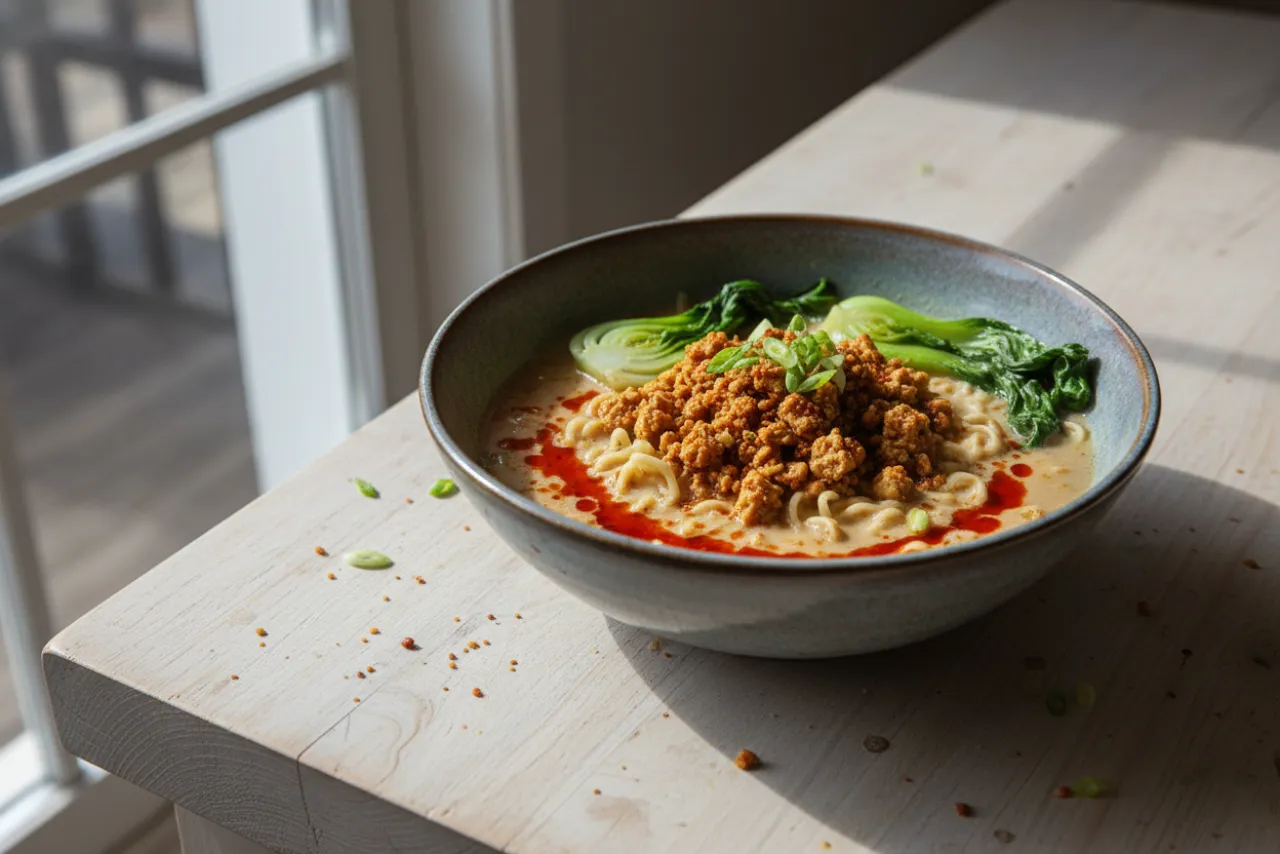
Japanese30 min
A creamy sesame-chili broth whisked into a bowl tare, topped with crispy spiced tofu crumbles — a fully plant-based take on tantanmen. Rich and nutty without any dairy or meat. 30 minutes for two.
The creaminess comes from sesame paste (tahini works) emulsified into the broth, so whisk it into the tare first to avoid clumps. Fry the tofu crumbles until genuinely crisp — they stand in for the traditional spiced pork.
10Tori Paitan-Style Ramen
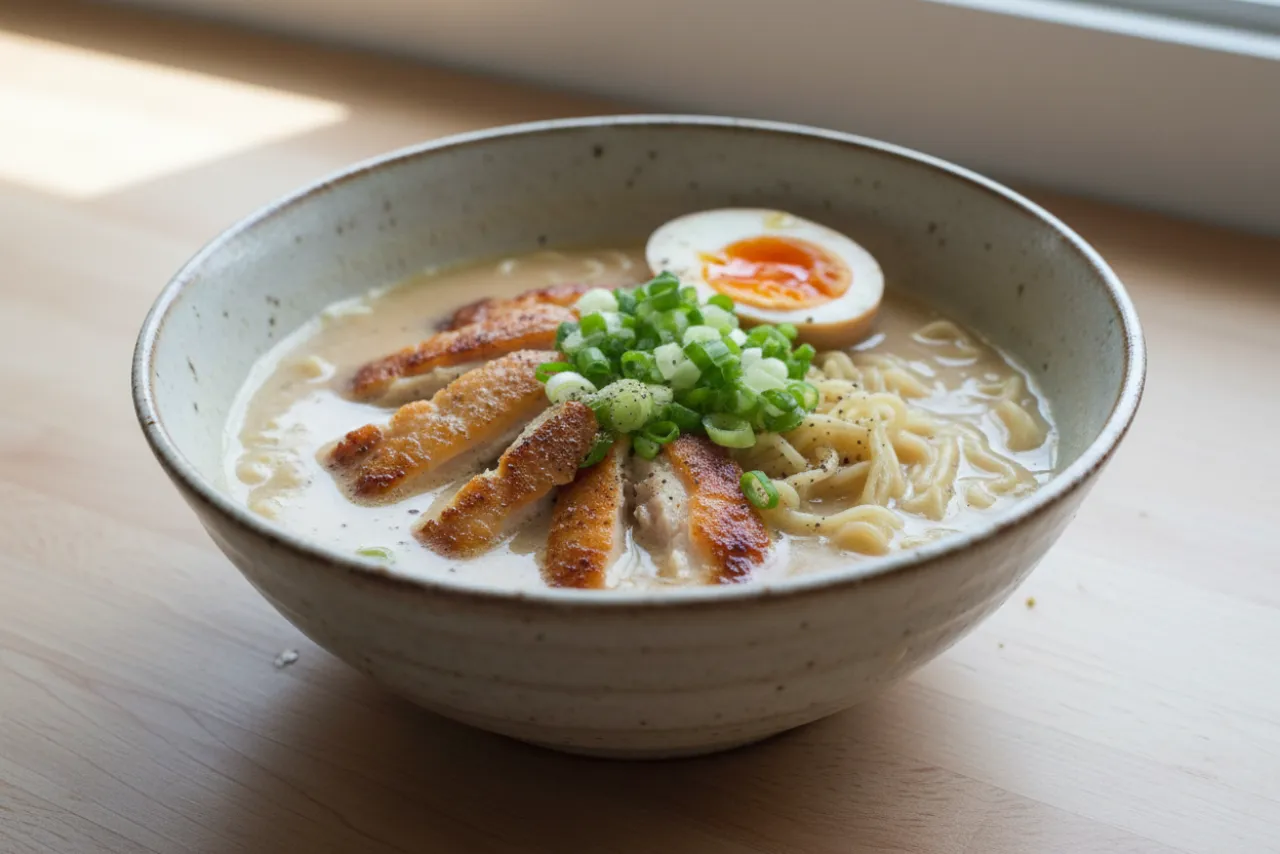
Japanese35 min
A silky, cloudy chicken broth under golden seared thighs — using the weeknight paitan trick of soy milk and white miso to fake a long-emulsified broth in 35 minutes. High-protein and high-volume.
Real paitan comes from hard-boiling bones for hours; here the soy milk and miso give you that opaque, creamy body without the wait. Keep it at a gentle simmer, not a rolling boil, so the soy milk stays smooth.
11Not-So-Instant Ramen with Seared Beef
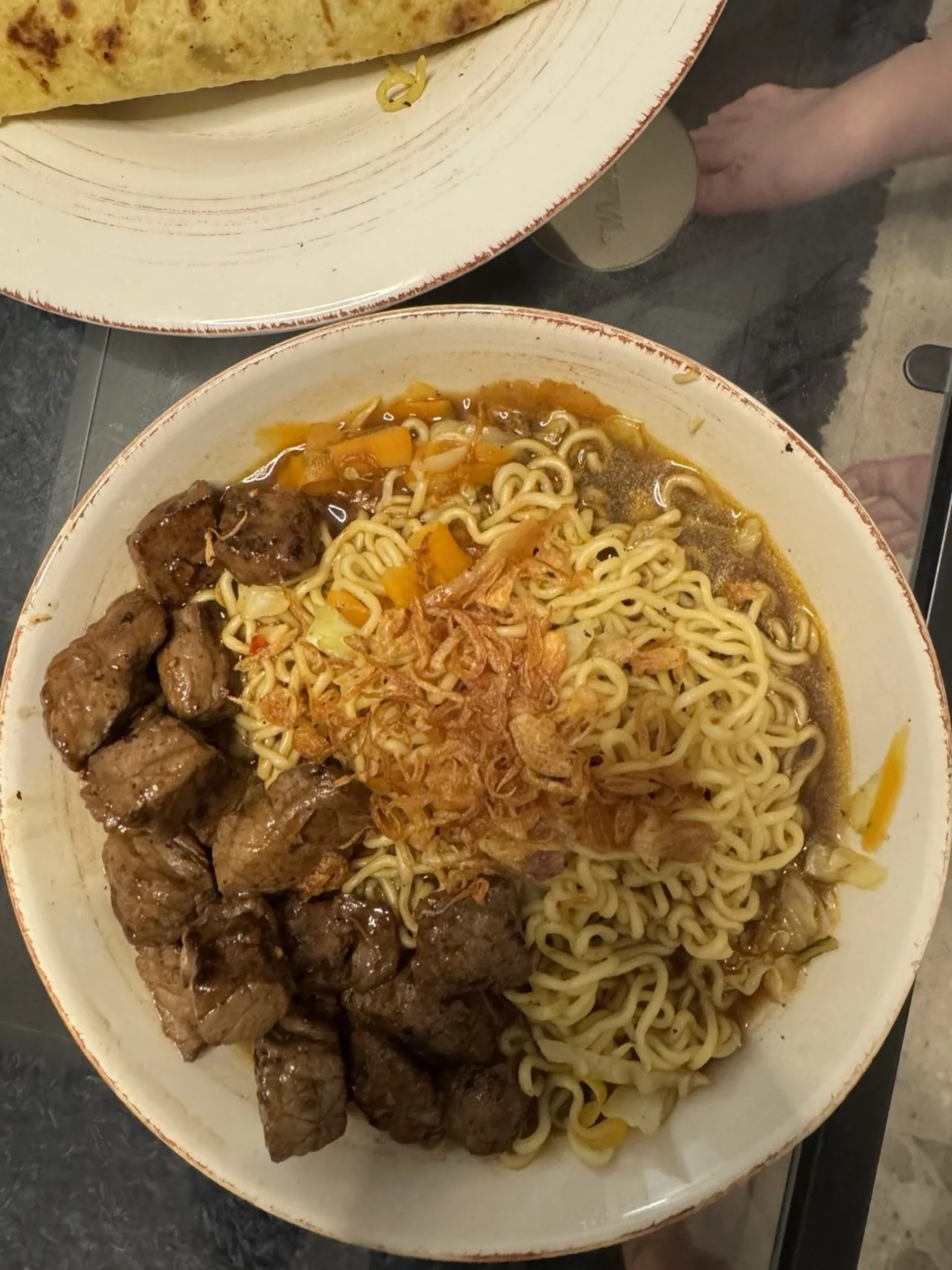
Korean25 min712 cal53g protein
Instant ramen made properly — the broth starts in the pan with shallot and garlic sweated in oil, then chicken stock, finished with seared sirloin and fried shallots. Built on Shin Ramyun, it lands at 712 kcal with a huge 53g protein.
This is the blueprint for making any instant packet genuinely good: build a real aromatic base, use the stock instead of just water, and add a proper protein. Use only part of the seasoning packet so you can control the salt.
1215-Minute Weeknight Ramen
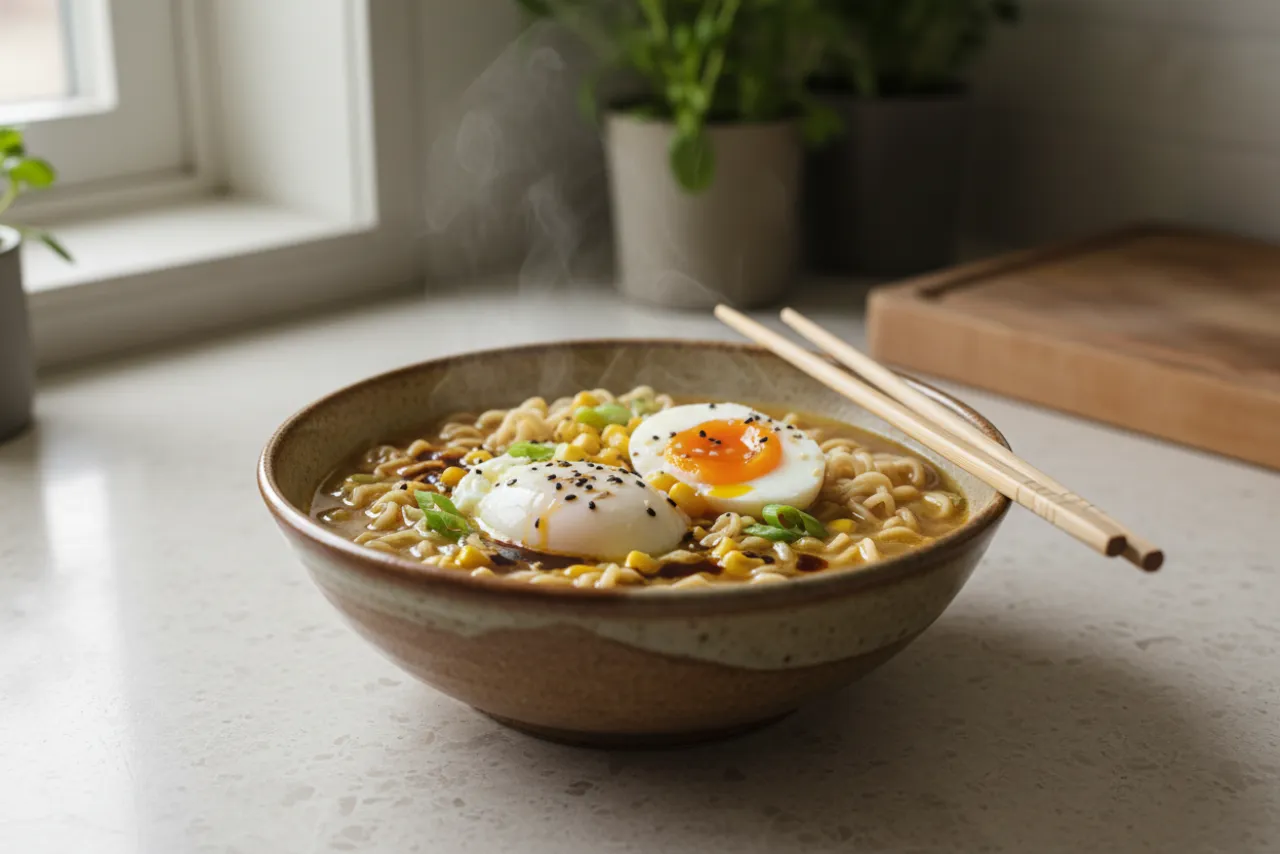
Japanese15 min
One pot, fifteen minutes — a miso-soy broth built on grated aromatics, noodles cooked right in it, and an egg poached on top. The fastest full bowl here and the lowest cleanup.
Grating the garlic and ginger instead of chopping releases their flavor fast, which is what makes this work in 15 minutes. Cooking the noodles directly in the broth thickens it slightly with their starch — just serve it right away before they overcook.
Frequently asked questions
How do I make ramen better and more flavorful?
Season the bowl, not just the pot: put a concentrated tare (miso, or soy plus mirin) in the bottom of each bowl and add hot broth to it. Build a real base by sweating garlic and aromatics in oil before adding stock instead of water, and finish with texture and richness — a soft egg, a seared protein, scallions, and a spoon of chili or garlic oil. For instant ramen specifically, use only part of the seasoning packet and add your own fresh aromatics and toppings.
What are the main types of ramen broth — miso, shoyu, and tonkotsu?
The three most common styles are defined mostly by their seasoning (tare) and base. Shoyu is soy-sauce-seasoned, giving a clear, savory brown broth. Miso uses fermented soybean paste for a thicker, richer, slightly sweet bowl. Tonkotsu refers to a pork-bone broth boiled until it turns creamy and opaque — it's a broth style rather than a seasoning, and it's often combined with a shoyu or shio tare. A silky paitan is the chicken equivalent of that cloudy, emulsified body.
Can ramen be healthy?
Yes, when you build it yourself. Homemade bowls let you control the sodium, load up on vegetables, and add lean protein — a bowl like our Miso Ramen comes in around 664 kcal with 36g protein and 5g fiber. Many of these recipes are tagged high-protein and high-volume, meaning they're filling for the calories. The bigger downside of packaged instant ramen is the very high sodium in the seasoning packet, which you can cut by using only part of it.
Is there gluten-free ramen?
Standard ramen noodles are made from wheat, and soy-sauce-based tare usually contains wheat too, so a typical bowl is not gluten-free. You can make a gluten-free version by swapping in rice noodles or dedicated gluten-free noodles and using tamari or a certified gluten-free soy sauce in place of regular soy. Miso and dashi are naturally gluten-free in most cases, but always check labels since some misos and instant packets include barley or wheat.
The easiest way to keep this going is to stop treating it as a project. Homecooked plans a week of meals around what's already in your kitchen, tells you the few ingredients you're missing, and walks you through cooking each one step by step. Browse more recipes or start planning your week.