
A 1,200 calorie meal plan can work as a short-term framework for some adults, but it needs to fit your own numbers, not a generic chart. It is not appropriate for anyone pregnant or breastfeeding, for teenagers, or for anyone whose personalized calorie estimate lands higher than 1,200. Done right, paired with activity and consistency, it tends to deliver gradual, modest weight loss rather than a quick fix.
TL;DR:
- A 1,200-calorie plan works best for smaller, less active adults with personalized maintenance estimates near that number; it is unsuitable for pregnant, breastfeeding, teen, or medically vulnerable individuals.
- Focus on building each meal around a protein source first, then add vegetables or fruit, while monitoring added sugars, sodium, and portion sizes to stay within nutritional targets.
- Incorporate daily protein (around 65 grams) and fiber (about 22 grams) with high-volume vegetables, whole grains, and fortified dairy or plant alternatives to maintain satiety and micronutrient balance.
- Use batch cooking, precise portioning, and pantry-first shopping to simplify meal prep and stay consistent, with adjustments based on your own schedule, preferences, and hunger cues.
- Regularly evaluate your energy levels, body responses, and progress over weeks, and consult a healthcare professional if experiencing persistent fatigue, dizziness, menstrual changes, or growing food-related anxiety.
Table of Contents
- Quick Takeaways Before You Start Cooking
- Your 7-Day Sample 1,200 Calorie Menu
- Nutrient Targets That Keep 1,200 Calories Working
- Shopping List and Meal-Prep Strategy for the Week
- Who 1,200 Calories Fits, and When to Check With a Clinician
- How Homecooked Supports a Personalized 1,200 Calorie Plan
- Making a 1,200 Calorie Plan Actually Stick
- Let Homecooked Handle the Planning Side
- FAQ
- Sources
Quick Takeaways Before You Start Cooking
Before you open the fridge and start portioning, a few priorities make the difference between a 1,200-calorie day that leaves you satisfied and one that leaves you hunting for snacks by 3 p.m.
Protein and fiber do the heavy lifting here. Both slow digestion and blunt hunger, which matters enormously when your calorie budget is tight. The Dietary Guidelines for Americans also set boundaries worth building into every meal: added sugars below 10% of daily calories, saturated fat below 10% of daily calories, and sodium kept in a range that, for a 1,200-calorie DASH-style framework, often runs between 1,500 and 2,300 milligrams depending on individual health needs, according to the NHLBI’s 1,200-calorie worksheet.
On pace: the CDC notes that a daily deficit of about 500 calories can translate to roughly 1 pound of weight loss per week as a general approximation, though actual results vary by person. That is the honest baseline to expect, not a guarantee.
Here is what to keep in mind as you move into the menus below:
- Build each meal around a protein source first, then add vegetables or fruit for volume.
- Treat the sample days as templates, not rules. Swap proteins, grains, or produce freely as long as portions stay similar.
- Watch added sugar and sodium creep from condiments, dressings, and packaged snacks.
- Expect weight change to show up over weeks, not days.
Personalization still matters more than any single number on this page. The NIDDK Body Weight Planner exists specifically because a flat 1,200 works differently for a 5-foot-2 office worker than for a 6-foot former athlete, and it enforces a calorie floor so you do not go lower than what is safe for your body.
Your 7-Day Sample 1,200 Calorie Menu
These menus give you a full week of real meals, each landing close to 1,200 calories once portions are followed. Mix and match across days if one combination suits your schedule better than another; the point is a usable starting map, not a rigid script.
- Day 1. Breakfast: Greek yogurt (¾ cup) with ½ cup berries and 1 tablespoon chia seeds. Lunch: Grilled chicken breast (4 oz) over mixed greens with ½ cup chickpeas and 2 teaspoons olive oil vinaigrette. Dinner: Baked salmon (4 oz), 1 cup roasted broccoli, ½ cup quinoa. Snack: 1 small apple with 1 tablespoon almond butter. Swap: use canned salmon if fresh is out of budget.
- Day 2. Breakfast: Two eggs scrambled with spinach, 1 slice whole grain toast. Lunch: Turkey and hummus wrap in a whole wheat tortilla with cucumber and bell pepper strips. Dinner: Turkey chili (1.5 cups) with kidney beans and diced tomatoes. Snack: 1 cup air-popped popcorn. Dairy-free note: this day has no dairy, useful if you are tracking that already.
- Day 3. Breakfast: Overnight oats (½ cup dry oats, unsweetened almond milk, cinnamon). Lunch: Lentil soup (1.5 cups) with a side salad and lemon dressing. Dinner: Stir-fried tofu (5 oz) with broccoli, snap peas, and ½ cup brown rice. Snack: 1 string cheese or dairy-free alternative. Vegetarian day: lentils and tofu cover the protein target without meat.
- Day 4. Breakfast: Cottage cheese (½ cup) with sliced peach. Lunch: Tuna salad (using plain Greek yogurt instead of mayo) over a bed of greens with whole grain crackers. Dinner: Grilled shrimp (4 oz) with a large mixed vegetable sauté and ⅓ cup farro. Snack: Carrot sticks with 2 tablespoons hummus. Gluten-free swap: replace farro with quinoa or rice.
- Day 5. Breakfast: Whole grain English muffin with 1 tablespoon peanut butter and half a banana. Lunch: Grilled chicken (4 oz) with roasted sweet potato and steamed green beans. Dinner: Black bean and vegetable fajitas in a corn tortilla with salsa. Snack: ½ cup edamame. Vegetarian swap: use black beans in place of chicken at lunch too.
- Day 6. Breakfast: Smoothie with 1 scoop protein powder, spinach, frozen berries, and water or unsweetened milk. Lunch: Quinoa bowl with roasted vegetables, feta, and chickpeas. Dinner: Baked cod (4 oz) with lemon, 1 cup roasted asparagus, ½ cup wild rice. Snack: Plain Greek yogurt (½ cup) with a drizzle of honey. Dairy-free note: skip feta and use olives for the quinoa bowl.
- Day 7. Breakfast: Veggie omelet (2 eggs) with mushrooms and onions, 1 slice toast. Lunch: Turkey burger (4 oz patty, no bun) over a large salad with avocado slices. Dinner: Vegetable and chickpea curry (1.5 cups) over ½ cup basmati rice. Snack: 1 orange or small pear. Lower-sodium tip: make curry from scratch rather than jarred paste to control sodium.
A few running threads tie the week together:
- Each day includes at least one lean protein serving at every meal to spread fullness evenly.
- Fluids matter as much as food. Aim for water as your primary drink, and treat anything with calories (juice, soda, sweetened coffee) as part of your budget, not separate from it.
- The single snack each day is intentional: one planned snack, built around protein or fiber, tends to prevent the kind of grazing that quietly adds up.
- Herbs, vinegar, mustard, and citrus juice are close to free in calories and go a long way toward making low-calorie meals taste finished rather than bare.
If a recipe calls for oil, measure it rather than pouring by eye. A few unmeasured tablespoons across a week can shift your totals more than people expect.
Nutrient Targets That Keep 1,200 Calories Working
Hitting 1,200 calories is the easy part. Hitting it with enough protein, fiber, and micronutrients to feel decent is the actual skill, and it comes down to a handful of practical ratios rather than calorie-counting alone.
A 2025 clinical example plan built around a 1,200-calorie framework includes daily totals near 65–68 grams of protein and 22–24 grams of fiber, with carbohydrates around 141–153 grams and fat around 41–44 grams, according to the NHS 1,200 calorie meal plan. Treat those numbers as a workable example rather than a fixed prescription. Your own ideal split depends on activity level, medical history, and what keeps you full.
A few tactics make those totals realistic in practice:
- Put a protein source at every meal, not just dinner. Eggs, Greek yogurt, beans, poultry, fish, and tofu all count.
- Lean on high-volume, low-calorie vegetables (leafy greens, broccoli, zucchini, peppers) to fill the plate without filling the calorie budget.
- Choose whole grains over refined ones where you can. They bring fiber along for the ride, which matters directly for the fiber target above.
- Use fortified dairy or a fortified plant alternative to help cover calcium and vitamin D without extra calories.
- Track liquid calories and dressings separately. A 300-calorie smoothie or two tablespoons of ranch can erase an entire snack’s worth of budget.
On the limits side, federal guidance keeps added sugars under 10% of daily calories and saturated fat under 10% of daily calories, while sodium guidance generally sits under 2,300 milligrams, with the lower-sodium DASH frameworks (including the 1,200-calorie version) aiming closer to 1,500 milligrams, per a peer-reviewed overview of federal dietary limits. On a 1,200-calorie day, 10% of calories works out to roughly 30 grams of sugar or about 13 grams of saturated fat as rough ceilings, numbers worth knowing before a flavored yogurt or a restaurant dressing quietly eats through them.
If you want recipe ideas that already lean toward these ratios, our high-protein meal roundup and our high-protein, high-fiber recipe collection both build meals around exactly this kind of balance.

Shopping List and Meal-Prep Strategy for the Week
Turning the 7-day menu into something you can actually sustain comes down to one Sunday afternoon of shopping and batching.
Produce: spinach, mixed greens, broccoli, asparagus, bell peppers, cucumber, carrots, zucchini, berries, bananas, apples, a peach, an orange or pear, avocado.
Protein: eggs, Greek yogurt, cottage cheese, chicken breast, turkey (ground and burger patties), salmon, cod, shrimp, tofu, canned tuna, black beans, kidney beans, chickpeas, lentils, edamame.
Whole grains and starches: oats, quinoa, brown rice, wild rice, farro or extra quinoa, basmati rice, whole grain bread and English muffins, corn tortillas, whole wheat tortillas.
Dairy and alternatives: unsweetened almond milk, feta, string cheese, fortified plant milk if preferred.
Pantry and condiments: olive oil, chia seeds, almond butter, peanut butter, hummus, salsa, low-sodium broth, vinegar, mustard, herbs and spices, honey.
For batch cooking, pick two anchor proteins to make in bulk, grilled chicken and a pot of turkey chili or lentil soup cover four of the seven dinners with almost no extra effort. Cook grains in batches too: a rice cooker full of quinoa or brown rice on Sunday covers several days once portioned into single-serve containers.
- Use a kitchen scale for proteins and a measuring cup for grains during your first few weeks. Eyeballing gets more accurate with practice, but scales remove the guesswork early on.
- Portion dressings and oils into small containers rather than pouring straight from the bottle onto a plate.
- Store prepped meals in labeled containers by day so there is no decision to make at 7 p.m. on a Tuesday.
- Reheat rice and grain-based dishes with a splash of water or broth to keep them from drying out.
For more structured batch-cooking schedules, our meal-prep ideas collection walks through storage times and reheating specifics in more detail.
Pro Tip: Weigh your first portion of rice, pasta, or oats on a kitchen scale once, then note what that amount looks like in your bowl. After that, your eyes become the measuring cup.

Who 1,200 Calories Fits, and When to Check With a Clinician
A 1,200-calorie plan tends to fit smaller-framed, less active adults whose personalized calorie estimate, run through a tool like the NIDDK Body Weight Planner, lands close to that number already. The planner builds in a minimum-calorie guardrail specifically so no one is pushed below what their body needs to function, which is the core reason a flat number on a webpage is never the full picture.
This framework is not appropriate for:
- Anyone who is pregnant or breastfeeding.
- Teenagers and younger adolescents, whose growth needs differ substantially from adult maintenance calculations.
- Anyone with a diagnosed eating disorder or a history of one.
- Anyone on medication or managing a condition where calorie intake needs direct clinical supervision.
Cleveland Clinic dietitians note that 1,200 calories can work for some people, but resting metabolic rate varies enough between individuals that professional guidance helps confirm the number is actually adequate and sustainable for you, according to Cleveland Clinic’s coverage of the topic.
Watch for warning signs that mean it is time to check in with a clinician rather than push through: ongoing fatigue that does not improve with sleep, dizziness or lightheadedness, menstrual cycle changes, hair thinning, or a growing preoccupation with food and calorie counts that starts to feel less like structure and more like anxiety. None of those are meant to happen on a well-fitted plan, and all of them deserve a conversation rather than a workaround. Our broader guide to weight-loss meal planning covers how to recognize when a plan needs adjusting versus when it needs professional input.
How Homecooked Supports a Personalized 1,200 Calorie Plan
Everything above works as a printed template, but real kitchens have real pantries, real schedules, and real food preferences that a static PDF cannot account for. That gap is where we built Homecooked.
We generate meal plans based on your own health goals and dietary preferences rather than a one-size list, and keep the planning grounded in what you already have on hand.
- We build meal plans that consider ingredients you may already have before adding to a shopping list.
- We generate shopping lists automatically from your selected meals, removing the need for manual list-building.
- We adjust portions and allow ingredient swaps to accommodate dietary preferences, making menu adaptations easier.
- We guide you through recipes step by step with integrated timers, to assist with cooking multiple components efficiently.
We do not position Homecooked as a clinical or medical service, and we do not claim accreditations we do not hold. For any medical condition, medication interaction, or concern raised in the safety section above, a clinician or registered dietitian remains the right call before starting a structured calorie plan.
Making a 1,200 Calorie Plan Actually Stick
The honest tension with any 1,200-calorie framework is that the number is the easy part and the week-after-week consistency is the hard part. Most people who struggle here are not failing at math. They are failing at a plan that does not account for how hungry, tired, or busy a given Tuesday actually is.
Our take: treat the first week as data collection, not a test to pass. Notice when hunger shows up, whether the snack timing works for your schedule, and whether energy holds steady through the afternoon. Adjust portions or swap meals based on what you learn rather than gritting through a plan that clearly is not fitting your life.
Pair the eating side with movement where you can. The CDC recommends at least 150 minutes of moderate activity weekly plus muscle-strengthening twice a week, and that activity supports the deficit far more sustainably than cutting calories further ever would.
Weigh yourself, if you choose to weigh at all, on a schedule and look at the trend line over two or three weeks rather than reacting to any single morning’s number. One week of real effort, honestly evaluated for how it felt rather than just what the scale said, tells you more than any amount of planning in advance.
— 0xmaglev
Let Homecooked Handle the Planning Side
Reading a 7-day sample menu is one thing. Living on it when your fridge, your schedule, and your taste preferences do not match the example exactly is another. That gap is exactly what we built Homecooked to close.
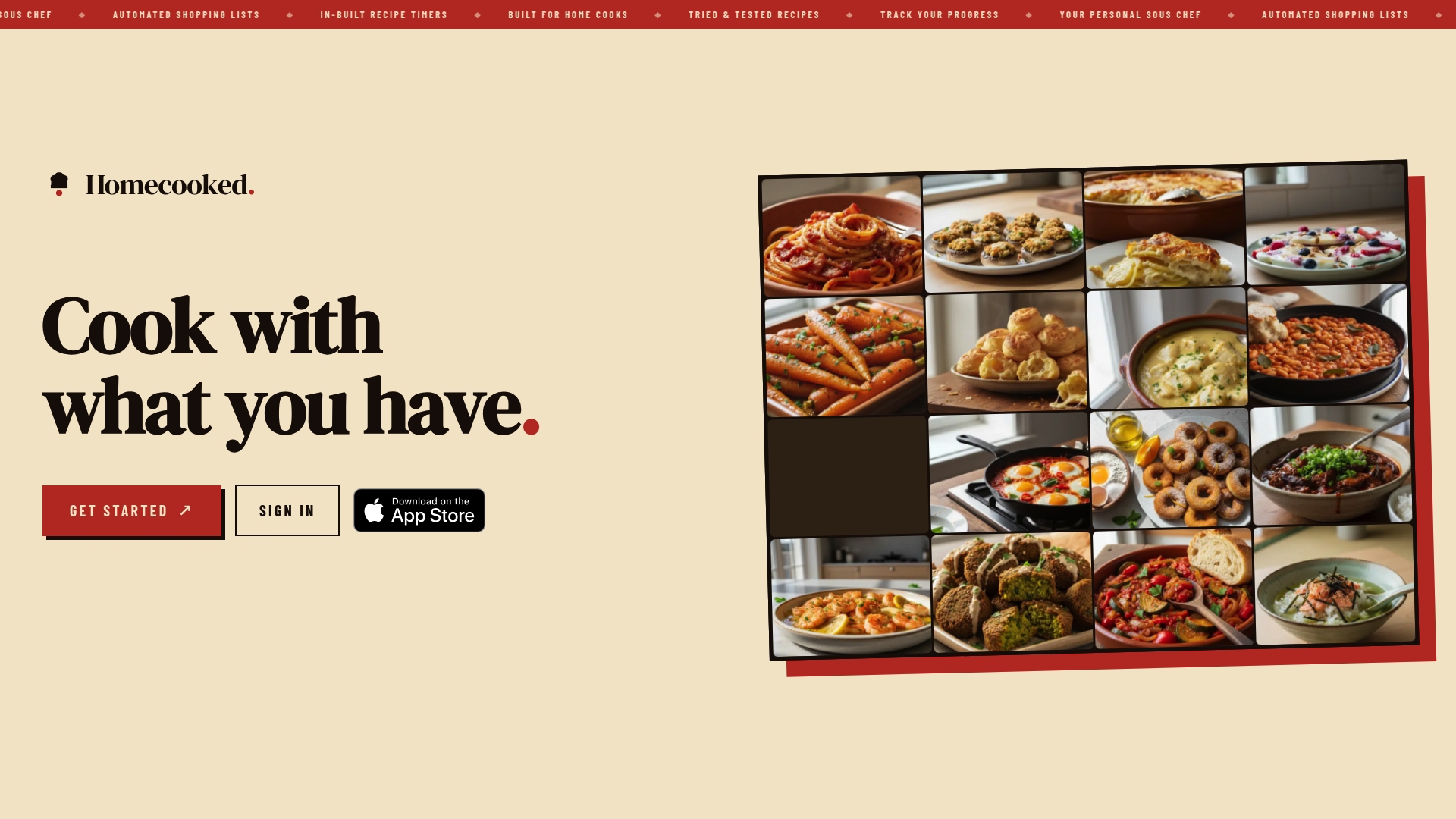
Our app turns a generic framework like the one above into a plan built around your actual pantry, your health goals, and the foods you genuinely want to eat, then hands you an automated shopping list so grocery runs stop being a guessing game. Step-by-step guided recipes with built-in timers make batch-cook days faster, and portion scaling means you are not stuck doing math every time you want to swap chicken for tofu.
- Personalized weekly plans based on your goals and preferences, not a fixed template.
- Shopping lists generated automatically from the meals you choose.
- Pantry-first suggestions that reduce food waste and grocery spend.
- Guided, timed recipe steps for smoother batch-cooking sessions.
Start building your own week at Homecooked and see how a plan tailored to your kitchen compares to a generic one.
This article is general information, not a substitute for advice from a qualified doctor. Consult a qualified healthcare professional about your own circumstances before acting on anything here.
FAQ
How much weight will I lose if I eat 1,200 calories a day?
Weight loss depends on your individual maintenance calories, not a fixed number for everyone. The CDC uses a general approximation that a daily deficit of about 500 calories can lead to roughly 1 pound of loss per week, though actual results vary by person and activity level.
What can I eat in a day to be 1,200 calories?
A full day can include a protein-forward breakfast, a lunch built around lean protein and vegetables, a dinner with a lean protein, a whole grain, and produce, plus one planned snack. The sample 7-day menu above shows exact combinations, including vegetarian and gluten-free swaps.
How long will it take to lose 40 pounds on a 1,200 calorie diet?
There is no fixed timeline, since it depends heavily on starting weight, activity, and adherence. Using the CDC’s general approximation of about 1 pound lost per week from a 500-calorie deficit, significant weight loss would take months for someone following that pattern consistently, though individual results vary and a personalized estimate is more reliable than a flat calculation.
How do I lose 20 pounds in 2 months with a meal plan?
Losing weight faster than the general CDC approximation of about 1 pound per week from a standard calorie deficit is not realistic or advisable for most people without direct clinical supervision. That pace is not realistic or advisable for most people without direct clinical supervision, and a personalized plan with a qualified professional is the safer way to set an appropriate goal and timeline.
Is a 1,200 calorie meal plan safe for everyone?
No, it is not appropriate for pregnant or breastfeeding people, teenagers, or anyone whose personalized calorie estimate is higher than 1,200. Cleveland Clinic dietitians note that individual metabolic rate varies enough that professional input helps confirm the number is adequate before starting.
If you want an objective check on how your readiness and current habits line up with a structured plan like this, the Weight Loss Readiness Quiz is a useful starting point before committing to a full week.
Sources
- CDC — Losing weight
- Dietary Guidelines for Americans (2020–2025)
- NIDDK — Body Weight Planner
- NHLBI — What’s on Your Plate? 1,200 calories a day (DASH worksheet)