A 15-minute meal plan works when you plan the ingredients, not just the recipes. Pick a few quick proteins, a few fast starches and some no-fuss vegetables, repeat them in different combinations, and keep one shopping list for the week. Add a plan that knows your pantry, your health goals and your tastes, and dinner stops being a nightly decision. That is what we built Homecooked to do.
Below you will find what “15 minutes” really means, a formula for building balanced plates, a five-day sample plan, and the habits that keep a fast-cooking week from falling apart on Wednesday.
TL;DR
- A true 15-minute meal starts the clock when the pan or pot heats and ends when food hits the plate, so it relies on thin, small or pre-cooked ingredients.
- Build every plate from four parts: a quick protein, an easy starch, a no-cook or fast vegetable, and a flavorful sauce.
- Plan in components and repeat them. Five dinners can share three proteins, two starches and one shopping trip.
- Sort meals by active time, not just total time, so your busiest nights get the least demanding recipes.
- Homecooked builds the plan around your goals and pantry, writes the shopping list and runs the timers while you cook.
Table of Contents
- What counts as a 15-minute meal?
- The four-part formula for a balanced 15-minute plate
- A five-day 15-minute meal plan
- The pantry that makes the plan possible
- Cooking habits that keep dinner under 15 minutes
- Why planning beats improvising
- Perspective
- Put your 15-minute week on autopilot
- Make the plan stick
- FAQ
- Sources
What counts as a 15-minute meal?
Recipe sites do not agree on the clock. Some count only cooking time. Others count everything from the first knife cut. One home-cooking site defines its 15-minute dinners as meals made start to finish in 15 minutes, with no marinades or hours-ahead work, and leans on skillets because an oven needs time to preheat. Another site states that its timer starts when you begin cooking, and suggests a one-minute setup of patting proteins dry, cutting vegetables, opening cans and mixing a sauce.
For a weekly plan, use the honest version: 15 minutes from heat on to plate, with a few minutes of setup you do while the pan warms. Anything that needs long simmering or roasting only qualifies if it uses a pre-cooked shortcut such as leftover rice or rotisserie chicken.
Why do some things finish fast and others do not? Size and starting temperature. A chicken breast butterflied to about an inch thick cooks in roughly 6 minutes, versus about 25 minutes whole, according to one recipe collection’s breakdown. Thin noodles cook in minutes while dried pasta takes 8 to 11. That is why 15-minute plans lean on stir-fries, quesadillas, rice bowls, foil packets and quick pastas.
Active time matters more than total time
A meal can be done in 15 minutes and still demand your full attention at the stove. Another meal can take 25 minutes with four minutes of real work. One quick-dinner writer argues that sorting meals by active time is what makes tired weeknights manageable. For a plan, that means: put the hands-on 15-minute stir-fry on a night you have energy, and the low-effort sheet pan or microwave meal on the night you do not.
The four-part formula for a balanced 15-minute plate
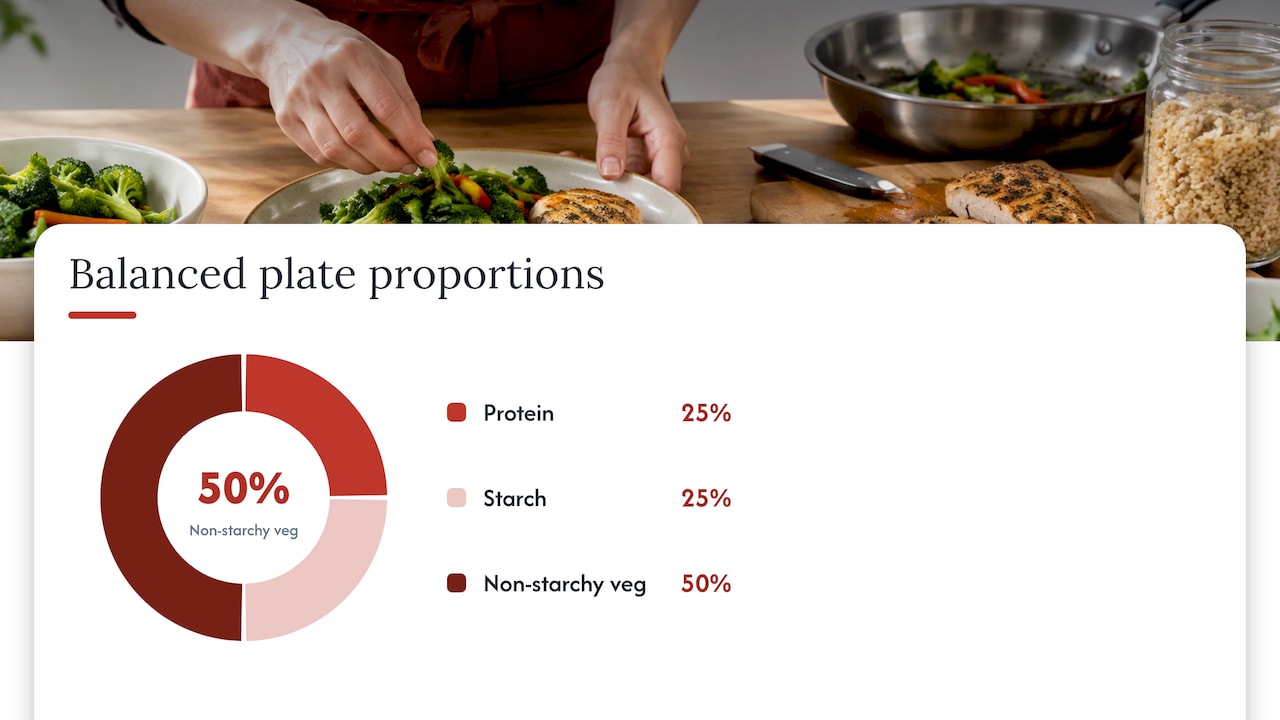
Fast does not have to mean thin on nutrition. Several sources land on the same structure. Cornell Health’s nutritionists recommend a protein plus starch plus fruit or vegetable formula built from pre-cooked or no-cook components, and note that frozen and canned vegetables are just as nutritious as fresh. The VA’s nutrition cookbook suggests a quarter of the plate as protein, a quarter as starch and half as non-starchy vegetables.
Here is the version we use for planning:
- Quick protein. Eggs, shrimp, thin chicken cutlets or cubed chicken, canned tuna or salmon, canned beans, tofu, rotisserie chicken.
- Easy starch. Microwave rice pouches, tortillas, quick-cooking pasta, fresh tortellini, couscous, instant ramen noodles, a microwaved potato.
- Fast vegetable. Bagged slaw, baby spinach, frozen stir-fry mix, frozen edamame, cucumber, avocado, bok choy.
- Flavor finish. Soy sauce, miso, jarred tomato sauce, salsa, chili crisp, lemon, vinegar, cheese, herbs.
That last part is what separates a plate you look forward to from one you merely finish. A recipe writer’s diagnostic for flat pantry meals is that they usually need salt, acid or fat, with a warning that soy sauce, olives and capers already bring salt, so add them gradually. A squeeze of lemon at the end is the cheapest upgrade in the kitchen.
Shortcuts are tools, not cheating
A registered dietitian makes the case that pre-cut vegetables, rotisserie chicken, canned beans, frozen produce and pre-cooked grains are smart tools, and recommends thinking in components rather than full recipes. The VA calls this approach speed-scratch cooking: using prepared, partially prepared and quick-cooking foods for most of the ingredients. A stir-fry of frozen vegetables, cooked meat or tofu and bottled sauce over instant brown rice is one of its examples.
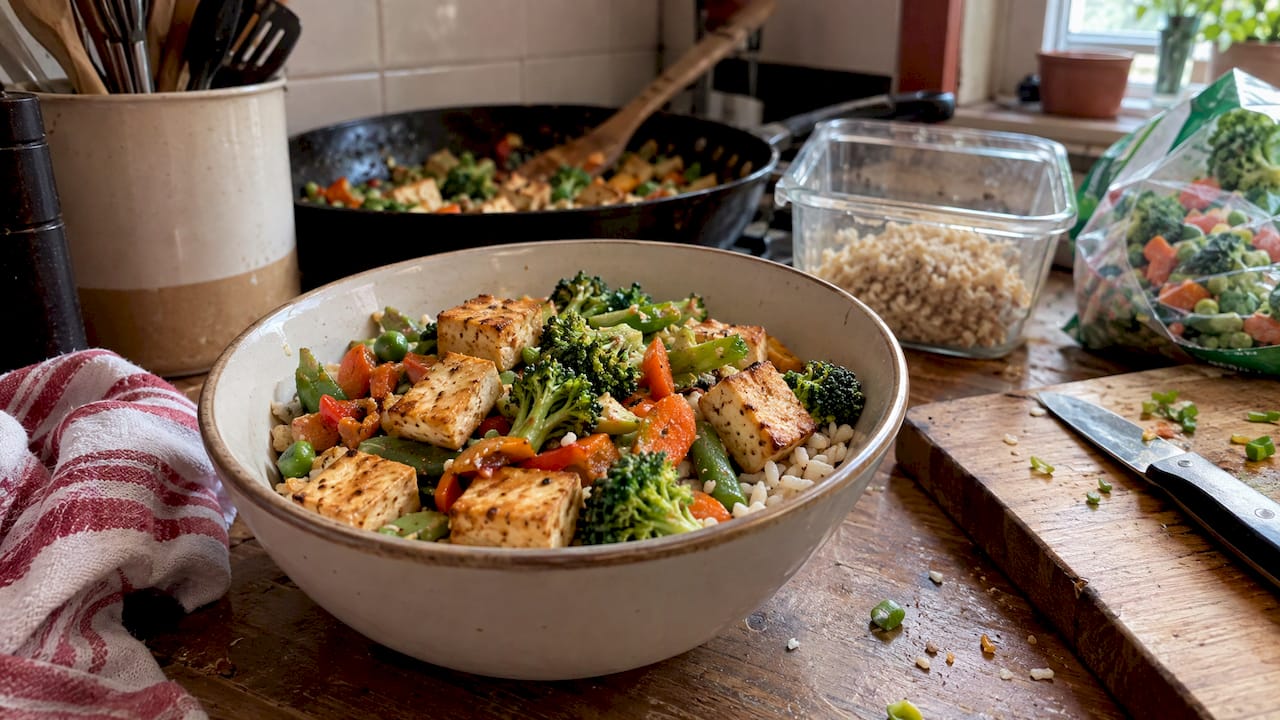
If you want protein-forward ideas for assembling plates from quick components, these high-protein vegan lunch combos show how far a few ingredients can go when each one has a job.
A five-day 15-minute meal plan
This sample plan reuses ingredients on purpose. Three proteins, two starches and a handful of vegetables cover the whole week, which keeps the shopping list short and the food from going to waste.
| Day | Dinner | Core ingredients | Hands-on effort |
|---|---|---|---|
| Monday | Shrimp and vegetable stir-fry over rice | Frozen shrimp, frozen stir-fry mix, soy sauce, microwave rice pouch | Medium |
| Tuesday | Chicken and black bean quesadillas with slaw | Rotisserie chicken, canned black beans, tortillas, cheese, bagged slaw | Low |
| Wednesday | Miso butter ramen with egg and bok choy | Instant ramen noodles, miso, soy sauce, butter, egg, bok choy | Medium |
| Thursday | Tuna and white bean rice bowl | Canned tuna, canned white beans, microwave rice, cucumber, lemon | Very low |
| Friday | Tortellini with garlic, spinach and Parmesan | Fresh tortellini, garlic, baby spinach, olive oil, Parmesan | Low |
Several of these have real-world counterparts. A professional food magazine’s 15-minute roundup includes a miso butter ramen that swaps the seasoning packet for miso and soy sauce and whisks in butter for a creamy broth, plus a 12-minute salmon and asparagus foil packet. Another magazine’s list features tortellini with garlicky brown butter and dill built on store-bought refrigerated pasta. If ramen is your thing, our 15-minute weeknight ramen follows the same logic: a few strong flavor ingredients and fast noodles.
Breakfast and lunch in 15 minutes or less
The same logic applies earlier in the day. The VA’s 2026 cookbook lists a cheesy microwave omelet at 10 minutes total (360 calories and 15 g protein per serving) and a chili cheese microwave-baked potato with canned chili beans and canned chicken at 15 minutes total (415 calories and 28 g protein per serving). Greek yogurt with granola and berries, scrambled eggs with toast and tomato, and fried rice with leftover rice are other quick options a dietitian lists in her 15-minute ideas.
The pantry that makes the plan possible
A 15-minute meal plan falls apart when you have to hunt for ingredients. A short, stable pantry fixes that. A food bank guide for stocking a flexible kitchen advises keeping proteins such as canned beans, lentils, tuna, salmon and eggs, grains such as rice, pasta and tortillas, and canned or frozen vegetables on hand, and rinsing canned foods to cut sodium. It also says a balanced meal needs at least three food groups, and it does not need to be perfect.
A sensible starter list for 15-minute cooking:
- Shelf: canned white and black beans, canned tuna, microwave rice pouches, quick-cooking pasta, instant ramen noodles, tortillas, soy sauce or tamari, jarred tomato sauce, miso paste.
- Freezer: shrimp, stir-fry vegetable mix, edamame, spinach, cooked rice.
- Fridge: eggs, fresh tortellini, bagged slaw, lemons, garlic, Parmesan, a rotisserie chicken when you can.
Notice how much overlaps with the plan above. That is the point. When your pantry and your plan are built from the same short list, every grocery trip does double duty. For more ways to turn what you already own into dinner, see our guide to recipes by ingredient.
Cooking habits that keep dinner under 15 minutes
The recipe is only half of it. The habits below are what actually hold the clock.
- Start the heat first. Put the pan on, fill the kettle or set the broiler before you chop anything. One quick-dinner site calls this a core rule of true 15-minute cooking.
- Use one shortcut per meal. Rotisserie chicken, a rice pouch or bagged slaw. Two or three shortcuts make a meal taste like assembly.
- Cut small. Cubing chicken breast into 1-inch pieces is one cook’s favorite way to cook it fast and evenly.
- Layer the pan. Sear protein, add quick vegetables, then build a fast pan sauce from the browned bits. The start-hot, cook-in-layers, finish-with-sauce approach is why skillet meals dominate this category.
- Parallelize. The fastest cooks are not chopping faster; as one food writer puts it, they start the slow item first and prep while it works. If active cooking is under five minutes, prep everything before the pan gets hot.
- Finish with acid or fat. Lemon, vinegar, cheese or a drizzle of olive oil lifts quick food.
Cooking for different diets? Quick meals adapt easily. One 14-minute pad thai recipe shows a gluten-free version with tamari, a vegetarian one with a fish sauce swap, and a vegan one with scrambled tofu. Swap the sauce and protein, keep the structure.
Why planning beats improvising
Even with fast recipes, the hard part of weeknight cooking is often the decision. The VA’s cookbook notes that planning meals in advance encourages more balanced meals and cuts last-minute decisions to eat out. It also recommends keeping a “Plan B” meal, such as a healthy frozen dinner or low-sodium soup boosted with thawed frozen vegetables or drained canned beans, for nights the plan collapses.
A good 15-minute plan therefore has three layers:
- The week’s menu, matched to how much energy you will have each night.
- One shopping list that covers every recipe and skips what you already own.
- A fallback so a missed night does not unravel the rest.
Planning by hand is possible, but it asks you to track proteins, pantry stock, preferences and nutrition at once. That is where an app earns its place. If you want more fast options as you build the plan, our guides to quick healthy dinners and 30-minute meals are good places to find backups for nights when 15 minutes is a stretch.
Perspective
We think the biggest mistake in fast cooking is treating speed as a property of a recipe. Speed comes from the whole system: what is already in your kitchen, what order you do things in, and whether you have to think about dinner at 6 p.m.
That is why Homecooked starts with your pantry. Our approach is pantry-first meal planning tailored to both your health goals and your flavor preferences, so the plan uses what you have and the shopping list only adds what is missing. A plan built on the same short list of ingredients is naturally a plan of fast meals.
The second half is the cooking itself. Our guided recipes show step-by-step instructions with live timers and parallel workflows, so you start the rice while you prep the vegetables instead of finishing one task before starting the next. That is the same parallel thinking good cooks use, built into the recipe so you do not have to hold it in your head.
Finally, we believe progress tracking matters. A plan you can see working is a plan you keep following. That is why we pair planning, pantry tracking and tracking of your goals in one place, with an AI cooking assistant for the moments when a step is unclear.
0xmaglev
Put your 15-minute week on autopilot
Homecooked is an app that makes personalized meal plans from your health goals and dietary preferences. It turns the plan into an automated shopping list, tracks your pantry, and walks you through each recipe with guided steps and integrated timers. You can start with a free trial, and the paid subscription is called Homecooked Pro.
If you want a week of fast dinners without doing the planning yourself, try Homecooked and set your goals, your diet and the time you have for dinner. Our post on smart recipes with timers and parallel steps explains how the guided cooking works.
Make the plan stick
A few finishing touches keep a 15-minute plan going past the first week.
- Match effort to the night. Put the hands-on meals early in the week and the near-effortless ones, like a rice bowl from a pouch and canned fish, on the nights you expect to be tired.
- Cook once, use twice. A rotisserie chicken can become quesadillas on Tuesday and a rice bowl on Thursday. For ways to use what is left, our list of leftover ideas is built for exactly that.
- Cook for the table you have. Quick meals suit families when each person can customize. Keeping sauce and toppings separate lets everyone build their own plate. For more of this, see our easy family dinners.
- Cooking for one? Our weekly plan for one shows how to keep dinners small and waste low.
- Keep a Plan B. Frozen vegetables and canned beans are what turn a freezer meal into a balanced one.
FAQ
Does a 15-minute meal include prep time?
It depends on the source, so check how a recipe counts. Some sites count only cooking time, while others state that the time includes both prep and cooking. In a plan, count about 15 minutes from heat on to plate, with a minute or two of setup while the pan warms.
What are the best ingredients for 15-minute meals?
Thin or small proteins such as shrimp, eggs and cubed chicken, plus pre-cooked items like rotisserie chicken, canned beans and microwave rice. Pair them with frozen or bagged vegetables and a strong sauce such as soy, miso or jarred tomato sauce. Frozen and canned vegetables are just as nutritious as fresh.
Can a 15-minute meal plan be healthy?
Yes, if each plate has a protein, a starch and vegetables. A simple target is the VA’s plate guide of a quarter protein, a quarter starch and half non-starchy vegetables. Rinsing canned beans and vegetables also helps lower sodium, as a food bank pantry guide points out.
How do I make quick meals work for vegetarian, vegan or gluten-free eating?
Keep the structure and change the ingredients. Use tofu, beans or eggs as the protein, tamari for soy sauce, and gluten-free pasta where pasta appears. Homecooked builds plans around your dietary preferences, so these swaps are part of the plan from the start.
Do I need to meal prep on Sunday for this to work?
No. The plan relies on ingredients that need little preparation, so a short shopping trip and a stocked pantry are enough. Leftover rice or a rotisserie chicken from one night can speed up another, but a full prep session is optional.
Sources
- 15-Minute Dinners, Family Food on the Table
- 15-Minute One-Pan Dinners, PlateDo
- 100 Easy 15 Minute Recipes, Chefadora
- 40 Quick Meals To Cook For Dinner, Quick Dish Cookbook
- Quick, Easy, & Budget-Friendly Meal Ideas, Cornell Health
- Cost-Friendly Cooking 2026, U.S. Department of Veterans Affairs
- 2022 Cooking With Ease Cookbook, U.S. Department of Veterans Affairs
- 15-Minute Pantry Dinner Recipes, Recipeva
- Quickest Meals Without Sacrificing Nutrition, Appleman Nutrition
- Crafting Your Pantry: TEFAP Flexible Cooking Guide, Ohio Association of Foodbanks
- 12 Easy Dinners You Can Make in 15 Minutes, Serious Eats
- 23 Flavor-Packed 15-Minute Meals, Bon Appétit
- 15-Minute Weeknight Dinners for Busy Families, Nomora Food
- 25 30-Minute Dinner Recipes, Craving Crumbs
- Healthy Pad Thai (15 Minute Meal), Eating Bird Food
- 20 Easy Meals Under 30 Minutes, There Is Food at Home
- High Protein Vegan Lunches, Wild Foodz