
For most home cooks, yes, a meal planning app is worth it when it does the work for you: it builds a week of dinners around your goals, turns them into one shopping list, and stays out of your way at the stove. The research is clear on one thing. Apps pay off through automation, not through effort. If an app makes you type, tag, and tinker, it adds to your workload. If it plans, lists, and guides, it gives you back time and mental energy. That is the idea behind Homecooked, and it is the test you can use on any app.
TL;DR
- Meal planning apps earn their cost when they save time and cut last-minute “what’s for dinner” decisions, which is what working parents in a 2021 study of five commercial apps valued most.
- The biggest risk is an app that demands lots of input. The same study found the high-input app had the lowest usability score, and authors concluded apps need automation so they don’t add to food-prep time.
- For health goals, a 2025 umbrella review found mobile app interventions produced a small but statistically significant weight reduction versus usual care.
- Look for four things: a plan built around your goals and tastes, an automatic grocery list, pantry awareness, and guided cooking.
- Try a full week before deciding. One planned week tells you more than any review.
Table of Contents
- What a meal planning app actually does for you
- Time, stress, and money: what the research shows
- Do meal planning apps help with weight loss?
- How to judge whether an app is worth it for you
- When specific diets are involved
- What about using ChatGPT instead?
- The 5-4-3-2-1 grocery rule
- Getting your money’s worth in the first week
- Try Homecooked for a week
- Our perspective
- FAQ
- Sources
What a meal planning app actually does for you
Meal planning has always been simple in theory: decide what you’ll eat, buy only what you need, cook it. In practice, it falls apart at three points. You run out of ideas, you forget what’s already in the fridge, and the plan changes by Wednesday.
A good app handles those three points. It suggests meals that fit your goals (say, higher protein, lower sodium, or just more vegetables), builds the grocery list from those meals, and tracks what you have at home so you don’t buy a fourth jar of cumin. Better ones also walk you through the cooking itself.
The question “is it worth it” is really two questions. Does it save you enough time and stress? And does it help you eat the way you want to? Let’s take them in turn.
Time, stress, and money: what the research shows
The most useful evidence comes from people who tested apps in real family life. In a study of 133 working parents who tried five commercial apps, 82% agreed they needed healthy recipes and 80.5% said they needed time for food provision. Participants rated meal planning and shopping list features as feasible, time-saving solutions that reduced last-minute decisions.
The same study has a warning that matters for your choice. Engagement quality was the lowest-rated area across all five apps, scoring between 3.0 and 3.7 out of 5. The family organizer app that required lots of user input had the lowest usability score. The authors concluded that apps must improve automation and integration so they do not add to the time burden of feeding a household.
Translate that into a buying rule: the more an app does for you automatically, the more likely it is to be worth it. An app that is mostly a digital notebook only repays you if you enjoy filling it in.
The benefits people report
A review of meal planning apps from Signos Health points to the same set of gains for busy professionals and families: less decision fatigue, fewer impulse purchases and takeout orders, and more variety on the plate.
Real households describe it in dollars. In a 2026 qualitative study of Hispanic households in a US food-is-medicine program, participants cited tasty healthy food, better health, cost savings, and time efficiency. One family said it had spent about $1,000 a month on food and takeout before the program. The same study noted that plans that weren’t customized, and plans covering a full seven days, reduced adherence and led to some food waste. That is a useful reminder that a plan has to fit your life, not the other way round.
Why plans fail, and what an app has to solve
A study of the Cooking Matters app with low-income parents found that most interviewees didn’t plan specific meals before shopping. Their reasons were practical: no time, plans that didn’t stick, and plans that changed. One parent said two hours of planning was wasted if they’d change their mind at the store. Shopping lists were often skipped because people kept items in their heads or bought whatever was on sale.
These are the exact frustrations a well-built app should remove:
- No time to plan: the plan should arrive in minutes, not hours.
- Plans change: swapping a meal should update the grocery list automatically.
- Lists get skipped: the list should be built for you and live on your phone at the store.
- Sales and what’s already at home: the app should know your pantry, so you cook what you have first.
If you want to see how a plan turns into a list without waste, our guide on building a smart grocery list from your meal plan walks through it, and the meal plan grocery list guide gives a printable seven-day version.
Do meal planning apps help with weight loss?
They can help, with realistic expectations. A 2025 umbrella review and meta-analysis pooled 11 systematic reviews covering 261 studies and 62,407 participants. Mobile app interventions produced a mean weight reduction of 1.32 kg (about 2.9 pounds) compared with usual care, while web-based interventions showed no significant effect. It is a modest average, and it tells you that an app is a support tool, not a shortcut.

A 2023 review of mobile weight-loss apps found that apps can help people lose weight as well as or better than paper-and-pencil methods, and often better than minimal support. It also found that success varies with how engaged people are. In a 2025 study of 3,951 US adults using a nutrition therapy program with a companion app, higher app engagement was significantly associated with greater weight loss.
The pattern is consistent: the app helps most when you actually open it. That is a design problem as much as a motivation problem. Meals you look forward to, steps that don’t confuse you, and tracking that takes seconds all make it easier to keep going.
If you have a medical condition, are pregnant, or take medication that interacts with food, talk with your doctor or a registered dietitian before changing how you eat. An app can organize your week, but they set the targets.
How to judge whether an app is worth it for you
Skip the feature checklists and ask five practical questions.
1. Does it plan around your goals and your taste?
A plan that hits your protein target but bores you will be abandoned by Thursday. Look for an app that takes your health goals and dietary preferences and also cares about flavor. Homecooked is built around exactly that pairing: personalized meal plans based on your health goals and dietary preferences, with recipes you actually want to cook.
2. Is the grocery list automatic?
If you have to build the list by hand, you’ve kept the most tedious part of planning. The list should appear as the plan does, and it should update when you swap a meal. Our roundup of grocery list apps that sync with meal plans explains what good syncing looks like, and the guide to a store-specific grocery list shows how to sort a list by aisle.
3. Does it know what’s in your pantry?
Pantry awareness is where savings come from. When the app knows you already have rice, canned tomatoes, and half a bag of spinach, it can plan around them. Pantry-first planning is a core part of how Homecooked works, alongside automated shopping lists and pantry tracking.
4. Does it help you cook, not just plan?
A plan only matters if dinner happens. Step-by-step guidance with built-in timers takes the guesswork out of timing, especially when two things need attention at once. Homecooked’s guided recipes include live timers and parallel workflows, so the rice, the sauce, and the vegetables finish together.

5. Can you track progress without extra work?
One complaint from app users is not being able to log snacks or meals eaten outside the plan. Look for tracking that matches how you really eat. Homecooked includes progress tracking so you can see how your week is going against your goals.
When specific diets are involved
Standard plans can fall short when your needs are narrow. A person managing bone health, for example, needs meals built around particular nutrients, and a day-by-day example like this osteoporosis meal plan guide shows how targeted those menus can be. Whatever app you pick, enter your preferences and restrictions up front, and review the first week’s plan against guidance from your care team.
What about using ChatGPT instead?
People ask whether a general AI chatbot can make a meal plan. It can produce one, but it does only the first step. You still have to build the list, track the pantry, and time the cooking yourself. The Center for Food Conservation and Waste Reduction cautions that AI tools for complex food tasks such as meal planning and list development may not suit people with little food and nutrition knowledge, who may go over their food budgets.
A purpose-built app keeps the plan, the list, the pantry, and the cooking steps in one place, which is the integration the research says people need. If you are comparing options by type, our breakdown of the best AI meal planner apps and the best recipe apps for home cooks lay out what to expect.
The 5-4-3-2-1 grocery rule
This popular shopping shortcut asks you to buy five vegetables, four fruits, three proteins, two carbohydrate staples, and one fun item each week. It is a handy way to keep a cart balanced when you don’t have a plan. It works even better with one, because the plan tells you which five vegetables and which three proteins, and the list makes sure you buy only those.
Getting your money’s worth in the first week
How you start decides whether the app sticks. A few habits help:
- Plan fewer nights than you think. Four or five dinners with leftovers beats seven ambitious ones. The FoodRx households found full seven-day plans hurt adherence.
- Fill in your pantry first. Ten minutes of setup means the first list is shorter.
- Cook at least one new recipe. Variety is one of the benefits people report, so use it.
- Swap freely. A plan that bends survives a busy Wednesday.
- Review Sunday night. Check what’s left and let it shape next week.
The most common slip-ups are covered in our guide to meal planning mistakes and how to fix them. For different households, see the guides to meal planning for busy people, family meal planning, and weekly meal planning.
Try Homecooked for a week
Homecooked is an app that makes personalized meal plans based on your health goals and dietary preferences. It adds automated shopping lists, pantry tracking, step-by-step guided recipes with integrated timers, progress tracking, and AI-powered cooking assistance. It starts with a free trial, with Homecooked Pro as the paid subscription afterward, so you can plan a real week of dinners and see how it fits your kitchen.
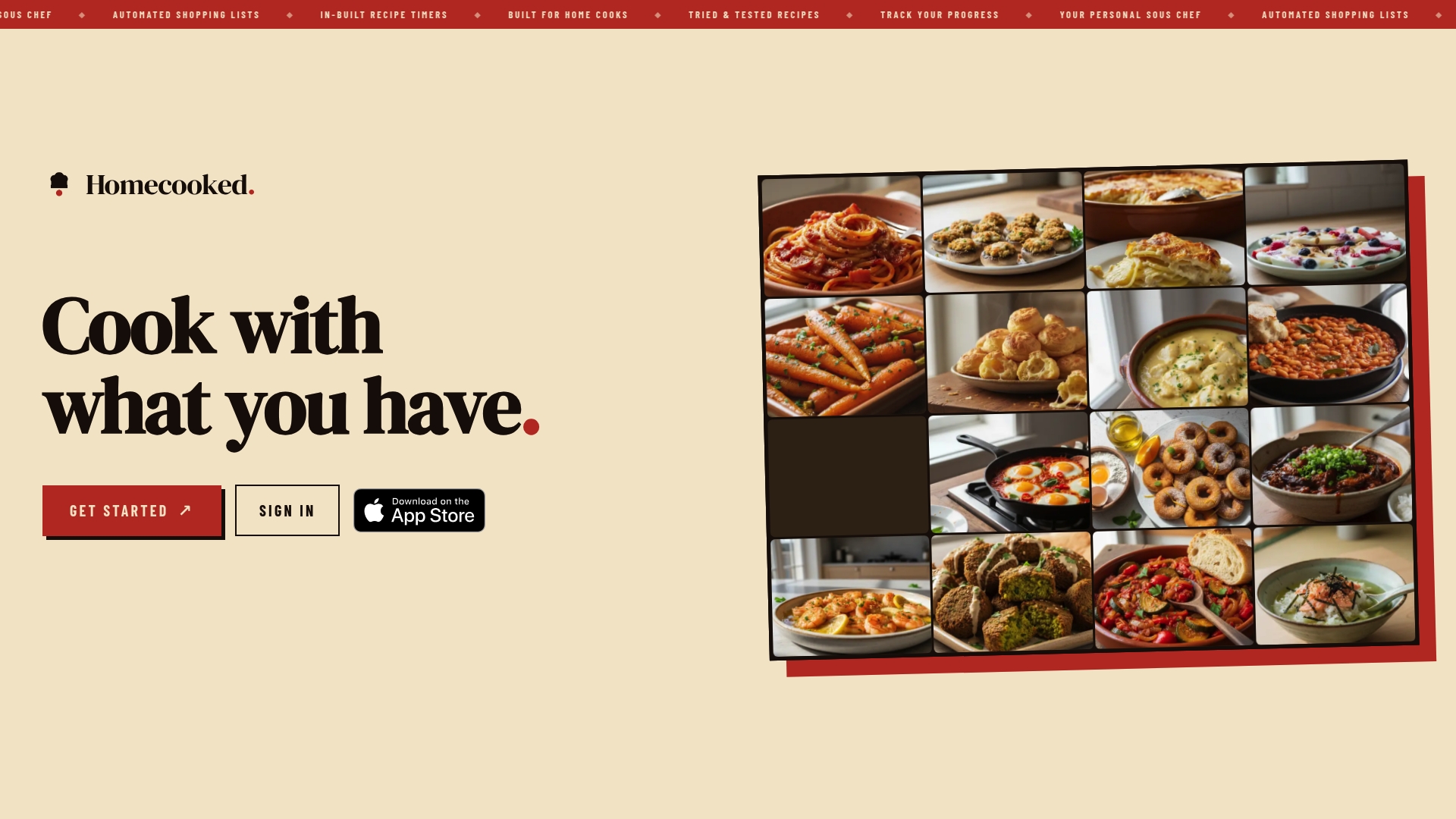
You can start at Homecooked, or get a feel for the cooking side with the home-style chicken curry recipe, ready in 40 minutes.
Our perspective
We built Homecooked around a simple belief: the plan is the easy part, and dinner is the hard part.
Most people can find a recipe. What drains them is everything around it: working out what to buy, remembering what’s already in the cupboard, and getting three dishes to land on the table at the same time. That is why we start from your pantry and your health goals, and why we care as much about flavor as about numbers. A plan you don’t want to eat is a plan you won’t follow.
It is also why our guided recipes run live timers and parallel steps, and why the shopping list builds itself. The research on family apps points the same way: automation is what keeps an app from becoming one more chore. Our aim is for planning to take minutes, so your energy goes into cooking and enjoying the meal.
0xmaglev
FAQ
Are meal planning apps worth paying for?
They are when they save you more time and stress than they cost. Reviews such as the Signos Health analysis say value depends on whether the app saves enough time, mental energy, and stress to justify the subscription. Choose one that automates the list and the planning, and use a free trial week to see the difference.
Does meal planning help with weight loss?
It can support it. A 2025 meta-analysis found app-based interventions produced a small average weight reduction compared with usual care, and engagement mattered. Planning helps by making your meals intentional, but your doctor or dietitian should guide any specific weight target.
What should I look for in a meal planning app?
Look for personalization to your goals and taste, an automatic grocery list, pantry tracking, and guided cooking steps. Low-effort design matters most, since studies found apps requiring heavy user input scored worst on usability.
Can ChatGPT make a meal plan?
It can draft one, but you still build the list, track the pantry, and manage the cooking yourself. If you use it, check the calorie totals and ingredients against a reliable source, and consider a dedicated app that keeps everything connected.
Sources
- Meal Planning Apps: Are They Worth It?
- Commercially Available Apps to Support Healthy Family Food Provision (JMIR mHealth and uHealth, 2021)
- Commercially Available Apps to Support Healthy Family Food Provision (PMC)
- Cooking Matters Mobile Application study
- Promoting Meal Planning and a Nutritious Weight-Loss Diet: Hispanic households in a food-is-medicine program
- Mobile and Web Apps for Weight Management in Overweight and Obesity
- The Efficacy of Mobile Applications for Weight Loss
- The Impact of Technology-Enabled Medical Nutrition Therapy (JMIR mHealth and uHealth, 2025)
- Using AI to help with household meal planning and other food tasks