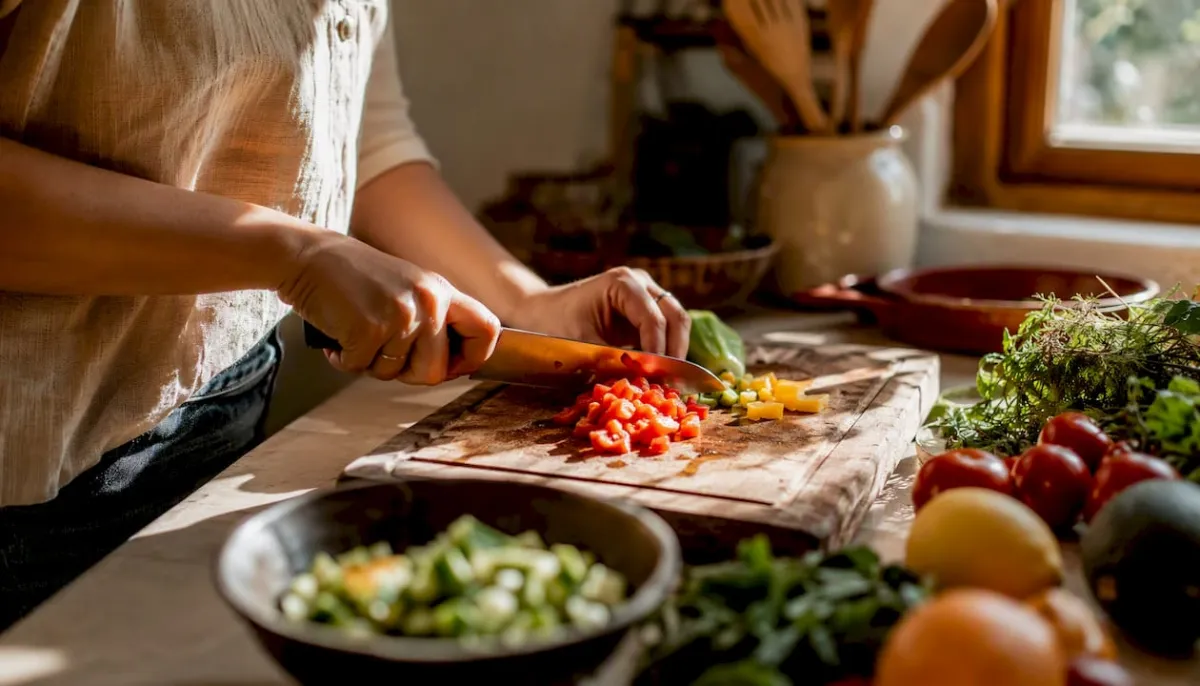
Start by planning just a few dinners (around four or five), building one shopping list from those recipes, and spending a manageable amount of time prepping once a week. That’s the whole system. Grab a pen or your phone, pull together a short list of recipes you already like, and clear a container or two in the fridge for leftovers.
- Something to write with (notes app or paper works fine)
- A short list of 4 to 5 recipes you already know how to cook
- A few containers for leftovers and prepped ingredients
Pro Tip: Pick your dinners before you open the fridge. Deciding what to cook while standing in front of random ingredients is how takeout wins every time.
Key Takeaways
Beginner meal planning works best when you plan fewer meals, repeat recipes on purpose, and use a two-step grocery list to avoid overbuying.
| Point | Details |
|---|---|
| Start small | Plan just 4 to 5 dinners your first week instead of a full seven days. |
| Use a two-step grocery list | Build a master ingredient list first, then reorganize it by store department. |
| Batch prep components | Cook grains, roast protein, and wash vegetables separately so you can mix meals all week. |
| Follow the 3 to 4 day rule | Keep the fridge at 40°F or below and use prepped food within 3 to 4 days. |
| Let an app handle the busywork | Homecooked converts your weekly recipe picks into one automated shopping list and tracks your pantry. |
Table of Contents
- What Beginner Meal Planning Actually Means
- How Big Should Your First Meal Plan Be?
- What Do You Actually Need To Get Started?
- How Do You Pick Recipes That Won’t Burn You Out?
- How Do You Build a Grocery List That Actually Works?
- What Does A 30 To 60 Minute Prep Session Look Like?
- How Long Do Prepped Foods Actually Stay Safe?
- How Do You Turn Leftovers Into New Meals?
- How Do You Save Money And Time On A Beginner Plan?
- What Templates And Tools Make This Easier?
- What Mistakes Trip Up Most Beginners?
- A Beginner’s Honest Take On Getting Started
- Try Homecooked For Your First Week Of Planning
- Frequently Asked Questions
- Sources
What Beginner Meal Planning Actually Means
Meal planning is just mapping three things ahead of time: what you’ll eat, what you need to buy, and when you’ll cook it. That’s it. No spreadsheets required, no color-coded binders, no Sunday ritual involving twelve dishes prepped from scratch.
Done right, it pays off fast:
- Less time deciding. You make one batch of decisions instead of seven daily ones.
- Less money wasted. You buy what you’ll actually use instead of guessing at the store.
- Less food in the trash. Ingredients get used up instead of forgotten in the crisper drawer.
- Less mental noise. “What’s for dinner” stops being a nightly crisis.
Nutrition researchers at Harvard’s Meal Prep Guide put it plainly: meal prep should fit your actual cooking ability and schedule, and beginners do best starting small, with just a few dinners a week instead of a full seven-day overhaul.
How Big Should Your First Meal Plan Be?
Your goal shapes your scope. Trying to save money? Focus on planning around what’s already in your pantry. Want to eat healthier? Build your list around vegetables and protein first, and fill in the rest. Trying to lower stress? Plan fewer meals, not more, so nothing feels forced.
Here’s how to size your first attempt:
- 3-night starter. Plan just three dinners and let the rest of the week be leftovers or simple standbys. Low effort, high success rate for week one.
- 4 to 5 dinners plus leftovers. The sweet spot for most beginners. You cook a handful of times and stretch the rest through repurposed meals.
- Full 7-day plan. Every dinner mapped out. Powerful once you have a rhythm, but a rough starting point since it leaves no room for a missed grocery trip or a long day at work.
Choose your scope this week by counting how many nights you’ll realistically cook, subtracting one for the inevitable curveball, and planning that many dinners. Fewer meals planned well beats a full week planned poorly.
What Do You Actually Need To Get Started?
You don’t need a fully stocked kitchen to plan your first week. You need a few real tools and a short pantry list.
Basic tools:
- A sharp knife and a cutting board
- One large pot and one skillet
- A handful of storage containers with lids
Pantry staples worth keeping stocked:
- Rice or another grain (quinoa, pasta)
- Canned beans and canned tomatoes
- Olive oil, salt, pepper, and two or three spices you actually use
- Onions and garlic, which show up in almost everything
Time budget: Most beginners spend a short amount of time choosing recipes and building a list, followed by a moderately timed grocery shopping trip and one prep session each week. Under two hours total, once a week, according to the step-by-step process Healthline outlines for new planners.
How Do You Pick Recipes That Won’t Burn You Out?
Not every recipe deserves a spot in your rotation. The ones worth repeating share a few traits.
Run new recipes through this checklist before adding them to your plan:
- Takes 30 minutes or less, or can mostly cook itself (think sheet pan, one pot, slow cooker)
- Uses ingredients that show up in other meals that week
- Makes enough for leftovers, not just one serving
- Doesn’t require a special trip for one obscure ingredient
A smart trick beginners overlook: one protein can anchor several different meals. Roast a tray of chicken thighs on Sunday, and by Wednesday you’ve made tacos, a grain bowl, and a quick salad, without cooking chicken three separate times. The same works with a pot of chili that becomes chili one night and taco filling the next.
Instead of hunting for individual recipes, think in categories. Sheet-pan dinners, one-pot meals, and grain bowls are formulas more than fixed recipes, which means you can swap the protein or vegetable and keep the same basic method. Once you’ve got a go-to sheet-pan dinner and a go-to grain bowl, you’ve got two meals you can make on autopilot.
Pro Tip: Aim for one new recipe per week, max. Everything else should be something you’ve already made before. New recipes take longer and carry more risk of a flop; too many at once is the fastest route to giving up.
How Do You Build a Grocery List That Actually Works?
Most beginners overbuy because they shop recipe by recipe, tossing duplicate items in the cart without realizing it. The fix is a two-step method.
- Build a master ingredient list. Go through every recipe you picked and write down every ingredient, combining duplicates (if two recipes both need onions, that’s one line, not two).
- Convert it into a store-ordered list. Rearrange that master list by department so you’re not crisscrossing the store.
A simple layout to copy:
- Produce: onions, bell peppers, spinach
- Meat: chicken thighs, ground turkey
- Dairy: shredded cheese, plain yogurt
- Pantry: rice, canned beans, olive oil
- Frozen: mixed vegetables, frozen berries
Pro Tip: Check your pantry and fridge before you shop, not after. And when two brands are sitting side by side, glance at the unit price, not just the sticker price. The bigger bag is often cheaper per ounce even when the total looks higher.
What Does A 30 To 60 Minute Prep Session Look Like?
One focused session on the weekend covers most of your week. Pick the version that matches your time.
- 30 minutes: Wash and chop one vegetable, cook one batch of grain, and portion out snacks.
- 45 minutes: Add roasting one tray of protein while the grain cooks.
- 60 minutes: Add a second vegetable, prep breakfast items, and pack lunch containers for the next two days.
What to batch by meal:
- Breakfasts: portion oats, hard-boil eggs, or pre-make a batch of muffins
- Lunches: pack grain, protein, and vegetable into grab-and-go containers
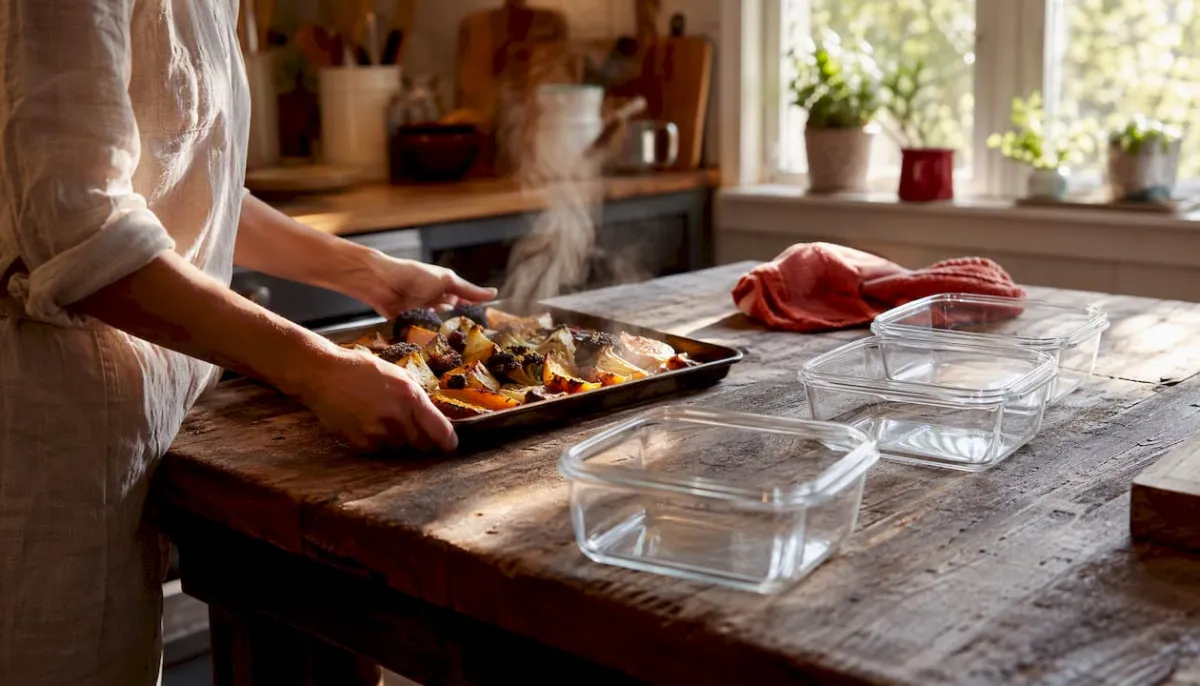
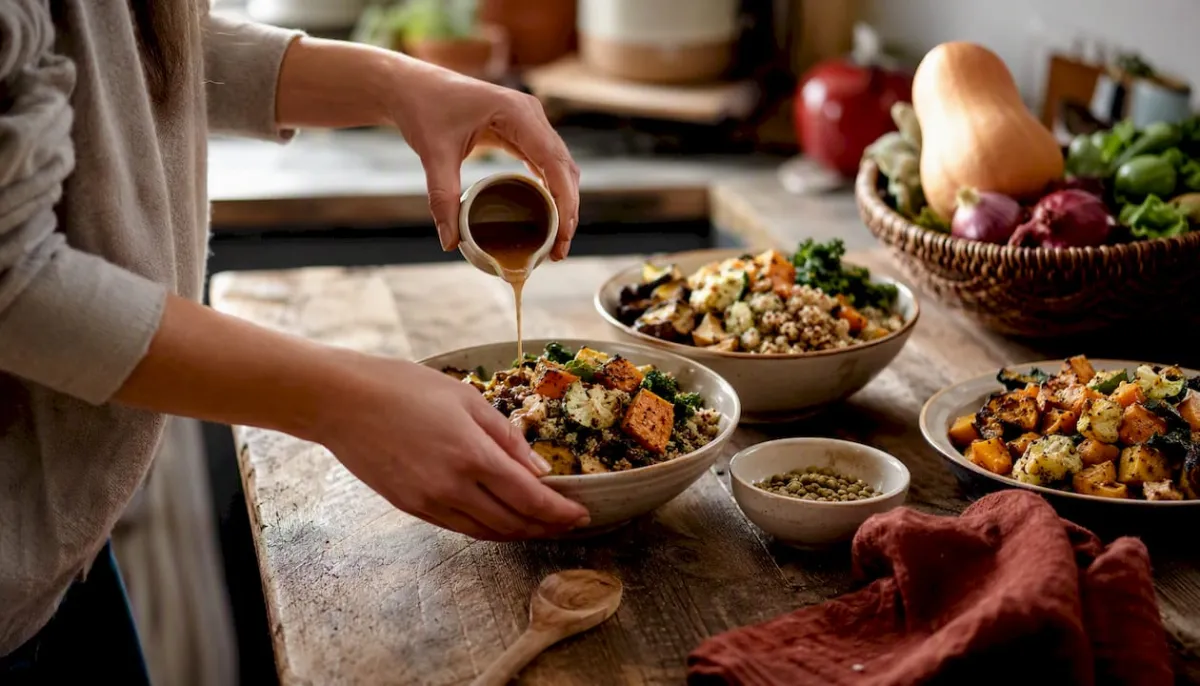
- Dinners: prep components separately (cooked grain, roasted protein, washed greens) rather than fully assembled meals, so you can mix and match through the week
Label containers with the contents and the date you made them, and stack the oldest items toward the front of the fridge so you actually use them. Batch-prepping components instead of full meals is generally the more sustainable approach, since prepped pieces stay flexible and hold up through midweek, according to Harvard’s Nutrition Source.
Pro Tip: Let hot food cool briefly before sealing containers. Trapping steam in a closed container speeds up spoilage and leaves you with soggy vegetables by Wednesday.
How Long Do Prepped Foods Actually Stay Safe?
Keep your refrigerator at 40°F or below. Cooked leftovers and prepped ingredients are good for 3 to 4 days within that range, according to the CDC’s food safety guidance.
Refrigerated leftovers should be eaten, frozen, or thrown out within 3 to 4 days. Bacteria can grow quickly even in the fridge if food sits too long.
A few habits protect you beyond the temperature rule:
- Freeze anything you won’t eat within that window instead of hoping for the best
- Label containers with the date they were made, not just the contents
- Use the oldest prepped food first, and eat your most perishable ingredients (fish, ground meat, fresh herbs) earlier in the week
These aren’t arbitrary numbers. The CDC and USDA set them based on how fast bacteria multiply at fridge temperature, and skipping them is the most common way a good meal plan turns into a stomach bug.
How Do You Turn Leftovers Into New Meals?
Leftovers stop feeling repetitive once you know a few transformation tricks.
- Roast chicken becomes fried rice, tacos, or a quick soup with broth and vegetables
- Extra rice or grains become a stir-fry base or a cold grain salad the next day
- Roasted vegetables get folded into an omelet or blended into a quick soup
- Leftover chili turns into nachos or a baked potato topping
A formula worth memorizing: grain plus vegetable plus protein plus sauce. Swap any piece and you’ve got a different meal without touching the stove for long. If something is close to spoiling, freeze it or plan to eat it first; use your most perishable ingredients before the sturdier ones like carrots or canned goods.
How Do You Save Money And Time On A Beginner Plan?
A few habits stretch your grocery budget and your calendar without cutting variety.
- Buy produce in season, or reach for frozen vegetables and fruit, which cost less and last longer
- Buy grains and beans in bulk since they’re cheap and store well
- Choose recipes that share ingredients so nothing goes unused
- Lean on one-pot meals to cut cleanup time along with cooking time
Planning a handful of dinners around a shared shopping list, rather than buying ingredients meal by meal, typically means fewer trips to the store and reduced impulse buys, which helps control grocery spending. For scheduling, pick one weekly shopping day, ideally near your store’s sale cycle, and settle into one prep rhythm (Sunday, or whatever day fits your week) so it becomes routine instead of a decision every time.
What Templates And Tools Make This Easier?
A one-week printable template keeps everything in one place: days across the top, meals down the side, a spot to note what needs to defrost, and checkboxes next to each grocery item. It’s low-tech and it works.
An app speeds up the part beginners find tedious: turning a recipe into a shopping list. Homecooked builds that conversion in automatically, pulling ingredients from your planned recipes into a single organized list and tracking what’s already in your pantry so you’re not buying olive oil you already own.
To go from plan to grocery list in minutes:
- Pick your 4 to 5 dinners for the week
- Let the app pull ingredients into one list, sorted by store section
- Check your pantry tracker before you shop so nothing gets duplicated
- Head to the store with one list instead of five recipe printouts
Pro Tip: If you’re adapting for a specific diet, start from a template built for it. A vegetarian 7-day guide or a vegan 1-week plan saves you the trial-and-error of building ingredient swaps from scratch.
What Mistakes Trip Up Most Beginners?
Most meal-planning failures come down to the same handful of errors.
- Planning too many meals. Fix: plan 4 dinners, not 21 meals a week.
- Ignoring your actual schedule. Fix: mark your busiest nights and assign them leftovers or a 10-minute meal.
- Buying too much fresh produce. Fix: buy frozen for anything you won’t cook in the next two days.
- Skipping leftovers entirely. Fix: build one leftover night into every plan on purpose.
- Not checking the pantry first. Fix: look before you shop, every time.
- Aiming for a perfect plan. Fix: allow swaps. A missed night doesn’t wreck the week.
A plan is a guide, not a contract. If Tuesday goes sideways, order pizza and pick the plan back up on Wednesday.
A Beginner’s Honest Take On Getting Started
Most people overthink their first week of meal planning. They try to map all 21 meals, chase a Pinterest-worthy prep photo, and quit by Thursday. The beginners who stick with it do the opposite: they repeat the same four dinners for a month, get faster each time, and only then start adding variety.
For your first week, try this: pick 2 breakfasts, 2 lunches, and 4 dinners, then block off 45 minutes on Sunday to prep. That’s the entire assignment. A tool like Homecooked can take the ingredient math off your plate once you’re ready to move faster.
Try Homecooked For Your First Week Of Planning
Homecooked turns your dinner picks into a finished shopping list in minutes, which is the exact step that eats up the most time for a new planner working from scratch. Instead of retyping ingredients from five different recipes, you pick your meals and the app builds one organized list, sorted by store section, with pantry items already checked off so you’re not buying a third bottle of olive oil.
The app also handles the parts beginners find hardest to keep consistent: swapping recipes for dietary preferences, tracking what’s already in your kitchen, and walking you through each recipe step by step with built-in timers so you’re not guessing when the chicken is done. If you want to see how one recipe fits into a real weekly plan, start with the cottage cheese protein bowl, a five-minute, high-protein option that works for breakfast or lunch and produces enough for next-day leftovers. Open the app, add it to your week, and let it build your first grocery list for you.
Frequently Asked Questions
How long does beginner meal planning take each week? Expect about 15 to 20 minutes to choose recipes and build your list, 30 to 45 minutes to shop, and one 30 to 60 minute prep session. Most weeks land under two hours total.
How many meals should a beginner plan first? Start with 4 to 5 dinners and let breakfasts, lunches, and one leftover night fill the rest of the week. Planning fewer meals well beats planning all 21 poorly.
What’s the easiest way to build a first grocery list? Write down every ingredient from your chosen recipes, combine duplicates, then reorder the list by store department (produce, meat, dairy, pantry, frozen) before you shop.
How long do meal-prepped foods stay fresh? Cooked leftovers and prepped ingredients are safe for 3 to 4 days when refrigerated at 40°F or below, per CDC guidance. Freeze anything you won’t eat within that window.
Can I adjust a beginner meal plan for allergies or a specific diet? Yes. Swap the protein or key ingredient in your go-to recipes rather than starting over, or begin from a diet-specific template, like a vegetarian or vegan starter plan, to skip the trial and error.
Sources
A few sources back the core routine in this guide and are worth bookmarking as you build your own rhythm.