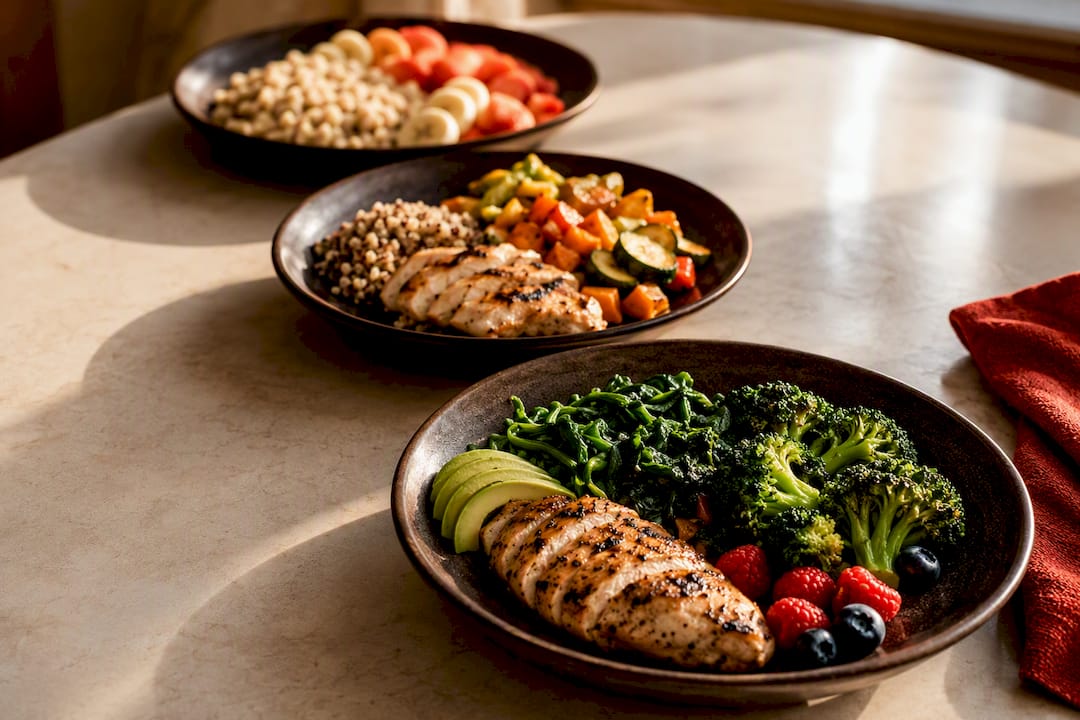
Start with a 3 high / 4 low carb split: put your extra carbs on your two or three hardest training days, keep protein steady every single day, and treat high-carb days as structured reseeds, not free-for-alls. If you have diabetes or take medication that affects blood sugar, talk to your doctor before you start. Expect the first few pounds you lose to be water, not fat.
TL;DR:
- High-carb days should be limited to your toughest training sessions, with about 5 to 7 grams per kilogram of body weight, timed around workouts.
- Maintaining consistent protein intake at 1.4 to 2.0 grams per kilogram daily supports muscle preservation, regardless of carb cycling.
- Avoid treating high-carb days as cheat days; they are essential fueling points and should stay within calorie and macro targets.
- Carb quality matters; prioritize whole grains and fruit over refined sugars even on high-carb days to support overall health.
- Progress is primarily water loss in the first week, with sustainable fat loss averaging around 0.5 to 1% of body weight per week afterward.
Table of Contents
- Your 7-Day Carb Cycling Meal Plan, Day by Day
- How to Structure Your Week and Set Carb and Protein Targets
- What to Eat on High, Moderate, and Low Carb Days
- When Should You Eat Carbs Around Workouts?
- Common Mistakes That Stall Carb Cycling Progress
- How Long Before Carb Cycling Shows Results?
- How Homecooked Turns This Plan Into Your Own Week
- Try Homecooked to Build Your Own Carb Cycling Week
- The Honest Take on Carb Cycling
- Sources
Your 7-Day Carb Cycling Meal Plan, Day by Day
Here’s a sample week built on a 4 low / 3 high split, good for someone lifting three or four times a week. Swap days around based on your own training schedule, and treat portions as a starting point, not gospel.
- Monday, low carb (rest day): Eggs with spinach for breakfast, a big salad with grilled chicken and olive oil for lunch, baked salmon with roasted broccoli for dinner, plus a handful of almonds as a snack.
- Tuesday, high carb (leg day): Oatmeal with berries and a banana for breakfast, a chicken and rice bowl for lunch, and a pasta dish with lean turkey for dinner. Add a rice cake with peanut butter post workout.
- Wednesday, low carb: Greek yogurt with a few walnuts, a turkey lettuce wrap for lunch, and stir-fried tofu with mixed vegetables for dinner.
- Thursday, high carb (upper body day): Toast with eggs and avocado, a turkey and sweet potato bowl for lunch, and shrimp with rice and grilled vegetables for dinner.
- Friday, low carb: Cottage cheese with berries, a big veggie and steak salad, and baked cod with asparagus. This is a solid day to try Homecooked’s cottage cheese protein bowl as your morning meal.
- Saturday, high carb (long or heavy training): Overnight oats with fruit, a bibimbap bowl for lunch, and grilled chicken with roasted potatoes for dinner.
- Sunday, moderate carb (active recovery): Veggie omelet, a grain bowl with grilled fish, and a lighter dinner of vegetable soup with a side of quinoa.
For a vegetarian version, swap chicken and fish for tofu, tempeh, lentils, or seitan, and lean on Greek yogurt and eggs for extra protein on low-carb days. Dairy-free swaps work fine too: coconut yogurt, extra nuts, and olive oil cover the fat gap left by dairy.
How to Structure Your Week and Set Carb and Protein Targets
Three common splits work for most people. A 3 high / 4 low week suits beginners or anyone training three times a week. A 4 high / 3 low split fits people training hard four or five days a week. A 5 high / 2 low split is really only for competitive athletes in heavy training blocks. Pick based on how many hard sessions you actually do, not how many you wish you did.
Rough carb ranges by day type:
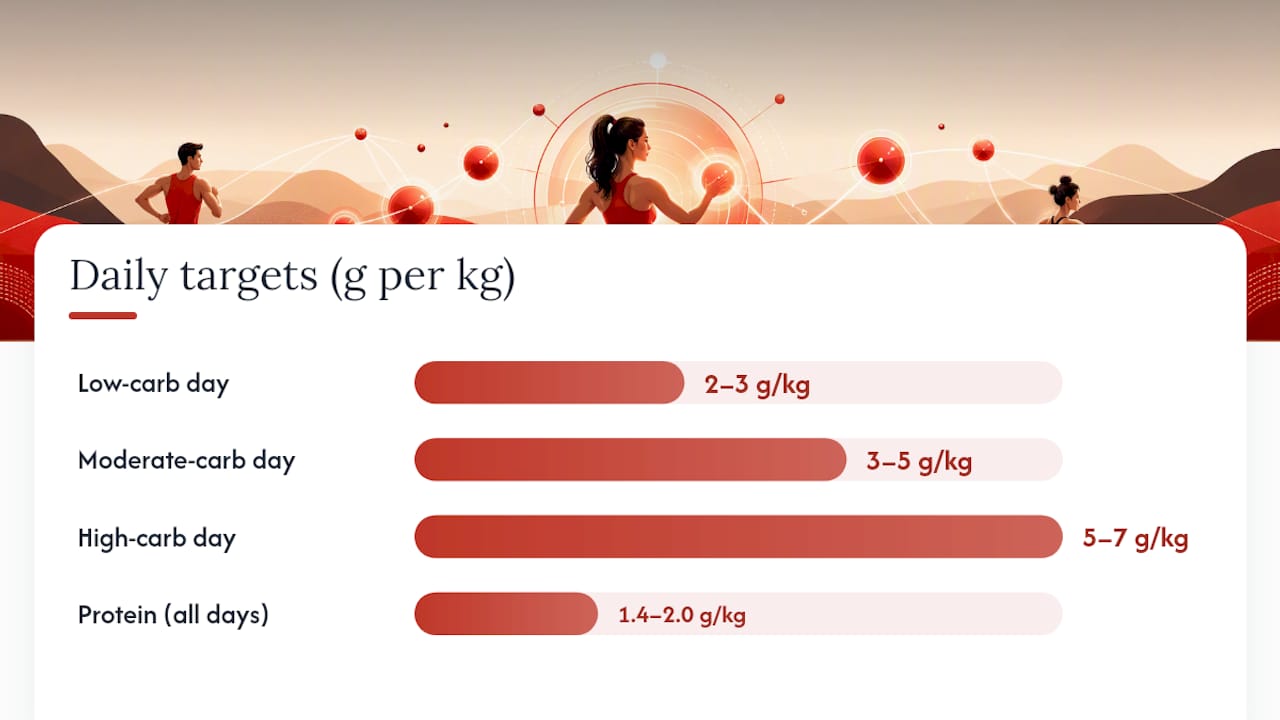
- Low-carb days: about 2 to 3 grams per kilogram of body weight.
- Moderate-carb days: about 3 to 5 grams per kilogram.
- High-carb days: about 5 to 7 grams per kilogram, timed around your toughest training.
Protein stays flat across every day, generally 1.4 to 2.0 grams per kilogram, with resistance-trained adults trending toward the higher end to protect muscle during a deficit, according to periodized carbohydrate research. For a 70 kg (154 lb) person, that’s roughly 98 to 140 grams of protein daily, with carbs swinging from about 140 grams on low days up to 490 grams on the biggest high-carb days. Scale up or down proportionally to your own body weight.
What to Eat on High, Moderate, and Low Carb Days
Building meals around a plate guide beats counting every gram. The Cleveland Clinic’s carb cycling food guide breaks this down well, and it lines up with what works in practice.
Low-carb day plate: half non-starchy vegetables, a quarter lean protein, a quarter healthy fat, with maybe a small serving of berries.
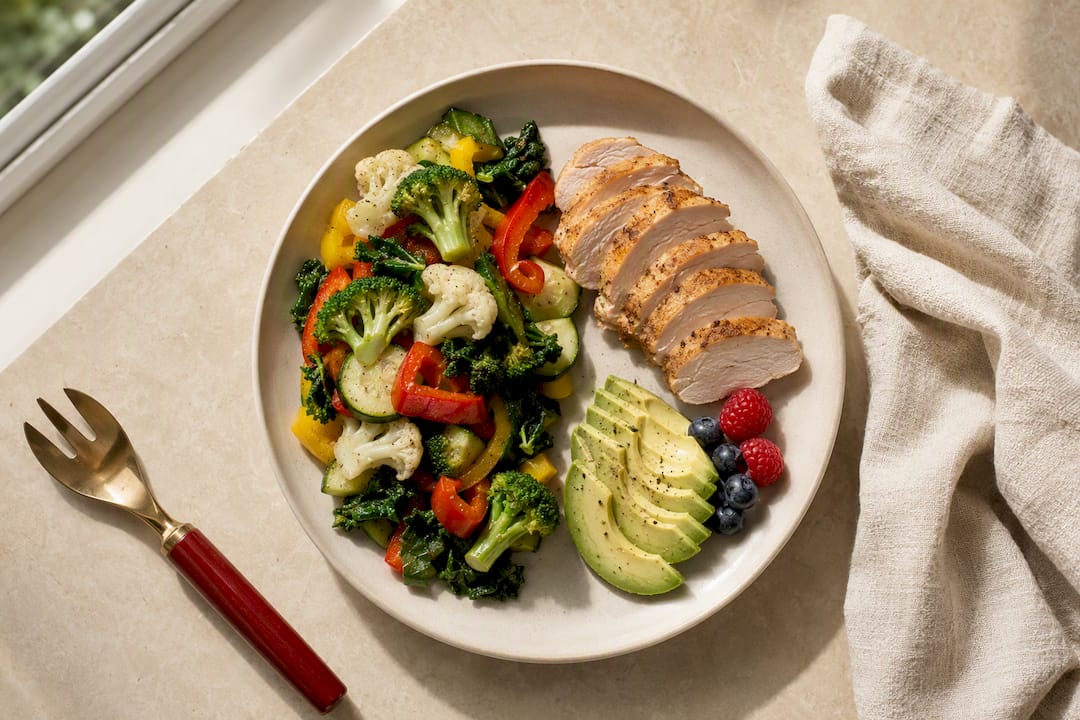
High-carb day plate: a third starch (rice, potato, oats), a third protein, a third vegetable, with fruit as a snack or dessert.
Food lists worth keeping on your fridge:
- Starches for high days: rice, potatoes, oats, whole grain bread, pasta, quinoa.
- Low-carb staples: leafy greens, broccoli, cauliflower, zucchini, peppers, mushrooms.
- Proteins for every day: chicken, turkey, eggs, fish, tofu, tempeh, Greek yogurt.
- Fats to lean on when carbs drop: olive oil, avocado, nuts, seeds. A seed-based snack covers this well on low-carb afternoons.
Pro Tip: Keep your protein and vegetables nearly identical across the whole week, and only swap the starch portion up or down. That single habit does most of the work in making carb cycling easy to stick with.
The Harvard Nutrition Source makes a good point worth repeating here: carb quality matters as much as quantity, so favor whole grains and fruit over refined sugar even on your highest-carb days.
When Should You Eat Carbs Around Workouts?
Carbs work hardest when they land close to training. A pre-workout meal 1 to 2 hours before lifting should carry 30 to 60 grams of carbs, something simple like oats with a banana or toast with honey. Post workout, within about 2 hours, aim for another 30 to 60 grams paired with protein.
Portion cues that don’t require a scale:
- ½ cup of cooked rice or oats runs about 25 to 30 grams of carbs.
- One medium potato (about the size of a fist) is close to 30 grams.
- Two slices of toast plus a medium banana lands around 50 grams.
Common Mistakes That Stall Carb Cycling Progress
The single biggest mistake is treating high-carb days like a cheat day. That extra rice bowl is fuel for training, not a free pass to eat past your calorie needs, and Medical News Today’s carb cycling review flags this exact pattern as the most common way people undo a week of progress.
Other slip-ups to watch for:
- Making low-carb days too extreme, which tanks energy and can mess with hormones over time.
- Skipping fiber-rich carbs entirely, which the Mayo Clinic warns can shortchange micronutrient intake.
- Ignoring total calories because “it’s a low-carb day,” so fat and protein quietly creep up.
If you have diabetes, are pregnant, have a history of an eating disorder, or take insulin or other blood-sugar medication, get clearance from a clinician before cycling carbs. Blood sugar swings between high and low days aren’t trivial for those groups.
How Long Before Carb Cycling Shows Results?
Most people see 3 to 5 pounds drop in week one, and that’s mostly water leaving as glycogen stores shrink, not fat. Real, sustainable fat loss runs closer to 0.5 to 1% of body weight per week after that.
If the scale stalls past week three or four, work through this order:
- Tighten portions slightly on low-carb days before cutting calories everywhere.
- Reassess your split. Someone training less than planned may need fewer high-carb days.
- Check sleep and recovery. Poor sleep blunts fat loss regardless of what’s on your plate.
- Track more than the scale: energy levels, strength in the gym, and how clothes fit tell a fuller story.
How Homecooked Turns This Plan Into Your Own Week
Homecooked takes this 7-day framework and swaps in meals matched to your goals, allergies, and pantry, then builds the grocery list automatically. Portion scaling happens behind the scenes, so a 70 kg target and a 90 kg target get different plates without you doing math. Pro Tip: Batch-cook your protein once, then let the app rotate starches around it all week.
Try Homecooked to Build Your Own Carb Cycling Week
Homecooked replaces the spreadsheet-and-guesswork version of carb cycling with a plan that adjusts to your body weight, training days, and food preferences automatically, then hands you a shopping list to match.

The free trial lets you map this exact 7-day structure onto your own week: pick your high and low days, and the app fills in meals like the bibimbap bowl for a training day or an apple pie for a planned higher-carb treat done the right way, without blowing your calorie target. If plain rice and chicken six nights a week sounds exhausting, this is the shortcut. Start a free trial and build your first carb cycling week at Homecooked.
The Honest Take on Carb Cycling
Most carb cycling content oversells the metabolic magic and undersells the boring part: consistency. Alternating high and low carb days doesn’t trigger some hormonal switch that melts fat faster than a steady calorie deficit would. What it actually does is make a deficit easier to sustain, because you get scheduled higher-carb days that keep training performance and mood from cratering.
The bigger risk isn’t picking the wrong split. It’s picking a split and then quietly abandoning the protein target, which is the one number in this whole plan that shouldn’t move. Carbs are the dial you turn. Protein is the wall. Confuse the two and the whole structure stops doing anything useful, no matter how carefully you timed your rice around leg day.
— 0xmaglev
This article is general information, not a substitute for advice from a qualified doctor. Consult a qualified healthcare professional about your own circumstances before acting on anything here.
Sources
- PubMed: Periodized carbohydrate intake for athletes (example review)
- Harvard T.H. Chan School of Public Health — Carbohydrates
- Mayo Clinic — Carbohydrates: Know the facts
- Cleveland Clinic — What to eat if you’re carb cycling