
A cutting meal plan works when you combine a modest calorie deficit with consistently high protein and at least two weekly resistance sessions, then follow a simple, repeatable system instead of reinventing meals every day. Aim for a 250 to 750 calorie daily deficit and 1.2 to 2.4 grams of protein per kilogram of body weight. Your next move: calculate your maintenance calories, set a protein target, and build your week around two or three core meals you can batch cook.
TL;DR:
- A calorie deficit of 250 to 750 calories per day with high protein intake supports fat loss while preserving muscle during cutting.
- Batch cooking two to three core meals simplifies meal planning and reduces decision fatigue, enhancing adherence over long periods.
- Resistance training at least twice a week and maintaining adequate protein intake are essential to prevent muscle loss in a cut.
- Tracking weekly average weight, progress photos, and strength levels helps determine when to adjust calorie intake or training.
- Using tools like Homecooked automates meal planning and grocery shopping, making consistent cutting easier and more sustainable.
Table of Contents
- How Do You Calculate Calories and Macros for Cutting?
- What’s the Easiest Way to Plan Meals for a Cut?
- What Does a Sample Cutting Meal Plan Look Like?
- What Groceries Do You Need for a Cutting Diet?
- Why Do Resistance Training and Protein Matter This Much?
- How Do You Track Progress and Know When to Adjust?
- How Does Homecooked Simplify Cutting Meal Planning?
- What I’d Tell Anyone Starting a Cut
- Ready to Automate Your Weekly Cutting Plan?
- Sources
- FAQ
How Do You Calculate Calories and Macros for Cutting?
Start with your total daily energy expenditure, or TDEE. A quick way to estimate it: multiply your body weight in pounds by 13 to 16 (lower if you’re sedentary, higher if you train hard and move a lot outside the gym). That gives you a maintenance number to subtract from.
From there, pick your deficit. A conservative cut trims 250 to 500 calories a day, which preserves muscle and energy for training. An aggressive cut goes up to 750 calories a day, but it demands tighter adherence and usually shorter duration.

Protein comes next, and it’s non-negotiable. Research on trained adults during weight loss points to 1.2 to 2.4 grams per kilogram of body weight as the effective range, with little added benefit above that even at intakes as high as 3.4 g/kg. For a 180-pound person, a common recommendation is to consume a high protein intake within the advised range to support muscle preservation during cutting.
Quick reference for common calorie targets:
- 1,600 kcal: 160g protein, 130g carbs, 50g fat
- 2,000 kcal: 175g protein, 175g carbs, 62g fat
- 2,400 kcal: 190g protein, 220g carbs, 75g fat
Pro Tip: Never drop below 1,200 to 1,400 calories without medical supervision. Going too low tanks energy, wrecks training performance, and often triggers the exact muscle loss you’re trying to avoid.
A full high protein meal plan can help you translate these numbers into actual food instead of just macros on paper.
What’s the Easiest Way to Plan Meals for a Cut?
You don’t need 21 different recipes a week. You need a template you can repeat with small variations, which is exactly how sustainable cutting meal planning works in practice.
Build a core meal formula:
- Pick one protein source (chicken thigh, ground turkey, cottage cheese, tofu).
- Add one starchy carb (rice, potatoes, oats).
- Add one fibrous vegetable (broccoli, spinach, peppers).
- Add a small measured fat (olive oil, avocado, nuts).
Scale portions up or down to hit your calorie target for that meal, and swap the protein or carb every few days to avoid flavor fatigue without rebuilding the whole system.
Batch cooking is where the real time savings happen. Cook proteins and grains in bulk on one or two days, then freeze portions in individual containers. Coaching experience consistently shows that rotating just two or three core meals cuts decision fatigue dramatically while still hitting macro targets, which matters more for long-term adherence than variety does.
Set aside 90 minutes on a weekend for prep, then reheat at midday during the week. Glass containers in consistent sizes make portioning almost automatic once you know what a “one serving” container looks like for each core meal. Browse healthy meal prep ideas or batch-friendly recipes to build your rotation.
What Does a Sample Cutting Meal Plan Look Like?
Here’s a 7-day plan built around roughly 2,000 calories and 180 grams of protein a day, based on a commonly used cutting meal plan template. It includes one refeed day to support training performance and adherence.
- Monday: Greek yogurt with berries, grilled chicken and rice bowl, salmon with sweet potato and greens.
- Tuesday: Egg white omelet with spinach, turkey chili, cottage cheese protein bowl with fruit.
- Wednesday: Protein oats, high-protein low-carb chicken salad, lean beef stir-fry.
- Thursday: Cottage cheese with berries, tuna wrap, bibimbap with extra vegetables.
- Friday: Protein smoothie, turkey burger bowl, baked cod with quinoa.
- Saturday (refeed day): Same protein target, carbs raised to maintenance level (around 300g), fat trimmed slightly to make room.
- Sunday: Repeat Monday or Wednesday’s meals to reset for the week ahead.
For a 4-week template, keep the same daily structure but rotate which two or three core meals you use each week. Weeks 1 and 3 might lean on chicken and rice; weeks 2 and 4 shift toward turkey and sweet potato. Adjust total calories down by 100 to 150 if your weekly weight average has stalled for more than two weeks straight.
| Original ingredient | Swap option | Why it works |
|---|---|---|
| Chicken breast | Ground turkey 93/7 | Similar protein, easier prep |
| White rice | Quinoa | Adds fiber, similar carb count |
| Ground beef | Extra-lean turkey or tofu | Cuts fat, keeps protein |
| Olive oil | Avocado | Swaps liquid fat for fiber-rich fat |
| Regular yogurt | Greek yogurt | Roughly double the protein per serving |
What Groceries Do You Need for a Cutting Diet?
A tight, category-based cutting grocery list keeps shopping fast and removes the decision fatigue that derails plans by Wednesday.
Proteins: chicken breast/thighs, 93% lean ground turkey, eggs and egg whites, Greek yogurt, cottage cheese, canned tuna or salmon, tofu or tempeh.
Carbs: rice, oats, sweet potatoes, quinoa, whole-grain bread, canned beans and lentils.
Produce: spinach, broccoli, bell peppers, berries, bananas, frozen mixed vegetables.
Fats: olive oil, avocado, almonds or peanut butter, chia seeds.
Condiments: low-sugar hot sauce, mustard, balsamic vinegar, herbs and spices.
Frozen vegetables and canned fish cut cost without sacrificing nutrition, and they’re often just as nutrient-dense as fresh versions since they’re processed close to harvest. Buying grains and beans in bulk drops the price per serving noticeably compared to single-serving packages.
If you’re vegan or plant-based, lean on tofu, tempeh, lentils, and Greek-style plant yogurts to hit protein targets. This plant protein bowl recipe is a solid model for a 25g plant-protein meal you can cook fast or adapt at home.

Why Do Resistance Training and Protein Matter This Much?
Muscle doesn’t stay by accident during a deficit. It stays because you send your body two clear signals: enough protein to rebuild tissue, and a mechanical reason (training) to keep that tissue around.
The American College of Sports Medicine’s 2026 position stand, built from more than 137 studies and 30,000-plus participants, recommends training each major muscle group at least twice a week. Consistency and individualized programming matter more than complex periodization for most lifters. Below that frequency, the protective effect of a cut on lean mass drops off noticeably, especially in aggressive deficits.
On the protein side, a common assumption is that you need to spread protein evenly across meals to maximize results. A 16-week trial in resistance-trained adults tested exactly that, comparing an even distribution (30/30/30 grams across meals) with a skewed one (10/20/60 grams).
The trial found that within-day protein distribution did not meaningfully change body-composition outcomes when total daily protein intake was already adequate. Total protein mattered far more than timing.
That’s genuinely useful news if your schedule doesn’t allow six perfectly spaced meals. Focus on hitting your daily gram target first, and treat meal timing as a convenience decision, not a performance one.
How Do You Track Progress and Know When to Adjust?
Daily weight swings 2 to 5 pounds from water, sodium, and digestion alone, so a single bad morning on the scale means nothing on its own.
- Weigh daily, but judge by the weekly average. A flat or rising average across two full weeks, not one bad day, is your signal to act.
- Take progress photos every two weeks in the same lighting and pose. Photos catch body-composition shifts the scale misses entirely.
- Watch your lifts. A steady drop in strength across multiple sessions often means your deficit or protein intake needs adjusting before your body composition even shows it.
- Reduce calories by 100 to 150 only after two stalled weeks, and pause the cut entirely if sleep, mood, or strength craters.
Refeed days help here. Every 1 to 2 weeks, raise carbohydrates to maintenance level while holding protein steady and trimming fat slightly to keep total calories close to your deficit target. This restores glycogen, supports harder training sessions, and tends to blunt hunger better than an unplanned splurge does.
How Does Homecooked Simplify Cutting Meal Planning?
Everything above works. It also takes real effort to plan manually every single week, which is exactly the friction Homecooked is built to remove.
The app builds personalized meal plans based on your calorie and protein targets and suggests meals considering available ingredients. Recipes include batch-cook formats that fit core-meal rotation strategies, and grocery lists generate automatically from your meal plan.
Step-by-step guided recipes with timers help simplify cooking, supporting users in following their meal plans. For anyone trying to stay consistent through a multi-week cut, that reduction in weekly planning time is often the difference between adherence and burnout.
What I’d Tell Anyone Starting a Cut
The biggest mistake I see isn’t a bad macro split. It’s chasing a pace of fat loss that no body sustains past week three. A realistic, muscle-preserving cut moves at roughly 0.5 to 1 pound a week for most people, and that pace feels slow right up until you compare it to the alternative: someone who crash-dieted, lost muscle along with fat, and had to rebuild both.
Adherence beats optimization every time. A slightly imperfect plan you follow for 12 weeks outperforms a perfect plan you abandon after 10 days. Build in social flexibility (a planned refeed before a dinner out beats white-knuckling through it), treat your rotation of core meals as a feature and not a limitation, and track lifts as closely as you track weight.
If you’re starting today: calculate your numbers, pick two or three core meals, batch cook this weekend, and check your weekly average in seven days.
— 0xmaglev
Ready to Automate Your Weekly Cutting Plan?
You now have the formula, the sample plans, and the tracking rules. The part that usually breaks a cut isn’t the science, it’s the weekly grind of re-planning meals and rewriting grocery lists by hand.
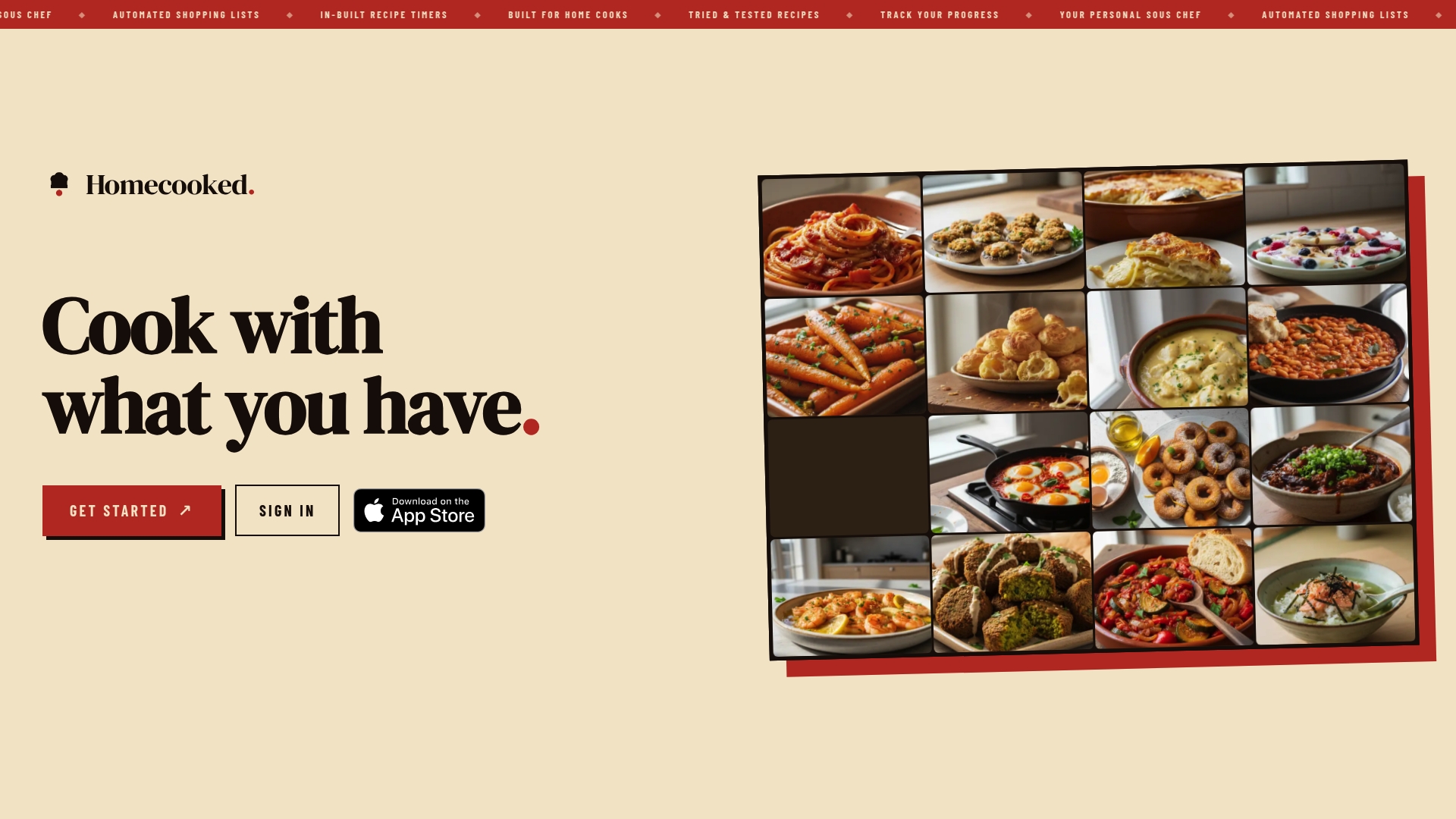
Homecooked builds personalized meal plans around your calorie and protein targets, then plans around what’s already in your pantry so you waste less food and spend less time deciding what’s for dinner. Recipes come with step-by-step guided instructions and built-in timers, and your grocery list generates automatically from whatever plan you’re running that week. Instead of rebuilding your rotation from scratch every Sunday, you get a system that adapts to your targets as your cut progresses. Start with Homecooked and turn this week’s macro targets into an actual weekly menu and shopping list in a few minutes.
Sources
- Within-day protein distribution does not influence body composition responses during weight loss in resistance-training adults — PMC
- ACSM releases new position stand on resistance training (2026) — ACSM
This article is general information, not a substitute for advice from a qualified doctor. Consult a qualified healthcare professional about your own circumstances before acting on anything here.
FAQ
What Is the 3-3-3 Rule for Meal Prep?
There’s no single agreed-upon definition of a “3-3-3 rule” in nutrition science, and versions vary widely across fitness content. A common informal interpretation used for meal prep is planning around 3 core meals, 3 core proteins, and 3 core carb sources to simplify weekly cooking, which lines up with the low-cognitive-load rotation strategy covered above.
Will Cutting Meals Help You Lose Weight?
Yes, cutting meals help you lose weight when the total effect creates a calorie deficit, typically 250 to 750 calories below maintenance. Pairing that deficit with adequate protein (1.2 to 2.4 g/kg) and resistance training at least twice a week preserves muscle while the fat comes off.
What Foods Should You Eat When Cutting?
Prioritize lean proteins like chicken breast, egg whites, Greek yogurt, and fish, paired with fiber-rich carbs like sweet potatoes, quinoa, and oats. Round out meals with fibrous vegetables and small portions of healthy fats such as olive oil or avocado to support fullness and micronutrient intake without blowing your calorie budget.
How Much Protein Do You Need During a Cut?
Most people preserving muscle during a cut need 1.2 to 2.4 grams of protein per kilogram of body weight daily. Going higher, up to 3.4 g/kg, has not shown consistent extra benefit for resistance-trained individuals, so there’s little reason to push past the upper end of that range.
Can Homecooked Build a Cutting Meal Plan for Me?
Homecooked generates personalized meal plans based on your specific health goals, including fat loss and muscle retention, and builds grocery lists automatically around those targets. Pricing details are available directly on the Homecooked site.