This week, pick five core dinners, slot them across three weeknights, reserve a couple of leftover nights, and shop with one consolidated list. That single 20-minute decision cuts most of the weeknight chaos before it starts. The American Heart Association confirms that families who plan meals eat together more often and make healthier choices at the table.
Your quick-start action list:
- Check your calendar for the week and note which nights are short on time.
- Pull out three to five meals your family already likes.
- Assign each meal to a specific night, leaving two nights for leftovers.
- Write one shopping list organized by store section (produce, proteins, pantry).
- Set aside 30 minutes on Sunday to do basic prep.
- Check the freezer and pantry before you buy anything new.
How you’ll know it worked:
- You made one grocery trip instead of three.
- At least two dinners this week came from planned leftovers.
- You ordered takeout fewer nights than usual.
Key Takeaways
Consistent family meal planning comes down to one repeatable habit: pick your meals before the week starts, shop once, and prep a little on Sunday.
| Point | Details |
|---|---|
| Pick five core meals | Choose three to five reliable dinners your family likes and slot them into the week before Sunday. |
| Schedule two leftover nights | Build leftover nights into the plan intentionally so nothing goes to waste and you cook less. |
| Shop from one list | Build a single grocery list from your meal plan, grouped by store section, to save time and money. |
| Prep components, not full meals | A 30-minute Sunday session cooking grains, proteins, and vegetables cuts 10–15 minutes off each weeknight. |
| Homecooked automates the system | The app generates personalized plans, builds shopping lists, and tracks your pantry so the weekly setup takes minutes. |
Table of Contents
- How to make a family meal plan in 5 steps
- Copyable weekly templates you can use right now
- Core family meals to rotate every week
- How to shop smart and keep grocery costs down
- Batch cooking, make-ahead moves, and freezer meal basics
- Pantry essentials that keep your plan flexible
- Handling dietary needs, allergies, and picky eaters without doubling your work
- Common meal-planning rules and frameworks explained
- When plans fall apart: common problems and fast fixes
- How Homecooked automates the steps you just read
- The honest trade-off every busy parent should know
- Homecooked takes the planning off your plate
- Sources
How to make a family meal plan in 5 steps
A repeatable process matters more than a perfect plan. Here’s a tight five-step loop you can run every Sunday in under 40 minutes.
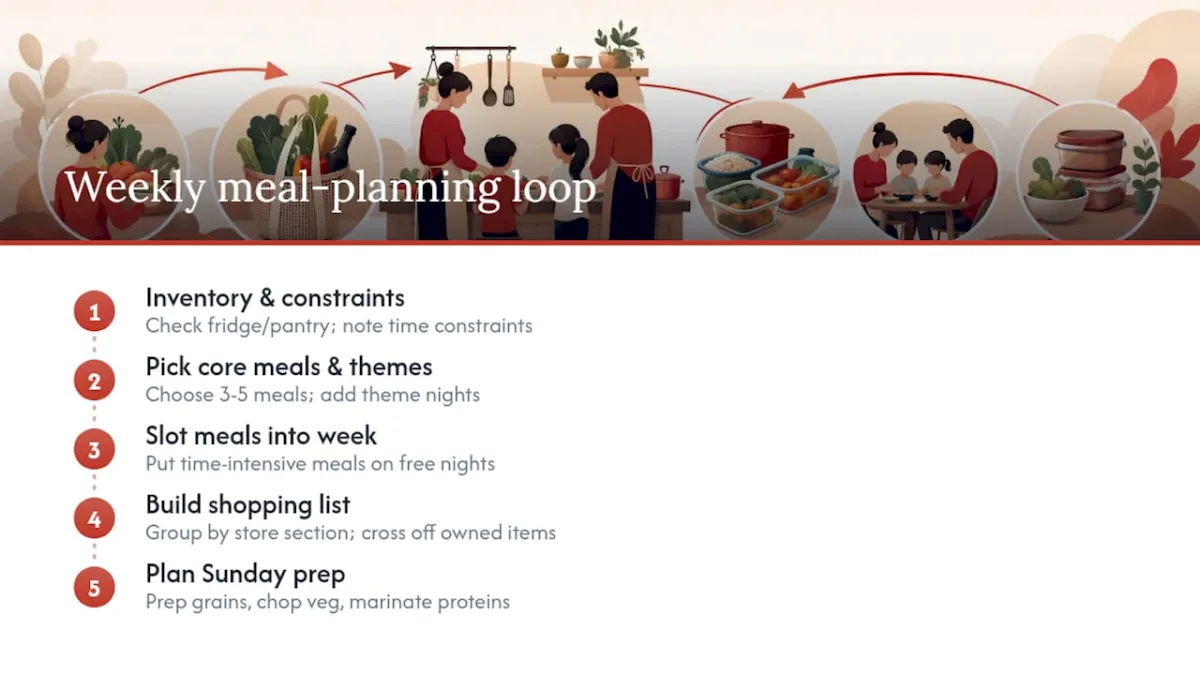
Step 1: Take inventory and note constraints (5 minutes)
Open the fridge, freezer, and pantry. Write down what needs to be used first. Check the week’s calendar for late nights, school events, or anything that shrinks your cooking window to 20 minutes or less.
Step 2: Pick three to five core meals and consider theme nights (10 minutes)
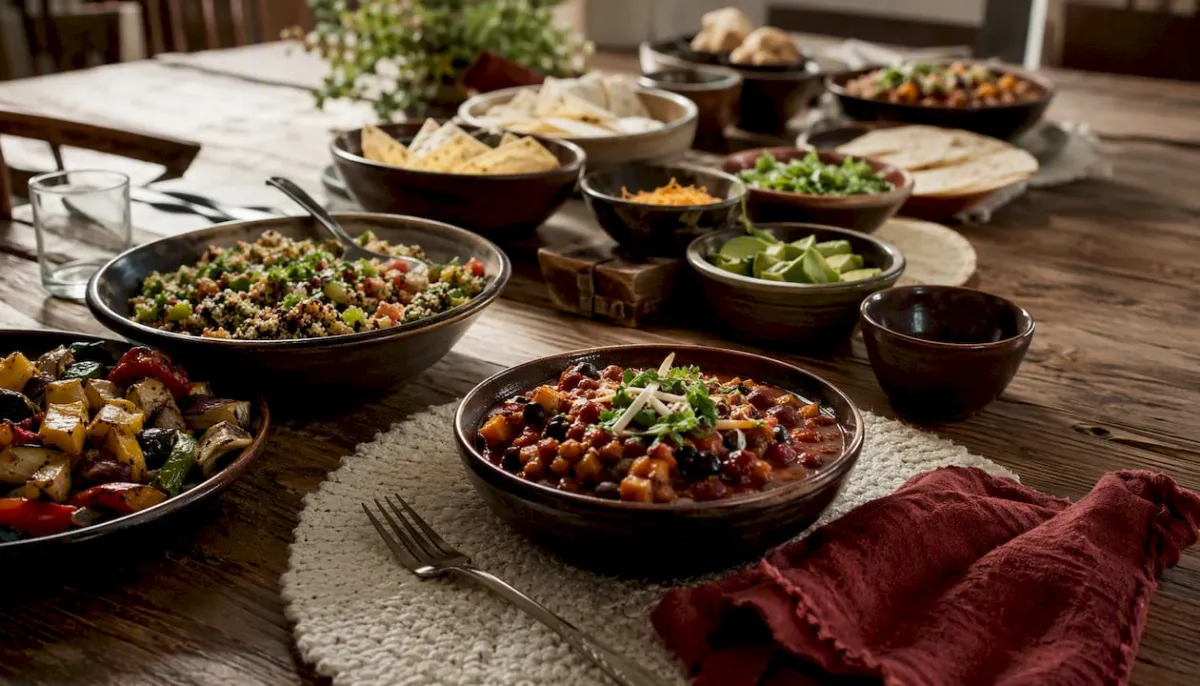
Pull from meals your family already eats without complaint. Theme nights (Taco Tuesday, Pasta Wednesday) remove the daily “what’s for dinner?” decision entirely. Aim for a mix: one slow-cooker meal, one sheet-pan dinner, one pasta or grain bowl, and one wildcard. A rotating schedule of family favorites is one of the simplest ways to reduce decision fatigue week after week.
Step 3: Slot meals into the week around your schedule (5 minutes)
Put the most time-intensive meal on the night with the most breathing room. Slow-cooker meals belong on your busiest day. Reserve two nights for planned leftovers, not “whatever’s in the fridge” guessing.
Step 4: Build one shopping list from the plan (10 minutes)
Go meal by meal, list every ingredient, then cross off what you already have. Group the remaining items by store section: produce, proteins, dairy, canned goods, dry goods. A zero-waste grocery list built directly from your meal plan also prevents the duplicate-buying that inflates grocery bills.
Step 5: Map out a Sunday prep session (5–10 minutes to plan, 30–90 minutes to execute)
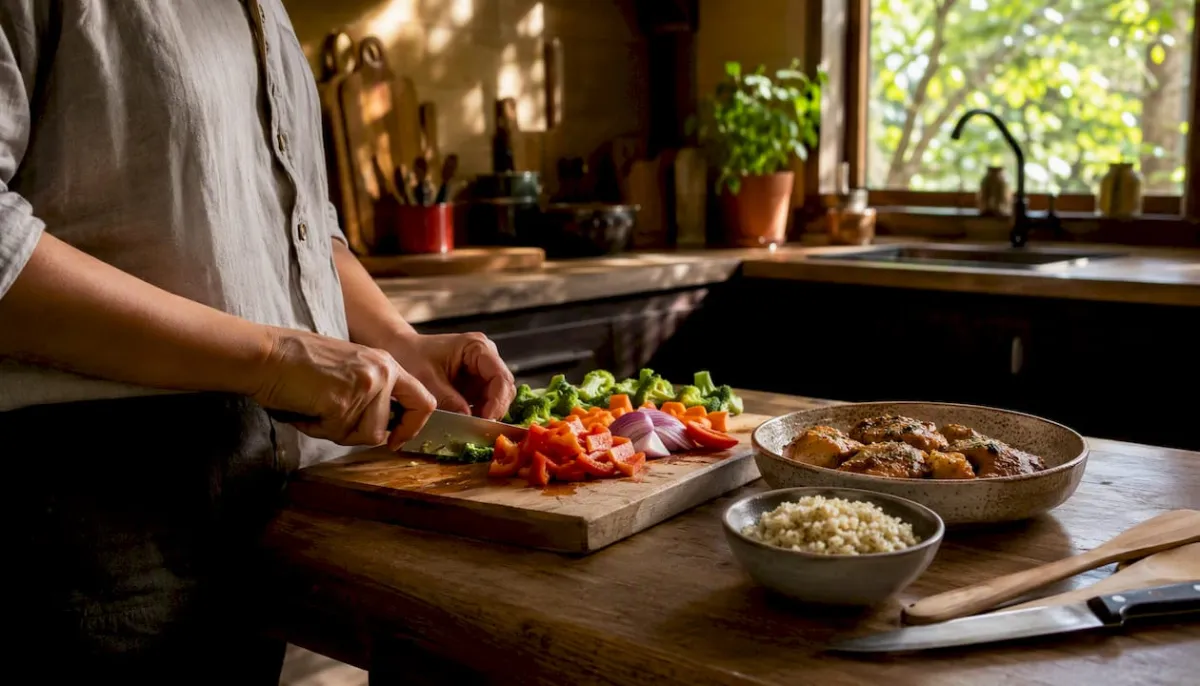
Decide what you’ll prep ahead: cooked grains, chopped vegetables, marinated proteins, or a batch of sauce. Even 30 minutes of Sunday prep can cut 10–15 minutes off each weeknight dinner.
Pro Tip: Write your meal plan on a whiteboard or sticky note on the fridge. When the whole family can see the week’s dinners, you field fewer “what’s for dinner?” questions and kids start to anticipate meals they like.
Copyable weekly templates you can use right now
These three templates cover the most common parent scenarios. Each runs Sunday through Saturday, focuses on dinners, and includes brief breakfast and snack notes. Tiny Table Meals recommends building in at least two leftover nights and letting kids choose one meal per week, both of which are baked into each template below.
Low-cost week (under $75 for a family of four)
| Night | Dinner | Swap / Note | Leftover? |
|---|---|---|---|
| Sunday | Slow-cooker chicken and rice | Sub chickpeas for chicken (vegetarian) | Yes, Monday |
| Monday | Leftover chicken rice bowls | Add fresh salsa or hot sauce | Leftover night |
| Tuesday | Pasta with marinara and Italian sausage | Use ground turkey to cut cost | No |
| Wednesday | Black bean tacos | Add shredded cheese, slaw | No |
| Thursday | Sheet-pan sausage and veggies | Sub tofu for sausage | Yes, Friday |
| Friday | Leftover sheet-pan bowls over rice | Top with a fried egg | Leftover night |
| Saturday | Kid’s choice (pizza night) | Homemade with store dough | No |
Breakfast notes: Oatmeal with banana, scrambled eggs, or toast with peanut butter. Batch-cook a pot of oatmeal Sunday for three mornings.
Snack notes: Apple slices with peanut butter, cheese and crackers, hummus with carrots.
30-minute week (every dinner under 30 minutes)
For quick 30-minute dinners organized by cuisine, Homecooked’s recipe library is a useful shortcut.
Picky-eater-friendly week
Core family meals to rotate every week
A short list of reliable, crowd-pleasing dinners is the backbone of any working meal plan. These are the meals worth keeping in permanent rotation, drawn from the easy family dinners category that consistently gets the most use on busy weeknights.
One-pan and sheet-pan dinners:
- Sheet-pan chicken thighs with roasted broccoli and potatoes
- Sheet-pan sausage, peppers, and onions
- One-pan lemon garlic salmon with asparagus
- Skillet chicken fajitas
Pasta and grain bowls:
- Spaghetti with meat sauce (doubles as a freezer meal)
- Pasta primavera with whatever vegetables are in the fridge
- Burrito bowls with seasoned ground beef or black beans
- Fried rice with eggs and frozen vegetables
Slow-cooker and hands-off meals:
- Slow-cooker chicken and rice
- Slow-cooker beef chili (freezes perfectly)
- Pulled pork with coleslaw
Quick-assembly meals:
- Tacos with ground beef, turkey, or black beans
- Quesadillas with cheese and leftover protein
- Stir-fry with any protein and frozen stir-fry vegetables
- Homemade pizza on store-bought dough
Freezer-friendly picks: Spaghetti meat sauce, beef chili, pulled pork, and burrito bowl filling all freeze well in labeled quart bags. Reheat straight from frozen in a pot or the microwave.
Pro Tip: When you make tacos on Tuesday, cook double the meat. Use the second half in quesadillas on Thursday or over rice on Friday. One cook session, three dinners.
How to shop smart and keep grocery costs down
Turning your weekly plan into a single grocery trip is where the savings actually show up. The pantry-first approach, checking what you already have before writing a single item, is the fastest way to cut $10–$20 off a typical grocery run.
Build your list the right way:
- Go meal by meal through your plan and list every ingredient.
- Cross off anything already in the pantry, fridge, or freezer.
- Group remaining items by store section to avoid backtracking.
- Add a small buffer for breakfasts and snacks, but keep it tight.
Tactics that consistently lower the bill:
- Shop sales first. Check your store’s weekly circular before you finalize the meal plan, not after. If chicken thighs are on sale, build two meals around them.
- Buy cheaper cuts. Chicken thighs cost less than breasts and stay moist in sheet-pan and slow-cooker recipes. Ground turkey runs cheaper than ground beef in most markets.
- Use frozen vegetables. Frozen broccoli, peas, corn, and stir-fry blends cost a fraction of fresh and have comparable nutrition. They also eliminate waste from produce that goes bad mid-week.
- Buy dry grains in bulk. A 5-pound bag of rice or a 2-pound bag of dried lentils costs less per serving than almost any packaged side dish.
- Lean on seasonal produce. Seasonal vegetables are cheaper, fresher, and more flavorful than out-of-season imports.
A simple cost-per-meal example:
A family of four eating slow-cooker chicken and rice can land around $8–$10 total using bone-in chicken thighs ($5–$6 for a 3-pound pack), a bag of rice ($1.50), a can of broth ($1.50), and pantry spices. That’s roughly $2–$2.50 per person, compared to $10–$15 per person for takeout. Multiply that across five planned dinners and the savings over a week of unplanned eating are substantial.
Families who plan meals weekly spend less on food overall and waste less of what they buy, according to the American Heart Association’s meal-planning guidance.
Batch cooking, make-ahead moves, and freezer meal basics
The goal of a Sunday prep session isn’t to cook every meal in advance. It’s to remove the friction from your three or four busiest weeknights. Meal planning for busy schedules works best when you prep components, not complete dishes.
Batch-cook checklist (what to prep once for the week):
- Cook a large pot of rice or grains (quinoa, farro) to use across three meals.
- Roast a sheet pan of vegetables (broccoli, sweet potato, zucchini) for bowls, sides, and omelets.
- Brown a pound of ground meat and season it neutrally so it works in tacos, pasta, or stir-fry.
- Hard-boil six eggs for quick breakfasts and salad toppers.
- Wash and chop raw vegetables (carrots, celery, peppers) and store in airtight containers.
- Make a double batch of sauce (marinara, chili, or curry) and freeze half.
Freezer-friendly storage tips:
- Label every container with the meal name and date before it goes in.
- Freeze in portion sizes your family actually eats, not one giant block.
- Soups, stews, and grain-based dishes reheat best; avoid freezing dishes with raw dairy or cooked pasta already mixed in.
- Use freezer-safe zip bags laid flat to save space; they stack once frozen.
Reheating notes: Thaw overnight in the fridge for best texture. For soups and stews, reheat on the stovetop over medium heat with a splash of broth or water to restore consistency. Grain bowls reheat well in a skillet with a small amount of oil.
For a full library of batch-friendly recipes, Homecooked’s meal prep collection covers 25 options organized by protein and prep time.
Pantry essentials that keep your plan flexible
A stocked pantry is what separates a plan that survives an unexpected schedule change from one that collapses into takeout. With eight to ten core staples on hand, you can build a complete dinner around almost any fresh protein.
The core pantry list:
- Canned tomatoes (diced and crushed)
- Canned beans (black, chickpea, kidney)
- Low-sodium chicken and vegetable broth
- Dry pasta (spaghetti, penne, or rotini)
- White or brown rice, plus one whole grain (quinoa or farro)
- Olive oil and a neutral cooking oil
- Basic spices: garlic powder, cumin, smoked paprika, Italian seasoning, red pepper flakes
- Soy sauce or tamari
- Frozen vegetables (broccoli, peas, corn, stir-fry blend)
- Canned coconut milk (for curries and soups)
How six staples combine with one fresh protein:
- Chicken thighs + canned tomatoes + broth + pasta = quick chicken cacciatore
- Ground beef + canned beans + diced tomatoes + cumin = 20-minute chili
- Shrimp + soy sauce + frozen stir-fry veg + rice = weeknight stir-fry
- Chickpeas + coconut milk + diced tomatoes + rice = vegetarian curry
- Eggs + frozen peas + soy sauce + leftover rice = egg fried rice
Pantry rotation tip: When you unpack groceries, move older cans to the front and new ones to the back. Once a month, do a quick expiration check and pull anything within 60 days to the front of the rotation so it gets used first.
Handling dietary needs, allergies, and picky eaters without doubling your work
The key is building one flexible base meal and adapting it at the table, not cooking separate full meals for each family member.
Common dietary swaps
Strategies for picky eaters
- Serve components separately. A child who refuses a mixed stir-fry will often eat the same rice, protein, and vegetables when they’re not touching each other on the plate.
- Build-your-own nights. Taco bars, pizza nights, and grain bowls let kids assemble their own plate. Acceptance rates go up when kids feel in control.
- Let kids pick one meal per week. This is one of the Tiny Table Meals planner’s core recommendations, and it works. A child who chose Wednesday’s pasta is far less likely to complain about it.
- Introduce one new ingredient at a time. Pair something unfamiliar with two foods the child already likes.
Batch one base, adapt at the table: Cook a plain protein (grilled chicken, ground beef) and a neutral grain. Set out toppings and sauces separately. One parent gets a spicy burrito bowl; the child gets plain rice and chicken with cheese. Same base, zero extra cooking.
Common meal-planning rules and frameworks explained
Three frameworks come up repeatedly in meal-planning guides. Each solves a different problem.
The Rule of 3
Originally a scheduling tool from dietitian practice, the Rule of 3 suggests structuring eating around three meals per day with up to three snacks, spaced roughly every three hours. For family meal planning, it’s most useful as a scheduling guide: it helps you map out when the family needs to eat so you can plan prep times backward from those windows. It’s a rhythm tool, not a strict diet prescription.
The 40-40-20 macro split
It comes from sports nutrition and is common in performance-focused eating plans. For most families, it’s too protein-heavy to apply rigidly, but it’s a useful reference when a parent wants to increase protein at dinner without overhauling the whole menu. Think of it as a dial to turn, not a rule to follow exactly.
The five rules of meal prep
IGA’s five rules offer the most practical framework for home cooks:
- Get organized before you start cooking.
- Establish a logical menu that uses overlapping ingredients.
- Cook efficiently by batching similar tasks (all chopping, then all roasting).
- Don’t cook everything in advance — some dishes are better fresh.
- Follow food-safety practices: label, date, and store correctly.
When to use each:
- Use the Rule of 3 when you’re building a weekly schedule and need to map meal timing.
- Use 40-40-20 when a family member has a specific protein goal (post-surgery recovery, an athlete in the house).
- Use IGA’s five rules every week as the operational backbone of your prep session.
Pro Tip: Combine the Rule of 3 for scheduling and IGA’s five rules for execution. Add 40-40-20 only when someone in the family has a specific nutrition target. Most families don’t need all three running at once.
When plans fall apart: common problems and fast fixes
Even a solid plan hits friction. Here’s how to handle the most common mid-week failures without abandoning the whole week.
Problem → Fix pairs:
- Missed the grocery trip: Raid the pantry. Pasta with canned tomatoes and whatever protein is in the freezer is a complete dinner. Keep one “pantry rescue” meal in every weekly plan for exactly this scenario.
- Unexpected overtime or a late night: Swap that night’s planned dinner to the slow cooker (set it in the morning) or pull a freezer meal. Egg fried rice from leftover rice takes 12 minutes.
- A picky child refuses the planned meal: Offer the components separately before offering an alternative. A child who won’t eat chicken stir-fry will often eat plain rice with chicken on the side. Avoid making a completely separate meal, which reinforces the refusal pattern.
- You’re out of a key ingredient: Most proteins are interchangeable in sheet-pan and stir-fry recipes. Out of chicken? Use shrimp, canned tuna, or a can of white beans.
- The plan felt too ambitious: Next week, cut it to three planned dinners plus two leftover nights. Simpler plans survive contact with real life better than elaborate ones.
Track what failed: After the week, spend two minutes writing down which meal didn’t happen and why. After three weeks, patterns emerge: Tuesday is always chaotic, or the slow-cooker meal always gets skipped. Adjust the plan to match your actual week, not an idealized one.
Low-effort rescue meals to keep in your back pocket: Scrambled eggs and toast, quesadillas with whatever cheese and protein is available, pasta with butter and Parmesan, or a grain bowl from batch-cooked components.
How Homecooked automates the steps you just read
Every step in this guide has a manual version and a faster version. Homecooked handles the faster version.
Where the app maps to this guide:
- Personalized meal plans replace the “pick five core meals” step. Homecooked generates a weekly plan based on your dietary preferences, health goals, and household size, so you’re not starting from a blank page.
- Automated shopping lists replace the manual list-building step. The app consolidates ingredients across all planned meals into one organized list, grouped by store section.
- Pantry tracking replaces the “check what you have” step. Log what’s in your pantry once, and the app cross-references it against your plan before generating the shopping list.
- Step-by-step guided recipes with integrated timers replace the need to manage multiple browser tabs on a busy weeknight.
- Dietary preference settings handle the swap logic from the picky-eater and dietary-needs sections automatically.
The app’s weekly meal planning tools also include templates and digital workflows that make the Sunday planning session faster, which is the single step most parents skip when life gets busy.
For parents who want to test the system before committing, Homecooked offers a free trial. The paid Homecooked Pro tier adds full automation, unlimited meal plans, and the complete recipe library.
The honest trade-off every busy parent should know
The conventional wisdom on family meal planning tends to oversell the upfront investment and undersell the compounding return. Most guides tell you to “spend an hour on Sunday” as if that hour is the cost. It isn’t. The real cost is the first two or three weeks, when the habit is new and the plan still doesn’t quite fit your family’s actual schedule.
The parents who stick with weekly meal planning long-term aren’t the ones with the most elaborate systems. They’re the ones who kept the plan simple enough to survive a bad Tuesday.
The other thing worth saying plainly: apps like Homecooked are genuinely useful for reducing the friction of those first few weeks, not because they do the cooking, but because they remove the blank-page problem. When the plan is already drafted and the shopping list is already built, the activation energy to actually follow through drops considerably. That’s the real value of automation in this context, not perfection, just lower resistance.
Start with three dinners this week. Add a fourth next week. By week four, the habit is there and the plan almost runs itself.
Homecooked takes the planning off your plate
Busy parents who want the results from this guide without the weekly setup time are exactly who Homecooked was built for. The app generates a personalized weekly meal plan based on your family’s dietary preferences and health goals, builds the shopping list automatically, and walks you through each recipe with step-by-step instructions and built-in timers. No blank page, no forgotten ingredients, no mid-week scramble.
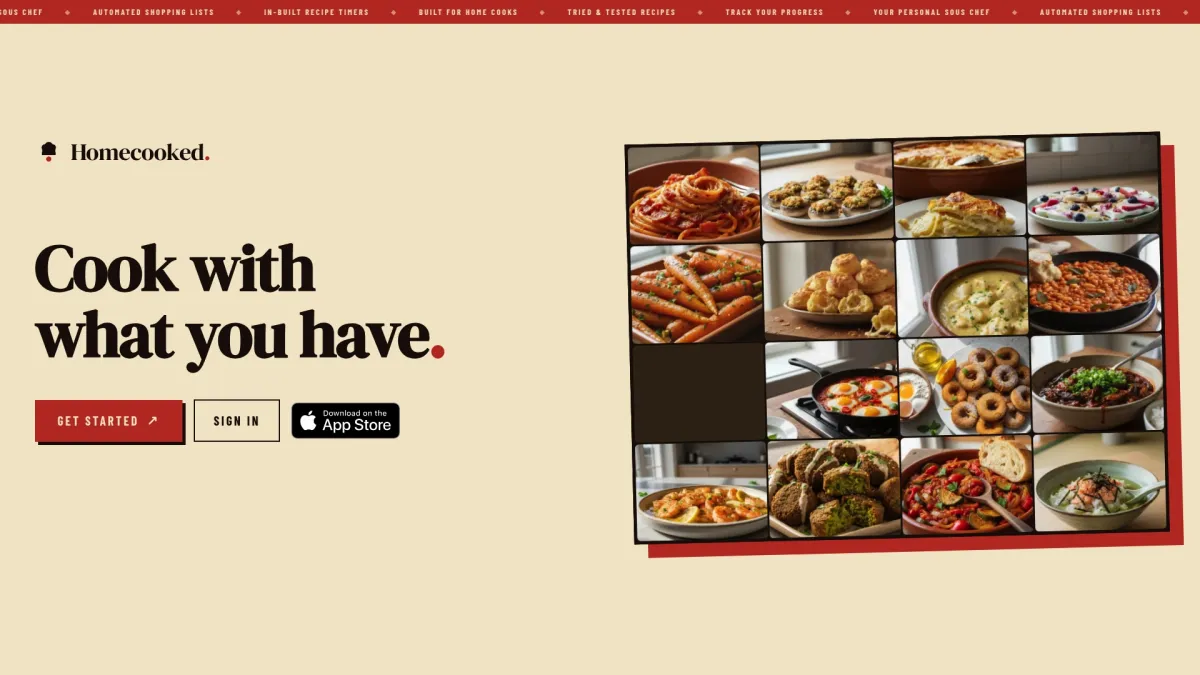
The manual approach in this guide works well once the habit is set. Homecooked is the faster path to get there, especially in those first few weeks when the system is still new. Try the free trial to see a full week’s plan built around your family’s preferences, then upgrade to Homecooked Pro when you’re ready for the complete library and full automation. Start your first personalized meal plan today and see what a week without the “what’s for dinner?” question actually feels like.
Sources
These are the most helpful resources referenced throughout this guide.
- Meal Planning: Benefits and How-To’s of Family Dinners
- Free Weekly Family Meal Planner Tool | Tiny Table Meals
- The 5 rules of meal prep - IGA