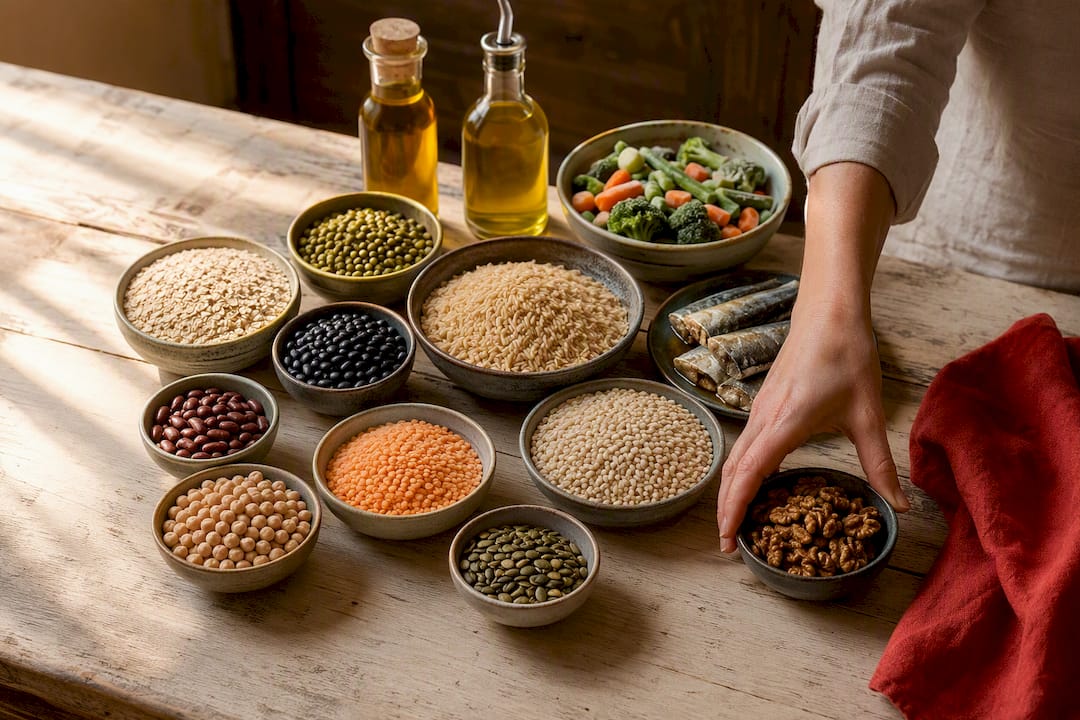
A consistent, fiber-forward, low-saturated-fat weekly meal plan is the single most effective habit for lowering LDL cholesterol through diet. The sample week and prep system below turn those numbers into something you can actually cook, and an app like Homecooked can build the plan around your own preferences automatically.
TL;DR:
- Consistent use of a fiber-rich, low-saturated-fat weekly meal pattern can significantly lower LDL cholesterol within four to twelve weeks, depending on individual response.
- Prioritized foods include whole grains, legumes, nuts, seeds, fatty fish, fruits, vegetables, and plant-sterol fortified products, while processed meats, full-fat dairy, and fried foods should be limited or avoided.
- Batch-cooking grains, proteins, and vegetables at the start of the week and rotating sauces simplifies meal prep and helps maintain dietary adherence.
- Achieving daily fiber targets of 10 to 25 grams and plant stanols around 2 grams is essential, with specific food swaps like canola oil for butter and frozen produce for fresh.
- Regular monitoring of lipid panels, blood pressure, and weight over several months can track progress, with personalized plans generated by apps easing recipe and shopping management.
Table of Contents
- Your Low Cholesterol Meal Planning Week: A Sample 7-Day Plan
- Which Foods Should You Prioritize, and Which Should You Skip?
- How Do You Meal Prep Without Burning Out?
- How Long Before You See Cholesterol Changes?
- How Homecooked Turns This Plan Into Your Week
- Why Consistency Beats Perfection Here
- Let Homecooked Build This Week for You
- Where These Guidelines Come From
- Sources
- FAQ
Your Low Cholesterol Meal Planning Week: A Sample 7-Day Plan
You don’t need seven brand-new recipes to eat this way. You need a rotation of breakfasts, lunches, and dinners that hit your fiber and fat targets, then mix them freely across the week.
- Monday: Overnight oats with berries and walnuts; lentil soup with whole-grain bread; baked salmon with roasted broccoli and brown rice. The oats and lentils both bring soluble fiber, and the salmon supplies omega-3 fats that support healthy triglycerides.
- Tuesday: Greek yogurt with ground flaxseed and sliced apple; chickpea salad bowl; turkey chili loaded with kidney beans. Flaxseed and chickpeas both nudge you toward that daily fiber target.
- Wednesday: Whole-grain toast with avocado and a poached egg; leftover turkey chili; grilled chicken with sautéed spinach and quinoa. Avocado replaces butter as your spread, which quietly cuts saturated fat.
- Thursday: Oatmeal with sliced banana and almonds; tuna salad (made with olive oil mayo) over greens; baked cod with roasted sweet potato and green beans.
- Friday: Smoothie with spinach, frozen mango, and chia seeds; black bean and vegetable burrito bowl; shrimp stir-fry with plenty of bell peppers and snap peas in canola oil.
- Saturday: Veggie scramble with mushrooms and peppers; big salad with white beans, olives, and a lemon vinaigrette; whole-wheat pasta with marinara, white beans, and a side salad.
- Sunday: Whole-grain pancakes topped with berries (light on syrup); barley and roasted vegetable bowl; grilled portobello and vegetable skewers with a side of couscous.
If you eat pescatarian or lean plant-forward, you can swap poultry days for beans, tofu, or additional fish nights to align with plant-forward principles.
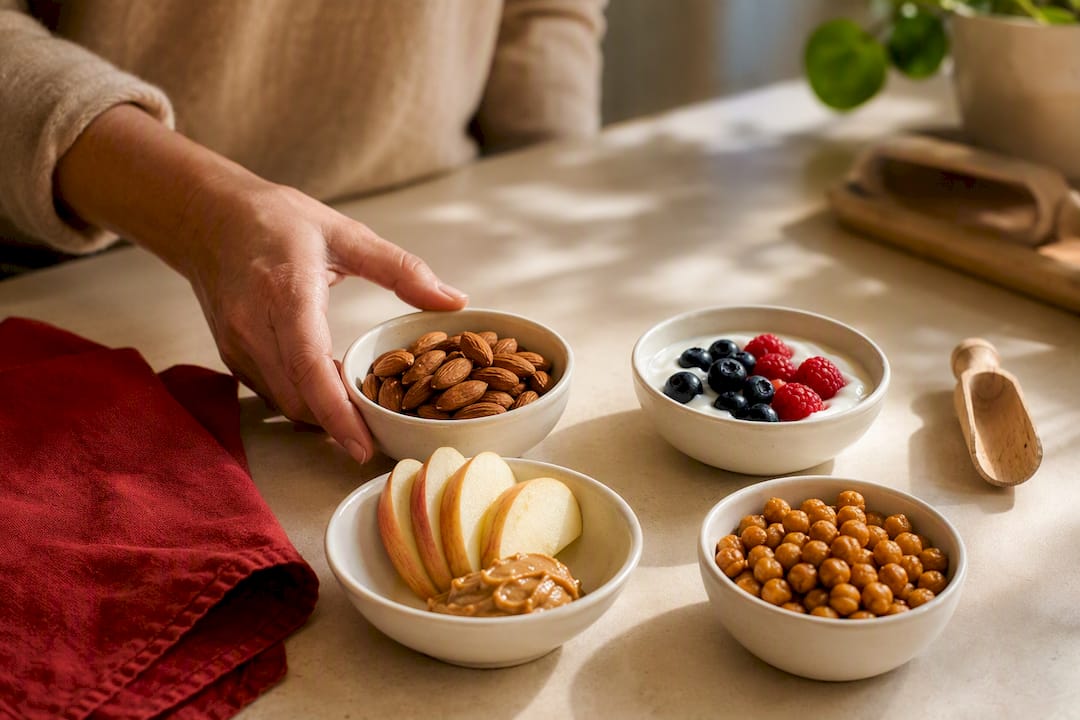
Snacks throughout the week can rotate through a handful of almonds, an apple with peanut butter, plain yogurt with berries, or roasted chickpeas. Keep portions around a fist-sized serving of protein, a cupped handful of grains, and half the plate in vegetables.
Before you shop, stock the basics: rolled oats, canned beans and lentils, brown rice or barley, frozen vegetables, canned fish, nuts and seeds, olive and canola oil, and a stanol-fortified spread or orange juice if you want an easy way to hit that 2-gram plant stanol target. These high-fiber salad and bowl recipes are a good place to pull lunch ideas from when you want variety without extra planning.
Which Foods Should You Prioritize, and Which Should You Skip?
Build your cart around a short list of foods that do real work on your cholesterol numbers, and be deliberate about what you leave off it.
Prioritize:
- Whole grains like oats and barley, which carry beta-glucan soluble fiber
- Legumes: lentils, chickpeas, black beans, kidney beans
- Nuts and seeds, especially walnuts, almonds, and flaxseed
- Fatty fish such as salmon, sardines, and mackerel
- Olive oil and canola oil in place of butter or shortening
- Fruits and vegetables, aiming for color variety
- Plant stanol or sterol fortified foods (spreads, orange juice, yogurt drinks)
Limit or skip:
- Processed meats like bacon, sausage, and deli cold cuts
- Full-fat dairy: whole milk, cream, regular cheese in large amounts
- Fried foods and packaged baked goods that lean on trans or saturated fats
Daily targets to track: soluble fiber 10 to 25 grams, plant stanols around 2 grams, saturated fat under 7% of calories, and sodium near 2,300 milligrams, according to MedlinePlus. Eating roughly a cup of beans daily has also been linked to measurable LDL reductions, per Harvard Health.
Direct swaps make this easier than it sounds: canola oil instead of butter in a pan sauce, sparkling water and lemon instead of a creamy dressing, and grilled chicken thighs with the skin removed instead of fried.
How Do You Meal Prep Without Burning Out?
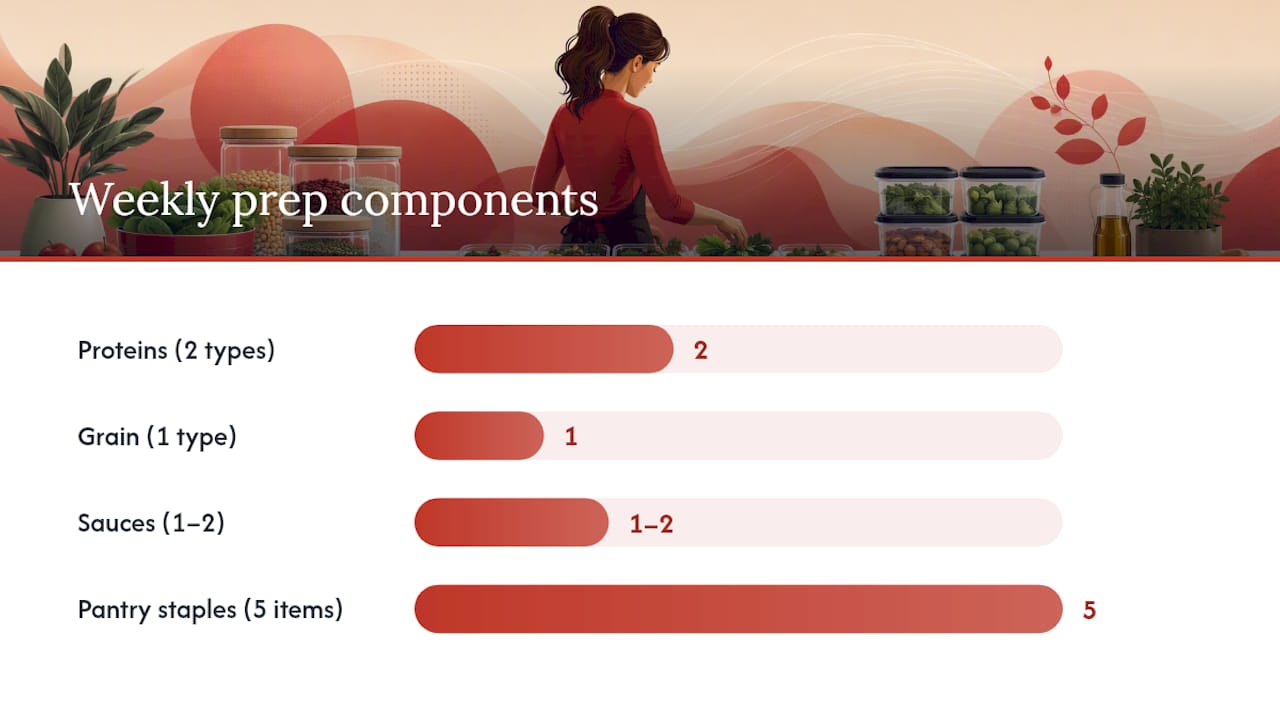
The plan above only works if the cooking part stays manageable on a Tuesday night. Modular prep solves that. Cook two proteins (say, baked salmon and shredded chicken), one grain (brown rice or barley), several vegetables (roasted and raw), and one or two sauces (a lemon tahini and a simple vinaigrette) at the start of the week. Recombine them daily so nothing tastes repetitive, even though you’re reusing the same base ingredients.
- Batch-cook grains and proteins on Sunday, store in separate containers.
- Roast a tray of mixed vegetables while the grains cook, no extra active time.
- Make two sauces you can rotate across bowls, wraps, and salads.
- Swap liquid oils for butter, and broil, roast, or poach instead of pan-frying.
- Keep low-fat dairy and drained, trimmed meats on hand for quick dinners.
Stock pantry staples like olive oil, garlic, lemon, and Greek yogurt. The American Heart Association lists these five as the backbone of fast, heart-healthy weeknight cooking.
Pro Tip: Buy pre-chopped or frozen vegetables for the nights you know you won’t feel like prepping from scratch, as explained in this guide on why order freshly prepared meals. Frozen produce retains its fiber and nutrients, and it removes the single biggest excuse for skipping the vegetable side. For more batch-cook ideas, browse these meal-prep recipes.
How Long Before You See Cholesterol Changes?
Most people see measurable movement in their lipid panel within four to twelve weeks of consistent changes, though individual response varies based on genetics, starting cholesterol level, and how strictly you follow the pattern.
Track three things: a lipid panel every few months as advised by your provider, your weight and blood pressure trends, and a simple log of how often you hit your fiber and saturated fat targets. A pattern-based approach tends to outperform single-food fixes, which is part of why NHLBI’s Therapeutic Lifestyle Changes program is built around the whole week, not one ingredient. Talk to a healthcare provider if your LDL is very high, you have a family history of heart disease, or three months of consistent effort hasn’t moved your numbers. The CDC recommends regular monitoring as part of managing these risk factors.
How Homecooked Turns This Plan Into Your Week
A meal planning app can build a personalized version of this pattern around your health goal and food preferences, then generate the shopping list and pantry tracking to match. The workflow is simple: set your goal, choose your dietary preferences, generate a 7-day plan, then shop from the automated list. Guided recipes with built-in timers handle the cooking swaps for you. This is general nutrition guidance, not a substitute for advice from your own doctor or dietitian.
Why Consistency Beats Perfection Here
The biggest mistake in low cholesterol meal planning isn’t eating the wrong thing once. It’s chasing “low-fat” packaged snacks and cereals that swap saturated fat for refined sugar and call it a win. A simple bowl of oats and beans, eaten most days, does more for your LDL than a pantry full of diet products eaten occasionally. Aim for a plate that looks roughly the same most days, half vegetables, a quarter lean protein, a quarter whole grain, rather than a perfect week followed by a collapse. Variety still matters. Rotate your proteins and produce so the pattern doesn’t feel like a sentence.
— 0xmaglev
Let Homecooked Build This Week for You
Typing up a 7-day cholesterol-friendly plan by hand and then converting it into a shopping list is a task that some apps are designed to simplify. By providing your health goal and food preferences, such an app can generate a personalized week that mirrors the fiber-forward, low-saturated-fat pattern described, complete with an automated grocery list and pantry tracking.
If you want a starting point tonight, try the bibimbap recipe, a bowl built around vegetables, lean protein, and a modest portion of rice that fits this eating pattern without feeling like diet food. Open the Homecooked app, set your cholesterol-focused goal, and let it generate your first week.
Where These Guidelines Come From
- MedlinePlus: How to lower cholesterol with diet
- NHLBI: Therapeutic Lifestyle Changes
- American Heart Association: Cooking to lower cholesterol
- CDC: Cholesterol risk factors
Sources
- How to lower cholesterol with diet — MedlinePlus
- Cooking to lower cholesterol — American Heart Association
- TLC: Therapeutic Lifestyle Changes — NHLBI
- 11 foods that lower cholesterol — Harvard Health
FAQ
What can I eat for dinner that’s low in cholesterol?
Baked or grilled fish with roasted vegetables, a bean-based chili, or a stir-fry made with canola oil and lean protein all fit. Build the plate around vegetables and a whole grain, with protein as the smaller portion.
What does a typical 30-day low cholesterol meal plan look like?
It’s essentially the 7-day pattern above repeated with rotating proteins and produce, so four weeks of oats, legumes, fish, and vegetables without eating the exact same meal twice. Homecooked can generate a full month this way based on your preferences.
Is eating two eggs a day bad if I have high cholesterol?
Dietary cholesterol has less impact on blood cholesterol than saturated fat does for most people, but if your LDL is elevated, it’s worth limiting egg yolks and prioritizing the fiber and healthy-fat foods that have a bigger measurable effect. Ask your provider about your specific case.
What should I eat every day to lower my cholesterol?
Soluble fiber sources like oats, beans, or barley, plus a source of unsaturated fat such as nuts, olive oil, or fatty fish, cover the daily basics. Add a plant stanol-fortified food if you want an easy way toward the 2-gram target.