Most adults should stay under 2,300 mg of sodium per day, and people managing hypertension or heart disease often aim closer to 1,500 mg. The fastest way to get there? Cook more meals at home tonight and use the FDA’s 5%/20% DV rule on every packaged food you pick up: 5% Daily Value or less means low sodium, 20% or more means high.
Sodium at a glance: The FDA defines “low sodium” as 140 mg or less per serving. On a Nutrition Facts label, 5% DV = low; 20% DV = high.
Two things drive most people’s sodium intake without them realizing it: packaged foods and restaurant meals. Fresh produce, unprocessed proteins, and home-cooked grains contain a fraction of the sodium found in canned soups, deli meats, or a takeout order. Shifting even one or two meals per day toward whole-food, home-cooked options makes a measurable difference within the first week.
Here’s what you need to make that shift practical:
- A ready-to-use 7-day meal plan with per-meal sodium estimates
- A one-page grocery and pantry list
- Label-reading shortcuts for the grocery aisle
- Salt-free seasoning swaps that actually taste good
- Batch-cooking steps to keep the plan running through a busy week
Key Takeaways
Staying under 1,500–2,300 mg of sodium per day is achievable with home cooking, smart label reading, and a stocked low-sodium pantry.
| Point | Details |
|---|---|
| Daily sodium target | Most adults: under 2,300 mg/day; hypertension or clinical contexts: ~1,500 mg/day or less. |
| Label reading shortcut | Use the 5%/20% DV rule: 5% or less = low sodium, 20% or more = high sodium per serving. |
| Rinse canned goods | Rinsing canned beans and vegetables under cold water can cut their sodium by up to 40%. |
| Flavor without salt | Use lemon juice, garlic, smoked paprika, vinegar, and herbs to replace salt in any recipe. |
| Batch cook on Sundays | Prep grains, roasted veg, and a protein base once a week to keep sodium predictable all week. |
| Consult a clinician | CKD, heart failure, or complex medications require a personalized plan from a renal dietitian. |
| Homecooked for personalization | The Homecooked app generates low-sodium meal plans, automated grocery lists, and swap suggestions tailored to your health goals. |
Table of Contents
- Low sodium meal planning: your 7-day starter plan
- What to buy: shopping list and pantry staples
- Recipe categories and easy low-sodium picks
- How to read Nutrition Facts labels in under 30 seconds
- Salt-free flavor: herbs, aromatics, acids, and blends
- Meal-prep tactics that keep sodium low all week
- Adapting the plan for seniors, hypertension, and kidney disease
- How to personalize a low-sodium plan with Homecooked
- What actually keeps a low-sodium plan going past week one
- Homecooked makes low-sodium planning personal, not generic
- Sources
Low sodium meal planning: your 7-day starter plan
A week of home-cooked meals can realistically average under 1,500 mg of sodium per day while still delivering solid protein and fiber. The plan below is built around that target, with simple swaps noted for each day so you can adjust based on what’s in your fridge.
Day-by-day meal plan
Weekly average: roughly 720 mg/day in this plan, well under the 1,500 mg clinical target and far below the 2,300 mg general limit. Actual totals vary by brand and portion size.
Easy swaps to keep flavor without adding sodium:
- Replace regular broth with low-sodium or homemade broth in every soup and stew.
- Use no-salt-added canned beans and tomatoes, then rinse them under cold water before cooking.
- Swap soy sauce for low-sodium tamari or coconut aminos (roughly 40% less sodium per teaspoon).
- Season grains with lemon zest, garlic, and fresh herbs instead of salting the cooking water.
- Choose plain Greek yogurt over flavored varieties, which often carry 80–120 mg of added sodium per serving.
For more healthy meal prep ideas that fit this kind of plan, the Homecooked blog has 24 batch-friendly recipes worth bookmarking.
What to buy: shopping list and pantry staples
A well-stocked pantry is what makes low-sodium cooking repeatable rather than effortful. The list below maps directly to the 7-day plan above.
Weekly grocery list
Produce
- Bananas, apples, oranges, blueberries, frozen mango
- Spinach, kale, broccoli, green beans, sweet potato
- Bell peppers, mushrooms, onions, garlic, cucumber, celery, tomatoes, avocados
Proteins
- Salmon fillets, cod fillets, shrimp (fresh or frozen, no brine)
- Skinless chicken thighs, ground turkey, lean beef stew meat
- Eggs, plain Greek yogurt (unsalted or low-sodium)
Grains
- Rolled oats (plain, not instant flavored packets)
- Brown rice, quinoa, whole-grain pasta
- Whole-grain crackers (look for 5% DV sodium or less), plain rice cakes
Canned and jarred goods (no-salt-added only)
- No-salt-added canned black beans, lentils, chickpeas
- No-salt-added canned diced tomatoes
- Low-sodium chicken or vegetable broth
Dairy and refrigerated
- Unsalted almond butter, unsalted peanut butter
- Low-sodium hummus or homemade hummus
Herbs, spices, and condiments
- Garlic powder, onion powder, cumin, smoked paprika, turmeric, black pepper
- Dried oregano, thyme, rosemary, basil
- Lemon juice (fresh), apple cider vinegar, olive oil
- Low-sodium tamari or coconut aminos
Nuts and seeds
- Unsalted walnuts, almonds
- Chia seeds, flaxseed
Pantry buy vs. avoid
The MyHealthfinder shopping guide recommends prioritizing no-salt-added canned goods and rinsing them before use.
| Category | Buy | Avoid |
|---|---|---|
| Bread | Low-sodium whole-grain bread (<140 mg/slice) | Regular sandwich bread (often 150–200 mg/slice) |
| Canned beans | No-salt-added, rinsed | Regular canned beans (400+ mg per half-cup) |
| Broth | Low-sodium or homemade | Regular broth (800–900 mg per cup) |
| Deli meats | Fresh-cooked turkey or chicken, sliced at home | Pre-packaged deli meats (600–1,000 mg per 2 oz) |
| Sauces | Homemade tomato sauce, no-salt-added jarred | Regular marinara, soy sauce, teriyaki sauce |
| Cheese | Fresh mozzarella, ricotta (lower sodium) | Processed cheese slices, feta, blue cheese |
| Condiments | Mustard (low-sodium), lemon juice, vinegar | Ketchup, barbecue sauce, ranch dressing |
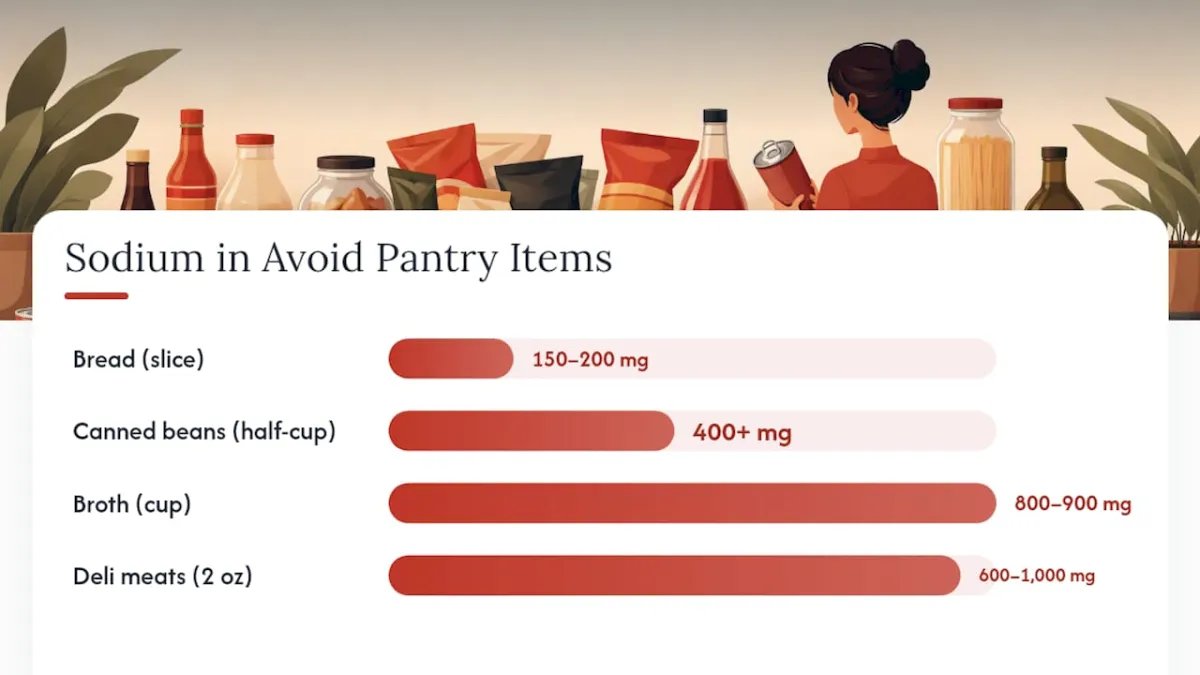
Frozen vs. canned: Plain frozen vegetables are an excellent low-sodium choice because they contain no added salt. Canned vegetables are fine when labeled “no salt added,” and rinsing canned beans or vegetables under cold running water can reduce their sodium content by up to about 40%. That single habit reclaims a lot of pantry staples you might otherwise avoid.
To turn this list into a zero-waste grocery run, the Homecooked guide on building a smart grocery list from your meal plan walks through the process step by step.
Recipe categories and easy low-sodium picks
Low-sodium cooking doesn’t require a separate recipe library. Most of your favorite dishes can be adapted with a few targeted swaps.
Breakfast
- Overnight oats with chia and berries: ~50 mg per serving. Use plain rolled oats, unsweetened oat milk, and fresh or frozen fruit. Skip flavored oat packets, which can carry 200–300 mg per serving.
- Veggie scramble: ~190 mg per serving. Two eggs with sautéed bell pepper, mushroom, and onion in olive oil. Season with garlic powder and black pepper.
Soups and stews
- Homemade lentil soup: ~280 mg per serving when made with low-sodium broth and no-salt-added canned tomatoes. Lentils are naturally low in sodium and high in potassium, which helps offset sodium’s effects on blood pressure.
- Minestrone: ~290 mg per serving using no-salt-added canned beans, diced tomatoes, and low-sodium broth. Season with fresh basil, oregano, and a parmesan rind (adds depth without much sodium when used sparingly).
Mains
- Baked salmon with roasted sweet potato: ~340 mg per serving. Rub salmon with lemon zest, garlic, and smoked paprika. No salt needed.
- Herb-roasted chicken thighs: ~360 mg per serving. Marinate in lemon juice, olive oil, rosemary, and thyme overnight. The acid does the work of salt here.
Bowls and salads
- Grain bowl with lemon-tahini drizzle: ~210 mg per serving. Brown rice or quinoa, roasted vegetables, avocado, and a dressing of tahini, lemon juice, garlic, and water. No added salt.
- Tuna salad on low-sodium crackers: ~240 mg per serving. Rinse canned tuna thoroughly, then mix with lemon juice, olive oil, celery, and black pepper.
Sodium per serving matters more than the total recipe sodium. A soup that contains 1,200 mg total but serves six people delivers 200 mg per bowl, which fits comfortably into a 1,500 mg daily target.
Snacks
- Unsalted popcorn (air-popped): 0–5 mg per serving
- Apple with unsalted almond butter: ~5 mg
- Carrot sticks with no-salt-added hummus: ~90 mg
- Plain rice cakes with cucumber: ~30 mg
How to read Nutrition Facts labels in under 30 seconds
The Nutrition Facts panel is your fastest tool in the grocery aisle, and two numbers do most of the work.
The 5%/20% DV rule: The FDA’s labeling standard sets 5% Daily Value or less as low sodium and 20% DV or more as high. For most packaged foods, that translates to roughly 115 mg or less per serving on the low end and 460 mg or more on the high end.
Quick label rule: 5% DV = low sodium. 20% DV = high sodium. Anything in between is moderate. Aim for 5% or below on staples like bread, broth, and canned goods.
Common label traps:
- Serving size is smaller than you think. A can of soup labeled “2.5 servings” at 480 mg each delivers 1,200 mg if you eat the whole can. Always multiply.
- “Reduced sodium” is not the same as “low sodium.” Reduced sodium means 25% less than the original product, which could still be 600 mg per serving.
- Bread is a hidden sodium source. A single slice of regular sandwich bread can contain 150–200 mg. Two slices at lunch plus two at dinner adds 600–800 mg before you’ve added any filling.
- Sauces and condiments stack fast. Two tablespoons of regular soy sauce contains roughly 900 mg of sodium. Even “lite” soy sauce runs around 500 mg per two tablespoons.
Grocery aisle checklist:
- Check the serving size first, then multiply by how much you’ll actually eat.
- Look for “no salt added” or “unsalted” on canned goods and nuts.
- Compare sodium across brands of the same product — it varies widely.
- Choose products where sodium is 5% DV or less per serving for everyday staples.
- Flag anything above 20% DV and use it sparingly or find an alternative.
Salt-free flavor: herbs, aromatics, acids, and blends
The assumption that low-sodium food tastes flat is mostly a habit problem, not a chemistry problem. Your palate adjusts to lower salt levels within two to four weeks, and in the meantime, a few specific techniques fill the gap immediately.
Seasoning swap table
| Replace | With | Amount |
|---|---|---|
| 1 tsp table salt in a marinade | Lemon juice + garlic + smoked paprika | 2 tbsp lemon + 1 clove garlic + ½ tsp paprika |
| Salt in soup base | Low-sodium broth + bay leaf + thyme | Use broth as the liquid; add 1 bay leaf + ½ tsp thyme |
| Soy sauce (1 tbsp) | Low-sodium tamari or coconut aminos | 1 tbsp (roughly 40% less sodium) |
| Salted butter in cooking | Unsalted butter + fresh herbs | 1:1 swap; add parsley, chives, or tarragon |
| — | Plain Greek yogurt + lemon + dill + garlic powder | 2 tbsp yogurt + squeeze of lemon + ¼ tsp each |
| Regular broth (1 cup, ~800 mg) | Homemade or low-sodium broth | 1:1 swap |
Umami without sodium: Toasted sesame seeds, dried mushrooms (rehydrated), and a small amount of nutritional yeast all add savory depth without meaningful sodium. A tablespoon of nutritional yeast contains roughly 30–40 mg of sodium and contributes a cheese-like richness to grain bowls and sauces.
Pro Tip: Kosher salt has larger crystals than table salt, so one teaspoon of kosher salt contains less sodium by volume than one teaspoon of table salt. If a recipe calls for kosher salt and you substitute table salt at the same volume, you’ll overshoot the sodium. When in doubt, measure by weight or use described amounts like “a small pinch” rather than volume teaspoons. McGill University’s salt comparison explains the crystal-size difference clearly.
Acids are the most underused tool in low-sodium cooking. A squeeze of lemon or a splash of apple cider vinegar at the end of cooking brightens every flavor in the dish and reduces the perception of saltiness. Try it on roasted vegetables, soups, and grain bowls before reaching for the salt shaker.
Meal-prep tactics that keep sodium low all week
Batch cooking is what turns a 7-day plan from a good idea into something you actually follow through on. The key is building a set of neutral, low-sodium bases that you can season differently each day.
Step-by-step batch session (Sunday, about 90 minutes)
- Cook a large batch of grains. Make 3–4 cups of brown rice or quinoa in plain water. Season with lemon zest and a bay leaf instead of salt. Portion into containers for the week.
- Roast two sheet pans of vegetables. Use whatever is in the plan: sweet potato, broccoli, bell pepper, zucchini. Toss with olive oil, garlic powder, smoked paprika, and black pepper. Roast at 400°F for 25–30 minutes.
- Cook a protein base. Bake or poach chicken thighs or salmon with herbs and lemon. Slice and store separately so you can use them in bowls, wraps, or salads through Thursday.
- Prep a sauce or dressing. Make a lemon-tahini drizzle (tahini, lemon juice, garlic, water) or a yogurt-herb dressing. Both keep for five days in the fridge and add flavor without sodium.
- Rinse and drain canned goods. Open your canned beans and tomatoes, rinse under cold water for 30 seconds each, and store in airtight containers. This step alone can cut sodium by up to 40%.
- Portion snacks. Divide unsalted nuts, rice cakes, and cut vegetables into individual containers so grab-and-go doesn’t mean reaching for a high-sodium packaged snack.
Freezing and reheating tips:
- Freeze individual portions of soups and stews in labeled containers. Reheat from frozen on the stovetop with a splash of low-sodium broth to restore texture.
- Cooked grains freeze well for up to three months. Thaw overnight in the fridge or reheat directly in a pan with a tablespoon of water.
- Avoid adding salt when reheating. Instead, add a squeeze of lemon or a pinch of fresh herbs to wake up the flavor.
Portioning checklist:
- Label every container with the meal name and sodium estimate.
- Keep daily sodium totals visible (a sticky note on the fridge works fine).
- Store high-sodium condiments separately so they don’t get mixed into low-sodium portions by accident.
The Homecooked blog’s lunch meal prep guide has 20 make-ahead recipes that adapt easily to the low-sodium framework above.
Adapting the plan for seniors, hypertension, and kidney disease
The 2,300 mg/day limit applies to most healthy adults, but clinical contexts often call for tighter targets. Clinicians frequently recommend around 1,500 mg/day for people with hypertension, heart failure, or stage 3+ chronic kidney disease (CKD). Some cardiologists set targets as low as 1,000–1,200 mg/day for specific conditions.
Clinical sodium targets vary. The general public limit is under 2,300 mg/day. For hypertension, many clinicians recommend 1,500 mg/day or less. For CKD, targets depend on lab values and should be set by a renal dietitian.
| Population | Typical Sodium Target | Key Consideration |
|---|---|---|
| Healthy adults | Under 2,300 mg/day | General dietary guideline |
| Adults with hypertension | ~1,500 mg/day or less | Often combined with DASH diet |
| Older adults | 1,500–2,000 mg/day | Taste sensitivity decreases with age; monitor hydration |
| CKD (stage 3+) | Individualized by clinician | Potassium and phosphorus restrictions may also apply |
| Heart failure | Often 1,500–2,000 mg/day | Fluid restriction may accompany sodium limits |
A critical caution for CKD: Some foods that help healthy adults reduce sodium’s cardiovascular effects, particularly high-potassium foods like bananas, avocados, and leafy greens, may be restricted for people with kidney disease. The NIDDK advises that meal plans for CKD patients should be tailored by a renal dietitian based on current lab values and medications. Salt substitutes that use potassium chloride instead of sodium chloride can be dangerous for people with impaired kidney function.
Practical notes for older adults:
- Smaller, more frequent meals (4–5 per day) help maintain energy without overloading sodium at any one sitting.
- Softer textures, such as mashed cauliflower, slow-cooked lentils, and baked fish, are easier to eat and still fit the sodium targets above.
- Finger-friendly snacks like cucumber rounds, soft fruit, and unsalted nut butter on rice cakes require no preparation at the table.
- Hydration matters: low-sodium diets can shift fluid balance, so drinking adequate water throughout the day supports kidney function and blood pressure regulation.
This article provides general information only. If you have CKD, heart failure, or a complex medication regimen, consult your clinician or a registered dietitian before changing your sodium intake.
How to personalize a low-sodium plan with Homecooked
The 7-day plan above is a strong starting point, but your actual needs depend on your health goals, food preferences, and what’s already in your pantry. That’s where Homecooked does the heavy lifting.
Homecooked features that matter for low-sodium planning:
- Health-goal filtering: Set your dietary preference to low-sodium or heart-healthy, and Homecooked generates a personalized weekly plan that matches your target, not a generic template.
- Automated grocery lists: Every meal in your plan generates a shopping list automatically, organized by store section, with no-salt-added options flagged where available.
- Pantry tracking: Log what you already have, and Homecooked builds meals around your existing ingredients, reducing waste and keeping you from buying high-sodium packaged substitutes.
- Swap suggestions: If a recipe calls for an ingredient you don’t have or want to avoid, the app suggests low-sodium alternatives with updated nutrition estimates.
- Step-by-step guided recipes with timers: Each recipe walks you through preparation in sequence, so you’re not improvising and accidentally reaching for the salt shaker out of habit.
How to personalize one recipe in the app:
- Open any recipe in Homecooked and tap “Customize.”
- Select the ingredient you want to swap (e.g., regular broth).
- Choose from the suggested low-sodium alternatives (e.g., homemade broth or low-sodium store-bought).
- The nutrition panel updates instantly, showing the new sodium per serving.
- Add the adjusted recipe to your weekly plan and let the grocery list update automatically.
Pro Tip: Start with one meal category, such as lunches, and let Homecooked generate low-sodium options for that slot first. Once those feel automatic, add dinners. Gradual layering is more sustainable than overhauling every meal at once.
What actually keeps a low-sodium plan going past week one
Most people who start a low-sodium diet hit a wall around day 10. Not because the food is bad, but because the habit infrastructure isn’t there yet. Here’s what actually works in the second and third week, based on what the research and practical cooking experience consistently point to.
Build a flavor bank. Keep three or four pre-made, sodium-free flavor bases in the fridge at all times: a lemon-garlic oil, a herb vinaigrette, a yogurt-dill sauce. When a meal feels flat, you reach for one of these instead of the salt shaker. The habit replaces the reflex.
Batch-roast vegetables every Sunday. Roasted vegetables have concentrated, caramelized flavor that raw or steamed versions don’t. A sheet pan of roasted sweet potato, broccoli, and red onion with smoked paprika and olive oil tastes genuinely satisfying with zero added sodium. People who do this consistently report that the craving for salty snacks drops noticeably by week three.
Track sodium for two weeks, then stop. Tracking every milligram indefinitely is exhausting and unnecessary. Two weeks of careful tracking builds an accurate mental model of which foods carry the most sodium. After that, you can maintain the habit by checking labels on new products and keeping your pantry stocked with the right staples.
The most common obstacle: eating out. A single restaurant meal can easily deliver 2,000–3,000 mg of sodium. The practical workaround is to ask for sauces and dressings on the side, choose grilled or baked proteins over fried or sauced ones, and request that the kitchen use no added salt when possible. Most restaurants accommodate this without issue. Ordering a salad with oil and vinegar on the side instead of a house dressing saves 200–400 mg in one swap.
One condiment worth keeping: plain mustard. Most yellow and Dijon mustards contain 50–70 mg per teaspoon, which is low enough to use freely as a flavor base for dressings, marinades, and sandwich spreads.
Homecooked makes low-sodium planning personal, not generic
Cutting sodium is straightforward in theory. Keeping it low across a full week of real meals, with a real schedule, is where most plans fall apart. Homecooked is built for exactly that gap.
The app generates a personalized low-sodium meal plan based on your health goals and what you actually like to eat, then builds your grocery list automatically with no-salt-added options prioritized. Pantry tracking means you’re cooking from what you have, not defaulting to high-sodium convenience foods when you’re short on time. And when you want to see what a low-sodium recipe looks like in practice, the cottage cheese protein bowl is a good first recipe to try: high protein, low sodium, and ready in under 10 minutes.
Start a free trial on Homecooked and set your dietary preference to low-sodium. Your first personalized week is ready before your next grocery run.
Sources
- Sodium in your diet - U.S. Food and Drug Administration
- How to reduce sodium - American Heart Association
- Lower-sodium foods: shopping list - MyHealthfinder (ODPHP)
- Sodium and salt - Centers for Disease Control and Prevention (CDC)
- Effect of leaching on sodium content of canned foods - PubMed
- Healthy eating for adults with chronic kidney disease - NIDDK
This article is general information, not a substitute for advice from a qualified doctor. Consult a qualified healthcare professional about your own circumstances before acting on anything here.