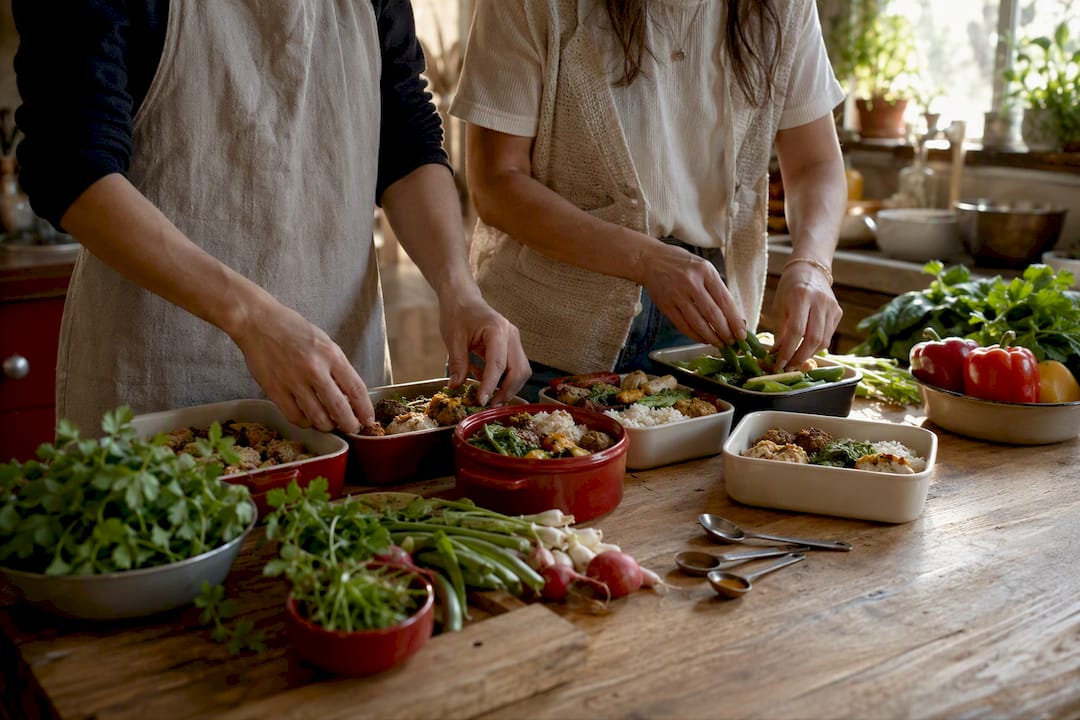
Meal planning for two works best as a 15-minute weekly routine: plan 4 to 5 dinners, sequence perishables early in the week, and reuse key ingredients across meals so nothing goes bad in the crisper drawer. That’s the whole system. You’re not batch-cooking a week of identical containers. You’re building variety with a handful of shared ingredients.
This approach pays off fast:
- Less waste, since you’re only buying what two people can realistically eat.
- Easier weeknights, because the decisions are already made.
- More variety, since planned overlap (not repetition) does the heavy lifting.
Start now with a 5-minute fridge and pantry scan. Note what needs to be used this week, then pick your proteins before you write a single grocery item.
Key Takeaways
Meal planning for two works best when you cap the week at 4 to 5 dinners, sequence perishables early, and reuse ingredients across meals to cut waste.
| Point | Details |
|---|---|
| Cap weekly dinners | Plan 4 to 5 unique dinners, and let overlap create variety. |
| Sequence perishables first | Schedule fish, greens, and ground meat for Monday through Wednesday. |
| Use ingredient bridges | Pick 2 to 3 vegetables and 1 to 2 proteins that appear in multiple meals. |
| Keep one backup meal | Stock a freezer or pantry option for the night nobody wants to cook. |
| Automate the busywork | Homecooked scales portions and builds the shared grocery list automatically. |
Table of Contents
- How to Do Meal Planning for Two in 15 Minutes a Week
- Building a Go-To Meal Rotation for Two People
- What Is the Ingredient Bridge Strategy?
- How Do You Plan Meals Around a Real Schedule?
- Sample Weekly Menus and a Grocery List for Two
- Your 5-Minute Weekly Planning Checklist
- Why Variety Beats Batch Cooking for Two
- Let Homecooked Handle the Busywork
- Sources
How to Do Meal Planning for Two in 15 Minutes a Week
The whole point of a two-person routine is that it fits into the time you already have, whether that’s a quiet Sunday afternoon or a 20-minute check-in with your partner over coffee. Here’s the sequence, in order:
- Audit the fridge and pantry (3 minutes). Open the door and name what needs to disappear this week: the half bag of spinach, the last two chicken thighs, the yogurt that expires Thursday.
- Assign proteins to 4 to 5 dinner slots (3 minutes). PlanEat AI’s weekly template recommends capping the week at 4 or 5 unique dinners for two people. That’s enough variety without turning grocery shopping into a scavenger hunt.
- Sequence perishables first (2 minutes). Fish, ground meat, and leafy greens go early in the week. Root vegetables, frozen proteins, and pantry staples can wait until Thursday or Friday.
- Find your ingredient bridges (3 minutes). Pick two or three ingredients that can move between two or three meals: a bag of spinach, a bunch of scallions, a block of tofu.
- Write the grocery list by store section (4 minutes). Produce, protein, dairy, pantry, frozen. This alone cuts down on backtracking through the store.
Assign who’s cooking which nights, and leave one night open as a wildcard, whether that’s takeout, a spontaneous recipe, or eating whatever’s left in the fridge.
Pro Tip: Do this on the same day and at the same time every week. Habit researchers call this “implementation intention,” and it’s the difference between a system you keep and one you abandon by February.
If splitting a shared list feels like its own chore, an app like Homecooked can scale portions automatically and generate the shopping list for you, so the planning session shrinks even further.
Building a Go-To Meal Rotation for Two People
A “go-to meal” earns its spot on your list for three reasons: it scales cleanly to two servings, it doesn’t require a specialty ingredient you’ll only use once, and it reheats without turning to rubber. Sheet-pan chicken thighs qualify. A delicate soufflé does not.
Build your rotation together, not solo. Each partner contributes five or six favorites, and you land on a shared list of 15 to 20 meals total, anchored by three proteins you both reach for often, whether that’s chicken thighs, ground turkey, and a firm tofu or salmon.
A few rules keep the rotation efficient:
- Cook slightly more than two servings, and let the extra become tomorrow’s lunch rather than three more dinners of the same thing.
- Favor single-serve components (a cooked grain, a roasted vegetable) over whole finished dishes when you want mix-and-match flexibility.
- Rotate in one new recipe every couple of weeks so the list doesn’t go stale.
Homecooked’s dinner recipes sized for two and its pantry meal collection are both built around this exact scaling problem, which makes them a fast way to seed your own rotation.
What Is the Ingredient Bridge Strategy?
The Ingredient Bridge Strategy means picking a small set of ingredients that show up in two or three meals across the week, so nothing sits half-used in the fridge until it liquefies. Buy a bag of spinach and it goes into Monday’s pasta and Wednesday’s omelet. Buy garlic and a bulb covers three separate dinners. Cook a batch of rice or farro on Sunday and it becomes a bowl base twice more before Friday.
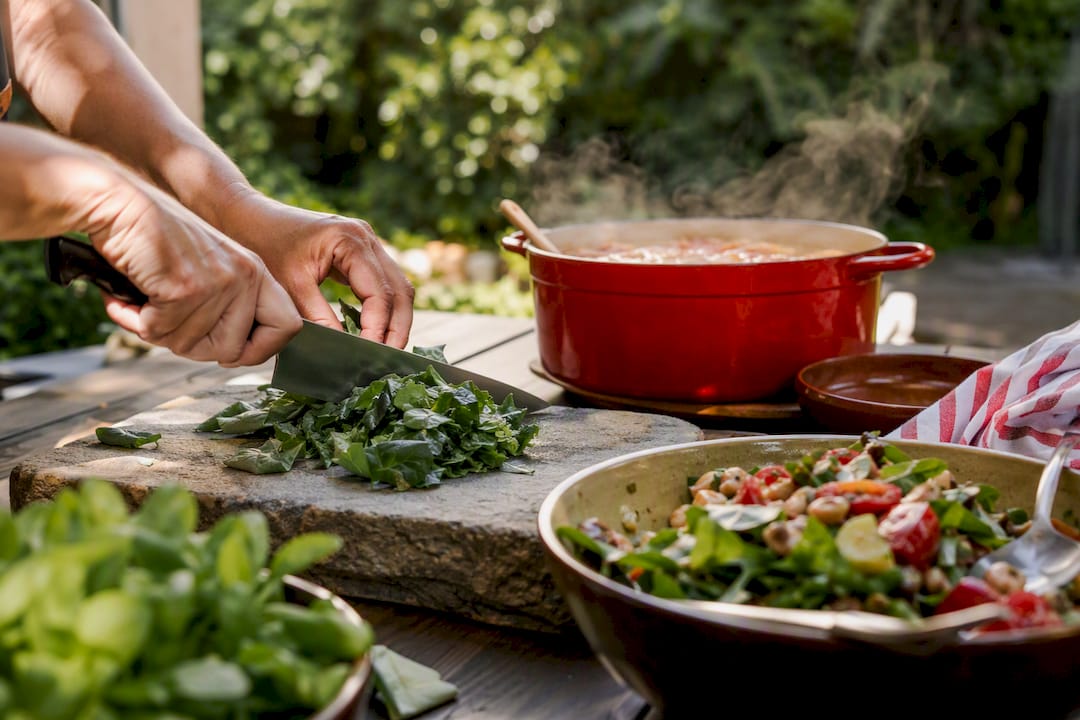
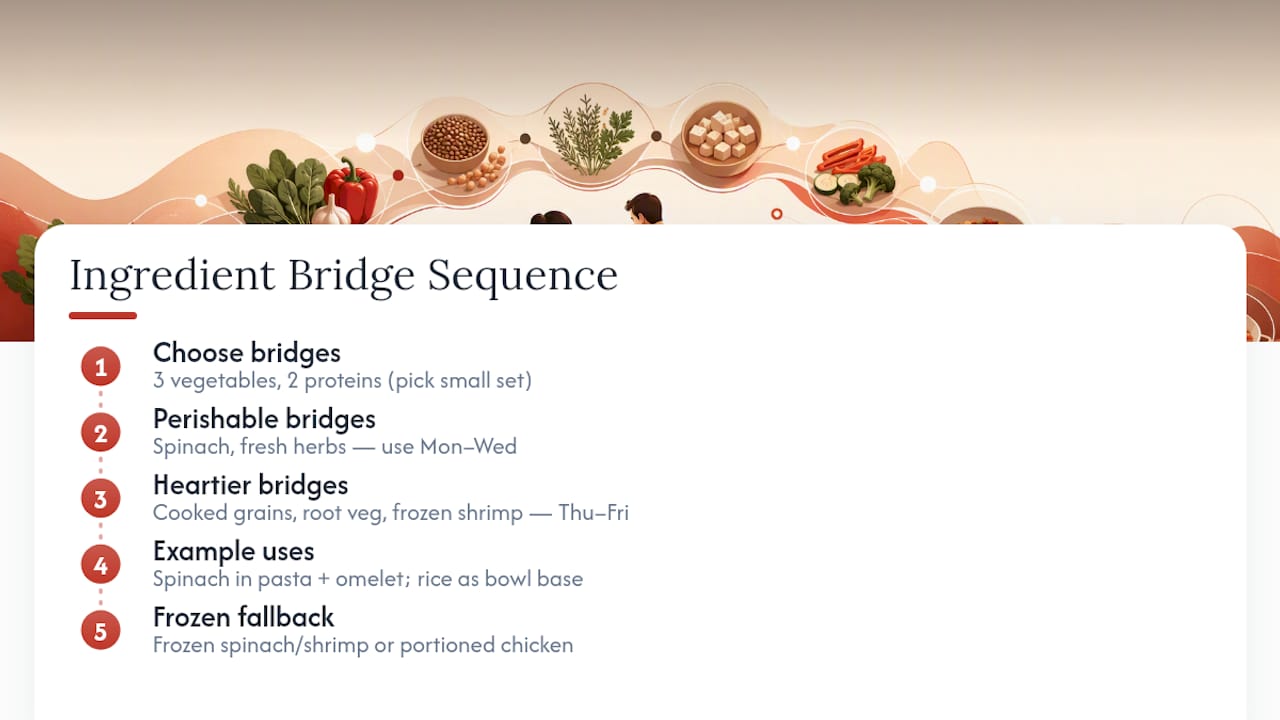
Pick two or three vegetables and one or two proteins to act as your bridges for the week. Sequence matters: perishable bridges like spinach or fresh herbs belong in Monday through Wednesday meals, while heartier ingredients like cooked grains, frozen shrimp, or root vegetables can carry you through Thursday and Friday.
Small-household planners consistently push variety over volume: plan fewer cook nights with more distinct dinners, rather than one giant batch eaten five nights running, according to The Kitchn’s meal plan for two. That’s the opposite of typical family meal prep, and it’s exactly why the bridge strategy exists.
When fresh produce is questionable or you’re not confident you’ll cook it in time, buy the frozen version instead. Frozen shrimp, frozen spinach, and individually portioned chicken breasts solve the “will we actually eat this” problem before it starts.
How Do You Plan Meals Around a Real Schedule?
A meal plan that ignores your actual week falls apart by Wednesday. Map your calendar first, then assign meals to it.
- Identify your cook nights versus quick nights. If Tuesday is always late, that’s a 15-minute meal night, not a braise night.
- Plan planned-overs, not just leftovers. Roast a chicken Sunday, and Tuesday it becomes wraps. Cook a big batch of rice, and Thursday it turns into fried rice with whatever vegetables are left. This is a different move than eating the same dish twice.
- Keep one backup meal on hand. A freezer dumpling bag or a jar of good pasta sauce solves the night nobody wants to cook. The Kitchn points to keeping measured, frozen shrimp on hand for exactly this reason.
- Assign shopping and cooking simply. Whoever’s schedule is lighter that week shops; whoever’s home first starts dinner. Rotate week to week so it never defaults to one person.
Sample Weekly Menus and a Grocery List for Two
Here’s a warm-weather week built entirely on the ingredient bridge method:
- Monday: Lemon herb salmon with spinach salad.
- Tuesday: Chicken and spinach quesadillas (using leftover spinach).
- Wednesday: Shrimp and vegetable stir-fry over rice.
- Thursday: Fried rice using Wednesday’s extra rice and vegetables.
- Friday: Wildcard night, whatever’s left or takeout.
And a cold-weather version:
- Monday: Sheet-pan chicken thighs with roasted root vegetables.
- Tuesday: Chicken tacos using Monday’s leftover meat.
- Wednesday: Lentil and kale soup.
- Thursday: Grilled cheese with the remaining kale soup.
- Friday: Freezer dumplings or pantry pasta.
| Section | Items for two |
|---|---|
| Produce | Spinach, kale, bell pepper, onion, garlic |
| Protein | Salmon fillets, chicken thighs, shrimp (frozen, individually portioned) |
| Dairy | Shredded cheese, plain yogurt, milk |
| Pantry | Rice, lentils, tortillas, pasta sauce |
| Frozen | Dumplings, mixed vegetables, extra shrimp |
For a vegetarian swap, replace the chicken and salmon with tofu or a can of chickpeas, and lean harder on the lentil soup and stir-fry. Both weeks also lean on calcium-rich staples like yogurt and cheese, a detail worth keeping in mind since Harvard’s Nutrition Source notes how easy it is to under-consume calcium when meals skip dairy or fortified alternatives entirely. Taste of Home’s monthly templates follow a similar week-to-week structure if you want more menu ideas to rotate in.
Your 5-Minute Weekly Planning Checklist
Run through this list every week, in this order:
- Check the fridge and pantry for what needs to go first.
- Check your energy for the week (busy Tuesday? Plan a 15-minute meal).
- Pick your proteins for 4 to 5 dinners.
- Identify two or three ingredient bridges.
- Write the shopping list by store section.
One rule to keep: plan 4 to 5 dinners, leave one wildcard night open, and always keep one backup meal in the freezer or pantry.
Pro Tip: Put your planning session on the shared calendar as a recurring event. Couples who treat it as an actual appointment, rather than “whenever we get to it,” stick with the habit far longer.
Share the finished list in whatever app you both check daily, whether that’s a notes app or something built for it, so nobody’s shopping from memory.
Why Variety Beats Batch Cooking for Two
Most meal planning advice is written for families of four or five, then shrunk down with math instead of logic. That’s the gap. Batch cooking a giant pot of chili makes sense when six people are eating it in two days. For two people, that same pot means five nights of the same dinner, and by night three, one of you is ordering pizza out of sheer boredom. The conventional wisdom optimizes for time saved per meal. It should optimize for meals you’ll actually want to eat.
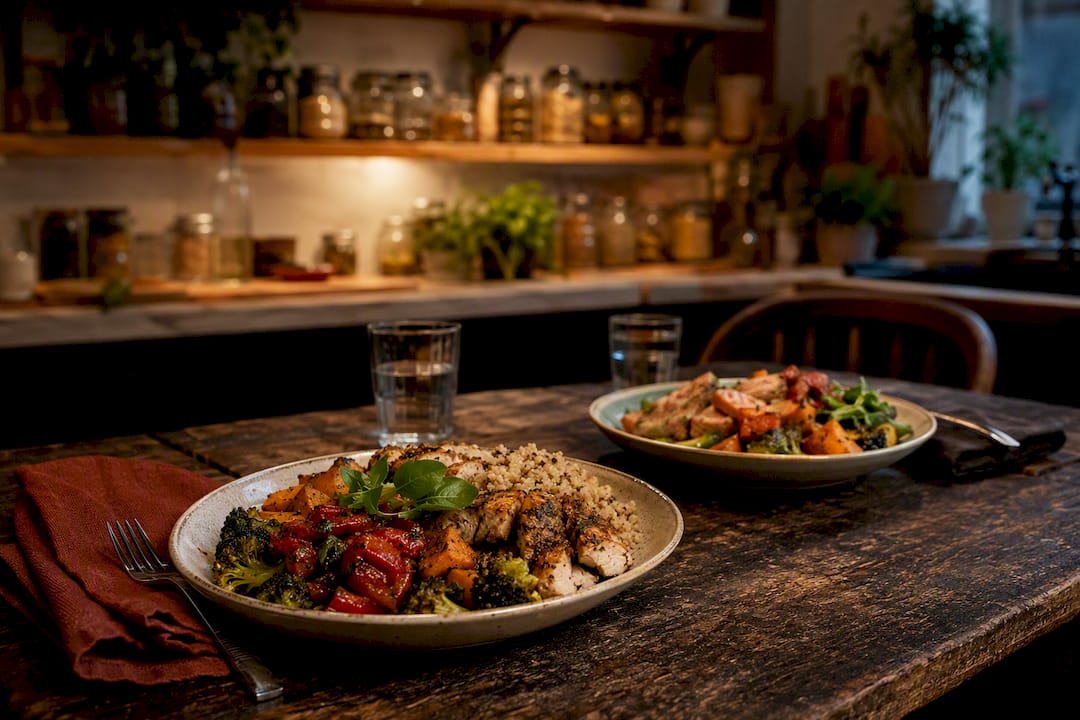
The ingredient bridge approach solves the real problem: how to get variety without buying seven different proteins that each get used once. Prioritize the planning session itself first, before worrying about recipes. A rotation of 15 good meals, refreshed occasionally, beats a Pinterest board of 200 recipes you’ll never cook twice. If you take one thing from this system, make it the perishables-first sequencing. It’s the single habit that does the most to keep food out of the trash.
Let Homecooked Handle the Busywork
You’ve got the system down: 4 to 5 dinners, perishables first, ingredient bridges throughout the week. The part that still eats up time is translating that plan into a shared shopping list that actually reflects two portions, not four or six. That’s where a dedicated tool earns its keep instead of a shared notes app that goes stale by Wednesday.
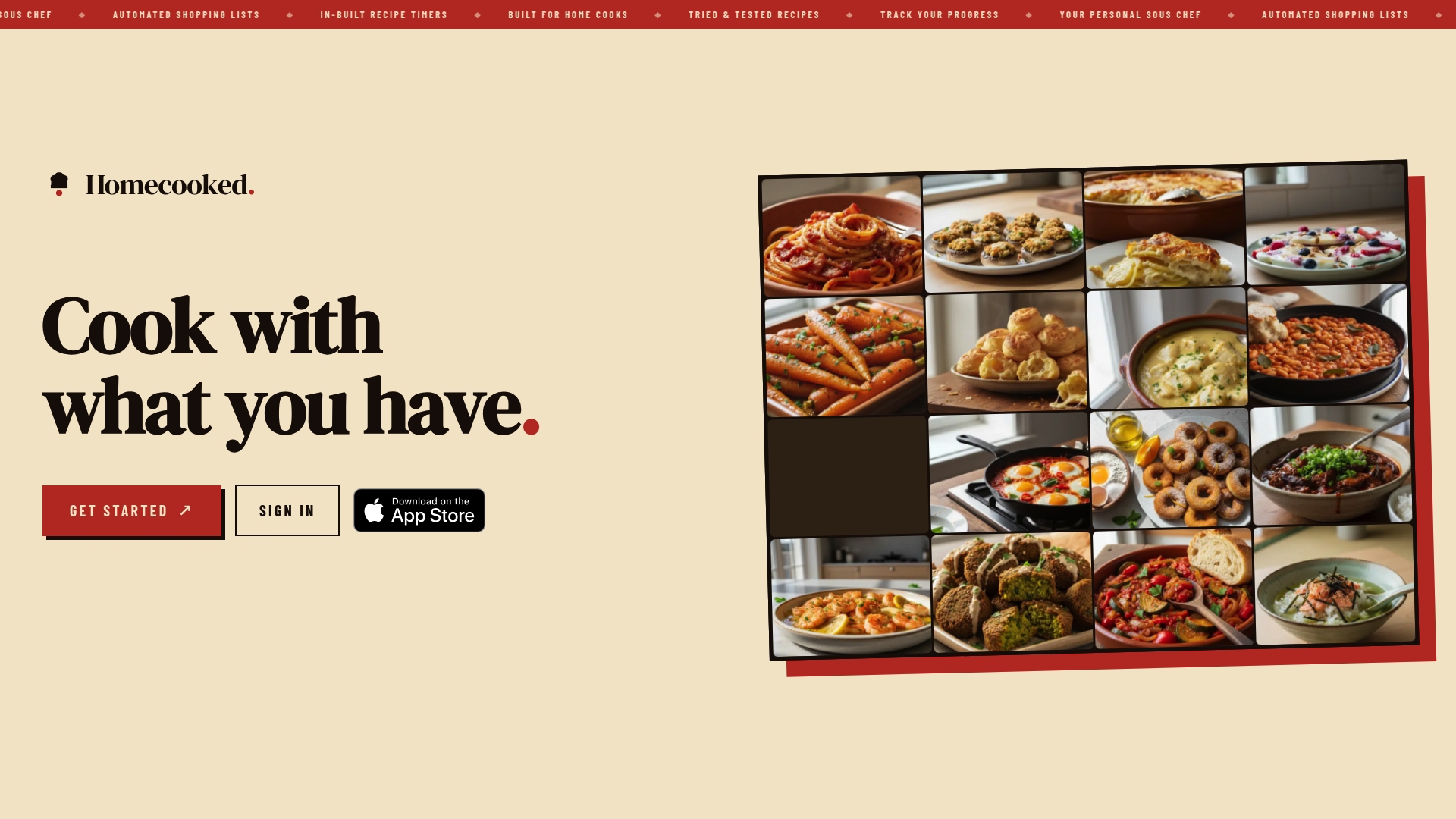
Homecooked builds personalized meal plans around your household size and dietary preferences, then turns that plan into an automated shopping list organized the same way you’d walk the store: produce, protein, dairy, pantry, frozen. It also handles portion scaling automatically, so a recipe written for four becomes exactly right for two without you doing the math. Guided recipes come with built-in timers, which matters most on the nights you’re cooking something new for the first time. If you want a fast way to put the ingredient bridge strategy into practice, start with a balanced bowl recipe like bibimbap, which reuses vegetables, rice, and protein exactly the way this system recommends. Open the app and build this week’s plan in the time it takes to finish your coffee.
Sources
- Calcium | The Nutrition Source | Harvard T.H. Chan School of Public Health
- Next week’s meal plan: A meal plan for two
- Your monthly meal plan for two | Taste of Home