
Most meal plans fail for ordinary reasons. They are too ambitious, they ignore what is already in your kitchen, they repeat one recipe all week, or they leave the food-safety clock out. The fix is a smaller, more flexible plan built around your pantry and a realistic cooking schedule. A tool such as Homecooked can do much of that bookkeeping for you.
Below are the mistakes that sink home cooks most often, what the research from dietitians, universities and the USDA says about each, and a simple correction you can use this week.
TL;DR
- Plan fewer meals than you think you need: three to five repeatable meals beat a perfect seven-day menu.
- Start from what you already own, then build a shopping list from the plan, not the other way around.
- Prep components (grains, proteins, chopped vegetables) instead of finished meals, so you can vary dinners.
- Refrigerate cooked food within 2 hours, eat it within 3 to 4 days, and reheat it to 165°F.
- Write a cooking order, with the longest task first, so prep day does not turn into chaos.
Table of Contents
- Mistake 1: Planning more than you can cook
- Mistake 2: Cooking one recipe for the whole week
- Mistake 3: Ignoring what is already in your kitchen
- Mistake 4: Building an unbalanced plate
- Mistake 5: Getting food storage and safety wrong
- Mistake 6: No order of operations on prep day
- Mistake 7: Making the plan too rigid
- Let the app handle the bookkeeping
- Our perspective
- FAQ
- Sources
Mistake 1: Planning more than you can cook
The classic overreach is a color-coded plan for 21 meals, a four-hour Sunday session, and a fridge full of containers by 3 p.m. It works once. Then the week gets busy, and half of it ends up in the trash.
The University of Washington’s wellness program suggests planning one to two weeks at a time, and keeping it as simple as three to five meals that you can repurpose into leftovers. The same page recommends prepping only what is genuinely helpful and leaving room for takeout. That is permission to be imperfect, and it is the single best protection against burnout.
The fix: Count your real dinners. If you are home four nights, plan four. Add one “flex” night for leftovers or a no-cook meal. If you are cooking for two, our guide to meal planning for two shows how to scale this down, and the single-person version does the same for one.
Mistake 2: Cooking one recipe for the whole week
Batch cooking a giant pot of chili sounds efficient. By Thursday you are staring at the fifth identical lunch. Registered dietitian Alina Petre warns in Healthline’s beginner’s guide that choosing only one recipe for the week can lead to boredom and may keep you from getting a range of nutrients.
Boredom is not a character flaw. It is the reason people abandon plans.
The fix: prep components, not meals. Registered dietitian Alicia Miller recommends prepping components rather than complete meals: washing fruit, chopping vegetables, cooking rice, portioning snacks. A pot of rice, a tray of roasted vegetables and a batch of grilled chicken can become a burrito bowl on Monday, a stir-fry on Wednesday and a grain salad on Friday. She also notes that the more ways you can use one ingredient, the less likely it is to go to waste.
Sauces and seasonings do the heavy lifting here. The same chicken tastes different with a curry paste, a lemon-herb dressing or a spicy peanut sauce. If you want a flavorful starting point, try a home-style chicken curry one night and use the leftover chicken and rice in something completely different later.
Mistake 3: Ignoring what is already in your kitchen
A plan built from scratch every week quietly doubles your grocery bill. You buy a second jar of cumin, a third bag of rice, and a bunch of cilantro that was supposed to be used last Tuesday.
The Academy of Nutrition and Dietetics lists ingredients you already have on hand, supermarket sales and in-season produce among the first things to consider when planning. Most people check the pantry only when they get to the store, which is too late.
Harvard’s Nutrition Source adds a related habit: date-label stored items and rotate them so the oldest get used first. Food forgotten in a drawer or at the back of a shelf spoils, and that is money and effort lost.
The fix: Do a five-minute inventory before you choose a single recipe. Pick the one or two meals that use up the oldest or most perishable things first. Then write the shopping list from the gaps. Our walkthrough on turning a meal plan into a zero-waste grocery list covers the process, and the printable 7-day grocery list gives you a template. If you are staring at a half-empty pantry, recipes by ingredient can turn what you have into dinner.
This is the idea behind Homecooked’s pantry-first approach: the app builds plans around what you already have, shapes them around your health goals and tastes, and generates an automated shopping list for what is missing.

Mistake 4: Building an unbalanced plate
Plans made in a hurry tend to center on a protein and a starch. Vegetables get added in theory and skipped in practice.
The University of Minnesota’s Real Life, Good Food program suggests that each day’s plan include a protein, a grain (ideally whole grain), a vegetable or fruit side and a drink, and that you aim to fill half your plate with vegetables and fruits. That half-plate picture is easier to apply than counting anything.

The fix: When you write each meal, name the vegetable before the sauce. Choose vegetables that suit the method: roasted broccoli and sweet potatoes hold up well in the fridge, while delicate greens are better dressed and added on the day.
If you are planning around a specific goal, such as more protein, fewer refined carbs or a particular eating style, build that into the plan from the start rather than adjusting afterward. For anyone managing a medical condition or taking a prescription medication that affects appetite or nutrition, a registered dietitian or your doctor should set the targets, and your plan can then carry them out. Professionals with packed calendars may also like this take on meal planning for professionals, which centers on one weekly session.
Mistake 5: Getting food storage and safety wrong
This is the mistake that can make you sick, so it deserves precision. Meal prep means cooked food sits in your fridge for days, and the rules for that are specific.
The time limits. The USDA’s Food Safety and Inspection Service says leftovers can be refrigerated for 3 to 4 days or frozen for 3 to 4 months for best quality. So the answer to “is meal prepping for four days safe?” is yes, if the food was cooled promptly, kept cold, and is eaten by day four. Plan day-five meals for the freezer, not the fridge.
Cool it fast. The same USDA page says to refrigerate perishable food within 2 hours, or within 1 hour when the temperature is above 90°F, and to cool food in shallow containers. FoodSafety.gov defines the danger zone as 40°F to 140°F, the range in which bacteria multiply quickly. Many people think food must cool on the counter first. A USDA study reported by FoodSafety.gov found that 76% of participants said they would let leftovers cool to room temperature first, which is unnecessary and can make food unsafe.
Reheat properly. Reheat leftovers to 165°F, measured with a food thermometer, according to USDA guidance. Color and steam are not reliable indicators.
Do not trust your nose past day four. The same FoodSafety.gov post notes that after four days spoilage bacteria can cause bad smells or tastes, and that 31% of study participants said they would eat leftovers kept longer than four days.
Freeze smartly. Freezer timing varies by source and by food: the USDA gives 3 to 4 months for leftovers, while dietitian Toby Amidor suggests frozen prepped food is best within about 2 months. Label everything with the date. Harvard notes that high-moisture foods such as salad greens, tomatoes and watermelon freeze poorly because they turn mushy when thawed.
Pick the right containers. Ohio State’s Dena Champion, RD, suggests vented-lid containers for washed and chopped produce, since they let ethylene gas escape that speeds ripening, and inserts that keep produce off the moisture-prone bottom. Amidor also advises portioning food into separate containers before storing so the last meal is not smaller than the first.
| Situation | Rule | Source |
|---|---|---|
| Refrigerated leftovers | Eat within 3 to 4 days | USDA FSIS |
| Frozen leftovers | 3 to 4 months for best quality | USDA FSIS |
| Cooling | Refrigerate within 2 hours (1 hour above 90°F), in shallow containers | USDA FSIS |
| Reheating | 165°F, checked with a thermometer | USDA FSIS |
Pregnant people, older adults, young children and anyone with a weakened immune system face higher risk from foodborne illness, so they should follow these limits strictly and ask their doctor about anything specific to their situation. Rules and guidance are updated from time to time, so check the USDA’s food safety pages for the latest.
Mistake 6: No order of operations on prep day
You can have the perfect menu and still lose two hours because you chopped onions three separate times and started the rice last.
The Kitchn’s Kelli Foster lists the common errors: not giving yourself enough time, picking recipes that do not keep or reheat well, skipping a task list and not having clean containers ready. She suggests blocking anywhere from 30 minutes to a couple of hours, and working backward from the longest tasks. Harvard agrees: start with the longest-cooking foods, such as proteins, whole grains, dried beans and roasted vegetables.
Healthline’s guide adds a useful rule of thumb: choose recipes that use different cooking methods, such as one oven meal and no more than two stovetop meals at once, plus a no-cook option like a sandwich or salad. Check the ingredient lists together so shared items are chopped once.
The fix: Before you start, write a short sequence:
- Oven on, and the longest roast or bake goes in first.
- Grains or beans on the stove next.
- While those cook, chop shared vegetables once.
- Make sauces and dressings while everything else finishes.
- Cool in shallow containers, label with the date, and refrigerate or freeze within 2 hours.
Homecooked’s guided recipes use step-by-step instructions with integrated timers and parallel workflows, so overlapping tasks are laid out for you. Our piece on parallel cooking with step timers explains how to run two or three things at once without losing track.
Mistake 7: Making the plan too rigid
A plan that cannot survive a late meeting, a sick kid or a spontaneous dinner out is a plan you will drop. Rigid plans create a feeling of failure the first time reality interferes.
The University of Washington recommends keeping easy meals on hand and allowing space for takeout. Alicia Miller makes a related point: prep when you actually have the time and bandwidth, so the habit stays realistic. The Academy of Nutrition and Dietetics also suggests running the menu by your household and keeping notes during the week on what worked, which turns each week into a better plan for the next.
The fix:
- Plan meals, not days. Do not assign “Tuesday: lasagna”; keep a list and choose each evening.
- Keep two emergency meals, such as pasta with a frozen vegetable or eggs on toast.
- Ask the people you cook for what they will actually eat. For families, our family meal planning guide and a sample week of seven dinners for four show the same pantry staples reused in different meals.
- If you want a longer horizon, a monthly system works when you plan in themes, not in specific dishes.
If you are just starting, weekly meal planning for home cooks is the right place to build the habit before you try anything bigger.
Let the app handle the bookkeeping
Every mistake above is a bookkeeping problem: what you own, what you need, what to cook first, what to eat before it turns. Homecooked is an app that makes personalized meal plans from your health goals and dietary preferences, then turns them into an automated shopping list. It also tracks your pantry, walks you through recipes with built-in timers, tracks your progress and offers AI-powered cooking assistance. It is offered with a free trial, with Homecooked Pro as the paid subscription.
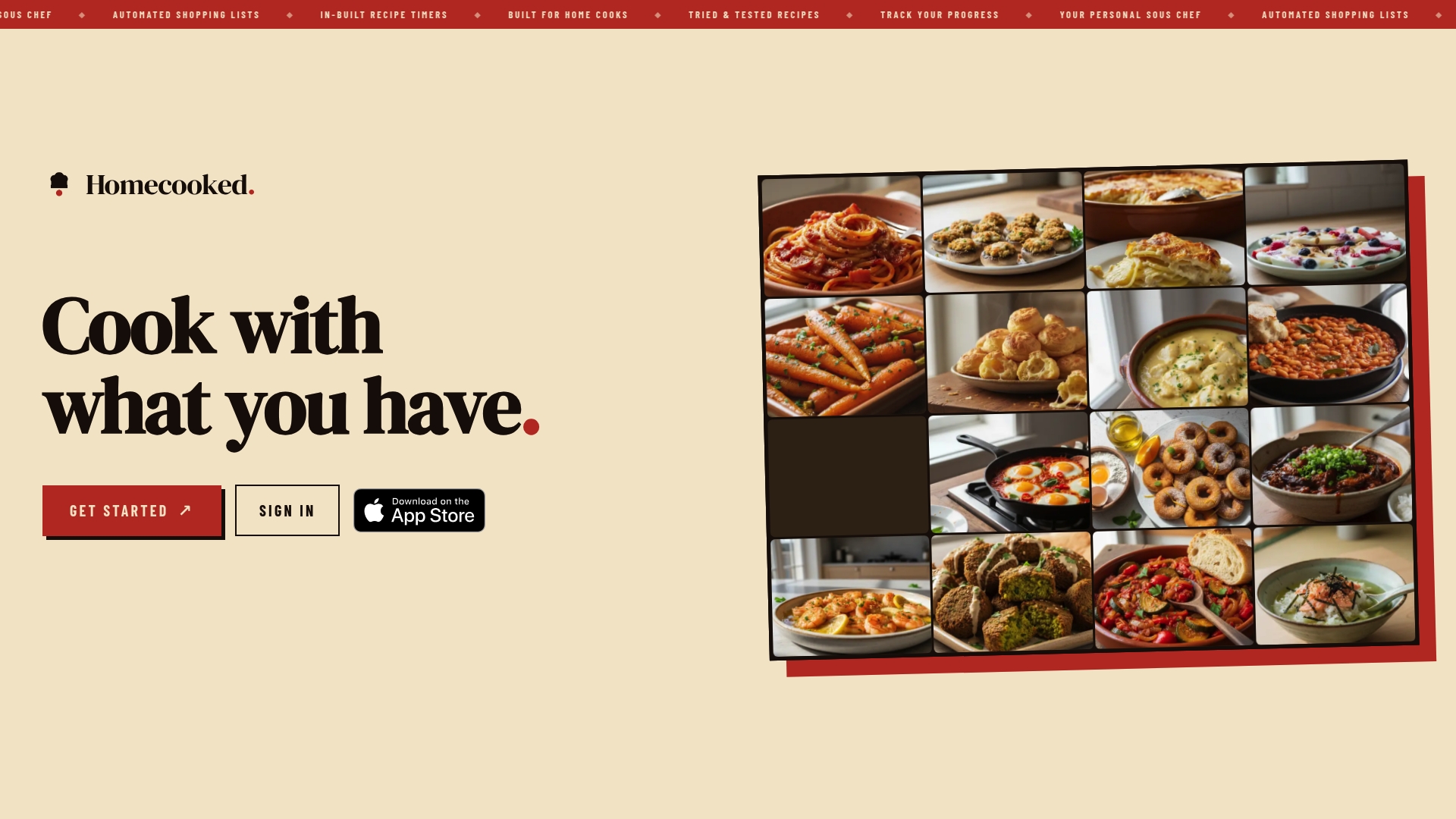
Try Homecooked and let your next plan start from what is already in your kitchen.
Our perspective
We built Homecooked on a simple observation: people rarely quit meal planning because they do not know what to cook. They quit because the plan stops matching their real kitchen and their real week.
That is why we start with the pantry. A plan that uses what you already own is cheaper, produces less waste and feels easier to begin. Then we shape it around your health goals and your taste, because a plan that is good for you but boring will not last past Wednesday.
We also think cooking itself deserves design. A recipe with live timers and parallel steps removes the guesswork about what goes on the stove next, which is where many prep sessions stall. Add progress tracking and a shopping list that updates with your plan, and the weekly routine becomes something you can repeat without a heroic effort.
Our goal is simple: make the sensible habits in this article the default way you plan, shop and cook.
0xmaglev
FAQ
Is meal prepping for four days safe?
Yes, as long as the food was cooled promptly and kept refrigerated. The USDA says cooked leftovers keep for 3 to 4 days in the fridge, so day four is the limit. Put anything you will not eat by then in the freezer on the day you cook it.
How many meals should I plan for a week?
Start with three to five. The University of Washington’s guidance describes that as enough to repurpose into leftovers, and it leaves room for nights when you eat out or improvise. You can add more once the routine feels easy.
What is the best way to avoid getting bored with meal prep?
Prep components, not complete meals. Cook a grain, a protein and a tray of vegetables, then change the sauce and seasoning each day. Choosing recipes with different cooking methods also keeps the week varied.
Do I need to plan snacks and breakfast too?
Not at first. Plan the meal that causes you the most stress, usually dinner, and add the others as you build the habit. The Academy of Nutrition and Dietetics lists variety across breakfast, lunch, dinner and snacks as a consideration once your basics are covered.
Sources
- 3 Strategies for Successful Meal Planning, Academy of Nutrition and Dietetics
- How to Meal Prep: A Beginner’s Guide, Healthline
- Meal Prep Guide, Harvard T.H. Chan The Nutrition Source
- 10 Meal-Prep Hacks That Can Save Time on Busy School Nights, AOL
- Meal planning, University of Minnesota Real Life, Good Food
- Leftovers and Food Safety, USDA FSIS
- Keep Food Safe! Food Safety Basics, USDA FSIS
- Prevent Illness from C. perfringens, FoodSafety.gov
- Thanksgiving Leftovers for Safe Keeping, FoodSafety.gov
- Make meal-prepping work for you, Ohio State Health & Discovery
- 10 Easy Meal Prep Tips from a Registered Dietitian, Clean Plates
- Meal Prep and Planning, The Whole U, University of Washington
- Meal Prep Mistakes & How To Solve Them, The Kitchn
- Meal Planning for Professionals