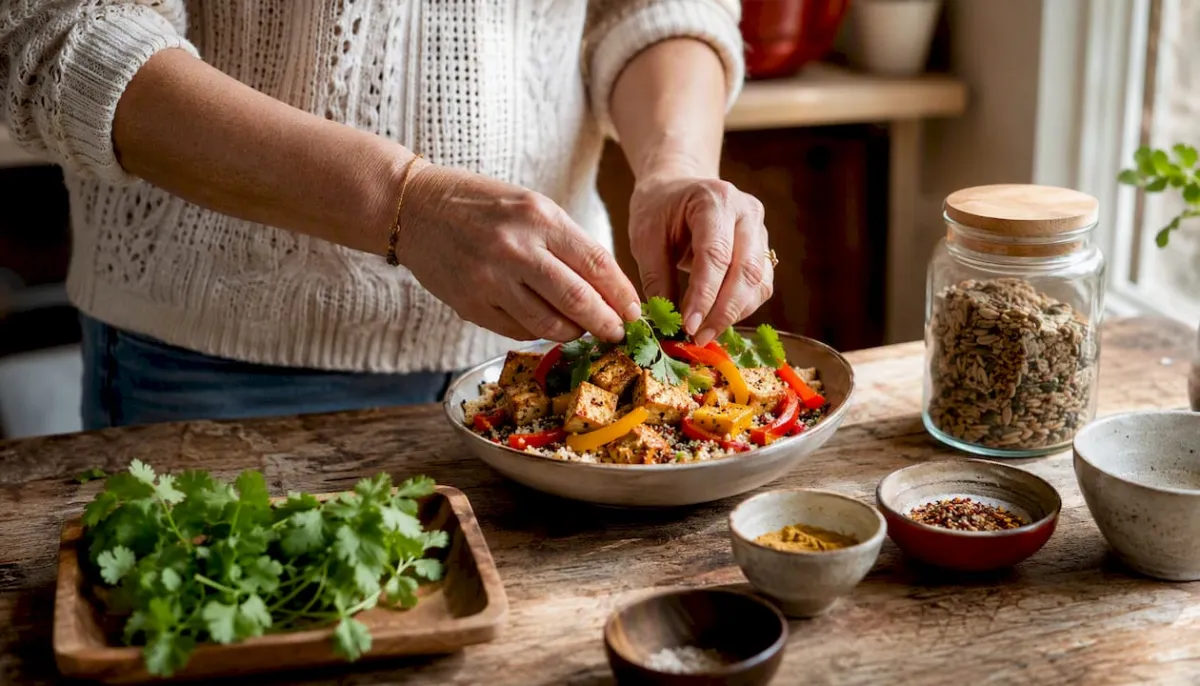
Yes, structured menopause meal planning can reduce hot flashes, stabilize blood sugar, preserve muscle, and protect both bone and heart health. The Academy of Nutrition and Dietetics recommends a nutrient-dense pattern built on lean protein, whole grains, healthy fats, calcium, vitamin D, and fiber as the foundation for managing this transition. The Mediterranean diet offers a practical, clinician-backed template that some research links to fewer vasomotor symptoms. And tools like Homecooked can automate the grocery list and recipe steps so the plan actually sticks.
Here is where to start right now:
- Scroll to the 7-day meal plan below and pick one day to try this week.
- Choose a swap-friendly template (vegetarian, dairy-free, or low-FODMAP options are included).
- Book a consult with a registered dietitian (RD) if you take medications, have osteoporosis, or have experienced significant weight changes.
- Use Homecooked to auto-generate your grocery list from the 7-day plan so Sunday prep takes 90 minutes, not three hours.
Key Takeaways
A structured menopause meal plan built around ~1.2 g protein/kg, 25–30 g fiber/day, calcium at 1,200–1,500 mg, and regular omega-3 intake addresses the core metabolic shifts of menopause more directly than any single food or supplement.
| Point | Details |
|---|---|
| Hit protein at every meal | Target ~1.2 g protein per kg of body weight daily, spread across breakfast, lunch, and dinner. |
| Fiber is your blood sugar anchor | Aim for 25–30 g of fiber per day from oats, beans, vegetables, and whole grains. |
| Try the 7-day plan for one week | Use the plan above as a starting experiment before making further changes or additions. |
| Limit the main triggers | Reduce alcohol, excess caffeine, refined carbs, and spicy foods to ease hot flashes and improve sleep. |
| Homecooked automates the logistics | Use Homecooked to generate grocery lists, track your pantry, and follow guided recipes with built-in timers. |
Table of Contents
- What can menopause nutrition realistically do for you?
- Which nutrients should you prioritize during menopause?
- What foods and habits make menopause symptoms worse?
- Your 7-day menopause meal plan: swap-friendly and symptom-focused
- How do you personalize this plan for your body and symptoms?
- Practical tips to reduce decision fatigue and make the plan stick
- Homecooked makes menopause meal planning less work
- Sources
What can menopause nutrition realistically do for you?
Nutrition cannot stop menopause, but it can meaningfully change how you experience it. The right eating pattern can preserve lean muscle mass, reduce the frequency and intensity of hot flashes, protect bone density, and lower cardiovascular risk. Those are concrete, measurable outcomes, not vague promises.
Here is why the shift matters: estrogen decline changes how your body handles calories, calcium, and muscle protein. Metabolic rate drops modestly, insulin sensitivity decreases, and bone turnover accelerates. Your protein and calcium needs go up at exactly the moment many women are eating less to manage weight.
Realistic, measurable goals for a menopause nutrition plan include:
- Protein: ~1.2 g per kg of body weight per day to preserve lean mass
- Fiber: 25–30 g per day for blood sugar control, satiety, and gut health
- Calcium: roughly 1,200–1,500 mg per day depending on individual needs
- Omega-3s: increased intake from fatty fish, flaxseed, or walnuts to support anti-inflammatory pathways
- Hydration: at least 8–10 cups of water daily, more if you experience night sweats
Midlife nutrition is calibrated, not restrictive. The Academy of Nutrition and Dietetics frames a menopause diet as a precision adjustment, not a deprivation plan. Structured meal planning reduces cognitive load on low-energy days, which is exactly when you are most likely to reach for ultra-processed convenience food.
If you have osteoporosis, take medications that affect nutrient absorption, or have experienced rapid or unexplained weight changes, consult an RD or clinician before making major dietary shifts. Bring your lab results and a current medication list to that visit.
Which nutrients should you prioritize during menopause?
Seven nutrients do the heaviest lifting during menopause: protein, calcium, vitamin D, fiber, omega-3 fatty acids, magnesium, and B vitamins. Phytoestrogens from whole soy foods round out the list as an optional, evidence-backed addition.
A 7-day menopause-focused framework targeting ~1.2 g protein/kg, 25–30 g fiber/day, and increased omega-3 intake supports muscle retention and metabolic control, with typical daily calories in the 1,700–1,900 range for many women in midlife, adjusted individually.
Protein
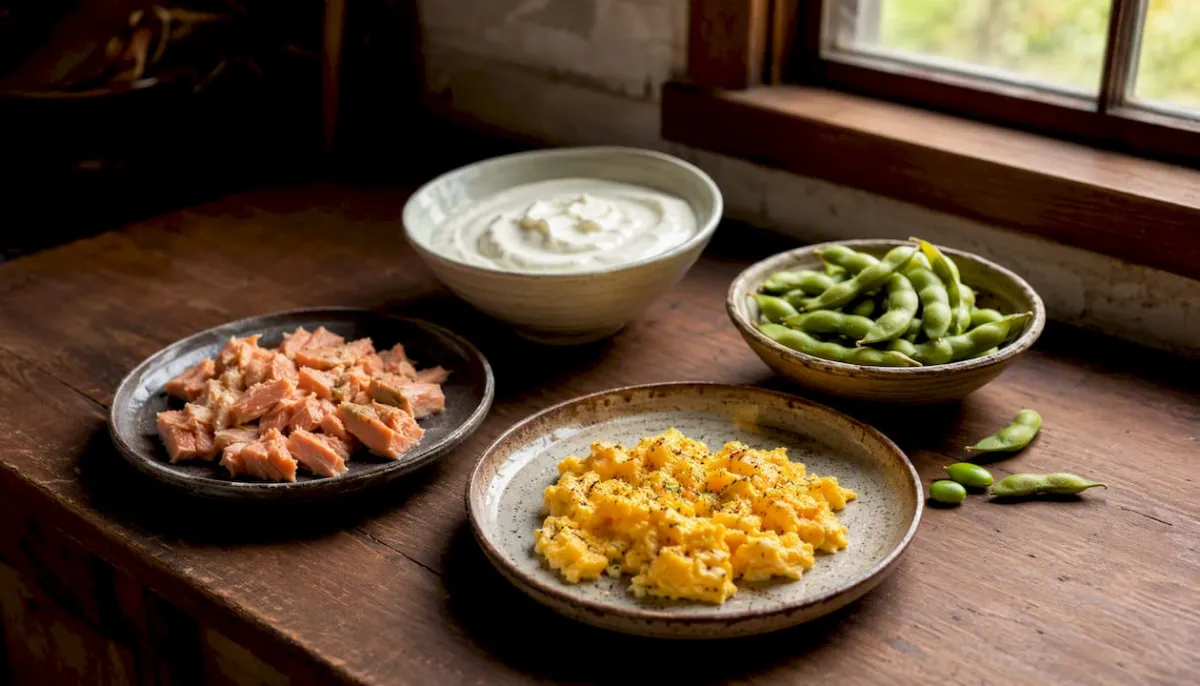
Spread protein across all three meals rather than loading it at dinner. Research on muscle preservation in midlife shows that per-meal protein distribution matters as much as total daily intake. Good sources: Greek yogurt (17–20 g per cup), canned salmon (25 g per 3.5 oz), eggs, lentils, edamame, and chicken breast. Swap: replace a refined-carb breakfast with a two-egg scramble plus Greek yogurt on the side.
Calcium and vitamin D
Canned salmon with bones delivers both calcium and omega-3s in one serving. Other calcium-rich picks: fortified plant milks, low-fat dairy, white beans, and bok choy. Vitamin D is harder to get from food alone; a clinician can test your serum level and advise on supplementation. Cleveland Clinic clinicians recommend aiming for 1,200–1,500 mg calcium daily and consulting a healthcare provider about individualized bone-loss risk.
Fiber
Higher fiber intake improves metabolic markers and satiety, both of which matter when estrogen-driven appetite signals become less reliable. Practical sources: oats (4 g per half-cup dry), black beans (15 g per cup cooked), raspberries (8 g per cup), and roasted broccoli. Swap refined pasta for lentil pasta and you add roughly 11 g of fiber per serving.
Omega-3s and anti-inflammatory fats
Omega-3 fatty acids have well-documented anti-inflammatory properties and may ease joint pain, a common but underreported menopause symptom. Aim for two or more servings of fatty fish per week (salmon, sardines, mackerel). Walnuts, ground flaxseed, and chia seeds fill the gaps on non-fish days. For a broader anti-inflammatory eating pattern, the Mediterranean diet for inflammation approach is a practical starting point.
Phytoestrogens
Trials and reviews suggest soy isoflavones in food form can modestly reduce hot flashes in some women, though results vary. Whole-food soy, such as edamame, tofu, and tempeh, is preferred over concentrated supplements without clinician oversight. Think of it as a bonus strategy, not a replacement for the core nutrient targets above.
What foods and habits make menopause symptoms worse?
Some foods reliably amplify hot flashes, disrupt sleep, or accelerate weight gain during menopause. Knowing the triggers is as useful as knowing the priorities.
- Added sugars and refined carbs spike blood sugar and then crash it, which can trigger hot flashes and energy dips. Swap: replace sweetened yogurt with plain Greek yogurt and a handful of berries.
- Excess alcohol raises core body temperature, disrupts sleep architecture, and adds empty calories. Even one drink in the evening can worsen night sweats. Swap: sparkling water with citrus or a non-alcoholic botanical drink.
- Caffeine in excess can trigger or intensify hot flashes in sensitive women. Swap: try half-caf coffee or herbal tea in the afternoon and evening.
- Very spicy foods are a well-known vasomotor trigger for many women. Swap: use fresh herbs, lemon zest, or smoked paprika for flavor without the heat.
- High-sodium ultra-processed foods raise blood pressure and contribute to bloating. Swap: choose low-sodium canned beans and season with herbs instead of packaged seasoning packets.
- Large meals close to bedtime raise core temperature and interfere with sleep. Swap: eat your largest meal at lunch and keep dinner lighter.
Hydration strategy: Drink a glass of water before each meal and keep a water bottle at your desk. Night sweats increase fluid loss, so a small glass of water before bed and one within 30 minutes of waking helps offset it. Herbal teas (peppermint, chamomile) count toward your daily fluid goal and can support sleep.
Your 7-day menopause meal plan: swap-friendly and symptom-focused
This plan targets ~1.2 g protein/kg, 25–30 g fiber/day, and two or more omega-3-rich meals per week. Calories fall in the 1,700–1,900 range for a moderately active woman in midlife; use the DRI Calculator to adjust for your specific weight, age, and activity level.
| Day | Breakfast | Lunch | Dinner | Snacks |
|---|---|---|---|---|
| Monday | Oatmeal with ground flaxseed, walnuts, and blueberries | Large salad with canned salmon, white beans, olive oil, lemon | Baked chicken thigh, roasted broccoli, quinoa | Greek yogurt + handful of almonds |
| Tuesday | Two-egg scramble with spinach and feta, whole-grain toast | Lentil soup with crusty whole-grain bread | Stir-fried tofu, bok choy, brown rice | Apple slices + almond butter |
| Wednesday | Greek yogurt parfait with raspberries and chia seeds | Chicken and vegetable grain bowl (farro, roasted peppers, tahini) | Baked salmon, steamed asparagus, sweet potato | Edamame + sparkling water |
| Thursday | Smoothie: frozen spinach, banana, Greek yogurt, flaxseed, almond milk | Turkey and avocado wrap in a whole-grain tortilla | Shrimp stir-fry with broccoli, snap peas, brown rice | Cottage cheese + cherry tomatoes |
| Friday | Overnight oats with chia seeds, sliced peach, and pumpkin seeds | Large salad with hard-boiled eggs, chickpeas, cucumber, olive oil | Lemon herb chicken, roasted zucchini, farro | Walnuts + a small piece of dark chocolate |
| Saturday | Veggie omelet (bell peppers, mushrooms, onion) with a side of fruit | Black bean and sweet potato tacos on corn tortillas | Baked cod, wilted kale with garlic, quinoa | Hummus + sliced bell peppers |
| Sunday | Whole-grain pancakes with almond butter and sliced banana | Leftover grain bowl or lentil soup | Slow-cooker chicken and white bean stew, whole-grain bread | Greek yogurt + mixed berries |
Swap options
- Vegetarian: Replace chicken or fish with tempeh, tofu, lentils, or white beans in any dinner. The Tuesday tofu stir-fry and Saturday black bean tacos are already vegetarian.
- Dairy-free: Use coconut yogurt or soy yogurt in place of Greek yogurt; choose fortified almond or oat milk for smoothies. Check calcium content on labels.
- Low-FODMAP: Swap white beans and lentils for canned chickpeas (rinsed, ¼-cup serving), replace garlic with garlic-infused olive oil, and choose firm tofu over silken. For more gut-friendly recipe ideas, the gut-healthy recipes collection has practical options.
Sunday batch-cook checklist (60–90 minutes)
- Cook a large pot of quinoa or farro (use all week)
- Roast two sheet pans of mixed vegetables (broccoli, zucchini, peppers)
- Bake or poach 4–6 chicken thighs or breasts; slice and refrigerate
- Hard-boil 6 eggs
- Prep overnight oats for Monday and Tuesday in mason jars
- Portion Greek yogurt and nuts into small containers for grab-and-go snacks
Store cooked grains and proteins in airtight containers for up to 4 days; freeze anything beyond that. Reheat proteins gently with a splash of water or broth to prevent drying out.
Pro Tip: Use Homecooked to enter this 7-day plan once and let it generate a consolidated, aisle-organized grocery list automatically. The built-in timers mean you can run the batch-cook session without watching the clock.
How do you personalize this plan for your body and symptoms?
No two women experience menopause the same way, and a one-size calorie number is rarely right. The practical flow: calculate your needs, pick a plate template, then adjust for your specific symptoms and any medications.
Start with the DRI Calculator from the National Agricultural Library, which factors in your age, sex, weight, and activity level to estimate your energy and micronutrient targets. A moderately active 52-year-old woman weighing 155 lbs might land around 1,800 calories per day as a maintenance target. If gentle weight loss is a goal, a 200–300 calorie daily deficit is a reasonable, sustainable starting point.
| Symptom | Targeted food action |
|---|---|
| Frequent hot flashes | Reduce caffeine, alcohol, spicy foods; add whole-soy foods (edamame, tofu) |
| Night sweats | Avoid alcohol and large meals within 2–3 hours of bedtime; stay hydrated |
| Poor sleep | Increase magnesium-rich foods (pumpkin seeds, leafy greens); limit evening caffeine |
| Bone loss risk | Boost calcium to 1,200–1,500 mg/day; add vitamin D; include weight-bearing exercise |
| Joint pain or inflammation | Increase omega-3 intake; follow a Mediterranean meal planning pattern |
| Weight gain around the midsection | Prioritize protein at every meal; increase fiber; reduce refined carbs and added sugars |
| Low energy or mood changes | Prioritize B vitamins (B6); include iron-rich foods if dietary restrictions apply |
For bone health specifically, a bone health supplement checklist can help you understand what to discuss with your clinician before adding anything beyond food sources.
When to bring in a clinician or RD:
- You take medications that affect calcium, vitamin D, or iron absorption (corticosteroids, proton pump inhibitors, metformin)
- You have been diagnosed with osteoporosis or have a high fracture risk
- You have severe GI symptoms that make following a standard plan difficult
- Your weight has changed by more than 10 lbs without a clear dietary reason
Iron status is worth checking at midlife, especially if you follow a plant-forward diet or have symptoms like fatigue and brain fog. Bring your most recent labs to your RD visit so they can assess your actual starting point rather than guessing.
Practical tips to reduce decision fatigue and make the plan stick
The biggest reason meal plans fail is not motivation. It is the daily mental load of deciding what to cook when you are tired. A simple repeatable system fixes that.
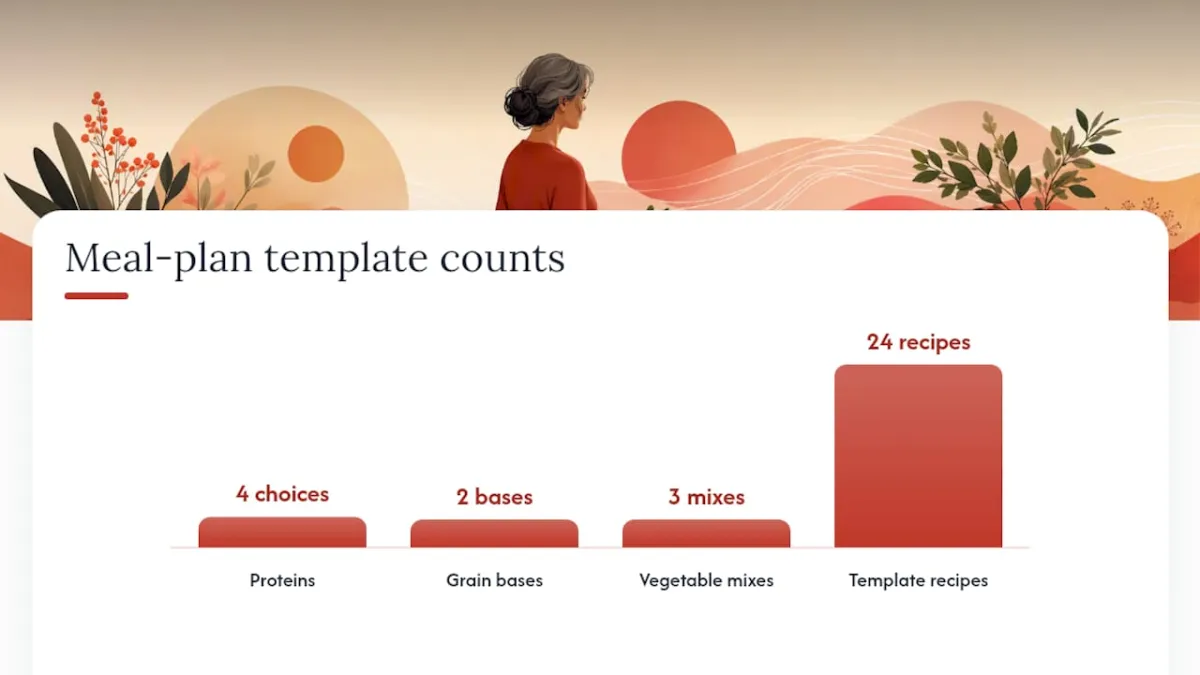
The core template: choose 4 proteins × 2 grain bases × 3 vegetable mixes. That combination alone generates dozens of meal variations from a short, predictable grocery list. Monday’s salmon-and-quinoa bowl becomes Wednesday’s salmon-and-farro grain bowl with different vegetables. Same prep, different plate.
Pantry staples that keep the plan feasible:
- Canned salmon and sardines (calcium + omega-3s, no cooking required)
- Canned chickpeas and white beans (fiber + protein, rinse before using)
- Frozen edamame, broccoli, and spinach (no prep, no waste)
- Rolled oats and farro (batch-cook once, use all week)
- Greek yogurt and cottage cheese (high-protein, quick snacks)
- Olive oil, tahini, and mixed nuts (healthy fats, flavor without effort)
- Ground flaxseed (stir into oatmeal, smoothies, or yogurt)
Smart shopping habits:
- Convert the 7-day plan into a one-sheet grocery list organized by store section (produce, proteins, grains, dairy/alternatives, pantry). You can do this manually or let Homecooked generate it for you.
- Buy pre-chopped stir-fry vegetables and pre-washed salad greens to cut active prep time.
- Read sodium labels on canned goods; choose options with 140 mg or less per serving.
- Check the sugar content on flavored yogurts; plain varieties give you full control.
For more batch-cooking inspiration, the healthy meal prep ideas collection covers 24 recipes built around exactly this kind of repeatable-template logic.
Pro Tip: Do a zero-waste pantry rotation every Sunday: move older canned goods to the front, check what proteins are about to expire, and build that week’s meals around them first. Homecooked’s pantry tracking feature does this automatically, flagging what to use before you shop.
A practical perspective on meal planning for menopause
The most underrated thing about a template-based menopause meal plan is not the nutrients. It is the decision architecture. When you already know what Tuesday’s lunch is, you do not stand in front of the refrigerator at noon, depleted, and reach for something that works against you. That friction reduction is where the real symptom benefit lives, because the hardest part of eating well during menopause is not knowing what to eat. It is doing it consistently when your energy, sleep, and mood are already under pressure.
Most articles focus on the nutrient targets, and those matter. But the women who actually sustain a menopause nutrition plan tend to be the ones who have made it boring in the best possible way: a short rotation of meals they enjoy, a Sunday prep session, and a grocery list that barely changes week to week. The 7-day plan here is designed to be that kind of boring. Try it for one week before you change anything. One week of data is worth more than a month of planning.
Homecooked makes menopause meal planning less work
Tracking protein targets, calcium sources, and grocery lists across a 7-day plan is genuinely tedious to do by hand. Homecooked handles the logistics so you can focus on the cooking.
The app builds a personalized meal plan around your health goals and dietary preferences, whether that means high-protein, dairy-free, low-FODMAP, or Mediterranean-style. Once your plan is set, it generates an aisle-organized grocery list automatically and tracks what you already have in your pantry. Step-by-step guided recipes with built-in timers mean your Sunday batch-cook session runs on autopilot. The cottage cheese protein bowl is a good example of the kind of high-protein, menopause-friendly recipe the app surfaces, with macros and prep steps laid out clearly.
Homecooked Pro includes a free trial, and you can cancel anytime. Start your personalized plan at Homecooked.
Sources
The claims and targets in this article draw from peer-reviewed research and guidance from established clinical and nutrition authorities. Consult an RD or clinician to apply these recommendations to your specific health history.
- Nutrition and Menopause
- DRI Calculator — National Agricultural Library
- Iron — NIH Office of Dietary Supplements
- PMC9031614
This article provides general nutritional information and is not a substitute for professional medical or dietary advice. Confirm current recommendations with a registered dietitian or your healthcare provider.