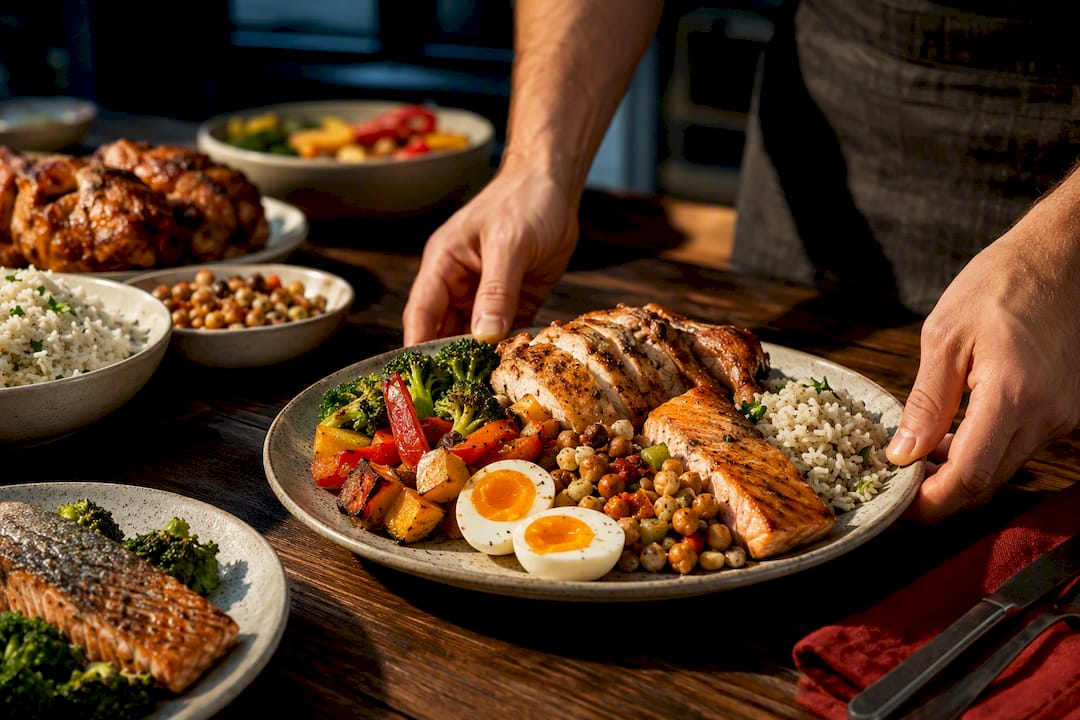
A working muscle gain meal plan runs on three numbers: a calorie surplus of roughly 200 to 400 kcal above maintenance, 1.6 to 2.0 grams of protein per kilogram of bodyweight spread across meals, and a repeatable seven-day structure you can run on autopilot. Skip the complicated math and the fifteen-recipe rotation. Build the same five or six meals into a weekly loop, hit your protein number, and let the surplus do its quiet work.
TL;DR:
- Maintaining a daily calorie surplus of 200 to 400 kcal and consuming 1.6 to 2.0 grams of protein per kilogram supports lean muscle gain with minimal fat increase.
- Consistent repetition of two to four meals with specified protein and carb sources, combined with weekly weight monitoring, optimizes muscle growth and plan adherence.
- Adjust caloric intake upward by 100 to 150 kcal if scale progress stalls for two consecutive weeks, while keeping protein intake steady.
- Prioritizing whole-food sources, micronutrients, and hydration enhances muscle recovery and overall growth, especially during varying training intensities.
- Automating meal planning, prep, and grocery shopping through apps facilitates adherence and reduces decision fatigue in the long term.
Table of Contents
- How to Set Calories and Protein for a Muscle Building Diet
- A Practical 7-Day Meal Plan You Can Copy
- Meal Prep Checklist and Grocery List for the Week
- Meal Timing and Distribution Around Workouts
- How to Reach Higher Calories When Appetite Is Low
- Best Foods for Muscle Gain and What to Limit
- The Evidence Behind This Muscle Gain Nutrition Approach
- Micronutrient Considerations for Muscle Gain
- Hydration Strategies and Their Role in Muscle Growth
- Adjusting the Meal Plan Based on Training Intensity and Progression
- Author Perspective: What to Prioritize in the First 12 Weeks
- How Homecooked Helps: Get a Personalized Muscle-Gain Plan Fast
- Sources
How to Set Calories and Protein for a Muscle Building Diet
Start by estimating your maintenance calories, then add 200 to 400 kcal on top. A quick estimate: multiply your bodyweight in pounds by 15 to 16 if you’re moderately active, which gets you close enough to start. You’ll refine it in two weeks anyway, once real data comes in.
Weigh yourself three or four times a week and average it. A systematic review on energy surplus and muscle gain found that gaining around 0.25% to 0.5% of your bodyweight per week keeps fat gain minimal while still supporting lean tissue growth. A 180 pound lifter gaining faster than about 0.9 pounds a week is probably overshooting the surplus and padding fat instead of muscle.
Protein is the non-negotiable number here. Research on resistance-trained individuals points to 1.6 to 2.0 grams of protein per kilogram of bodyweight daily, split into 25 to 40 gram doses per meal to maximize muscle protein synthesis across the day.
- 150 lb (68 kg) lifter: 109 to 136 g protein daily, about 27 to 34 g per meal across four meals.
- 180 lb (82 kg) lifter: 131 to 164 g protein daily, about 33 to 41 g per meal.
- 220 lb (100 kg) lifter: 160 to 200 g protein daily, about 40 to 50 g per meal.
Weekly gain sweet spot: 0.25% to 0.5% of bodyweight, checked as a rolling average, not a single morning reading.
If the scale stalls for two straight weeks, add 100 to 150 kcal.
A Practical 7-Day Meal Plan You Can Copy
The trick to a muscle building meal plan that survives week three isn’t variety. It’s repetition with small swaps. Below is a template built around four eating windows a day: breakfast, lunch, dinner, and one or two snacks, each main meal carrying 25 to 40 grams of protein.
Core daily structure:
- Breakfast: eggs or Greek yogurt with oats, plus fruit.
- Lunch: a protein source (chicken, tofu, or beef), a starchy carb (rice, potato, or pasta), and vegetables.
- Snack: protein shake, cottage cheese, or trail mix.
- Dinner: a second protein source, a different carb base, and healthy fat like olive oil or avocado.
- Optional evening snack: Greek yogurt with berries or a handful of nuts.
Repeating two proteins and two carb bases across the week cuts decision fatigue dramatically, which is exactly the logic behind coaching frameworks that favor templates over rigid daily menus. Here’s a sample seven-day rotation:
- Monday/Thursday: Eggs and oats breakfast, chicken and rice lunch, bibimbap-style dinner with beef and vegetables.
- Tuesday/Friday: Greek yogurt and granola breakfast, turkey and sweet potato lunch, salmon and quinoa dinner.
- Wednesday/Saturday: Cottage cheese protein bowl breakfast, beef and pasta lunch, tofu stir fry dinner.
- Sunday: Flex day using leftovers, plus a lighter dinner if training volume was low.
For a 2,800 kcal target, daily totals land around the protein, carbohydrate, and fat amounts recommended by research, adjusted up on heavier training days. Vegetarians can swap chicken and beef for tofu, tempeh, or lentils and still hit the same protein numbers with slightly larger portions. Dairy-free lifters can trade Greek yogurt for a pea or soy protein shake without losing ground on the per-meal target.
Meal Prep Checklist and Grocery List for the Week
Batch two proteins and one or two carb bases before Sunday ends, and the rest of the week runs itself. This is the single habit that separates people who stick with a muscle mass diet plan from people who quit by Wednesday.
Four-step prep routine:
- Cook: Grill or bake your two proteins and roast or boil your carb bases in one session.
- Portion: Divide into meal-sized containers using a kitchen scale or eyeball measures.
- Store: Refrigerate what you’ll eat within four days; freeze the rest in labeled bags.
- Label: Date every container so nothing sits past five to seven days in the fridge.
One-column grocery list:
- Chicken breast, ground beef, salmon, eggs, Greek yogurt, tofu
- Rice, oats, sweet potatoes, whole wheat pasta
- Broccoli, spinach, bell peppers, frozen mixed vegetables
- Olive oil, almond butter, avocado, mixed nuts
- Protein powder, milk, cottage cheese
For more batch-cook ideas that fit this rhythm, browse meal prep recipes built around the same cook-once, eat-all-week logic.
Meal Timing and Distribution Around Workouts
Timing helps, but it’s not sacred. Place a carb and protein meal roughly one to two hours before training, and another within about two hours afterward when your schedule allows it.
- Pre-workout: Oats with a scoop of protein powder, or rice with chicken two hours out.
- Post-workout: A protein smoothie or a full meal with 30 to 40 g protein.
- Avoid: Large, high-fat meals within an hour of lifting, which sit heavy and slow digestion.
Spreading protein evenly across four meals supports muscle protein synthesis better than front loading or back loading it into one giant dinner. If you miss the “ideal” window some days, don’t panic. Total daily protein and consistent surplus matter more than nailing a 90-minute post-workout target.
How to Reach Higher Calories When Appetite Is Low
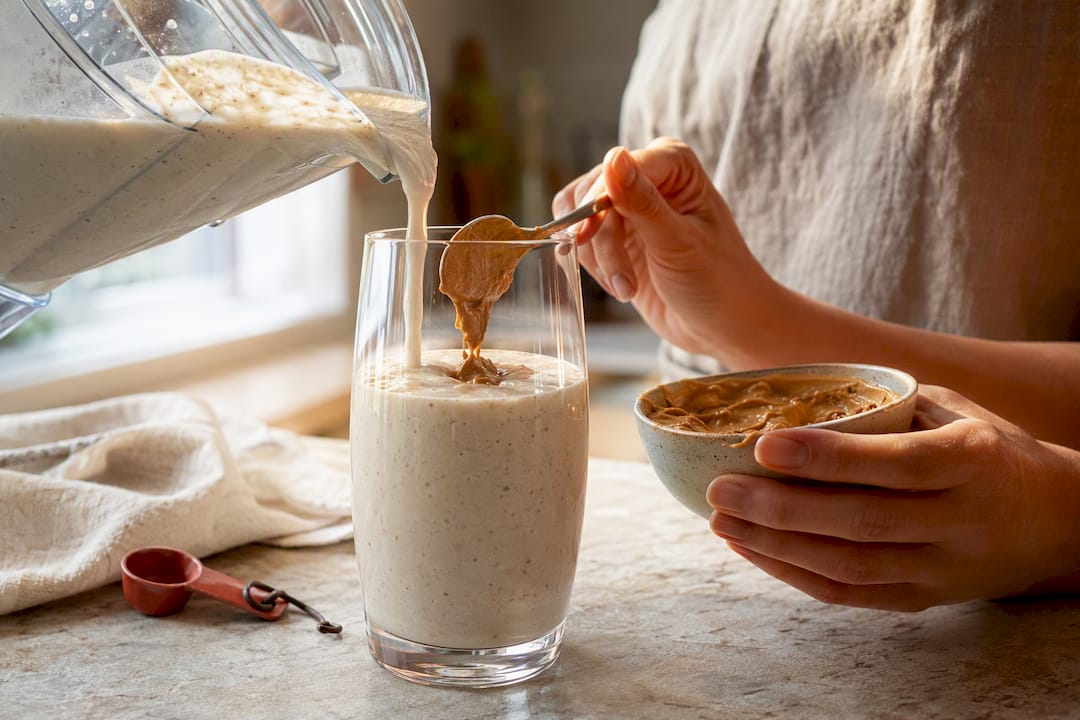
Some lifters hit a wall where eating enough feels like a chore, not a goal. Liquid calories solve this fast: a smoothie with oats, nut butter, milk, and protein powder can pack 600 to 700 kcal without the bloated feeling three chicken breasts would cause.
- Add olive oil, avocado, or seeds to meals you’re already eating.
- Keep milk, yogurt, or trail mix nearby for grazing between meals.
- Schedule snacks on a timer instead of waiting for hunger that may not show up.
Pro Tip: If appetite loss persists for more than a few weeks despite these tactics, that’s a signal to talk to a doctor or registered dietitian rather than push through it alone.
Liquid nutrition and energy-dense add-ins remain one of the most reliable low-volume strategies for people who struggle to eat enough in whole-food form.
Best Foods for Muscle Gain and What to Limit
Prioritize whole-food proteins, starchy carbs, dairy, eggs, legumes, and healthy fats. These give you the most nutrition per calorie and per dollar.
- Prioritize: Chicken thighs, eggs, canned tuna or salmon, lentils, Greek yogurt, oats, rice, potatoes, olive oil.
- Limit: Excess alcohol, sugary drinks, and deep-fried foods, especially in the hours around training when they slow digestion and crowd out useful nutrients.
- Budget swaps: Canned fish instead of fresh salmon, beans or lentils instead of beef, frozen vegetables instead of fresh.
- Quick swap: No salmon on hand? Chicken thigh delivers a similar protein-to-calorie ratio at a lower price point.
The Evidence Behind This Muscle Gain Nutrition Approach
The 200 to 400 kcal surplus and 1.6 to 2.0 g/kg protein range aren’t arbitrary. They come directly from research on lean mass gains under controlled surplus conditions and protein intake studies in resistance-trained populations. Repeatable templates outperform rigid, ever-changing menus because they cut the daily decision load that causes most diets to fail.
The biggest failure point in any muscle building meal plan isn’t the macros. It’s inconsistency, day after day, meal after meal, until the surplus disappears entirely.
An app builds on this exact logic by generating a personalized meal plan based on your calorie and protein targets, providing a grocery list, and guiding you through recipes so the template stays repeatable without feeling repetitive.
Micronutrient Considerations for Muscle Gain
Protein and calories get the spotlight, but a handful of vitamins and minerals quietly determine how well your body actually uses that surplus. Vitamin D and calcium support bone density and muscle contraction, which matters more the heavier your training load gets. Magnesium plays a role in energy metabolism and muscle relaxation, and it’s easy to under-eat if your diet skews toward meat and rice without enough leafy greens, nuts, or seeds.
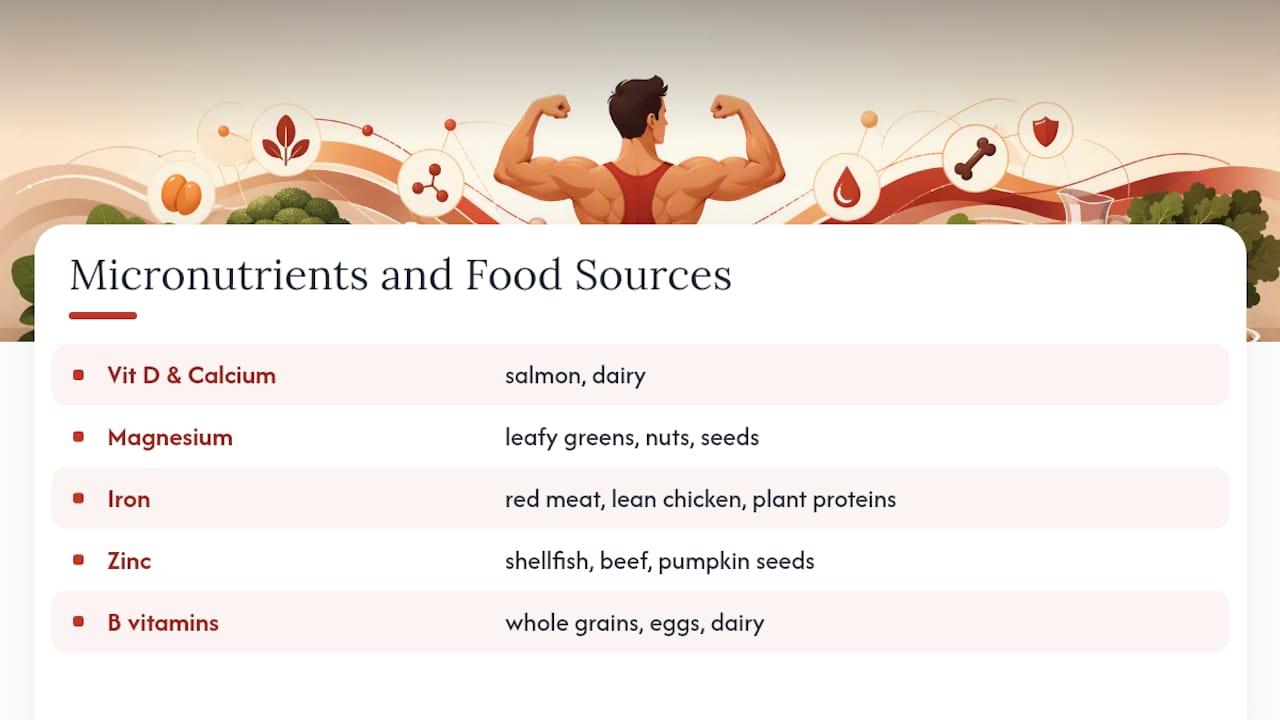
Iron deserves attention too, especially if you’re cutting back on red meat in favor of lean chicken or plant proteins. Low iron shows up as fatigue and stalled recovery long before it shows up on a blood test most people think to request. Zinc, found in shellfish, beef, and pumpkin seeds, supports the hormonal pathways tied to tissue repair.
B vitamins, particularly B6 and B12, help convert the food you’re eating into usable energy rather than letting it sit as wasted calories. Whole grains, eggs, and dairy cover most of this ground without any extra effort.
The Dietary Guidelines for Americans recommend a varied diet built on whole foods precisely because no single food source covers every micronutrient a muscle building diet plan needs. A weekly plan that rotates chicken, salmon, beef, eggs, legumes, and a mix of colorful vegetables will cover almost all of this without a supplement aisle detour.
Hydration Strategies and Their Role in Muscle Growth
Muscle tissue is roughly 75% water, which makes hydration less of an afterthought and more of a structural requirement. Even mild dehydration, around 2% of bodyweight lost as fluid, can measurably reduce strength output and endurance during a training session, which means less stimulus for growth on that day.
A simple starting target is half your bodyweight in ounces daily, adjusted upward on training days or in hot weather.
Water also plays a role in nutrient transport, carrying amino acids and glucose to muscle tissue after a workout. Dehydration thickens blood slightly and can slow that delivery process down. Electrolytes matter here too, particularly sodium and potassium, which help retain the fluid you’re drinking rather than losing it straight to the bathroom.
A practical routine: a glass of water with each meal, another during training, and one more within the hour after. Coffee and tea count toward daily fluid intake for most people, despite the old myth that caffeine cancels out hydration. Urine color remains the simplest gauge. Pale yellow means you’re in good shape; dark yellow means catch up before your next session.
Adjusting the Meal Plan Based on Training Intensity and Progression
A muscle gain meal plan isn’t static. It should flex with how hard you’re training that week. On heavy lifting days or during a strength-focused block, bump carbohydrates up by 20 to 30 grams to fuel the extra volume, since carbohydrates directly support training performance and glycogen replenishment.
During deload weeks or lighter training phases, pull calories back toward maintenance rather than maintaining the same surplus. Muscle growth happens in response to training stimulus, and a lighter week doesn’t need the same fuel load. Keep protein steady regardless of training intensity. It’s the one macro that shouldn’t shrink even when volume drops.
As you progress from a beginner phase into intermediate training, expect your maintenance calories to creep upward simply because you’re carrying more muscle and often training harder. Recalculate your baseline every eight to twelve weeks rather than assuming the number you started with still applies. If strength gains stall for three or more weeks despite consistent training and eating, that’s often a signal to nudge the surplus up slightly rather than a sign the plan has failed.
Author Perspective: What to Prioritize in the First 12 Weeks
Watch the weekly trend, not the daily number on the scale. Prioritize sleep and recovery as much as food. Small, boring increases in weight and effort beat any dramatic overhaul.
— 0xmaglev
How Homecooked Helps: Get a Personalized Muscle-Gain Plan Fast
Homecooked skips the spreadsheet math entirely. Instead of manually calculating your surplus, splitting protein across meals, and building a grocery list by hand, you tell the app your goal, your bodyweight, and your dietary preferences, and it builds the same kind of repeatable weekly template covered above, personalized to your numbers.

Open the app, set your goal, and it generates a full week of meals with calorie and protein targets calculated per meal. The grocery list populates automatically, sorted by store section, to help with shopping. Guided recipes walk you through each meal step by step with built-in timers.
If you’ve been putting off building your own plan because the math felt tedious, try a recipe like the cottage cheese protein bowl to see how a single meal maps to your daily protein target, then visit the app’s site to start and generate your full week.
This article is general information, not a substitute for advice from a qualified doctor. Consult a qualified healthcare professional about your own circumstances before acting on anything here.
Sources
- A systematic review on energy surplus and lean mass gains (PMC6680710)
- Meals for muscle: coaching clients on eating to support growth — NASM
- Protein recommendations for athletes (PubMed 30130465)
- Dietary Guidelines for Americans (2020–2025)