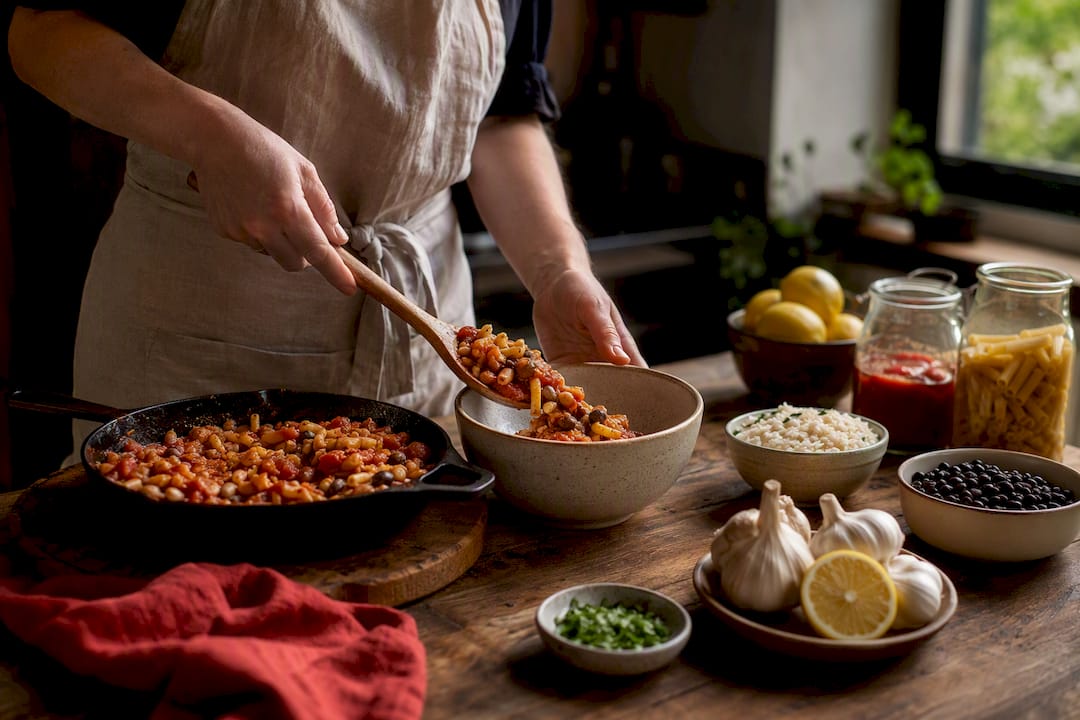
A pantry challenge meal plan turns whatever’s already in your cabinets, fridge, and freezer into a full week (or month) of meals, with little to no fresh grocery shopping. This guide gives you the exact workflow to build one, a copyable 7-day plan, over 40 pantry meal ideas sorted by staple, and the storage know-how to keep it all safe.
TL;DR:
- A pantry challenge typically lasts 7 to 30 days and involves cooking mainly from existing supplies, with some allowances for perishables or small fresh buffers.
- Proper planning requires inventorying all food, prioritizing perishables, and choosing a few anchor recipes to maximize leftovers and reduce cooking time.
- Recipes can be adapted by swapping ingredients, focusing on staples like pasta, rice, beans, eggs, and canned fish to create versatile, low-cost meals.
- Storing and labeling frozen and perishable foods correctly prevents waste and helps maintain food safety during the challenge.
- Using dedicated apps or guides can streamline inventory management and meal planning, especially during tired or stressful days.
Table of Contents
- What Is a Pantry Challenge, and What Rules Should You Set?
- Why Bother With a Pantry Challenge?
- How Do You Prep Before You Start?
- Turning Your Inventory Into an Actual Meal Plan
- A Copyable 7-Day Pantry Challenge Meal Plan
- 40+ Pantry Meal Ideas Sorted by What You Already Have
- Substitutions, Storage, and Keeping Food Safe
- How Homecooked Supports a Pantry-First Plan
- What I’ve Learned From Running These Myself
- Homecooked: A Pantry-First Way to Plan Your Week
- Sources
- FAQ
What Is a Pantry Challenge, and What Rules Should You Set?
A pantry challenge is a set window of time where you cook almost entirely from what you already own, instead of restocking at the grocery store. Most people run one for 7 days, 14 days, or a full 30 days, and the timeframe you pick should match how deep your freezer and pantry actually are.
There isn’t one official rulebook, so you get to define the terms:
- Strict $0 challenge: no grocery spending at all, meals built purely from what’s on hand.
- Fresh buffer version: a small allowance, often $10 to $20 a week, for milk, eggs, or produce that spoils fast.
- Freezer-first rule: you commit to clearing out the freezer before touching pantry cans, since frozen food ties up the most money and space.
If you’re feeding toddlers or managing allergies, build in exceptions up front rather than mid-week. Fragile perishables (fresh dairy, greens, ground meat) usually need that small buffer to make the challenge sustainable.
Why Bother With a Pantry Challenge?
The core payoff is financial: meal planning and inventory discipline consistently help households spend less and throw away less food, according to guidance from registered dietitians at EatRight. You’re not buying duplicates of things you forgot you had, and nothing gets pushed to the back of the shelf until it’s unusable.
By the Numbers: Nutrition experts at EatRight frame consistent meal planning as one of the most effective tools for cutting food waste and grocery spending, precisely because it forces you to shop from your own shelves before adding anything new.
There’s a behavioral upside too. A pantry challenge trains you to rotate ingredients instead of hoarding them, and nutrition experts describe this kind of kitchen discipline as a habit that sticks well past the challenge itself. Success after one round usually looks like a noticeably lighter freezer, a shorter grocery receipt, and a mental list of “anchor recipes” you’ll repeat because they worked.
How Do You Prep Before You Start?
Don’t skip the setup. A rushed start is the number one reason pantry challenges fall apart by day three.
- Inventory everything. Open the fridge, freezer, and every pantry shelf, and write down what you find, quantity included. Nutrition planning your meals before you shop, and that starts with knowing exactly what you’re planning around.
- Pick your timeframe and buffer. Seven days is plenty for a first attempt. If you have young kids or dietary restrictions, a $10 to $20 fresh buffer keeps the week realistic instead of miserable.
- Flag your perishables first. Anything with a near-term expiration date becomes your priority ingredient, not an afterthought.
- Label and date what’s left. A piece of tape and a marker turn “mystery bag in the freezer” into “ground turkey, frozen March 2.” That alone prevents a surprising amount of waste.
Pro Tip: Take a phone photo of your full inventory list before you start cooking. It’s faster to scroll through than to keep walking back to the fridge, and it doubles as your grocery list template for next time.
Turning Your Inventory Into an Actual Meal Plan
Once you know what you have, the workflow is the same whether you’re planning 7 days or 30.
- Build around the protein plus grain plus vegetable template. Every meal starts as those three slots, then gets flavored differently so it doesn’t feel repetitive.
- Pick two or three anchor recipes for the week. The Kitchn’s meal-planning guidance points to this as the single biggest time and money saver: recipes that share ingredients and produce leftovers you can repurpose, rather than five unrelated dishes that each need their own shopping list.
- Design leftovers on purpose. Cook a bigger batch of rice or beans Monday, and Wednesday’s dinner is half done already.
- Cook longest items first. Harvard’s Nutrition Source recommends starting weekend prep with whatever takes the most time (dried beans, roasts, grains), so your weeknights are mostly reheating and assembling.
- Fill gaps with quick pantry meals. Reserve one or two nights for a fast egg dish or canned-fish salad when you don’t feel like cooking a full anchor recipe.
This is also where a pantry planning app can help by turning a photographed shelf inventory into a matched meal plan far faster than doing it by hand on a Sunday night.
A Copyable 7-Day Pantry Challenge Meal Plan
This week assumes a moderately stocked pantry and a small fresh buffer for eggs, milk, and one bag of greens.
- Monday: Oatmeal with pantry nut butter / canned tuna salad on crackers / rice and beans with whatever frozen veg you have
- Tuesday: Scrambled eggs and toast / leftover rice and beans wrapped in a tortilla / pasta with canned tomatoes and frozen spinach
- Wednesday: Yogurt or eggs / leftover pasta / one-pot chicken (or canned chickpea) and rice soup
- Thursday: Toast with pantry jam / soup leftovers / baked potatoes topped with canned chili
- Friday: Eggs and pantry vegetables / leftover baked potato mash into hash / stir-fried rice with frozen veg and soy sauce
- Saturday: Pancakes from pantry flour / quesadillas with canned beans and cheese / bibimbap-style rice bowl using whatever’s left in the fridge, similar to this bibimbap recipe
- Sunday: Leftover buffet, clearing out anything still sitting in containers, plus a batch-cook session for next week
| Category | Item | Approximate Cost |
|---|---|---|
| Fresh buffer | Eggs, milk, one bag of greens | $10 to $20 total |
| Pantry staples used | Rice, canned beans, canned tomatoes, pasta, canned tuna | Already owned |
| Freezer staples used | Frozen vegetables, one protein | Already owned |
Weekend prep should focus on cooking a big pot of rice, a pot of beans if they’re dried, and roasting whatever frozen vegetables you have on hand. That single prep session is what makes Monday through Wednesday nearly effortless.
40+ Pantry Meal Ideas Sorted by What You Already Have
Organizing ideas by staple, rather than by meal type, makes it faster to scan your shelf and match a template to what’s actually there. Each one follows a simple formula you can adjust based on what’s missing.
Pasta base: pasta plus canned tomatoes plus garlic; pasta plus canned tuna plus lemon and oil; pasta plus frozen peas and cream cheese; pasta bake with any melty cheese and canned beans.
Rice base: fried rice with soy sauce, egg, and frozen veg; rice and canned black beans with salsa; rice pudding with pantry milk and cinnamon; rice bowl topped with canned salmon.
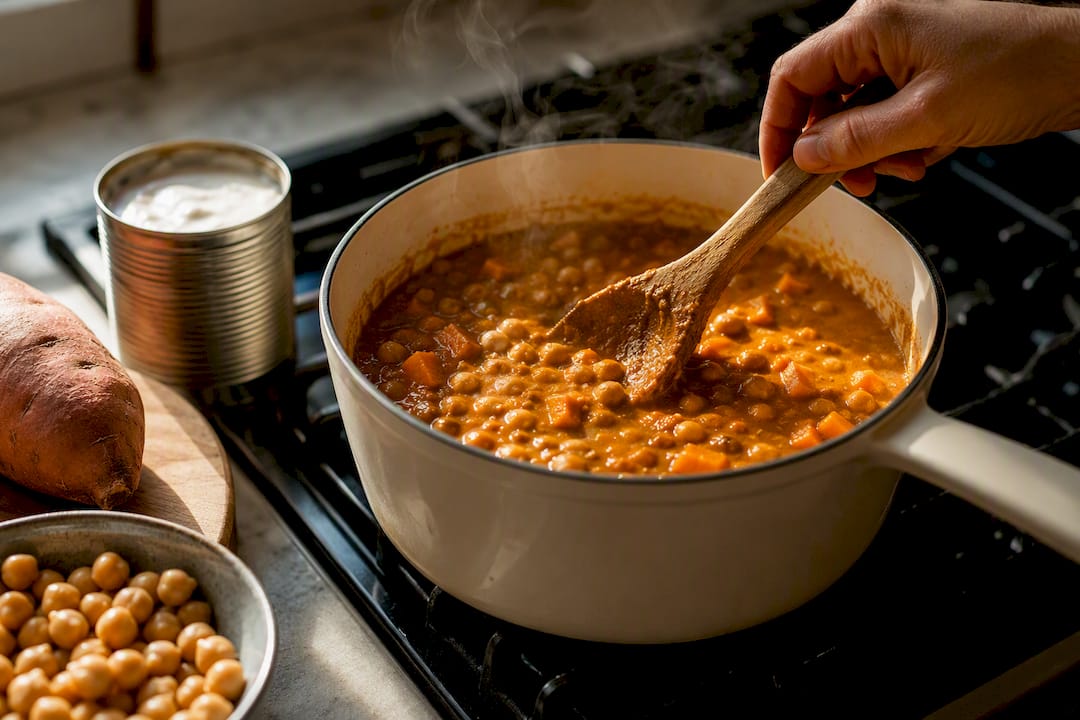
Beans and legumes: chickpea curry with canned coconut milk and curry powder; white bean soup with canned tomatoes; lentil stew with whatever root vegetable is left; bean and cheese quesadillas.
Eggs: shakshuka with canned tomatoes; fried rice topper; frittata with any vegetable scraps; egg salad sandwich if bread’s still good.
Canned fish: tuna melt; salmon patties with breadcrumbs; sardines on toast with mustard; tuna pasta salad.
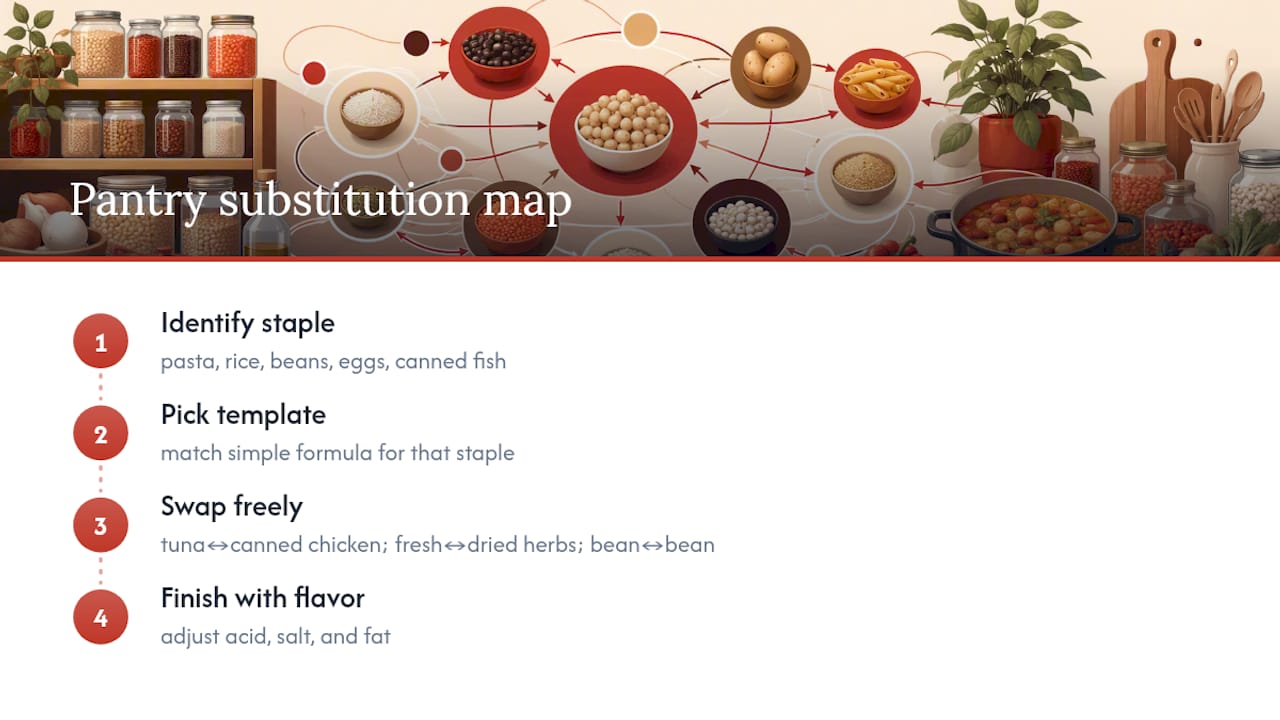
If a recipe calls for something you don’t have, swap freely: canned chicken for tuna, any dried herb for fresh, one canned bean for another. Flavor comes from acid, salt, and fat more than from the specific ingredient in the recipe title.
Substitutions, Storage, and Keeping Food Safe
A few smart swaps and clear timelines make the difference between a smooth pantry challenge and a wasted one.
- Common substitutions: lemon juice or vinegar for citrus, any dried herb for fresh, canned coconut milk for cream, broth in place of wine.
- Refrigerator temperature: keep your fridge at 40°F or lower. Harvard’s Nutrition Source flags this as the baseline for limiting spoilage on anything you’ve prepped ahead.
- Label and date everything you freeze. Cooked grains and beans generally hold in the freezer for a few months; frozen vegetables keep even longer.
- Salvage near-expiry produce fast. Wilting greens go into soup, soft vegetables get roasted or blended, and bruised fruit goes into a pantry crumble or smoothie.
- When in doubt, toss it. Off smells, visible mold, or slimy texture on anything perishable is a discard, not a “cook it hot enough” situation.
How Homecooked Supports a Pantry-First Plan
Homecooked publishes pantry-focused guides built around exactly this workflow, including a pantry meals recipe collection with two dozen ways to turn staples into dinner.
- Browse recipes sorted by ingredient when you need to build a meal around one specific item you’re trying to use up.
- Pantry tracking features can help skip the manual inventory step and speed up converting what’s on your shelf into a matched plan.
- Start with a pantry staples checklist before your first challenge, to get a sense of what you have on hand.
What I’ve Learned From Running These Myself
Family buy-in makes or breaks a pantry challenge more than any recipe does. Kids notice repetition fast, so I rotate sauces and toppings before I rotate the base ingredients. Start with a short 3 to 7 day trial before committing to 30. It’s easier to finish, and it still shows you where your real pantry gaps are.
— 0xmaglev
Homecooked: A Pantry-First Way to Plan Your Week
Homecooked is built around the exact problem this guide walks through: turning what’s already in your kitchen into a real plan, without spending an evening doing the math yourself. Instead of manually matching proteins to grains to vegetables, the app takes your pantry inventory and personal health goals and builds guided recipes around them, with automated shopping lists that only fill in what’s actually missing.
That matters most in the exact moments a pantry challenge gets hard: day four, when you’re tired of thinking, and the freezer still has three mystery bags in it. Homecooked’s step-by-step guided recipes come with integrated timers, so a weeknight dinner built from odds and ends still feels manageable instead of improvised. If you want a template for what the app can generate, look at a pantry-friendly option like this cottage cheese protein bowl or a comfort bake like apple pie built from basic staples.
Start a free trial at Homecooked and let the app turn your next inventory check into a finished week of meals.
Sources
- 3 strategies for successful meal planning — EatRight
- Meal prep — Harvard T.H. Chan School of Public Health Nutrition Source
- Nutrition
- The beginner’s guide to meal planning — The Kitchn
FAQ
What Is the 5-4-3-2-1 Rule for Groceries?
It’s a shorthand some meal planners use to balance a cart: roughly 5 vegetables, 4 fruits, 3 proteins, 2 grains, and 1 treat or extra. Definitions vary by source, so treat it as a loose ratio rather than a fixed formula.
What Is the 3-3-3 Rule for Meal Prep?
It generally refers to prepping 3 proteins, 3 sides, and 3 sauces or flavor bases in one session, then mixing and matching them into different meals all week.
Is There a Free App That Tracks Pantry Inventory for Meal Planning?
Several apps offer some form of free pantry tracking, and Homecooked includes pantry tracking alongside guided recipes and shopping list automation as part of its plan. Check the current pricing and trial details directly on the site.
How Do You Eat on $20 a Week for Food?
Lean almost entirely on pantry staples like rice, dried or canned beans, pasta, and eggs, and reserve the $20 for a small fresh buffer covering milk, eggs, or produce. Public-health meal-planning guidance backs this approach: planning around what you already have is one of the most reliable ways to cut a grocery budget without cutting nutrition.