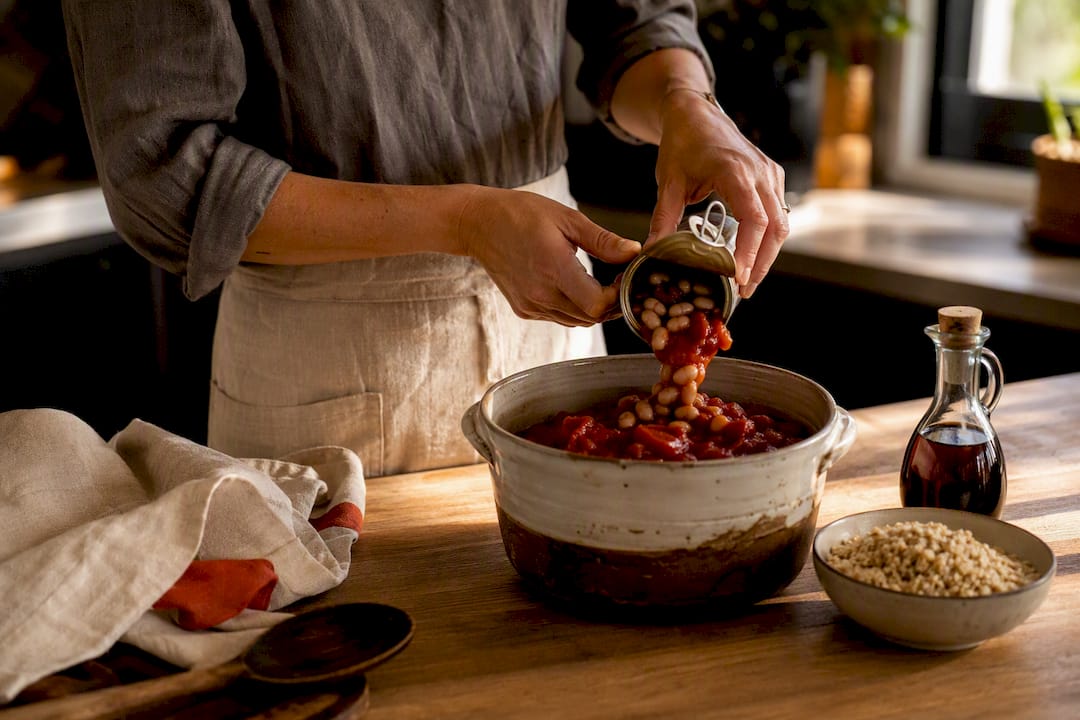
Pantry-first cooking means starting every meal with what’s already on your shelves and in your freezer, then buying only the small extras needed to finish the dish. It flips the usual grocery-first habit on its head, and the payoff shows up fast: lower grocery bills, less wasted food, and a weeknight dinner routine that stops feeling like a scavenger hunt. Try it tonight with three items already in your cabinet: a can of beans, a grain, and one sauce.
TL;DR:
- Using pantry staples reduces grocery spending by focusing on small, frequent restocks of versatile ingredients like grains, canned proteins, and sauces.
- Stocking frozen vegetables and portioned proteins extends pantry use, offering quick meal solutions even when fresh ingredients are unavailable or gone bad.
- Building meals with a simple formula—one protein, one grain, two vegetables, and one sauce—can make dinner preparation faster, easier, and less wasteful.
- Meal planning around what is already in your pantry minimizes duplicate purchases and encourages sustainable shopping by filling only essential gaps.
- Regularly rotating pantry items and organizing them into designated zones helps maintain freshness, reduce waste, and streamline weeknight cooking.
Table of Contents
- Why Pantry-First Cooking Is Catching On
- How To Build A Meal From Pantry Staples
- The Freezer Is Part Of Your Pantry, Too
- How Pantry-First Cooking Changes Your Grocery List
- Your Pantry Staples Checklist And Zone Layout
- Four Pantry-First Meals You Can Make Tonight
- How Homecooked Fits Into Pantry-First Cooking
- What A Week Of Pantry-First Cooking Actually Teaches You
- Let Homecooked Handle The Pantry Math
- Sources
- FAQ
Why Pantry-First Cooking Is Catching On
Grocery prices keep climbing, and most households are quietly losing money to food that never gets eaten. The USDA reports that food loss and waste remain a persistent problem in American kitchens, driven largely by forgotten produce, duplicate purchases, and meals planned around ingredients nobody ends up using. Pantry-first cooking attacks that waste at the source, by putting what you own at the center of the decision instead of what’s trending on a recipe app.
The habit also fixes a psychological problem: decision fatigue. When you shop before you plan, you’re guessing what you’ll want to eat in five days. When you cook from what’s already there, the guesswork disappears.
Here’s what changes once you flip the order:
- Fewer impulse buys, because you’re not wandering the store hungry and unplanned
- Fewer duplicate jars and cans crowding your shelves
- Less mental energy spent deciding “what’s for dinner” every single night
None of that requires boring food. A can of chickpeas, a spoon of curry paste, and coconut milk make a dinner as satisfying as anything ordered in, and it uses three pantry staples you probably already own.
How To Build A Meal From Pantry Staples
The Pantry-First Method developed by The Colorful Pantry breaks meal-building into a repeatable formula: pick a meal style, then layer in one protein, one grain or starch, two vegetables, and one sauce to tie it together. Once you know the shape, you can fill it with almost anything.
Three formats cover most weeknights:
- Bowl: rice or quinoa, canned beans or shredded chicken, roasted or frozen vegetables, a drizzle of tahini or salsa
- Stir-fry: any grain, a protein cut small, frozen veggies straight from the bag, soy sauce and vinegar for the finish
- Handheld: tortillas or bread, canned tuna or beans, pickled or sautéed vegetables, a mayo-based or hot sauce spread
Apply it tonight in four steps: pick your format, grab one protein and one grain from the shelf, add two vegetables (fresh, frozen, or canned), then finish with a sauce that brings acid, salt, or spice.
Pro Tip: Blandness usually comes from skipping the acid, not the seasoning. A splash of vinegar or a squeeze of lime at the end wakes up almost any pantry dish more than an extra pinch of salt.
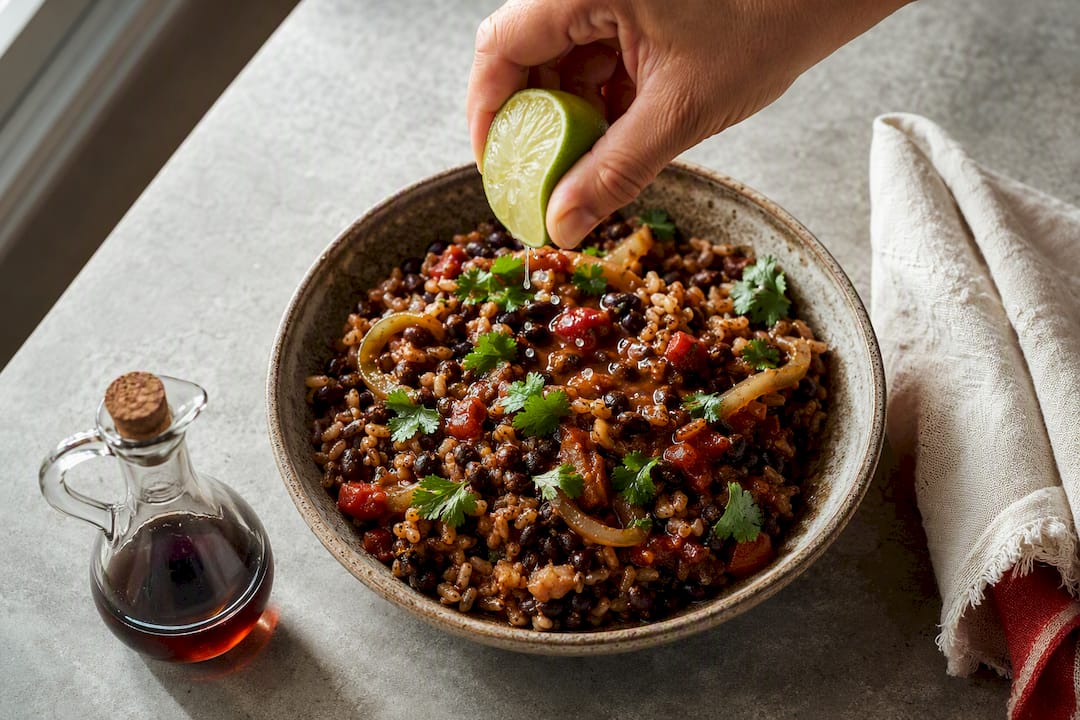
Serious Eats’ library of pantry-based recipes shows how few ingredients it actually takes to build something with real flavor.
The Freezer Is Part Of Your Pantry, Too
Treat your freezer as an extension of your shelves, not a separate appliance for leftovers you’ll forget about. Frozen vegetables, portioned proteins, and pre-cooked grains buy you flexibility on nights when fresh produce has already gone bad or dinner needs to happen in fifteen minutes.
Stock these regularly:
- Frozen peas, corn, broccoli, and stir-fry blends
- Portioned chicken thighs or ground meat, wrapped flat and labeled
- Cooked rice or grains, frozen in single-serving bags
- Sauce bases like pesto or tomato sauce, frozen in ice cube trays for small portions
Label everything with the date and portion size. Harvard’s meal-prep guidance recommends pressing bags flat before freezing, which speeds up thawing and makes stacking easier. For quick weeknight rescue, skip the thaw entirely: roast frozen vegetables straight from the bag, sauté frozen proteins in a hot pan, or steam frozen grains in a covered skillet with a splash of water.
How Pantry-First Cooking Changes Your Grocery List
Once your pantry drives the menu, grocery shopping shrinks down to filling small gaps instead of restocking everything. A short routine before every shopping trip keeps this from sliding back into old habits:
- Check what’s perishable and needs to be used soon
- Note which staples are running low, not gone
- Write a short list of only the fresh items needed to finish a meal
If your pantry already has rice and canned black beans, your gap-fill list might be nothing more than fresh cilantro, a lime, and a tub of yogurt. That’s the entire trip.
This shift also changes what you buy in the first place. Instead of single-use specialty sauces, pantry-first shoppers lean toward versatile staples like broth, canned tomatoes, soy sauce, vinegar, and bouillon, items that flex across a dozen different meals instead of sitting half-used in the back of the fridge. Turning a finished meal plan into a tight, waste-free list is its own skill, and building a smart grocery list from what you already planned makes the gap-fill approach stick.
Your Pantry Staples Checklist And Zone Layout
A well-stocked pantry isn’t about volume, it’s about variety across a few key categories. Keep these on hand and dinner is rarely more than fifteen minutes from ready:
- Grains: rice, pasta, oats, tortillas
- Canned protein: tuna, chicken, chickpeas, black beans
- Legumes and lentils: dried or canned, for bulk and protein
- Aromatics: onions, garlic, ginger
- Sauces and condiments: soy sauce, vinegar, mustard, hot sauce
- Fats: olive oil, butter, neutral cooking oil
- Eggs: the fastest protein in the kitchen
Organize your shelves into five zones so nothing gets buried: everyday grab-and-go items at eye level, baking and grains together, canned and jarred goods grouped by type, sauces and condiments near the stove, and a labeled freezer zone for portioned staples. The Colorful Pantry’s zone-based layout makes the habit sustainable instead of a one-time cleanup project.
Rotate stock using first-in, first-out order, and label open containers with the date. The USDA’s food waste guidance points to forgotten, unlabeled food as one of the biggest drivers of waste in a typical kitchen, and a five-second label fixes most of it. For a deeper breakdown of what to stock and where, the complete pantry staples checklist covers priority items room by room.
Four Pantry-First Meals You Can Make Tonight
- Chickpea curry bowl: canned chickpeas, coconut milk or broth, curry paste, frozen mixed vegetables, served over rice
- Pantry pasta: canned tomatoes, garlic, olive oil, and a finishing squeeze of lemon or a handful of parmesan
- Fried rice: leftover rice, a couple of eggs, frozen peas and carrots, soy sauce and a drizzle of sesame oil
- Sheet-pan veg and grain bowl: any roasted vegetable, a cooked grain, and a quick tahini-lemon sauce whisked together in two minutes
Each one leans on the same base-plus-support formula from earlier, just dressed differently. Browse more combinations by ingredient in the pantry meal recipe collection, or start from whatever protein you already have using recipes built around what’s on hand.
How Homecooked Fits Into Pantry-First Cooking
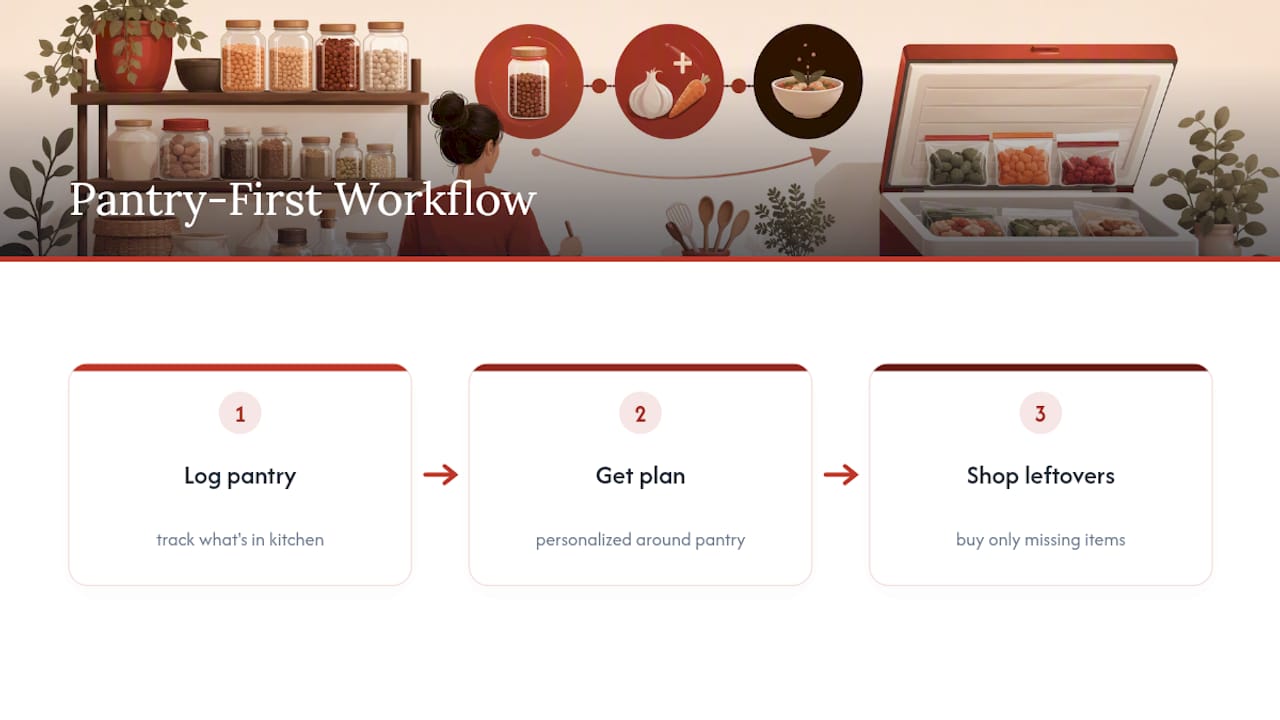
Homecooked’s pantry tracking keeps a running list of what’s actually in your kitchen, so your personalized meal plan gets built around ingredients you already own instead of a generic recipe pulled from nowhere. When something’s missing, the app converts the gap into a short, targeted shopping list rather than a full restock. The workflow is simple: log your pantry, get a plan shaped around it, then shop only for what’s left over.
What A Week Of Pantry-First Cooking Actually Teaches You
Try one “use-what-we-have” night a week for a month and track what changes: fewer store trips, less thrown-out produce, and a grocery total that creeps down. Anecdotal reports from home cooks suggest real savings show up fast once shopping starts filling gaps instead of restocking everything. Treat it as a flexible habit, not a rulebook, and it sticks.
— 0xmaglev
Let Homecooked Handle The Pantry Math
Homecooked gives you a more personalized starting point than a generic pantry-first checklist: it builds meal plans around your actual health goals and dietary preferences, then layers your pantry inventory on top so the plan reflects what you already own, not just what sounds good in theory.
Say your pantry has rice, canned black beans, and frozen corn logged in the app. This kind of planning turns that into a full meal, then flags only the two or three items you’re missing, like fresh cilantro or a lime, instead of handing you a generic grocery list built from scratch. You can see the format in action with a pantry-friendly dish like the cottage cheese protein bowl, or a step-by-step guided dinner like butadon, each built with integrated timers so nothing overcooks while you’re juggling sides. If pantry-first cooking is a habit you want to actually keep, start a plan at Homecooked and let the app track what’s on your shelves for you.
Sources
- U.S. Department of Agriculture — Food loss and waste FAQs
- Harvard T.H. Chan School of Public Health — Meal prep
- Pantry-first cooking is the simple trend that helps you save money and reduce waste — Creators / Yahoo
- What’s for Dinner? The Pantry-First Method for Real Life — The Colorful Pantry
FAQ
What is the 2-2-2 rule in cooking?
The 2-2-2 rule isn’t a formal pantry-first standard, and definitions vary depending on the source. A common version suggests planning around two proteins, two starches, and two vegetables you keep stocked, which lines up closely with the base-plus-support formula used throughout this guide.
What should be on a first pantry checklist?
Start with grains like rice and pasta, canned proteins such as tuna or chickpeas, legumes, aromatics like onion and garlic, a few versatile sauces, cooking fats, and eggs. That short list covers most meal styles without requiring a full grocery haul.
What are the 7 pantry zones?
Most pantry-first organizing methods use five to seven functional zones: everyday grab-and-go items, baking and grains, canned and jarred goods, sauces and condiments, a labeled freezer zone, and sometimes separate spice and snack sections depending on kitchen size. The exact number matters less than keeping similar items grouped and visible.
What’s the easiest meal for a beginner to cook from pantry staples?
Pantry pasta is one of the simplest starting points: canned tomatoes, garlic, olive oil, and pasta, finished with a squeeze of lemon or grated cheese. It uses ingredients most kitchens already have on hand.
Does Homecooked track pantry items automatically?
Homecooked lets you log pantry items so your personalized meal plans and shopping lists build around what you already own. Current features and pricing details are available directly on the Homecooked site.