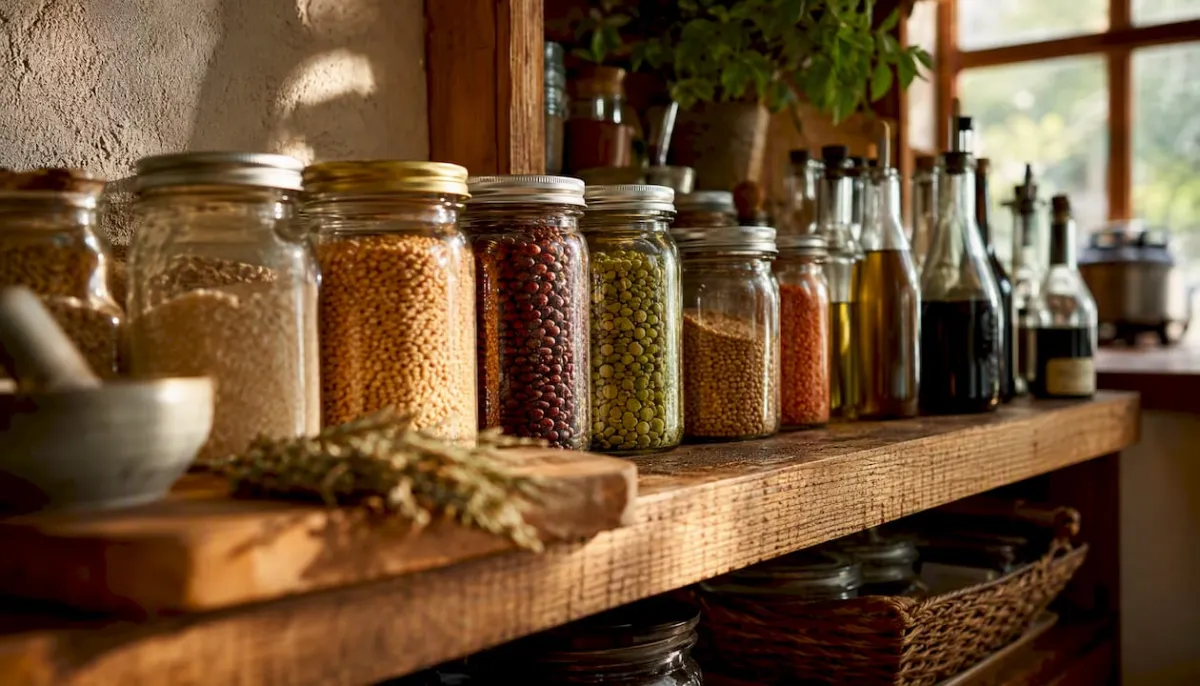
Here is the complete pantry staples list you can use right now. Print it, screenshot it, or pull it up at the store. These are the versatile, high-utility items that let you cook a real meal on a Tuesday night without a special shopping trip. According to Allrecipes’ comprehensive pantry guide, a well-stocked pantry spans six core categories: oils and fats, grains and legumes, canned goods, baking basics, spices, and condiments. Add fridge and freezer basics, and you have a kitchen that can handle almost anything.
TL;DR: A stocked pantry means fewer takeout orders, faster weeknight meals, and the confidence to cook from what you have. As Bon Appétit puts it, canned tomatoes, legumes, and grains function as a creative safety net — the foundation that lets you pivot to dozens of meals without stepping outside.
Quick pantry checklist by category:
- Oils and fats: neutral oil, extra-virgin olive oil, unsalted butter
- Vinegars: white distilled, apple cider, red-wine or balsamic, rice vinegar
- Grains and pasta: long-grain white rice, brown rice, oats, pasta (two shapes), quinoa
- Dried legumes/canned beans: lentils, chickpeas, black beans, kidney beans
- Canned goods: crushed tomatoes, tomato paste, low-sodium broth, canned tuna
- Baking: all-purpose flour, baking powder, baking soda, cornstarch, granulated sugar, brown sugar, honey
- Spices: kosher salt, black peppercorns, garlic powder, paprika, cumin, cinnamon, oregano
- Condiments: soy sauce or tamari, hot sauce, mustard, ketchup, mayonnaise
- Snacks/breakfast: rolled oats, nut butter, crackers, nuts, dried fruit
- Fridge basics: eggs, butter, hard cheese, plain yogurt, onions, garlic, lemons
- Freezer basics: frozen vegetables, berries, sliced bread, chicken breasts, ground meat
Table of Contents
- What oils and vinegars should you keep in your pantry?
- Which grains, pasta, and dried legumes belong in your pantry?
- What canned and jarred goods should every pantry include?
- What baking staples do you actually need?
- Which spices and dried herbs give you the most range?
- What condiments and umami boosters should you stock?
- What snacks and breakfast items pull double duty in cooking?
- What refrigerator basics keep your pantry meals going?
- What freezer essentials extend your pantry’s reach?
- How should you store pantry staples to minimize waste?
- What quick meals can you make from pantry staples right now?
- Your printable pantry shopping checklist
- How do you personalize your pantry list and keep it stocked?
- Key Takeaways
- Why a small, useful pantry beats a big, impressive one
- Homecooked turns your pantry list into personalized meal plans
- Sources and further reading
What oils and vinegars should you keep in your pantry?
Three oils cover nearly every cooking need. A neutral oil (avocado, grapeseed, or vegetable) handles high-heat searing and frying. Extra-virgin olive oil goes on salads, finishes soups, and works for low-heat sautéing. Toasted sesame oil is optional but earns its shelf space fast — a few drops transform a grain bowl or stir-fry.
For vinegars, four bottles handle the full range: white distilled for pickling and cleaning, apple cider for dressings and marinades, red-wine or balsamic for richer dishes, and unseasoned rice vinegar for Asian-inspired cooking.
- Neutral cooking oil (avocado, grapeseed, or vegetable)
- Extra-virgin olive oil
- Toasted sesame oil (optional but versatile)
- White distilled vinegar
- Apple cider vinegar
- Red-wine or balsamic vinegar
- Unseasoned rice vinegar
Pro Tip: Store olive oil away from heat and light — a cabinet near the stove is the worst spot. Toasted sesame oil and any nut oils go in the fridge after opening; they turn rancid fast at room temperature. Buy olive oil in medium bottles (500 ml) unless you cook with it daily, since flavor degrades after opening.
Which grains, pasta, and dried legumes belong in your pantry?
Long-grain white rice is the workhorse — it cooks in 18 minutes and pairs with almost everything. Brown rice and quinoa add nutrition and variety; both keep for up to a year in a sealed container. Rolled oats pull double duty as breakfast and a binder in meatballs or crumble toppings.
For pasta, keep one long shape (spaghetti or linguine) and one short shape (penne or rigatoni). They are not interchangeable in every dish, and having both means you can match the sauce properly. Couscous and polenta round out the grain shelf nicely — both cook in under 10 minutes.
- Long-grain white rice
- Brown rice
- Quinoa
- Rolled oats
- Spaghetti or linguine
- Penne or rigatoni
- Couscous or polenta (optional)
- Red or green lentils
- Dried chickpeas or black beans
Dried legumes are cheaper per serving than canned, but they need soaking and 45–90 minutes of cooking. A practical rule: keep dried lentils (no soaking needed) and canned chickpeas and black beans for quick meals. Use dried beans when you have time to plan.
What canned and jarred goods should every pantry include?
Canned tomatoes are the single most versatile pantry item you can own. Crushed tomatoes build pasta sauces, soups, and braises. Tomato paste adds deep, concentrated flavor in a tablespoon. Keep both. Food Network’s pantry checklist highlights these alongside low-sodium broth and canned fish as the backbone of last-minute family meals.
- Crushed tomatoes (cans, keep multiple)
- Tomato paste (small cans or tube)
- Canned chickpeas, black beans, and white beans
- Low-sodium chicken or vegetable broth
- Canned tuna or salmon in water or olive oil
- Chipotles in adobo (smoky heat for sauces and marinades)
- Jarred roasted red peppers
- Olives and capers
- Salsa
When choosing canned goods, look for low-sodium or no-salt-added versions of beans and broth — you can always add salt, but you cannot take it out. Whole canned tomatoes give you more control than pre-seasoned varieties; crush them yourself in the pot.
What baking staples do you actually need?
Even if you rarely bake, a small baking kit earns its place. All-purpose flour thickens sauces and gravies. Cornstarch makes a cleaner, glossier thickener for stir-fry sauces. Baking powder and baking soda together cover pancakes, quick breads, and emergency muffins.
- All-purpose flour
- Baking powder
- Baking soda
- Cornstarch
- Granulated white sugar
- Brown sugar
- Powdered sugar (optional)
- Honey
- Pure maple syrup
- Pure vanilla extract
- Active dry yeast (optional, for bread bakers)
Brown sugar and honey do more than sweeten desserts. Brown sugar balances acidity in tomato sauces. Honey glazes roasted vegetables and finishes salad dressings. Keep small quantities of each — a 2 lb bag of flour and a small jar of honey go a long way before they need replacing.
Which spices and dried herbs give you the most range?
A compact spice kit of 12–15 items covers global cooking styles far better than a 40-jar collection you rarely touch. Start with the high-frequency items and build from there.
- Kosher salt (the everyday cooking salt)
- Whole black peppercorns (grind fresh for best flavor)
- Garlic powder
- Onion powder
- Sweet paprika
- Smoked paprika
- Ground cumin
- Dried oregano
- Dried thyme
- Ground cinnamon
- Red pepper flakes
- Bay leaves
- Whole nutmeg (grate fresh; lasts years)
For quality spice blends that expand your range quickly, BAM Spices offers a solid selection of single-origin and blended options worth exploring.
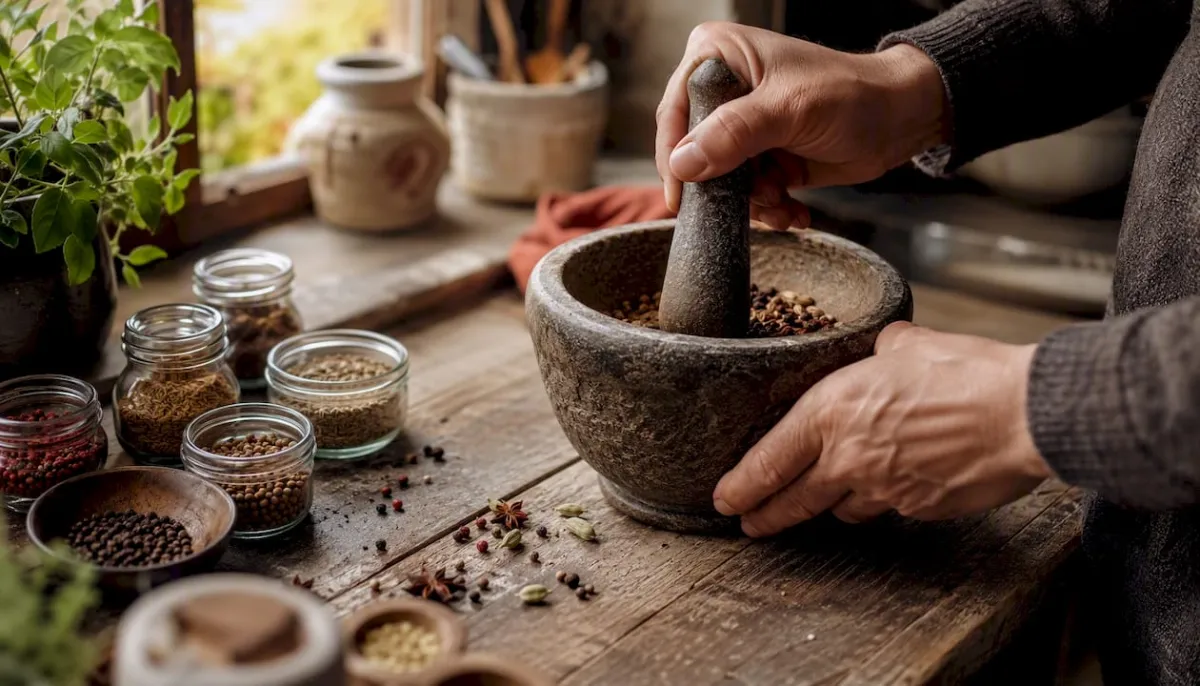
Pro Tip: Ground spices lose potency after 12–18 months. If you cook a spice fewer than twice a month, buy the smallest jar available. Whole spices (peppercorns, cumin seeds, coriander) last 3–4 years and taste noticeably brighter when freshly ground. A small mortar and pestle handles the job in 30 seconds.
What condiments and umami boosters should you stock?
Condiments are where a pantry goes from functional to genuinely exciting. Soy sauce or tamari (for gluten-free households) adds salt and depth to everything from marinades to scrambled eggs. Fish sauce is the umami engine in Southeast Asian cooking — a few drops in a pasta sauce or soup adds a savory backbone most people cannot identify but everyone notices.
- Soy sauce or tamari (tamari is gluten-free)
- Hot sauce (Tabasco, Cholula, or your preference)
- Dijon mustard
- Ketchup
- Mayonnaise (refrigerate after opening)
- Worcestershire sauce
- Fish sauce
- Miso paste (white or red; refrigerate)
- Concentrated bouillon base or paste
- Tahini
- Jarred pesto
Miso paste and tahini both refrigerate after opening and last months. Pesto from a jar works as a pasta sauce, a pizza base, or a sandwich spread. Worcestershire and fish sauce are interchangeable in many savory applications — Worcestershire works for those avoiding fish.
What snacks and breakfast items pull double duty in cooking?
The snack shelf is more useful than it looks. Rolled oats go into overnight oats, pancake batter, and crumble toppings. Crackers blitzed in a food processor make a fast breadcrumb coating for baked fish or chicken. Nut butters thin with soy sauce and lime juice into a quick peanut sauce for noodles.
- Rolled oats
- Nut butter (peanut, almond, or sunflower seed)
- Whole-grain crackers
- Popcorn kernels
- Nuts (almonds, walnuts, cashews)
- Seeds (pumpkin, sunflower, sesame)
- Dried fruit (raisins, apricots, cranberries)
- Granola or whole-grain cereal
Store nuts and seeds in the fridge or freezer if you buy in bulk. At room temperature, shelled nuts go rancid within a few months — the fridge extends that to about a year.
What refrigerator basics keep your pantry meals going?
The fridge items below are the bridge between dry pantry staples and a finished plate. Eggs alone can become a meal in 10 minutes. A wedge of Parmesan grated over pasta, soup, or roasted vegetables adds more flavor per gram than almost any other ingredient.
- Eggs
- Unsalted butter
- Plain yogurt (Greek or regular)
- Parmesan wedge or other hard cheese
- Milk or shelf-stable plant-based milk
- Onions
- Garlic
- Lemons and limes
- Carrots
- Potatoes
- Kimchi or pickles (fridge-stable flavor boosters)
One storage note worth knowing: potatoes, onions, and garlic each need slightly different conditions and should not be stored together. Onions release gases that accelerate potato sprouting. Keep them in separate cool, dark spots with good airflow.
What freezer essentials extend your pantry’s reach?
A stocked freezer turns a sparse pantry into a full week of meals. Frozen vegetables (peas, corn, edamame, spinach) are nutritionally comparable to fresh and cook in minutes. Frozen berries go straight into oatmeal, smoothies, or a quick compote.
- Frozen vegetables (peas, corn, edamame, broccoli, spinach)
- Frozen berries
- Sliced bread (freeze immediately after purchase)
- Chicken breasts or thighs (portioned and labeled)
- Ground beef or turkey (portioned in 1 lb packs)
- Pizza dough or puff pastry
- Single-serve portions of homemade stock or broth
Bon Appétit recommends slicing bread before freezing so you can pull a single slice and toast it directly from frozen. Label proteins with the date and weight before freezing — thawing a mystery bag at 11 PM is a problem you can avoid entirely.
How should you store pantry staples to minimize waste?
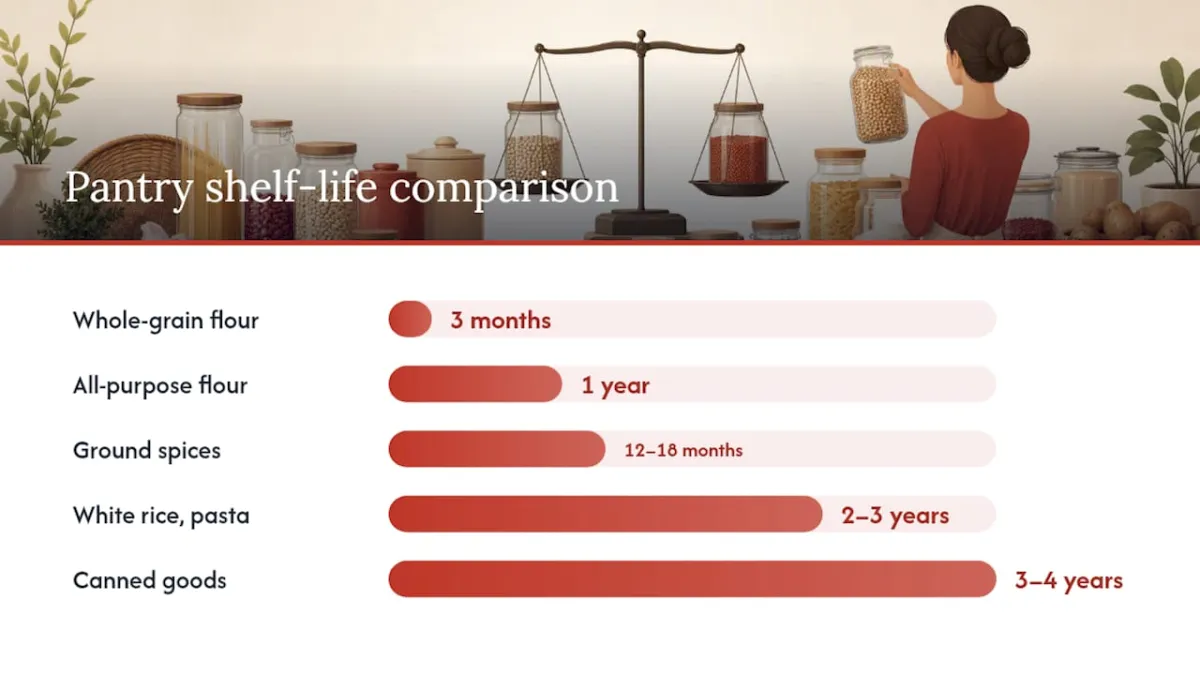
Good storage is what separates a pantry that works from one that wastes money. The table below gives approximate shelf-life windows for major categories under proper storage conditions.
| Category | Pantry shelf life | Notes |
|---|---|---|
| White rice, pasta | 2–3 years | Airtight container; away from moisture |
| Whole-grain flour | 3 months | Refrigerate or freeze for longer life |
| All-purpose flour | 1 year | Cool, dry, sealed container |
| Ground spices | 12–18 months | Away from heat and light |
| Whole spices | 3–4 years | Sealed jar; grind as needed |
| Canned goods | 3–4 years | Check for dents or bulging lids |
| Opened condiments | 1–12 months | Refrigerate; check label for specifics |
| Nuts (shelled) | 3 months pantry; 1 year fridge | Fridge or freezer for bulk quantities |
| Frozen proteins | 3 months | Label with date; use oldest first |
Organization basics: use the first-in/first-out rule — new cans go behind older ones. Clear containers for bulk grains and legumes let you see what you have at a glance. Group your pantry into zones: baking (flour, sugar, leaveners), grains and pasta, canned goods, and sauces and condiments.
Pro Tip: Swap boxed broth for a concentrated bouillon base or paste. One small jar replaces six cartons, takes up almost no shelf space, and lets you dial in exactly how much flavor you want. UNL extension guidance specifically recommends this swap when shelf space is limited.
What quick meals can you make from pantry staples right now?
These pantry-first meal ideas use items from the checklist above. Each one notes the core ingredients and one optional add-on from the fridge or freezer.
- Apple cinnamon oatmeal: — rolled oats, cinnamon, honey, dried fruit. Add fresh apple slices if available.
Serious Eats’ roundup of last-minute pantry dinners includes pasta al tonno, mujaddara (lentils and rice), and black bean soup as reliable go-to meals built entirely from staples. For full recipes on any of these, the Homecooked weeknight meal collection has step-by-step guides.
Your printable pantry shopping checklist
Print this list or save it to your phone before your next store run. It mirrors the categories above and maps to standard supermarket aisles.
| Category | Typical store aisle |
|---|---|
| Oils, vinegars, condiments | Oils/condiments aisle |
| Grains, pasta, dried legumes | Dry goods / pasta aisle |
| Canned tomatoes, beans, broth | Canned goods aisle |
| Baking staples, sugars, sweeteners | Baking aisle |
| Spices and dried herbs | Spice aisle |
| Snacks, nut butters, oats | Snack / breakfast aisle |
| Eggs, butter, cheese, yogurt | Refrigerated / dairy section |
| Onions, garlic, lemons, potatoes | Produce section |
| Frozen vegetables, proteins, bread | Frozen foods aisle |
Printable checklist (one column, ready to print):
- [ ] Neutral cooking oil
- [ ] Extra-virgin olive oil
- [ ] Apple cider vinegar, rice vinegar, red-wine vinegar
- [ ] Long-grain white rice
- [ ] Pasta (one long, one short shape)
- [ ] Rolled oats
- [ ] Red lentils, canned chickpeas, canned black beans
- [ ] Crushed tomatoes (x2–3), tomato paste
- [ ] Low-sodium broth or bouillon base
- [ ] Canned tuna
- [ ] All-purpose flour, baking powder, baking soda, cornstarch
- [ ] Granulated sugar, brown sugar, honey
- [ ] Kosher salt, black peppercorns, garlic powder, paprika, cumin, cinnamon
- [ ] Soy sauce or tamari, hot sauce, Dijon mustard
- [ ] Nut butter, crackers, nuts
- [ ] Eggs, unsalted butter, Parmesan, plain yogurt
- [ ] Onions, garlic, lemons, potatoes, carrots
- [ ] Frozen vegetables, frozen berries, sliced bread
For dietary adjustments: swap soy sauce for tamari (gluten-free), use plant-based milk instead of dairy, and replace butter with a neutral oil or vegan butter. This Farm Girl Cooks’ printable pantry checklist offers a downloadable PDF version organized by the same categories if you prefer a formatted print layout.
How do you personalize your pantry list and keep it stocked?
The best pantry list is the one that matches what you actually cook. UNL extension guidance recommends tailoring your list to household consumption patterns rather than following a generic exhaustive checklist. Start with a utility-first subset: identify the five to eight meals your household eats most often, then stock backward from those recipes.
Personalization by cooking style:
- Asian-inspired cooking: — add fish sauce, rice vinegar, sesame oil, mirin, and gochugaru or chili paste.
For restock rhythm, a 2–4 person household generally needs a pantry check every 7–14 days. Darcy Baldwin at The Purposeful Pantry advises prioritizing items based on actual cooking habits to prevent waste — a principle that works better than restocking everything on a fixed schedule.
Pro Tip: Keep a running note on your phone (or use Homecooked’s automated list feature) to log items as they run low. A smart grocery list tied to your meal plan eliminates the “I thought we had cumin” problem entirely.
Key Takeaways
A stocked pantry built around versatile, high-utility staples lets you cook real meals on any weeknight without extra shopping trips.
| Point | Details |
|---|---|
| Start utility-first | Stock the items you actually cook with weekly before expanding to specialty ingredients. |
| Rotate stock consistently | Place new cans and jars behind older ones; check expiration dates every 2–3 months. |
| Freezer extends everything | Sliced bread, portioned proteins, and frozen vegetables turn a sparse pantry into a full week of meals. |
| Personalize by cooking style | Vegetarian, meat-focused, and Asian-inspired kitchens each need a different subset of the master list. |
| Homecooked automates the restock | Homecooked’s pantry tracking and automated shopping lists keep your staples current without manual checking. |
Why a small, useful pantry beats a big, impressive one
There is a version of pantry advice that tells you to own 60 spices, four types of vinegar, and specialty flours for every cuisine. That advice looks great in a magazine spread and produces a pantry you cannot actually navigate.
The checklist in this article is deliberately shorter than what most “complete pantry” guides recommend. The reason is simple: a jar of sumac you use twice a year is not a pantry staple — it is a specialty ingredient. The items listed here earn their space because they appear in multiple meals across multiple cuisines. Crushed tomatoes go into Italian pasta, Indian dal, Mexican shakshuka, and Moroccan chickpea stew. Cumin works in Mexican, Middle Eastern, Indian, and North African cooking. That cross-cultural utility is the actual test.
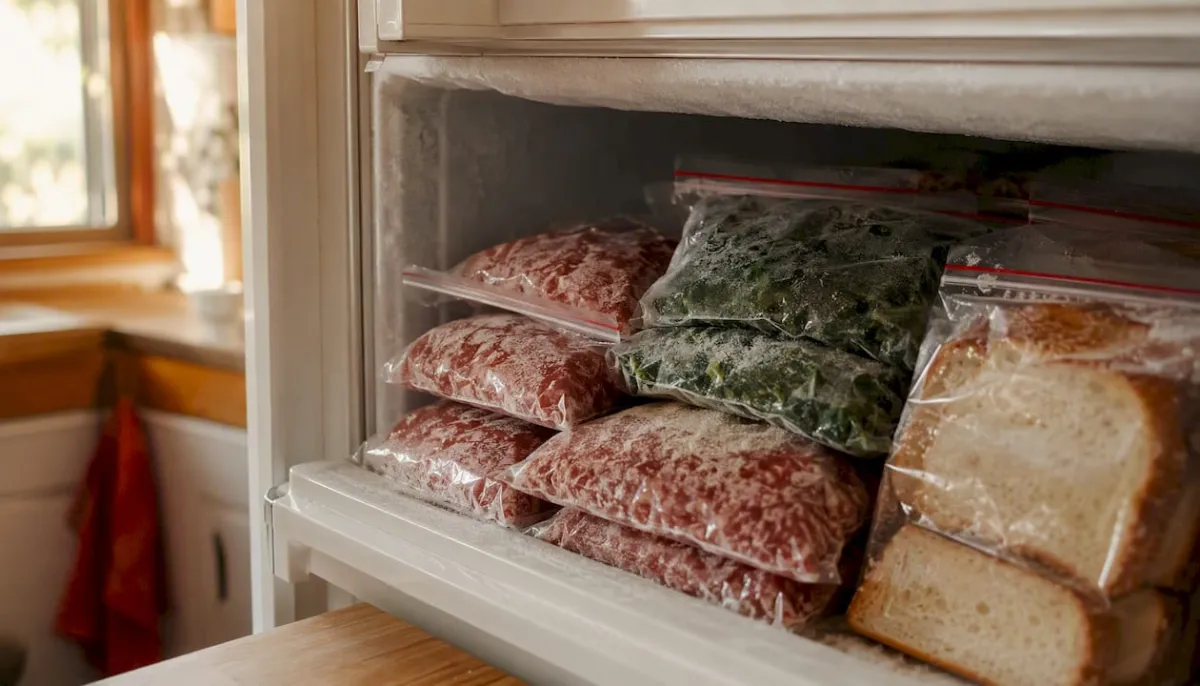
The other thing most pantry guides underestimate is the freezer. Treating the freezer as overflow storage misses its real function: it is a time machine. Sliced bread frozen the day you buy it tastes exactly the same six weeks later. Portioned ground meat thaws in cold water in 20 minutes. A bag of frozen spinach added to a chickpea stew at the last minute is indistinguishable from fresh. The freezer does not just extend shelf life — it changes how you shop and plan.
Start with the utility-first subset. Cook from it for two weeks. You will quickly discover which items you reach for constantly and which ones sit untouched. That feedback loop, not any published list, is what builds a pantry that actually works for your kitchen.
Homecooked turns your pantry list into personalized meal plans
You have the checklist. The next step is turning those staples into meals you actually want to eat, planned around your health goals and dietary preferences. That is exactly what Homecooked does.
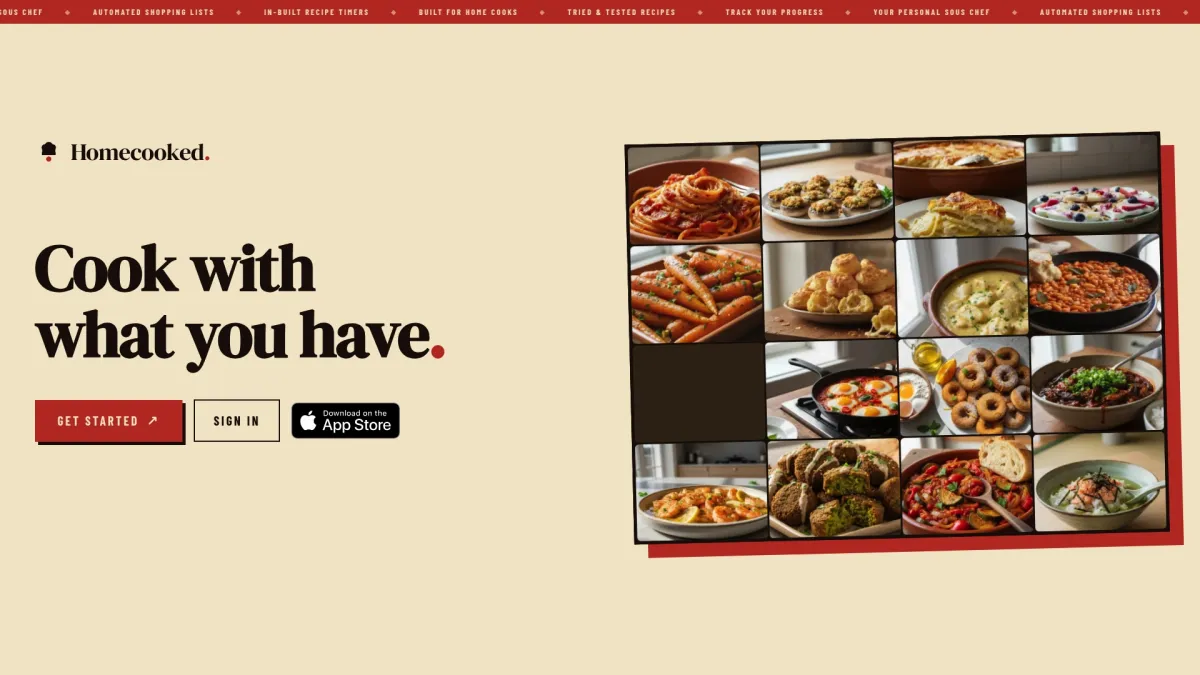
Homecooked’s pantry tracking feature logs what you have on hand, and its AI-powered meal planner builds a weekly plan around those ingredients — so you are not staring at a can of chickpeas wondering what to make. The automated shopping list fills in the gaps, and step-by-step guided recipes with integrated timers walk you through every dish. A Bibimbap recipe built from pantry rice, fridge eggs, and whatever vegetables you have on hand is a perfect example of how the app turns a basic stock-up into a restaurant-quality bowl at home. Start your free trial at Homecooked and see how fast a stocked pantry becomes a week of meals you are genuinely excited about.
Sources and further reading
| Source | What it covers | Why it’s useful |
|---|---|---|
| Allrecipes Pantry Guide | Category-organized baseline of pantry staples | Comprehensive starting point for oils, grains, canned goods, and spices |
| Food Network Essentials Checklist | Pantry, fridge, and freezer item lists | Practical item examples across all three storage zones |
| Bon Appétit Pantry Starter Kit | Foundation items and freezer/bread tips | Explains the creative safety-net role of core staples |
| UNL Food Basic Foods Checklist | Personalization and restock rhythm guidance | Extension-backed advice for tailoring lists to household habits |
| Serious Eats Pantry Dinners | 10 last-minute pantry-first dinner ideas | Reliable recipe examples built entirely from staples |
| This Farm Girl Cooks Printable List | Downloadable PDF pantry checklist by category | Ready-to-print format for shopping convenience |
| FruitsAndVeggies.org Storage Guide | Potato, onion, and garlic storage advice | Practical produce storage guidance to prevent sprouting |
| The Purposeful Pantry Checklist | Utility-first pantry stocking philosophy | Supports starting small and personalizing to cooking habits |