
Running out of paprika mid-recipe is frustrating, but you almost always have a workable swap on hand. Here are the fastest go-to substitutes by goal:
- Color only, no heat: Tomato powder at a 1:1 ratio. Beet powder works too, though it adds a faint sweetness.
- Sweet/neutral flavor: Piment d’Espelette at 1:1 is the closest match. Ancho powder or mild chili powder both work when extra savory notes are fine.
- Hot paprika: Cayenne at a reduced amount. Add a pinch of sugar to smooth the sharp heat.
- Smoked paprika: Chipotle powder at half the amount, or sweet paprika plus 1–2 drops of liquid smoke.
For a quick garnish swap (deviled eggs, roasted vegetables), tomato powder or Aleppo pepper keeps the color without changing the heat. For a stew where paprika is a background note, mild chili powder or ancho carries the flavor without derailing the dish.
Table of Contents
- How to pick the right paprika substitute for your recipe
- Best paprika alternatives organized by what you need
- How to replace smoked paprika specifically
- Options for cooks who avoid chilies or capsaicin
- Practical substitution ratios and a quick conversion guide
- Key Takeaways
- What actually surprised me about paprika substitutions
- Homecooked helps you track every swap you make
- Useful sources and further reading
How to pick the right paprika substitute for your recipe
The right swap depends on what paprika is actually doing in your dish. Before you reach for anything, run through this quick checklist:
- Is paprika the primary flavor? In goulash or chicken paprikash, paprika is the backbone. Substituting heavily will noticeably change the dish. Consider finding a recipe built around what you have instead.
- Is it a color agent? If paprika is mainly there for that red-orange hue, a color-first substitute like tomato powder or turmeric does the job without altering flavor much.
- Is it a garnish? Finishing spices like Aleppo or a light dusting of tomato powder work perfectly here.
- What’s your heat tolerance? Cayenne is far hotter than most paprikas. Chipotle is hotter than smoked paprika. Always start with less.
- Do you need smoke? Dry spice swaps rarely replicate smoke on their own. A small amount of liquid smoke or smoked salt is often more effective.
- Any chili or capsaicin restrictions? Tomato powder, turmeric, beet powder, and sumac are all capsaicin-free.
One more thing worth knowing: most grocery-store chili powder is a blend of cumin, garlic, and oregano. It works fine when you want added savory depth, but it is not a neutral stand-in for single-ingredient paprika.
Best paprika alternatives organized by what you need
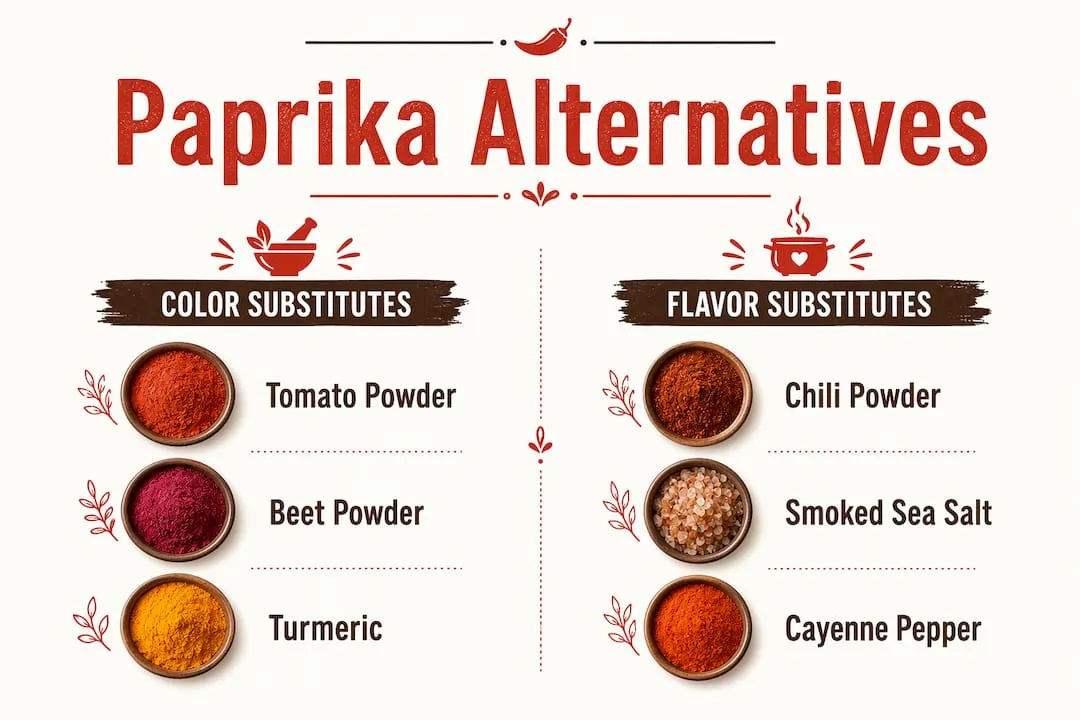
| Substitute | What it replaces best | Heat level | Flavor notes | Ratio (per 1 tsp paprika) | Best uses |
|---|---|---|---|---|---|
| Tomato powder | Color / no-heat | None | Tomatoey, mild | 1:1 | Rubs, sauces, garnish |
| Beet powder | Color / no-heat | None | Earthy, slightly sweet | 1:1 | Garnish, sauces |
| Turmeric | Color only | None | Earthy, slightly bitter | 1:1 | Stews, rice, sauces |
| Piment d’Espelette | Sweet / neutral | Mild | Fruity, close to sweet paprika | 1:1 | Any recipe calling for sweet paprika |
| Ancho powder | Sweet / mild heat | Mild | Earthy, slightly sweet, smoky | 1:1 | Rubs, stews, sauces |
| Aleppo pepper | Sweet / garnish | Mild–medium | Fruity, oily, mild | Less than the amount of paprika | Finishing, eggs, roasted veg |
| Mild chili powder | Sweet / neutral | Mild | Savory blend (cumin, garlic) | 1:1 | Stews, chili, rubs |
| Cayenne | Hot paprika | Hot | Sharp, clean heat | Much less than the amount of paprika | Rubs, sauces, stews |
| Gochugaru | Hot / color | Medium | Fruity, smoky-sweet | 1:1 | Stir-fries, rubs, kimchi |
| Chipotle powder | Smoked paprika | Medium–hot | Smoky, earthy, slightly sweet | Less than the amount of paprika | Rubs, marinades, stews |
| Smoked salt | Smoked paprika | None | Smoky, salty | Use sparingly | Finishing, rubs |
| Sumac | Non-chili depth | None | Tangy, fruity | 1/2:1 | Garnish, sauces, salads |
| Guajillo powder | Color / mild heat | Mild | Tangy, berry-like | 1:1 | Sauces, stews, moles |
| Liquid smoke | Smoked paprika | None | Intense smoke | 1–2 drops | Stews, marinades, rubs |
A few quick usage notes:
- Tomato powder is the most versatile color swap. Pair it with a tiny pinch of cumin or a touch of sugar to approximate sweet paprika’s full profile.
- Aleppo pepper is worth keeping on hand as a finishing spice. Its fruity, oily quality adds depth that plain paprika often does not deliver.
- Gochugaru brings vibrant color and a fruity heat that works beautifully in rubs and roasted vegetables, including Korean dishes.
- Guajillo powder is a flavorful option with a tangy, berry-like flavor, fitting well in sauces and slow-cooked stews.
How to replace smoked paprika specifically
Smoked paprika’s woody, campfire-like quality is hard to replicate with dry spices alone. The most reliable single-ingredient swap is chipotle powder, which delivers genuine smoke, though it runs hotter. Use about half the amount and taste as you go.
Smoked sea salt is a gentler option. It adds smoke without any heat, though it also adds saltiness, so reduce the salt elsewhere in the recipe.
The most controllable DIY approach: start with sweet paprika for color and body, then add 1–2 drops of liquid smoke for the woody note. This lets you dial in the smoke level precisely, which matters because liquid smoke concentrates fast.
Pro Tip: Test your liquid smoke blend on a small spoonful of the sauce or marinade before adding it to the whole batch. One drop too many and the smoke becomes the only thing you taste. Start with one drop, stir, taste, then decide.
- Chipotle powder: best when you want smoke plus some heat in a rub or braise.
- Smoked salt: best for finishing or when heat is off the table entirely.
- Sweet paprika + liquid smoke: best when you need precise control over both color and smoke intensity. A recipe like smoky eggplant bharta shows how a small amount of smoke transforms a dish without overpowering it.
Options for cooks who avoid chilies or capsaicin
If chilies are off-limits, whether due to allergy, sensitivity, or dietary preference, you still have solid options for both color and flavor.
Tomato powder is the go-to. It delivers paprika’s red-orange color at a 1:1 ratio without any capsaicin. It works well in rubs, sauces, and as a garnish. The flavor is mild and slightly savory, so it blends into most dishes without standing out. For concentrated tomato color, lycopene-rich tomato products show just how much pigment tomatoes carry naturally.
Turmeric gives you a yellow-gold color rather than red, but it is completely capsaicin-free and adds a gentle earthiness. Beet powder swings toward red-pink and brings a touch of sweetness, which works well in sauces but can read as odd in savory rubs if you use too much.
Sumac is worth considering when you want flavor depth without any pepper. Its fruity acidity adds complexity to savory dishes in a way that reads as brightness rather than heat. It is particularly good as a finishing spice on roasted vegetables or grain bowls.
Pro Tip: When using tomato powder or beet powder as a color substitute, add a small pinch of cumin or smoked salt to restore the savory depth that paprika normally provides. Color alone rarely tells the whole flavor story.
- Tomato powder: best all-around non-chili swap for color and mild flavor.
- Turmeric: color-only, earthy; use in stews, rice, and soups.
- Beet powder: red-pink color with sweetness; best in sauces and dressings.
- Sumac: no color contribution, but adds fruity depth; great as a finishing spice.
- Roasted red bell pepper powder or a small reduction of fresh red bell pepper: adds color and mild sweetness with no capsaicin.
Practical substitution ratios and a quick conversion guide
These ratios are per 1 teaspoon of paprika called for in the recipe:
| Substitute | Ratio | Notes |
|---|---|---|
| Tomato powder | 1:1 | Best color match; add cumin or sugar for depth |
| Turmeric | 1:1 | Color only; flavor is earthy and distinct |
| Beet powder | 1:1 | Red-pink color; adds sweetness |
| Piment d’Espelette | 1:1 | Closest flavor match to sweet paprika |
| Ancho powder | 1:1 | Mild heat; earthy and slightly sweet |
| Mild chili powder | 1:1 | Savory blend; expect cumin and garlic notes |
| Aleppo pepper | 3/4:1 | Fruity and mild; ideal for finishing |
| Cayenne | 1/4:1 | Much hotter; add sugar to soften |
| Chipotle powder | 1/2:1 | Smoky and hot; use less than you think |
| Liquid smoke | 1–2 drops | For smoke only; measure carefully |
| Smoked salt | Use sparingly | Reduce other salt in the recipe |
| Sumac | 1/2:1 | Tangy brightness; no color |
| Guajillo powder | 1:1 | Mild heat; tangy and fruity |
How to adjust and balance:
- Start with less than the suggested ratio, especially for cayenne and chipotle. You can always add more.
- Taste after adding. Heat from cayenne hits fast and sharp; adjust with a pinch of sugar or a small amount of fat (butter, olive oil) to smooth the edge.
- For sweet paprika, if your substitute tastes flat, add a trace of sugar (1/8 tsp) or a tiny pinch of cumin.
- For smoked paprika, add liquid smoke one drop at a time and stir before tasting.
On storage: Ground spices lose potency faster than whole spices. Tomato powder, in particular, can clump with humidity. Store all substitutes in airtight containers away from heat and light. Most ground spices hold their best flavor for about a year. Smoked salts last longer but can absorb moisture, so keep them sealed.
On cost and availability: Tomato powder, cayenne, and chili powder are available at virtually every grocery store in the US. Aleppo pepper, piment d’Espelette, and guajillo powder are easiest to find at specialty spice shops, Middle Eastern or Latin grocery stores, or online. Smoked salt is widely available at most supermarkets. Liquid smoke is a pantry staple at most major grocery chains.
Key Takeaways
The single most useful rule: match your substitute to paprika’s role in the dish, not just its color.
| Point | Details |
|---|---|
| Color without heat | Tomato powder at 1:1 is the best non-chili color swap; beet powder and turmeric also work. |
| Smoked paprika swaps | Use chipotle powder at 1/2:1 or sweet paprika plus 1–2 drops of liquid smoke for the closest match. |
| Hot paprika caution | Cayenne is much hotter; use 1/4 tsp per 1 tsp paprika and add sugar to soften sharp heat. |
| Heavy-use recipes | When paprika is the primary flavor (goulash, paprikash), any substitute changes the dish noticeably. |
| Track your swaps with Homecooked | Log substitute, ratio, and result in Homecooked’s pantry notes so future meal plans reflect what actually worked. |
What actually surprised me about paprika substitutions
Most cooking guides treat paprika as a simple color spice, which undersells how much its variety matters. Sweet, hot, and smoked paprika behave like three different ingredients in the kitchen. The substitution that works perfectly in a deviled egg garnish can completely throw off a slow-cooked stew.
The finding that surprised me most: tomato powder genuinely nails the color in rubs and sauces. It is not a compromise. Paired with a pinch of cumin, it reads as close to sweet paprika as most people will notice. Cayenne, on the other hand, is more disruptive than most guides suggest. The heat is not just more intense; it hits differently, faster and sharper, in a way that sugar alone does not fully fix. Fat helps more than sugar does.
The other underrated move is using Homecooked’s pantry tracking to log what you swapped and how it turned out. Substitutions are experiments, and the ones that work are worth remembering for next time.
Homecooked helps you track every swap you make
Every substitution you make is a small experiment. The problem is that most cooks forget what they used, how much, and whether it worked, and then repeat the same guesswork the next time the recipe comes up.

Homecooked’s pantry tracking lets you log your substitute, the ratio, and the result directly in your recipe notes. Your future meal plans and grocery lists update to reflect what you actually have and what you have already tested. No more buying paprika for a recipe when you know tomato powder worked just as well last time. If you want to stop repeating the same substitution guesswork, start your free trial and put your pantry to work.
Useful sources and further reading
- The Spice House: Paprika Substitute — Solid guidance on tomato powder as a non-chili color swap and chipotle ratios for smoked paprika; one of the more specific sources for single-ingredient substitutions.
- Allrecipes: The 10 Best Substitutes for Paprika — Covers cayenne ratios, the chili powder blend caveat, and the tomato powder plus cumin tip for approximating sweet paprika.
- PepperScale: Paprika Substitute — Best source for the liquid smoke DIY method and for understanding how cayenne’s heat profile differs from hot paprika.
- InspireUplift Reviews: Best Paprika Substitute — Useful for Aleppo pepper ratios and piment d’Espelette as a sweet paprika match.
- Bake It With Love: Paprika Substitute — Good coverage of turmeric and beet powder as color-only, capsaicin-free options with practical flavor tradeoff notes.
- Frontier Co-op: Paprika Substitute Guide — Helpful overview of ancho chili powder and gochugaru as paprika replacements with notes on availability.