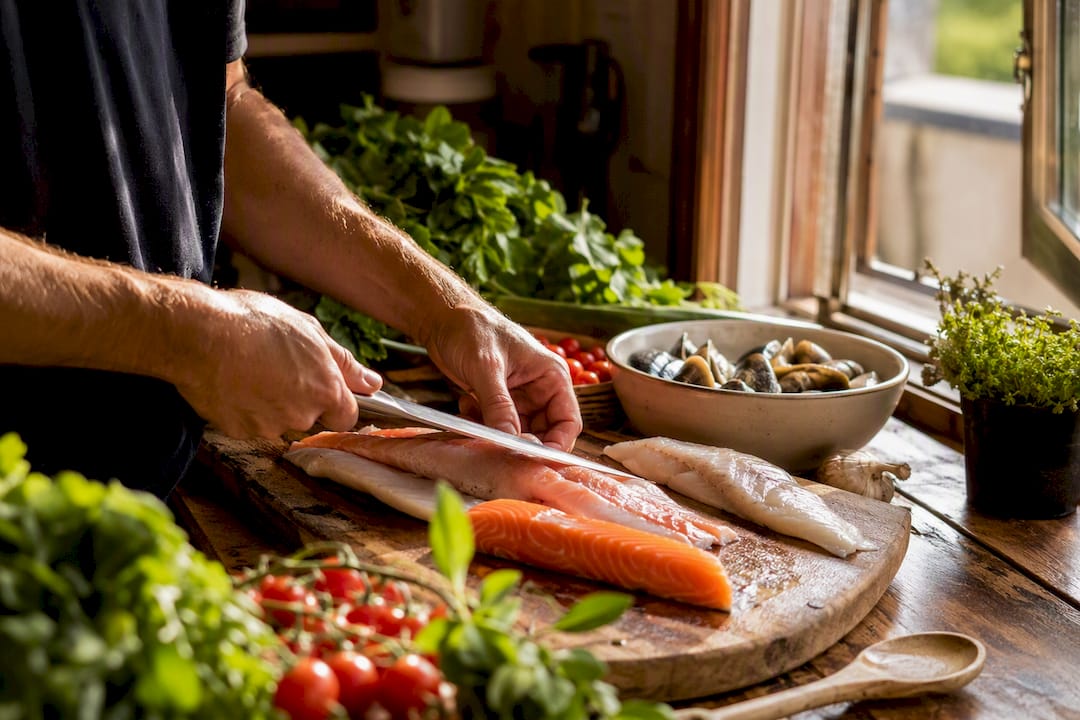
This article hands you a complete, shopping-ready pescatarian meal plan: a full 7 days of breakfast, lunch, dinner, and snacks, a grocery list sorted by store section, and a two-hour prep routine to make it happen. The plan is plant-forward with seafood included regularly throughout the week, and you can scale it up or down for your calorie needs. Jump to the sample week below, or skip ahead to customize it for weight loss or extra protein.
TL;DR:
- Rotating low-mercury seafood such as salmon, sardines, and trout twice a week provides essential omega-3s and B12 while minimizing mercury risk.
- Adjusting portion sizes and adding snacks allows for calorie targets from 1,200 to 2,000, accommodating weight loss or maintenance goals.
- Batch-cooking grains, roasting vegetables, and pre-portioning fish can streamline prep in under two hours, supporting efficient weekly meal planning.
- Incorporating flavor profiles like Mediterranean, Asian, or Mexican keeps meals varied without changing core ingredients.
- Seafood should be rotated regularly with plant-based proteins to ensure nutritional balance and reduce potential toxin accumulation.
Table of Contents
- What Is a Pescatarian Meal Plan?
- A Full 7-Day Pescatarian Menu You Can Shop For Today
- How Do You Adjust the Plan for Calories or More Protein?
- How Do You Meal Prep This Week Efficiently?
- Which Nutrients Matter Most, and Is the Seafood Safe?
- What Pantry Staples and Flavor Swaps Keep This Plan Interesting?
- Homecooked’s Take on Building a Plan That Actually Fits You
- Let Homecooked Build Your Pescatarian Week Automatically
- Where to Learn More
- Sources
What Is a Pescatarian Meal Plan?
A pescatarian meal plan builds meals around fish, shellfish, eggs, dairy, and plants while cutting out meat and poultry entirely. Think grain bowls with salmon, lentil soups, shrimp stir-fries, and veggie omelets rather than steak or chicken breast. The pescatarian diet sits in a nice middle lane: you get the plant-forward benefits of a vegetarian approach while keeping seafood’s protein and omega-3s in regular rotation.
Some people follow a strict version that skips all land-animal products, including eggs and dairy, and lean closer to pescatarian-vegan. Others use it loosely, eating mostly plants with seafood a few times a week and the occasional dairy splurge. Either version works. The plate model that most dietitian-built plans use is roughly 50% vegetables, 25% seafood or plant protein, and 25% whole grains, which gives you a simple visual to build any meal around without measuring cups.
If you’re pregnant, managing a chronic condition, or have a complicated relationship with food, run this plan past a registered dietitian first. It’s a solid starting template, not a prescription.
A Full 7-Day Pescatarian Menu You Can Shop For Today
This week uses low-mercury seafood, keeps prep simple, and hits at least two seafood dinners plus a seafood lunch. Portions below assume a calorie level suitable for maintenance for many adults; you’ll find scaling rules in the next section.
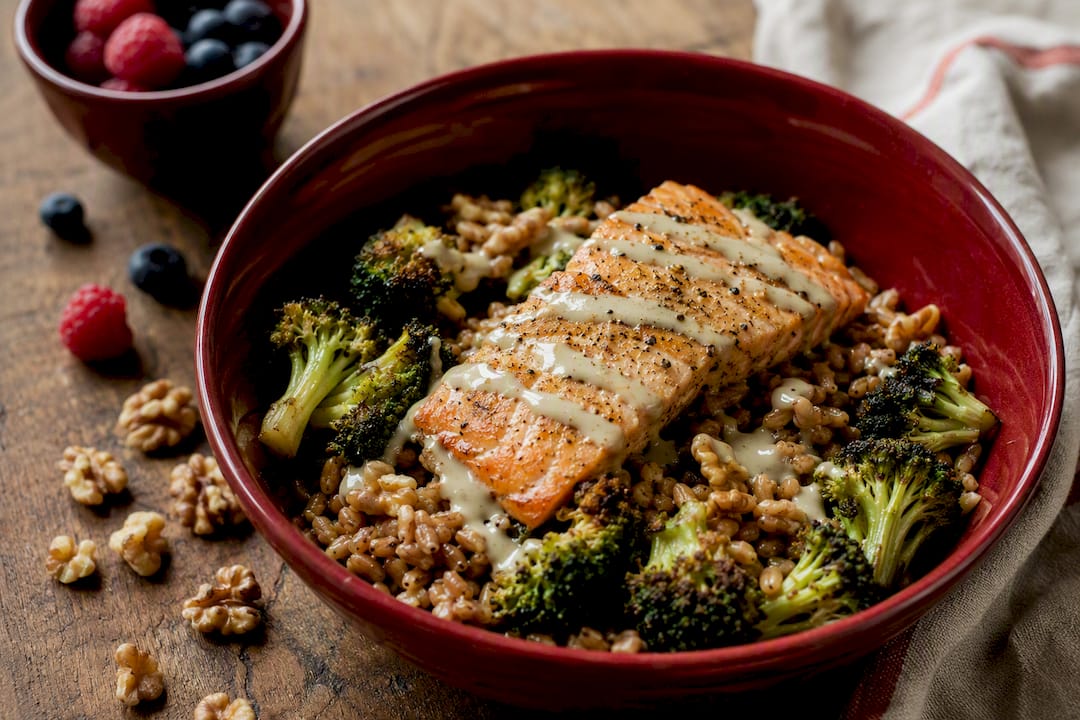
Monday: Greek yogurt with berries and walnuts for breakfast. Lunch is a sheet-pan salmon grain bowl (4 ounces salmon, farro, roasted broccoli, tahini drizzle). Dinner is a black bean and sweet potato tostada. Snack: apple with almond butter.
Tuesday: Veggie omelet (2 eggs, spinach, mushrooms, feta) with whole-grain toast. Lunch is leftover salmon flaked over mixed greens. Dinner is shrimp and vegetable stir-fry over brown rice. Snack: hummus with carrots.
Wednesday: Overnight oats with chia seeds and sliced banana. Lunch is a canned tuna salad (light tuna, white beans, cherry tomatoes, olive oil) on whole-grain crackers. Dinner is lentil and vegetable curry. Snack: cottage cheese with pineapple.
Thursday: Sardine toast with avocado and a squeeze of lemon. Lunch is a chickpea and roasted vegetable grain bowl. Dinner is baked cod with quinoa and sautéed kale. Snack: trail mix.
Friday: Smoothie with frozen berries, spinach, and Greek yogurt. Lunch is leftover cod tacos with cabbage slaw. Dinner is a veggie-loaded pasta with white beans and parmesan. Snack: orange and a handful of walnuts.
Saturday: Whole-grain pancakes with peanut butter and sliced strawberries. Lunch is a shrimp and avocado salad. Dinner is trout with roasted Brussels sprouts and wild rice. Snack: rice cakes with cottage cheese.
Sunday: Vegetable frittata with goat cheese. Lunch is a big grain bowl using whatever’s left in the fridge. Dinner is a simple minestrone with a side salad. Snack: Greek yogurt with honey.
Your categorized grocery list for the week:
- Seafood: salmon fillet, shrimp (frozen is fine), canned light tuna, cod fillet, canned sardines, trout fillet
- Produce: spinach, mushrooms, broccoli, kale, Brussels sprouts, sweet potatoes, mixed greens, avocado, berries, bananas, apples, oranges, cabbage
- Pantry: farro, brown rice, quinoa, wild rice, lentils, black beans, white beans, chickpeas, whole-grain pasta, whole-grain crackers, tahini, olive oil
- Dairy and eggs: Greek yogurt, cottage cheese, feta, parmesan, goat cheese, eggs
- Extras: almond butter, peanut butter, walnuts, chia seeds, trail mix, honey
How Do You Adjust the Plan for Calories or More Protein?
The sample week above sits around 1,800 calories a day, but not everyone needs that number. Dietitian-built plans typically work in three bands: 1,200 calories suits smaller-framed adults or those with lower activity levels aiming for steady weight loss, 1,500 calories fits most adults targeting a gradual loss of about 1 to 2 pounds a week, and 2,000 calories works for maintenance or for active people who train regularly.
You don’t need to rewrite the whole week to move between these bands. Adjust portions and add-ins instead:
- Dropping to 1,200 or 1,500 calories: cut grain portions by a third, skip one snack, and keep protein portions steady so you stay full.
- Pushing toward 2,000 calories: add a second snack, increase whole grains by half a cup at dinner, and add a tablespoon of olive oil or nut butter to two meals.
- Boosting protein on any budget: swap one egg breakfast for two eggs plus a side of Greek yogurt, add a half-can of tuna to lunch salads, or stir a scoop of cottage cheese into oatmeal.
- Fitting in more legumes: double the beans or lentils in dinner recipes when you want extra fiber and protein without more seafood.
- Checking in weekly: if hunger or energy dips noticeably, move up one calorie band rather than pushing through.
Higher-protein eaters, especially those lifting weights or training for endurance sports, often do well layering in extra high-protein fish and seafood recipes two or three times a week instead of relying only on portion increases. If your primary goal is fat loss rather than protein, a weight loss meal plan framework can help you pace calorie targets safely over several weeks.
How Do You Meal Prep This Week Efficiently?
Set aside two hours on a Sunday and you can knock out most of this week in one go. The order matters here, since starting with the oven saves time later.
- Preheat the oven and roast a big tray of vegetables (broccoli, Brussels sprouts, sweet potatoes) while you prep everything else.
- Cook a large batch of grains (farro, brown rice, quinoa) in bulk; they hold well in the fridge for days.
- Simmer lentils or cook dried beans if you’re not using canned versions.
- Portion the salmon, cod, and trout into individual servings and season them so dinner is just a matter of cooking.
- Whisk a batch of dressing (olive oil, lemon, tahini) to use across multiple meals.
- Hard-boil a few eggs for quick snacks or salad toppers.
Cooked fish holds safely in the fridge for 3 to 4 days, so cook fresh salmon and cod early in the week and lean on frozen shrimp or canned tuna toward the end. Frozen fish is a practical option here to keep costs down and reduce food waste because you thaw only what you need. If you want more ideas for stretching a batch-cooking session, the healthy meal prep ideas collection has recipes built around this same power-hour approach.
Your shopping list for the store, organized the way most grocery stores are laid out:
- Seafood counter: salmon, cod, trout, shrimp
- Canned goods aisle: light tuna, sardines, beans, lentils
- Produce section: everything green, plus sweet potatoes and fruit
- Dairy case: eggs, yogurt, cottage cheese, cheeses
Which Nutrients Matter Most, and Is the Seafood Safe?
Seafood is doing real nutritional work in this plan. Fish and shellfish deliver B12, iron, and omega-3 fatty acids in forms your body absorbs efficiently, which matters because these three nutrients are the ones people most often run low on when they cut back on meat. Fill remaining gaps with fortified plant milks or cereals for B12, legumes and dark leafy greens for iron, and dairy or fortified plant alternatives for calcium.
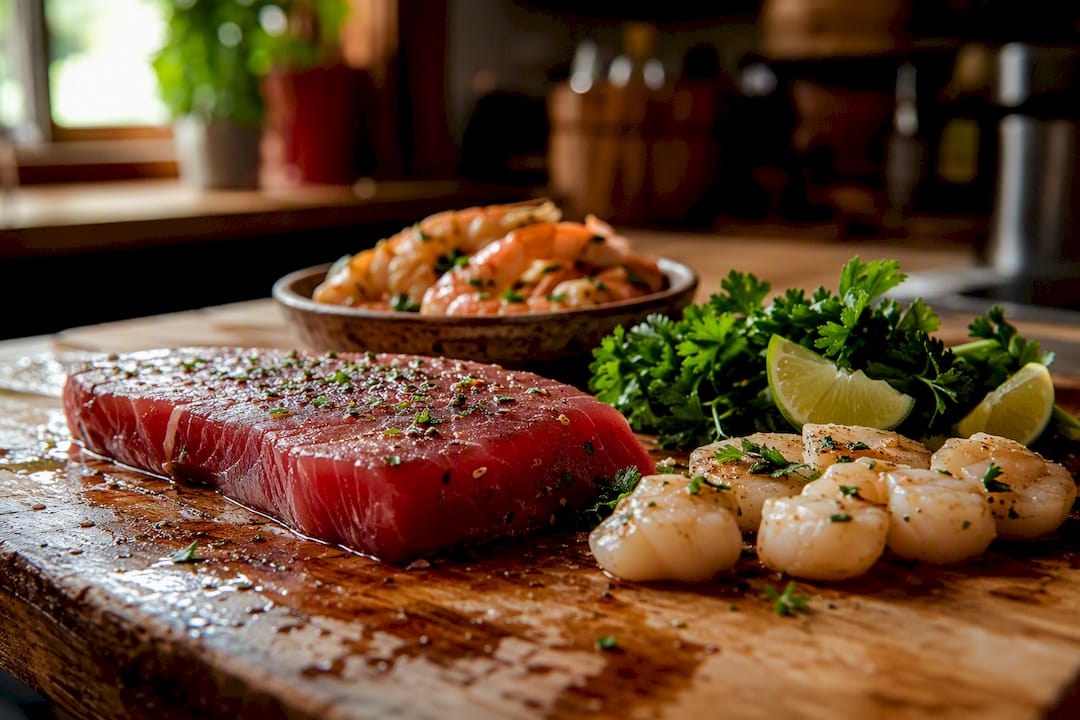
Mercury is the other side of the seafood conversation, and it’s worth taking seriously rather than skipping past. Rotate your fish choices instead of eating the same species every week. Salmon, sardines, shrimp, trout, and canned light tuna are considered low-mercury choices, while shark, swordfish, tilefish, and king mackerel carry high mercury levels and should be avoided if you’re pregnant or breastfeeding, and limited by everyone else.
Pro Tip: If you love tuna, stick to canned light tuna for regular meals and save albacore for an occasional treat, since albacore carries meaningfully more mercury per serving.
Most nutrition guidance around seafood and mercury points to a similar range: two to three seafood meals a week, rotating between low-mercury species, gives you the omega-3 and B12 benefits without meaningful mercury risk for most adults.
- Include at least two low-mercury seafood meals weekly
- Watch B12 and iron if you’re eating seafood fewer than twice a week
- Skip high-mercury fish entirely during pregnancy or breastfeeding
- Talk to a clinician if you’re managing kidney disease, pregnancy, or a seafood allergy alongside this plan
What Pantry Staples and Flavor Swaps Keep This Plan Interesting?
Keep canned tuna, canned sardines, frozen shrimp, dried lentils, canned beans, whole grains, and olive oil stocked at all times. They’re the backbone of nearly every meal above and rarely go to waste.
Three flavor templates let you rotate the same core ingredients without boredom setting in: Mediterranean (olive oil, lemon, feta, olives), Asian (soy sauce, ginger, sesame oil, scallions), and Mexican (lime, cumin, cilantro, chili). Swap the seasoning on the same salmon or shrimp and dinner feels new. A Mediterranean meal plan is a good reference if you want more of that template specifically, and this healthy Mexican meal workflow offers pantry-friendly ideas for the Mexican side.
- Not enough fiber? Add a serving of beans or an extra vegetable to lunch.
- Frying seafood too often? Bake or pan-sear instead, most weeks.
- Eating the same fish every time? Force a rotation with a shopping list that names three species minimum.
Homecooked’s Take on Building a Plan That Actually Fits You
A sample week works only until real life interferes: allergies, a pantry half-stocked with something else, or a calorie target that doesn’t match what’s written above. That’s the gap Homecooked was built to close. Tell it your goals, your calorie range, and what you already have on hand, and it turns a generic seven-day template into one built around your actual kitchen. The vegetarian meal planning framework works on the same logic if you’re leaning less on seafood some weeks. Try the free trial and see what a plan built for your pantry looks like.
— 0xmaglev
Let Homecooked Build Your Pescatarian Week Automatically
Homecooked turns everything in this article, the plate math, the calorie scaling, the grocery sorting, into something you don’t have to manage by hand. It builds your shopping list from the plan, tracks what’s already in your pantry so you’re not buying duplicate olive oil, and scales portions automatically when you move between calorie bands.
Instead of eyeballing portions for a 1,500 versus 2,000 calorie day, the app does that math for you and adjusts the recipe as it goes, right down to built-in timers so your salmon doesn’t overcook while you’re plating the grain bowl. If you want a taste of what step-by-step guided cooking looks like, the cottage cheese protein bowl recipe is a good example of the format: clear steps, protein counted for you, no guesswork on portions. Start a free trial and build your first personalized pescatarian week today.
Where to Learn More
- Harvard Health’s pescatarian diet overview for the clinical basics and calorie guidance
- EatingWell’s dietitian-created 7-day plan for another sample week and grocery list format
- Pabau’s downloadable meal plan template for mercury safety rules and plate-model visuals
- The Kitchn’s power-hour prep guide for batch-cooking mechanics
This article is general information, not a substitute for advice from a qualified doctor. Consult a qualified healthcare professional about your own circumstances before acting on anything here.
Sources
- Health
- 7-Day Pescatarian Diet Plan, Created by a Dietitian — EatingWell
- Pescatarian meal plan: free 7-day PDF and food list — Pabau
- Meal Prep Plan: Veggie-packed pescatarian meals for 2 — The Kitchn