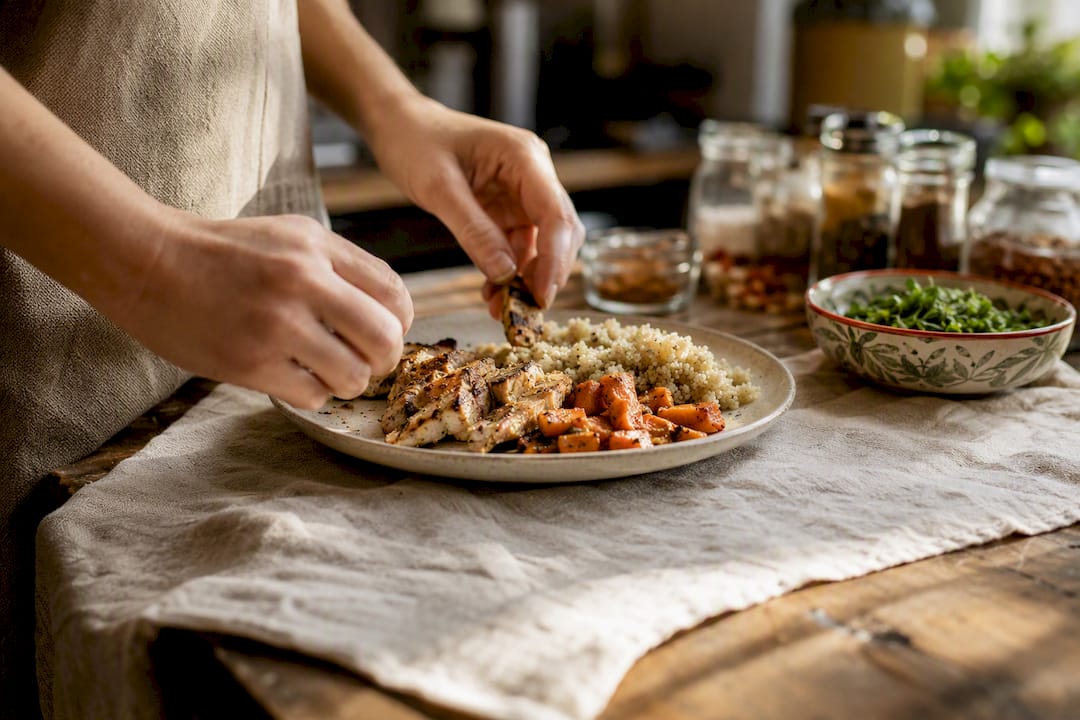
Start tonight with a modular one-meal plan built around your child’s safe foods, plus a single low-pressure exposure to something new. That’s the whole strategy in miniature: one shared dinner, adapted three or four ways, so nobody cooks two meals and nobody battles at the table.
Here’s your survival checklist for tonight:
- Anchor the plate. Put at least one safe food your child already eats without protest on every plate, every night.
- Add one tiny try-bite. A pea-sized portion of something new, served alongside (not instead of) the safe food, with zero pressure to eat it.
- Build one base, many plates. Cook a shared component (rice, pasta, a protein) and let toppings and sides differ by eater.
Progress in picky eating gets measured in exposures, not meals. Clinical literature on child feeding consistently finds that repeated, low-pressure exposure beats forced tasting for building acceptance over time.
Key Takeaways
Modular meal planning built on a shared base, one daily low-pressure exposure, and a simple tracking log is the most sustainable way to expand a picky eater’s diet without nightly battles.
| Point | Details |
|---|---|
| Anchor every plate | Include one guaranteed safe food at every meal so the plate always feels manageable to your child. |
| Build one base, many plates | Cook a shared component and split it into variations to avoid separate short-order dinners. |
| Expect 10 to 20 exposures | Acceptance of a new food often takes many repeated, low-pressure tries rather than just one or two. |
| Log, don’t guess | Track food, format, and response so plateaus and progress are visible, not just felt. |
| Homecooked automates the plan | The app converts a modular weekly plan into a consolidated grocery list and pantry-aware shopping flow. |
Table of Contents
- What Is Picky Eater Meal Planning, Really?
- How Do You Build a Meal Plan Kids Won’t Fight?
- What Does a Weekly Picky Eater Meal Plan Look Like?
- How Can Build-Your-Own Meals Reduce Mealtime Battles?
- What Meal-Prep Shortcuts Actually Save Time?
- How Do You Track Whether the Plan Is Working?
- When Does Picky Eating Need Professional Support?
- What Makes Homecooked Useful for Picky Eater Families?
- Where Can You Find More Evidence-Based Guidance?
- Why Survival-First Planning Beats Perfectionist Advice
- Turn Tonight’s Plan Into Tomorrow’s Grocery List
- Sources
What Is Picky Eater Meal Planning, Really?
Picky eater meal planning isn’t a diet plan. It’s a behavioral system: you’re managing exposure, not just nutrition, and the two goals require different tactics. A safe food is anything your child will reliably eat without a fight. A new or target food is anything outside that list you’re trying to expand into. Food chaining is the technique of introducing a new food that shares a texture, color, or flavor trait with an existing safe food, so the jump feels small instead of huge.
The exposure math matters more than most parents realize. Clinical reviews commonly cite ranges around 10 to 20 repeated exposures before a child accepts a new food, and that’s for kids without significant sensory or medical complications. One taste test on a Tuesday tells you nothing. Twelve calm, no-pressure encounters with the same broccoli, served the same plain way, tells you something.
Pressure tends to backfire. Reviews of pediatric feeding strategies find that parental modeling and low-pressure repeated exposure predict better long-term acceptance than bargaining, hiding food, or requiring a “no thank you bite” before dessert.
Realistic goals look like this over a few months, not a few weeks:
- Fewer mealtime battles, even if the food list grows slowly.
- New foods are typically added to the regular rotation slowly over time, not quickly or weekly.
- A child who will at least touch, smell, or lick a new food without distress, which counts as real progress toward eventual acceptance.
One caveat worth flagging early: if your child’s diet is so limited it affects growth, or if textures trigger gagging and distress rather than simple refusal, the plan below still applies, but you’ll want to loop in a professional sooner. More on that later.
How Do You Build a Meal Plan Kids Won’t Fight?
The framework that actually survives a real week is modular: one shared base, built into several variations, so you’re not running a short-order kitchen every night. This structure is widely used across feeding-focused meal planning because it solves the actual logistics problem, not just the nutrition one.
Here’s how it works in practice. You cook one foundational component, plain rice, a sheet of roasted chicken, a pot of pasta, and then split it three or four directions at the table. The picky eater gets it unsauced and separated. Everyone else gets the same base dressed up. Nobody’s dinner started from a different recipe.
Building your plan starts with a short list, not a long one:
- Write a safe list of foods your child already eats without complaint. Include every food your child eats without complaint, across proteins, starches, fruits, and vegetables, even if it’s a short list at first.
- Pick 3 versatile bases for the week. Rice, pasta, and a roasted protein cover most cuisines and reheat well.
- Pick 2 proteins that show up in different forms. Ground turkey can be taco filling Monday and meatball Thursday.
- List several mix-and-match toppings or sides. Shredded cheese, plain yogurt, cut fruit, and steamed veggies let each eater customize without extra cooking.
- Slot one exposure item into each dinner. Something new, sitting quietly on the plate, no commentary required.
Pro Tip: Build your grocery list from the base-and-variation structure, not from individual recipes. If rice, chicken, and shredded cheddar appear in three different dinners, you buy them once, in bulk, instead of three separate smaller purchases. That’s the difference between a grocery bill that creeps up and one that stays flat.
What Does a Weekly Picky Eater Meal Plan Look Like?
Templates work better than advice here, because a tired parent at 5:30 p.m. doesn’t need inspiration, they need a script. Below are two versions: a 5-day survival plan for weeks when you’re barely holding it together, and a 7-day flexible plan for when you have slightly more bandwidth.
Both follow the same rule for dinner: a shared base, an adult variation, a child-safe option built from the same base, and one small exposure item served on the side.
5-day survival plan (dinners only):
| Day | Shared base | Adult variation | Child-safe plate | Exposure item |
|---|---|---|---|---|
| Monday | Ground turkey | Taco filling with salsa and avocado | Plain turkey, plain tortilla, shredded cheese | Diced tomato, unsauced |
| Tuesday | Rice | Stir-fry with soy sauce and vegetables | Plain rice with plain chicken strips | One cooked carrot coin |
| Wednesday | Pasta | Marinara and parmesan | Butter noodles, plain chicken | One meatball, unsauced |
| Thursday | Sheet-pan chicken | Roasted with lemon and herbs | Plain chicken, plain rice | Roasted broccoli floret |
| Friday | Baked potato | Loaded with cheese, sour cream, chives | Plain potato, butter, cheese on the side | Sour cream for dipping |
The 7-day flexible plan adds breakfast and lunch structure: rotate two breakfasts (yogurt with fruit, toast with a protein) and two lunches (a sandwich variation, a bento-style plate with three or four safe foods plus one exposure item) across the week, so you’re never inventing a new meal from scratch.
Snacks and backups worth keeping stocked: cheese sticks, applesauce pouches, crackers, plain yogurt, cut fruit, and a frozen backup dinner (like a sheet-pan chicken batch) for nights the plan collapses entirely.
For substitutions, swap the protein base for a plant-based option if you’re dealing with allergies (lentils or beans work in the taco and rice slots), and soften textures across the board (mashed instead of chunky, warm instead of room temperature) if texture aversion is the sticking point rather than flavor.
How Can Build-Your-Own Meals Reduce Mealtime Battles?
Build-your-own dinners and deconstructed plating work because they hand over control without handing over the whole menu. A taco bar, a pizza with toppings on the side instead of baked in, or a rice bowl with components in separate little piles all do the same job: they let your child opt in gradually instead of confronting one fully assembled dish they didn’t choose.
The mechanics are simple:
- Keep the base plain and separate. Rice, pasta, or tortillas arrive undressed; sauces, cheese, and toppings sit in small bowls on the side.
- Let the child assemble their own plate. Even if they only choose plain rice and cheese, the act of choosing matters more than the choice itself.
- Offer two options, not an open buffet. “Would you like the chicken plain or with a little sauce?” works better than “what do you want?”, which can overwhelm a child who doesn’t have a ready answer.
Two scripts worth keeping in your back pocket: “You don’t have to eat it, but it’s going on your plate,” removes the pressure while keeping exposure alive. And “Do you want to try it with your fingers or a fork?” turns a refusal into a choice about how, not whether. Pediatric feeding guidance consistently favors this kind of bounded autonomy over open-ended bargaining, because it reduces negotiation without reducing exposure.
What Meal-Prep Shortcuts Actually Save Time?
Sheet-pan dinners and batch-cooked proteins are the backbone of a modular plan, because they produce a plain component and a dressed-up component from the same cooking session with almost no extra work. Roast a tray of chicken thighs; season half after they come out for the adults, leave the rest plain for the kids. Boil a big pot of pasta; toss half in sauce, leave the rest dry and buttered.
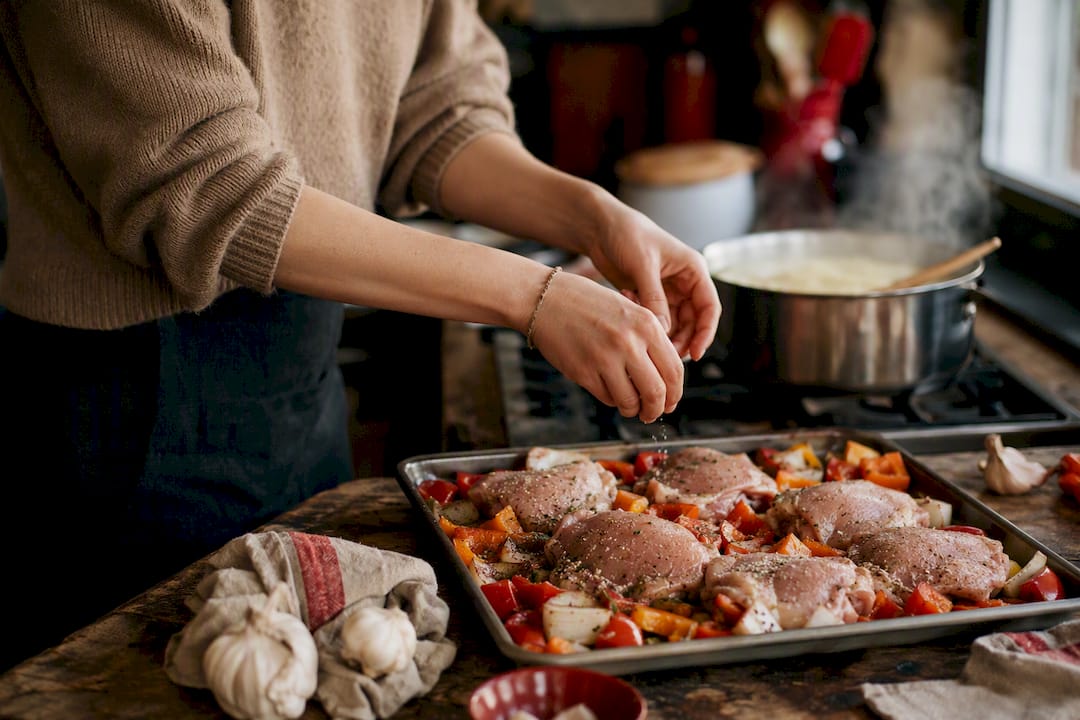
The trick is separating the “plain” portion before you season anything, not after. Pull it aside the moment it’s cooked through, then dress the rest. It adds maybe ninety seconds to a cooking session that would otherwise require a second pot entirely.
Keep a short bench of backup meals for the nights the plan falls apart anyway:
- A frozen batch of plain meatballs or nuggets
- Scrambled eggs and toast, always available in under ten minutes
- Quesadillas made from whatever cheese and tortillas are already in the fridge
Pro Tip: Freeze single-serving portions of your plain bases (rice, shredded chicken, plain pasta) in labeled containers right after a big cook. On a bad night, that’s dinner in the time it takes to microwave, without touching the stove.
This is also where planning software earns its place. A tool like Homecooked can take a week’s modular plan and generate the grocery list automatically, which matters more than it sounds like it should. When the shared-base structure is already mapped out, an app that consolidates rice, chicken, and shredded cheese into one grocery line instead of three separate recipe lists cuts both the shopping trip and the food waste that comes from over-buying duplicate ingredients. Reading about family meal planning approaches that build one adaptable dinner instead of separate meals gives you a sense of how this plays out in practice.
How Do You Track Whether the Plan Is Working?
A simple exposure log beats a mental tally, because picky eating progress is slow enough that memory alone will convince you nothing is happening when something actually is. Three columns are enough: the food, the format it was served in (plain, mixed, dipped), and the response (touched, tasted, ate a bite, refused).
- Log every exposure, not just the wins. A refusal is still data. It tells you the food, the format, or the day wasn’t right yet, not that the approach failed.
- Count toward the known range, not toward zero. If clinical guidance points to roughly 10 to 20 exposures before acceptance, and you’re at exposure six with zero bites, you’re on pace, not behind.
- Watch for two signals that mean it’s time to adjust: a flat plateau past 20 exposures with no change in response at all, or rising anxiety and distress around the food rather than simple disinterest.
Structured tracking isn’t just busywork. Intervention studies that pair repeated exposure with measured tracking report real gains in dietary variety over weeks to months, in both clinical and home settings. Bring that log to your next pediatric visit or registered dietitian consult. A pattern on paper is far more useful to a professional than “she just won’t eat vegetables.”
When Does Picky Eating Need Professional Support?
Most picky eating is developmentally normal and responds to time, low-pressure exposure, and a modular plan. Some situations need a second set of eyes sooner rather than later. Watch for:
- Growth faltering or weight loss, flagged at a pediatric checkup rather than guessed at home.
- A severely limited repertoire, often described as fewer than 10 to 15 total accepted foods, especially if entire food groups (all proteins, all vegetables) are missing.
- Gagging, choking, or genuine distress around food textures, rather than simple refusal or disinterest.
- Mealtime anxiety that’s escalating, not settling, despite weeks of low-pressure exposure.
These patterns can point toward Avoidant/Restrictive Food Intake Disorder (ARFID) or a sensory processing component that a modular meal plan alone won’t resolve. A pediatrician can rule out medical causes and refer you to a registered dietitian or feeding therapist, who will typically want your exposure log, your current safe-food list, and recent growth chart notes from well visits. Bringing organized data to that first appointment usually shortens the path to an actual plan. Reviews of sensory-based feeding strategies support graduated food chaining over pressure tactics specifically for children in this category.
What Makes Homecooked Useful for Picky Eater Families?
Homecooked turns the modular framework above into something you don’t have to rebuild from scratch every Sunday night. The app builds personalized meal plans around your household’s actual dietary needs, then automates the grocery list so the shared-base ingredients get bought once, not three times.
- Personalized plans that account for picky eaters alongside adults with different goals on the same household plan.
- Automated grocery lists built directly from your weekly plan, base ingredients consolidated automatically.
- Pantry tracking that flags what’s already on hand before you duplicate a purchase.
- Guided recipes with built-in timers, useful for batch-cooking sessions where timing plain and seasoned portions matters.
Picture the 5-day template above, loaded into the app: the shared bases and exposure items get flagged automatically, the grocery list consolidates rice, chicken, and cheese into single line items, and you can log which exposure items got a bite versus a refusal without a separate notebook.
| Homecooked feature | Why it matters for picky eater planning |
|---|---|
| Personalized meal plans | Adjusts around a child’s safe-food list and a parent’s health goals in one plan |
| Automated grocery lists | Consolidates shared-base ingredients across the week automatically |
| Pantry tracking | Reduces duplicate purchases of staple bases like rice or pasta |
Where Can You Find More Evidence-Based Guidance?
For deeper reading beyond this framework, these sources back the strategies above:
- PMC review on low-pressure exposure covering feeding strategies and modeling behavior.
- CDC early nutrition guidance on routine meal structures for young children.
- NIH News in Health: Plan your plate for consumer-facing meal planning tips.
- Natasha Pehrson’s family meal strategies for a parent-tested template approach.
Why Survival-First Planning Beats Perfectionist Advice
Most picky eating advice fails because it asks exhausted parents to do something elaborate: a new recipe, a themed presentation, a fresh negotiation tactic every night. That’s backwards. The families who actually see progress are the ones who lowered the daily bar and raised the repetition count instead.
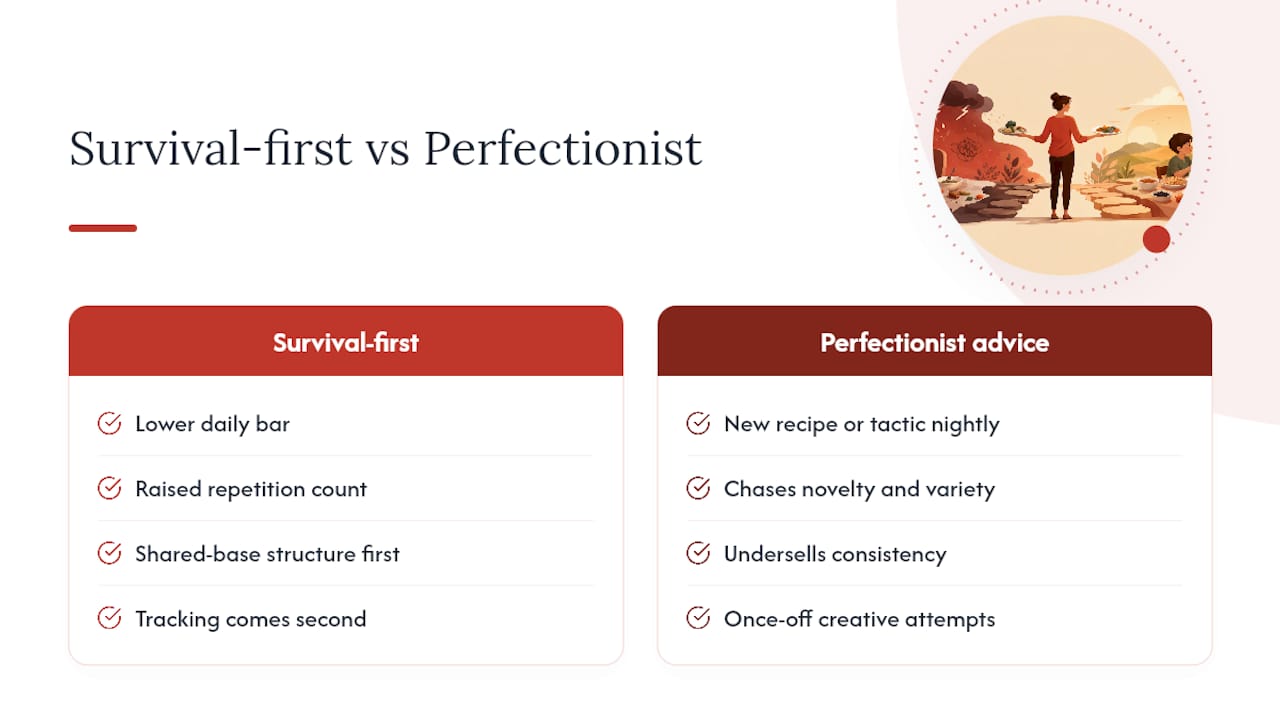
The conventional wisdom oversells novelty and undersells consistency. Twelve identical, boring exposures to the same plain broccoli will out-perform twelve creative, once-off attempts at twelve different vegetables, because the exposure count is what moves the needle, not the variety of tactics. Parents chase variety when they should be chasing repetition.
Prioritize the shared-base structure before anything else. It’s the piece that keeps the whole system alive on a Tuesday when you have fifteen minutes and no patience left. Tracking comes second, once the plan is stable enough that skipping a log entry for a week won’t derail anything. Software that automates the grocery side, the way Homecooked does, matters most for families running this system for months, not days, because that’s when manual list-building starts to buckle under its own weight.
— 0xmaglev
Turn Tonight’s Plan Into Tomorrow’s Grocery List
Homecooked takes the modular framework in this article and does the parts that eat up your evening: building the shopping list, tracking what’s in your pantry, and adapting the plan around your child’s safe foods alongside everyone else’s goals at the table.
Instead of retyping the same rice, chicken, and cheddar into a shopping app every week, Homecooked pulls your shared-base ingredients into one consolidated list automatically, and keeps a running record of what’s already in your kitchen. If you want a low-effort dinner to try tonight that fits the shared-base model, the cottage cheese protein bowl splits easily into a plain version and a dressed-up version from the same base. Start a plan in the app this week and let it build your grocery list while you focus on the one tiny exposure that actually moves the needle.
Sources
- PMC6398579
- PMC7539343
- PMC6220498
- CDC: Good nutrition starts early
- NIH News in Health: Plan your plate