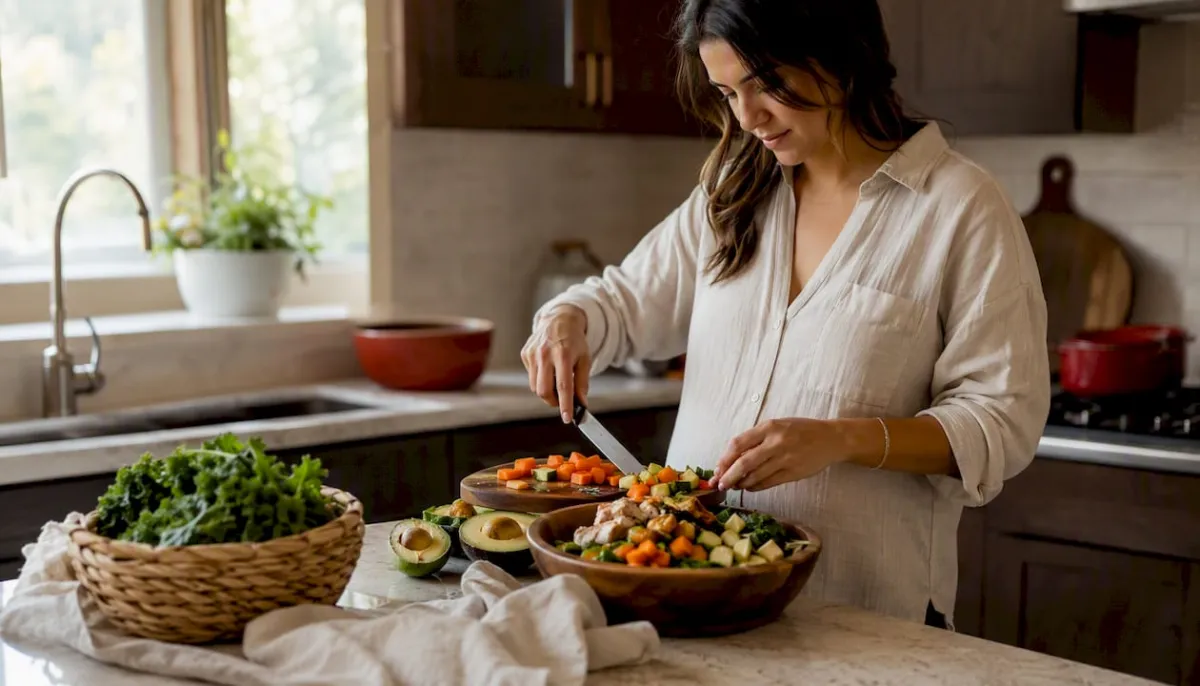
Good pregnancy meal planning starts with one rule: eat for nutrient density, not just calories. Whether you’re trying to conceive, navigating first-trimester nausea, or fueling a third-trimester growth sprint, the core framework stays the same: three balanced meals plus several snacks daily, built around folate, iron, protein, and whole foods.
Your immediate action checklist for this week:
- Start or confirm a prenatal vitamin with at least 400–600 mcg of folic acid
- Add one folate-rich food to each meal (spinach, lentils, fortified cereal)
- Drink at least 8–10 cups of water daily
- Swap one processed snack for a protein-plus-fiber combo (Greek yogurt + berries, hummus + veggies)
- Write a simple 3-day meal sketch before your next grocery run
Quick stage takeaways:
- Trying to conceive: Build folate stores and stabilize blood sugar with regular, whole-food meals.
- First trimester: Prioritize nutrient density; manage nausea with small, frequent, bland-friendly meals.
- Second trimester: Increase protein and iron-rich foods to support rapid fetal growth.
- Third trimester: Keep calories steady, add fiber for digestion, and eat smaller meals to reduce reflux.
- Postpartum: Fuel milk production with extra calories, protein, iron, and consistent hydration.
If you have a medical condition such as hyperemesis gravidarum, gestational diabetes, or a restrictive diet, work directly with your OB or a registered dietitian for personalized guidance.
Key Takeaways
Consistent pregnancy meal planning built around three meals plus two snacks daily, nutrient-dense whole foods, and trimester-specific adjustments covers the vast majority of what your body and your baby need.
| Point | Details |
|---|---|
| Start folate early | Begin folic acid at least three months before conception and continue through pregnancy to support neural tube development. |
| Follow the 3+2 pattern | Three balanced meals plus two snacks daily stabilizes blood sugar and reduces nausea across all trimesters. |
| Pair plant iron with vitamin C | Eating spinach or lentils alongside a vitamin C source meaningfully improves iron absorption from plant foods. |
| Adjust by trimester | Add roughly 200 extra calories in the third trimester; increase to 300–500 extra calories daily during lactation. |
| Homecooked automates the logistics | Homecooked generates trimester-specific meal plans and synced grocery lists, reducing the gap between knowing what to eat and actually cooking it. |
Table of Contents
- What should you eat when trying to conceive?
- First trimester meal planning: weeks 1–13
- Second trimester meal planning: weeks 14–27
- Third trimester meal planning: weeks 28–40
- How should you eat if you have gestational diabetes?
- Postpartum and lactation: fueling recovery and milk supply
- How to shop and batch-prep on a pregnancy budget
- Adapting your plan for vegetarian, vegan, gluten-free, and allergy needs
- Why these meal plans align with USDA, ACOG, and Mayo Clinic guidance
- Sources
What should you eat when trying to conceive?
Preconception nutrition is the foundation every trimester builds on. The goal before pregnancy is to build folate stores, stabilize blood sugar, and reach a healthy weight range — all of which directly affect early fetal development. Many clinicians recommend starting folic acid at least three months before conception to reduce the risk of neural tube defects, which form in the first weeks before most people even know they’re pregnant.
A 7-day preconception sample plan
Day 1: Fortified whole-grain cereal with milk and sliced banana for breakfast; a lentil and spinach soup with whole-grain bread for lunch; baked salmon with roasted broccoli and brown rice for dinner. Snack on a hard-boiled egg and an orange.
Day 2: Scrambled eggs with sautéed kale on whole-grain toast; a chickpea and cucumber salad with olive oil and lemon; chicken stir-fry with edamame and quinoa. Snack: Greek yogurt with a handful of walnuts.
Day 3: Oatmeal topped with chia seeds and blueberries; a black bean burrito bowl with avocado and salsa; grilled chicken with roasted sweet potato and steamed green beans. Snack: apple slices with almond butter.
Day 4: Whole-grain toast with avocado and a poached egg; lentil and vegetable curry over brown rice; baked cod with asparagus and farro. Snack: cottage cheese with sliced strawberries.
Day 5: Smoothie with spinach, frozen mango, Greek yogurt, and flaxseed; turkey and hummus wrap with mixed greens; shrimp and vegetable fried rice made with eggs and edamame. Snack: carrot sticks with guacamole.
Day 6: Whole-grain pancakes with fresh berries and a side of turkey sausage; white bean and kale soup; beef and vegetable stew with whole-grain rolls. Snack: a small handful of pumpkin seeds and dried apricots.
Day 7: Veggie omelet with bell peppers, onions, and feta; tuna salad on whole-grain crackers with a side salad; roasted chicken thighs with quinoa and roasted Brussels sprouts. Snack: hummus with whole-grain pita.
Preconception swaps and prep tips
Fortified cereals, legumes, and eggs are your highest-return folate and choline sources. Swap white rice for quinoa or farro to add both fiber and B vitamins in one move. For choline specifically, two eggs daily covers roughly half your preconception target.
Batch-cook a grain base (brown rice, farro, or quinoa) on Sunday so weekday lunches take five minutes to assemble. Pre-wash and dry leafy greens and store them in a damp paper towel in the fridge — they stay crisp for five days and are ready to toss into any meal.
First trimester meal planning: weeks 1–13
The first trimester is less about eating more and more about eating smarter. Caloric needs don’t jump significantly yet, so the focus is nutrient density: folate, iron, vitamin B12, and choline. The complication, of course, is nausea. Small, frequent meals are the most practical tool you have.
7-day first trimester sample menu
- Monday: Ginger oatmeal with banana and a glass of orange juice; whole-grain crackers with peanut butter (mid-morning); lentil soup with a small whole-grain roll; plain Greek yogurt with honey (afternoon); baked chicken with steamed broccoli and brown rice.
- Tuesday: Fortified cereal with low-fat milk; a hard-boiled egg and a few whole-grain crackers; spinach and white bean soup; a small apple; ground turkey taco bowl with black beans, salsa, and brown rice.
- Wednesday: Whole-grain toast with almond butter and sliced banana; cold cucumber slices with hummus; chicken and vegetable soup (broth-based, easy to digest); a small handful of trail mix; baked salmon with roasted sweet potato and green beans.
- Thursday: Plain scrambled eggs with toast; a small smoothie made with frozen mango, yogurt, and a handful of spinach; chickpea and vegetable stew; a few whole-grain crackers with cheese; pasta with marinara and ground beef, side salad.
- Friday: Oatmeal with chia seeds and a few blueberries; a banana; turkey and avocado sandwich on whole-grain bread; Greek yogurt; baked cod with quinoa and steamed asparagus.
- Saturday: Whole-grain waffles with fresh strawberries; a hard-boiled egg; lentil and spinach salad with lemon dressing; a small orange; chicken stir-fry with edamame, brown rice, and broccoli.
- Sunday: Veggie omelet with feta; a small bowl of fortified cereal; white bean and kale soup with whole-grain bread; cottage cheese with peach slices; slow-cooker beef and vegetable stew.
Key first trimester nutrients
Mayo Clinic’s pregnancy nutrition guidance sets the targets clearly: folate at a recommended daily amount of folate, a recommended daily amount of iron, a recommended daily amount of calcium, a recommended daily amount of vitamin D, and a recommended daily amount of protein. Your prenatal vitamin covers the gap, but food sources matter too. Pair plant-based iron (spinach, lentils) with vitamin C — a squeeze of lemon juice or a glass of orange juice alongside your iron-rich meal improves absorption. Avoid taking your iron supplement with calcium-fortified orange juice, since calcium competes with iron for absorption.
Pro Tip: If nausea hits hardest in the morning, eat a few plain crackers before getting out of bed. Cold foods — yogurt, chilled fruit, room-temperature toast — tend to be better tolerated than hot, aromatic dishes. Keeping liquids and solids separate (drink fluids 30 minutes before or after meals rather than with them) can also reduce that full, queasy feeling. If nausea is severe and you can’t keep food or fluids down, contact your care provider — hyperemesis gravidarum requires medical management.
Second trimester meal planning: weeks 14–27
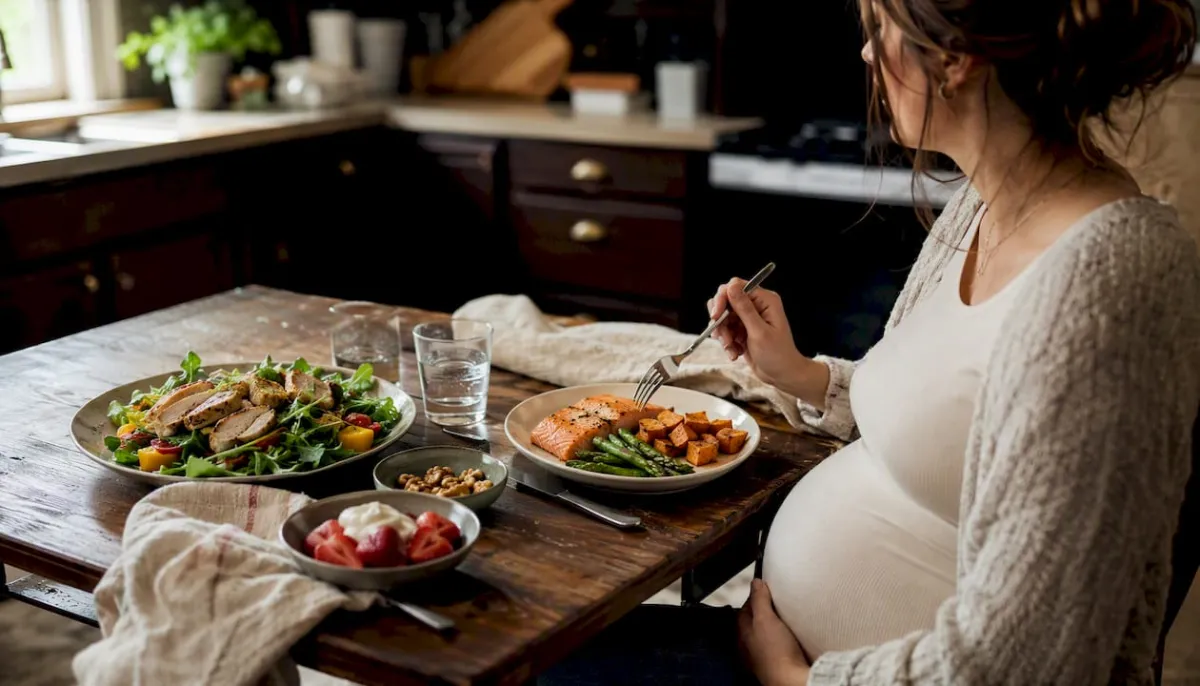
The second trimester is when appetite usually returns and fetal growth accelerates. Protein needs stay at roughly 71 g/day, but you’ll likely feel genuinely hungry for the first time in weeks. A sample 2,200-calorie template is a reasonable starting point for many people, though your actual needs depend on your baseline weight and activity level — use the USDA MyPlate tool to personalize.
7-day second trimester sample plan
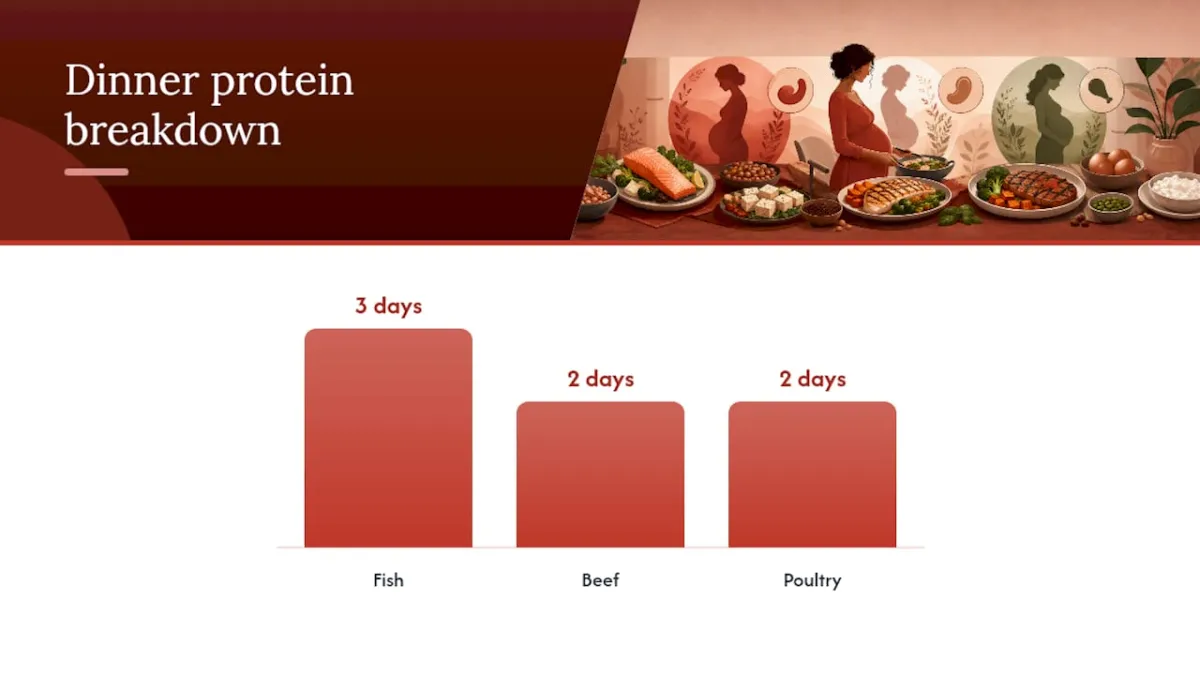
Day 1: Greek yogurt parfait with granola and berries; mid-morning snack of a hard-boiled egg and an orange; grilled chicken salad with chickpeas, spinach, and lemon-tahini dressing; afternoon snack of apple slices with almond butter; salmon with roasted sweet potato and steamed broccoli.
Day 2: Oatmeal with walnuts, banana, and a drizzle of honey; a small cheese and whole-grain cracker snack; lentil and vegetable soup with whole-grain bread; Greek yogurt with a handful of pumpkin seeds; beef stir-fry with edamame, brown rice, and snap peas.
Day 3: Whole-grain toast with avocado and two poached eggs; a smoothie with spinach, mango, and Greek yogurt; turkey and hummus wrap with mixed greens and tomato; cottage cheese with sliced peaches; baked chicken thighs with quinoa and roasted asparagus.
Day 4: Fortified cereal with low-fat milk and sliced strawberries; a banana; white bean and kale soup; a handful of trail mix; ground turkey taco bowl with black beans, salsa, and brown rice.
Day 5: Veggie omelet with bell peppers, onions, and feta; whole-grain crackers with peanut butter; chickpea and spinach curry over brown rice; a small orange; baked cod with farro and roasted Brussels sprouts.
Day 6: Whole-grain pancakes with fresh blueberries and a side of turkey sausage; a hard-boiled egg; tuna salad on whole-grain crackers with a side salad; Greek yogurt; slow-cooker beef and vegetable stew with whole-grain rolls.
Day 7: Smoothie bowl with frozen berries, banana, Greek yogurt, and chia seeds; a small handful of almonds; grilled shrimp over quinoa with roasted zucchini and tomatoes; hummus with carrot sticks; baked salmon with roasted sweet potato and green beans.
Vegetarian swaps and nutrient callouts
If you’re avoiding meat, leafy greens, legumes, and fatty fish alternatives are your best tools for hitting iron and omega-3 targets. Pair lentils or spinach with a vitamin C source at every iron-rich meal. For omega-3s without fish, ground flaxseed, chia seeds, and walnuts provide ALA, though algae-based DHA supplements are the most direct plant-based route to the omega-3 form the fetal brain uses. For high-protein vegetarian meals that map directly to these templates, Homecooked’s recipe library has options that hit the 71 g/day protein target without meat.
Calcium and iron compete for absorption, so space your calcium-rich foods (dairy, fortified plant milks) away from your highest-iron meals when possible.
Third trimester meal planning: weeks 28–40
By the third trimester, your stomach has less room and your energy needs a small but real bump. The NHS notes that the final trimester calls for roughly 200 additional calories per day alongside high-fiber choices to manage constipation and reflux. Smaller, more frequent meals are the most practical response to both a compressed stomach and heartburn.
7-day third trimester sample template
- Monday: Small bowl of oatmeal with banana and chia seeds; mid-morning: whole-grain crackers with almond butter; grilled chicken and vegetable soup (broth-based, easy on the stomach); afternoon: Greek yogurt with a few berries; baked salmon with roasted sweet potato and steamed green beans; evening snack: a small handful of walnuts.
- Tuesday: Fortified cereal with low-fat milk; a hard-boiled egg; lentil and spinach soup with a small whole-grain roll; apple slices with peanut butter; ground turkey with quinoa and roasted zucchini; evening snack: cottage cheese with sliced peaches.
- Wednesday: Whole-grain toast with avocado and a poached egg; a banana; chickpea and vegetable stew; a small orange; baked cod with farro and roasted asparagus; evening snack: a few whole-grain crackers with cheese.
- Thursday: Smoothie with spinach, frozen mango, Greek yogurt, and flaxseed; a small handful of trail mix; white bean and kale soup; hummus with carrot sticks; chicken stir-fry with edamame and brown rice; evening snack: a small bowl of fortified cereal with milk.
- Friday: Veggie omelet with feta and bell peppers; whole-grain crackers with peanut butter; turkey and avocado wrap with mixed greens; Greek yogurt; baked chicken thighs with roasted Brussels sprouts and quinoa; evening snack: a small apple.
- Saturday: Oatmeal with walnuts and blueberries; a hard-boiled egg; tuna salad on whole-grain crackers with a side salad; a small handful of pumpkin seeds; beef and vegetable stew with whole-grain rolls; evening snack: cottage cheese with honey.
- Sunday: Whole-grain pancakes with fresh strawberries; a banana; grilled shrimp over quinoa with roasted tomatoes and zucchini; a small orange; slow-cooker chicken and white bean soup; evening snack: a few almonds and dried apricots.
Pro Tip: Heartburn peaks in the third trimester as the uterus presses upward. Avoid eating within two to three hours of lying down, stay upright for at least 30 minutes after meals, and skip acidic or spicy foods in the evening. Smaller portions at dinner — paired with a light evening snack — work better than one large meal. Cold or room-temperature foods tend to trigger less reflux than hot, aromatic dishes.
Late-pregnancy iron, calcium, and DHA remain priorities. Fatty fish twice a week (salmon, sardines, trout) covers DHA without exceeding the FDA’s mercury guidance. Aim for 8–10 cups of water daily; dehydration in the third trimester can trigger Braxton Hicks contractions.
How should you eat if you have gestational diabetes?
Gestational diabetes (GD) requires a specific meal pattern, not just “eating healthy.” The core principle: distribute carbohydrates evenly across the day, pair every carb source with protein and fiber, and never skip meals. Consistent timing matters as much as food choice because blood sugar spikes follow irregular eating patterns.
A sample GD day template
- Breakfast (15–30 g carbs): Two scrambled eggs with sautéed spinach, one slice of whole-grain toast, and half an avocado. No fruit juice.
- Mid-morning snack (15 g carbs): A small apple with a tablespoon of almond butter.
- Lunch (45–60 g carbs): Grilled chicken over a large salad with chickpeas, cucumber, tomato, and olive oil-lemon dressing; one small whole-grain roll.
- Afternoon snack (15–30 g carbs): Greek yogurt (plain, full-fat) with a small handful of berries.
- Dinner (45–60 g carbs): Baked salmon with roasted non-starchy vegetables (broccoli, zucchini, asparagus) and a half-cup of brown rice or quinoa.
GD-friendly swaps and low-GI choices:
- Replace white rice with cauliflower rice or a half-portion of brown rice
- Choose whole-grain bread over white; limit to one slice per meal
- Swap fruit juice for whole fruit (fiber slows glucose absorption)
- Use plain Greek yogurt instead of flavored varieties (which carry added sugar)
- Opt for legumes (lentils, black beans) over starchy sides; they digest slowly
- Pair any grain with a protein source to blunt the glucose response
A prenatal vitamin remains important with GD, and your care team may adjust iron or other supplements based on lab results. If your fasting glucose consistently reads above your target range, or if post-meal readings stay elevated two hours after eating, contact your provider or diabetes educator promptly. GD management is individualized — these templates are a starting framework, not a substitute for your clinical care plan.
Postpartum and lactation: fueling recovery and milk supply
The six weeks after delivery are not the time to restrict calories. Lactation adds roughly 300–500 extra calories per day to your baseline needs, and iron repletion after delivery is often overlooked. Protein, hydration, and easy-to-reheat meals are the practical priorities when sleep is scarce and cooking time is minimal.
7-day postpartum sample plan
- Monday: Oatmeal with walnuts, banana, and a drizzle of honey; mid-morning: Greek yogurt with berries; lentil and spinach soup with whole-grain bread; afternoon: a handful of almonds and dried apricots; baked salmon with roasted sweet potato and steamed broccoli; evening: cottage cheese with sliced peaches.
- Tuesday: Scrambled eggs with sautéed kale on whole-grain toast; a banana; chicken and white bean soup (batch-cooked, reheated); hummus with carrot sticks; ground turkey taco bowl with black beans, salsa, and brown rice; evening: a small bowl of fortified cereal with milk.
- Wednesday: Smoothie with oats, spinach, frozen mango, Greek yogurt, and flaxseed; a hard-boiled egg; chickpea and vegetable curry over brown rice (freezer batch); a small apple with almond butter; baked chicken thighs with quinoa and roasted asparagus; evening: a few whole-grain crackers with cheese.
- Thursday: Whole-grain toast with avocado and two poached eggs; a small orange; lentil and vegetable stew (reheated from batch); Greek yogurt with a handful of pumpkin seeds; beef and vegetable stew with whole-grain rolls; evening: a banana with peanut butter.
- Friday: Fortified cereal with low-fat milk and sliced strawberries; a hard-boiled egg; tuna salad on whole-grain crackers with a side salad; cottage cheese with honey; baked cod with farro and roasted Brussels sprouts; evening: a small handful of trail mix.
- Saturday: Oatmeal with chia seeds and blueberries; a smoothie with spinach and frozen berries; white bean and kale soup with a small whole-grain roll; a handful of almonds; slow-cooker chicken and vegetable soup; evening: Greek yogurt with berries.
- Sunday: Veggie omelet with feta and bell peppers; a banana; grilled shrimp over quinoa with roasted zucchini and tomatoes; hummus with carrot sticks; baked salmon with roasted sweet potato and green beans; evening: cottage cheese with sliced peaches.
Batch-prep and freezer-first tips
Cook double batches of soups, stews, and grain bases in the final weeks of pregnancy and freeze in single-serving containers. Oats, lentils, and dairy are among the most practical lactation-supporting foods — and all three reheat in under five minutes. For structured batch-cooking workflows that translate directly to postpartum cooking, Homecooked’s batch-prep guides walk through a single weekly cook session step by step.
Hydration targets during lactation run higher than pregnancy: aim for at least 13 cups of fluid daily. Keep a large water bottle at your nursing station. If milk supply drops unexpectedly or you’re struggling to meet calorie needs, a lactation consultant and a registered dietitian working together can identify the gap quickly.
How to shop and batch-prep on a pregnancy budget
Batch-prepping one weekly cook session and shopping seasonally can meaningfully cut your grocery bill without sacrificing nutrition. The most nutrient-dense pregnancy foods are also among the least expensive: eggs, canned salmon, lentils, frozen spinach, canned beans, and oats.
A practical shopping list template
Proteins: Eggs (a dozen), canned salmon or sardines, dried lentils, canned black beans and chickpeas, Greek yogurt, chicken thighs (bone-in are cheaper than breasts).
Grains: Rolled oats, brown rice or farro, whole-grain bread, whole-grain crackers.
Produce: Frozen spinach and broccoli (nutritionally equivalent to fresh, far cheaper), fresh bananas and apples, sweet potatoes, carrots, and whatever leafy greens are on sale.
Dairy/fats: Low-fat milk or fortified plant milk, a block of cheese, avocados, almond butter.
Pantry staples: Olive oil, canned tomatoes, low-sodium broth, garlic, and a good prenatal vitamin.
Weekly batch-prep checklist
- Cook a large grain base (brown rice, quinoa, or farro) — use across lunches and dinners all week
- Simmer a big pot of lentil or bean soup — portion into containers for grab-and-go lunches
- Hard-boil six to eight eggs — ready for snacks, salads, and quick breakfasts
- Roast a sheet pan of vegetables (broccoli, sweet potato, zucchini) — reheat as sides or toss into grain bowls
- Wash and dry leafy greens — store in the fridge for instant salad bases
Food safety matters during pregnancy: refrigerate cooked foods within two hours, store leftovers for no more than three to four days, and reheat to an internal temperature of 165°F. Avoid raw or undercooked meat, unpasteurized cheeses, and high-mercury fish (shark, swordfish, king mackerel, tilefish). Canned light tuna is lower in mercury than albacore and is safe at two to three servings per week.
Homecooked’s automated grocery list feature syncs directly with your weekly meal plan, so you never have to manually transfer a recipe’s ingredients to a shopping list — a small but real time-saver when you’re already managing a lot.
Adapting your plan for vegetarian, vegan, gluten-free, and allergy needs
Meeting core nutrient needs on a restricted diet during pregnancy is entirely possible with the right swaps. The nutrients that need the most attention are protein, iron, vitamin B12, and DHA.
Vegetarian and vegan swaps:
- Replace meat protein with lentils, chickpeas, black beans, edamame, tofu, and tempeh
- Use fortified plant milks (soy milk has the closest protein profile to dairy) for calcium and vitamin D
- Pair every iron-rich plant food (spinach, lentils, fortified cereal) with a vitamin C source to improve absorption
- Add ground flaxseed or chia seeds for ALA omega-3s; consider an algae-based DHA supplement
- B12 is found almost exclusively in animal products — vegans need a B12 supplement, full stop
Gluten-free swaps:
- Replace wheat-based grains with certified gluten-free oats, brown rice, quinoa, buckwheat, and millet
- Check labels on fortified cereals and breads, as gluten-free versions are not always fortified with the same B vitamins
Nut-free substitutions:
- Swap almond butter or peanut butter with sunflower seed butter (high in vitamin E and healthy fats)
- Replace nut-based snacks with seeds (pumpkin, sunflower, hemp) or roasted chickpeas
Supplement checklist
A daily prenatal vitamin is the baseline for every pregnancy, regardless of diet. Mayo Clinic notes that prenatal vitamins fill nutritional gaps even when eating a balanced diet, and that clinicians may recommend additional supplementation for restrictive diets — particularly B12 for vegans and extra iron for those with low ferritin. Talk to your provider before adding individual supplements on top of a prenatal vitamin.
Red flags that warrant a dietitian referral: unexplained weight loss during pregnancy, persistent inability to meet calorie needs, ongoing GI symptoms that prevent normal eating, or any combination of restrictions (vegan + gluten-free, for example) that makes hitting multiple nutrient targets simultaneously difficult.
Why these meal plans align with USDA, ACOG, and Mayo Clinic guidance
The meal patterns across every trimester in this guide are built on a consistent framework: three meals plus multiple snacks per day, as recommended by USDA MyHealthFinder, to maintain stable energy and blood sugar throughout the day. That structure is the backbone of every template above.
Key pregnancy nutrient targets
| Nutrient | Daily target | Key food sources |
|---|---|---|
| Folate/folic acid | 400–600 mcg | Fortified cereal, lentils, spinach, asparagus |
| Iron | ~27 mg | Lean beef, chicken, lentils, fortified cereal |
| Calcium | a recommended daily amount | Dairy, fortified plant milk, broccoli, almonds |
| Vitamin D | 600 IU | Fatty fish, fortified milk, egg yolks |
| Protein | ~71 g/day | Chicken, eggs, Greek yogurt, legumes, tofu |
| DHA (omega-3) | 200–300 mg | Salmon, sardines, trout, algae-based supplement |
Targets sourced from Mayo Clinic’s pregnancy nutrition guidance.
The 3-meals-plus-2-snacks pattern does more than prevent hunger. It keeps blood glucose stable, reduces nausea in early pregnancy, and helps prevent the energy crashes that make cooking feel impossible. USDA MyPlate is the flexible framework behind the food-group balance in each template — it doesn’t prescribe a rigid menu, but it does set the proportions (half your plate as fruits and vegetables, a quarter lean protein, a quarter whole grains) that every sample day above follows.
These plans draw on US-based guidance from USDA MyHealthFinder, Mayo Clinic, Parents, and BabyCenter because nutrient targets and food safety standards vary by country. Always follow individualized advice from your own care team, especially if your needs differ from the general population targets above.
What Homecooked has learned from building pregnancy meal plans
The most common mistake people make with pregnancy nutrition isn’t eating the wrong foods. It’s treating meal planning as a research project instead of a cooking habit. Spending an hour reading about DHA but never actually getting salmon on the table doesn’t move the needle. What does move it is having a plan simple enough to execute on a Tuesday night when you’re exhausted.
At Homecooked, the approach to building pregnancy-friendly plans prioritizes three things: simplicity (fewer ingredients per recipe, not more), nutrient density per prep minute, and automation for the parts that create friction. The biggest friction point isn’t cooking — it’s the gap between “I should eat lentils this week” and actually having lentils on your shopping list, bought, and ready to cook. Closing that gap with automated grocery lists and step-by-step guided recipes with built-in timers is where the real adherence gains come from.
One practical tip: pre-schedule a single 90-minute cooking block each week, treat it as a non-negotiable appointment, and use in-app timers to run multiple dishes in parallel. A grain base, a pot of soup, and a sheet pan of roasted vegetables can all finish within the same window.
Homecooked makes trimester-specific meal planning automatic
Pregnancy meal planning is genuinely easier when the logistics handle themselves. Homecooked builds personalized meal plans around your trimester, dietary preferences, and health goals — then generates a synced grocery list automatically, so you go from “what should I eat this week?” to a ready-to-shop list in minutes.
Every recipe includes step-by-step guidance and integrated timers, so you can run a grain base, a protein batch, and roasted vegetables in parallel without losing track. The cottage cheese protein bowl is one example of a high-protein, pregnancy-friendly recipe the app can slot directly into your weekly plan.
Start a free trial at Homecooked to explore trimester-specific templates and let the app handle the grocery math. For clinical questions about your specific pregnancy, always check with your OB or a registered dietitian — Homecooked handles the planning and cooking logistics; your care team handles the medical guidance.
Sources
These sources set the nutrient targets and meal-pattern guidance throughout this article. All are US-based or internationally recognized clinical references.
- Eat healthy during pregnancy — MyHealthFinder (U.S. Department of Health and Human Services / USDA guidance page)
- 15 healthy recipes for pregnancy | BabyCenter
- 30 Pregnancy Meal Plan Recipes — Parents
These sources were used to set nutrient targets and meal-pattern guidance. They do not replace personalized advice from your OB, midwife, or registered dietitian.